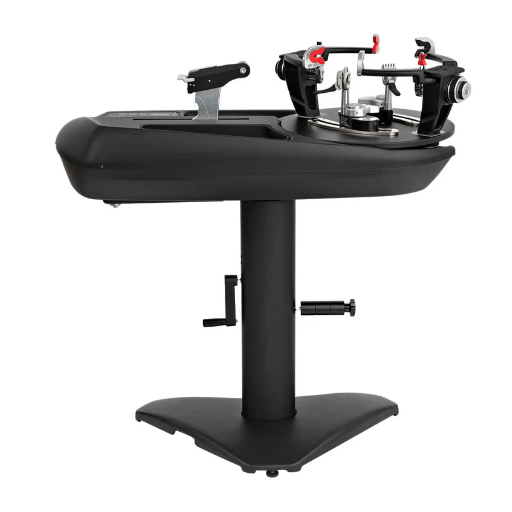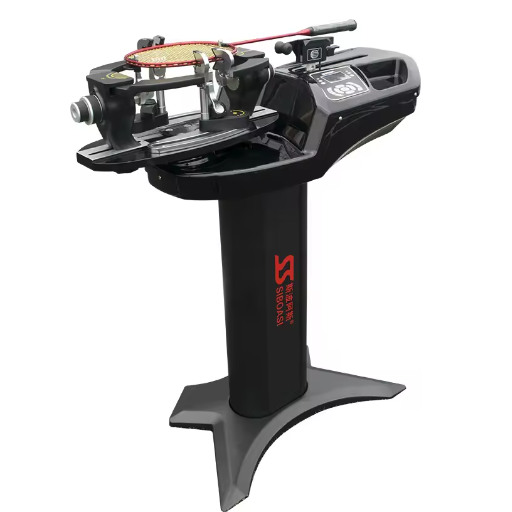
It is crucial to keep your stringing machine in tip-top condition to keep consistency and high quality in its results always. Thus, whether you are a professional stringer or a passionate tennis player, do not compromise on calibrating and maintenance for the accuracy and durability features of your machine. This resource has been developed to help you follow all the essential steps and techniques of professional maintenance.
Key Takeaway
From what calibration is and entails to its advantages along with some practical moves for everyday care, the following knowledge will introduce you to techniques for keeping your machine running well and giving you a stringing edge. Place yourself over the top today and maintain good gear efficiency!
Importance of Stringing Machine Calibration

Impact on Racquet Performance
Calibration of stringing machines is pivotal for ensuring the consistency and precision of the performance in the framing of your racquets. A machine calibrated correctly ensures tension is properly applied, according to the set point of the racquet strings. For selfishness, power, control, and feel terms, tension variation may affect the attributes of your racquet. Inadequate tension forms can lead to an unequal string job that will subsequently deteriorate performance and may inflict stress on the frame.
If calibrated accurately, uniform tension within the string across a racquet is an essential factor in the preservation of balance and the response during a game. This, for the players, means the ball lands wherever they planned and their best performance during practice or competition. A small change in tension could have a mix-up without sufficient calibration.
String calibration is not just about the life of the racket—it is about personal performance. String machine servicing takes all guesswork out of the equation and ensures that pros and amateur players are professional on any court.
Enhancing String Longevity
Proper stringing machine calibration is highly instrumental in elongating the longevity of racket strings. It ensures that tensioning levels are consistent during stringing. If the tensioning is inconsistent, the strings may be at the mercy of being either over-tightened or under-tightened, thereby resulting in their premature demise. By keeping tension level even, a good calibration improves overall performance of strings over a long run.
Moreover, when properly strung, the risk of string breakage during high-performance use is much diminished. The strings themselves are supposed to act as shock absorbers, especially when they are correctly tensioned. The less strain on the individual strings, the longer their life, which also means better control and overall performance on the part of the player in a game.
The third purpose a machine for stringing should serve is of endurance: endurance through uniform rather than uneven ballabeen. An uneven ballabeen will show quickly when the string bed is used and it needs to be restringed most of the time. By maintaining a properly calibrated machine, you stabilize a tensioned string bed to optimize string life expectancy and playing quality.
Benefits of Regular Calibration
The regular calibration of a stringing machine provides what is best for string tension. Properly applied string tension affects the little things, which together can make a big difference in the flourishing performance and consistency of play. Whereas any changes that produce varying tension that affect the string bed will often be met by some troubles in playability and frequent restrings, consistent tension in strings will bring confidence in the player’s tool and feeling back on it.
The other great benefit of calibration is the life expectancy in strings. Strings, when uniformly pulled during stringing, are under least strain or absent during the whole life. Reduced tension does not translate into an early restringing, thereby saving time and resources in the longer run. When a string is well maintained and regularly calibrated, it is at its peak throughout its specified life period.
Another key use of regularly calibrating the stringing machine is that it helps it maintain its durability and functionability. Prolonged use can lead to wear and drift rendering the machines inaccurate. Through the calibration regime, the wear and tear can be brought into control and the machine function optimally. This protects the machine against firm maintenance and allows for consistent, high-quality stringing to preserve the player’s capacity to come back.
Calibration Frequency Recommendations

📅
Professional Stringers
It is recommended that professional stringers calibrate their stringing machines every week or after heavy usage. Regular calibration assures the maintenance of precision and accuracy, the two most important qualities in ensuring the uniform string tensioning across all rackets.
Failure to have regular calibration will result in tension imbalances, tampering with the performance of rackets and also affecting customer satisfaction. Therefore, for each week for calibration, professional stringers will cut down on wear and tear errors and thus get the machine in top available shape for customers. In the end, it not only preserves machine reliability but also gives a good job update. This little chore acts together to preserve a professional standard.
Casual Stringer
Less-delicate casual stringers string lesser with respect to professional stringers, but it is still crucial to have the machines calibrated to provide facilitative consistency. The calibration frequency recommended for casual stringing depends on the amount of usage, type of stringing machine, and a period to vary but is typically every 4-6 weeks. Nonetheless, this may be some greater or lesser, depending on the use a machine sees in terms of impact, if lighter or heavier.
Regular calibrations are needed to keep the tension-setting accurate, which directly influences the quality of the stringing and satisfaction of the customers; failure to calibrate when required will very likely result in tension discrepancies. In recovering ex-tennis quite often, they also allow to confirm calibration with racket reduction between calibrations at about every 10 to 15 rackets.
Factors Influencing Calibration Needs
There are a few final factors that could influence the calibration needs of stringing machines. Such is the main essence of factors. The most important of them is the number of times a machine is utilized. Full stringers, which work best when put into regular and high volume use, are likely to suffer increased wear and tear physically on their componentry; this is why in such cases more number of calibrations might be required to keep the string tension fairly repeatable and accurate.
Further, a machine that functions pretty much unindifferently within harsh environmental states experiences the elements’ wear and tear hugely. Temperature changes, humidity, and air-borne contaminations also damage the internally placed components of a stringing machine significantly over time. A good instance would be that high humidity may cause wearing and corrosion of some components, and temperature changes can create inconsistency when it comes to tension; thus, by calibration, the effects are removed and the machine performance becomes optimal.
Lastly, the material of the strings plays a vital role in adjustments. Strings that are stiffer or need higher string tension put more strain on the machine, which may speed up component misalignment. The flexible adaptation of calibration using these differences prevents such problems and assures accurate and reliable results over a span of time.
Essential Tools for Calibration

Types of Tension Calibrators
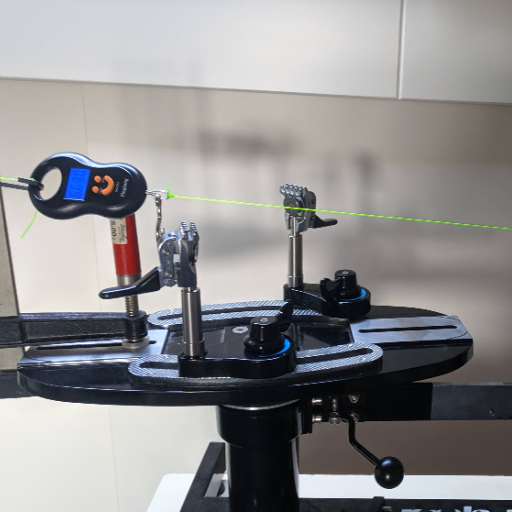
Many varieties of tension calibrators can be used for calibration of stringing machines, suitably developed to check tension accuracy for string. Digital calibrators are the most commonly used which are electric calibrators and load cells. These detect tension variances that allow the stringing machine to be finely corrected.
Digital calibrators give clear and precise digital readings on the tension and are easy to handle and very reliable. They can register even small changes in tension to upkeep precise performance evermore. Mechanical calibrators, on the other hand, use calibrated springs and scale for taking readings of tension. Even if it is manual handling, this form is a simple and robust away of regular maintenance.
Electronic load cells use sophisticated sensors to measure tension with great accuracy. Due to their compliments for processing detailed data, tension-applying instrument calibration systems are more appreciated for various heavy-duty applications. In essence, every type of calibration system benefits from the constant serviceability of the machines through fine calibration checks that, in turn, bring coordination in processing well. Listening to the precise calibration results maximizes the lifespan of the tool effort calibration and maximum handy performance for durability of use.
Required Equipment for Calibration
For proper stringing machine calibration, specific tools and equipment are essential. First, you will need to have a tension calibration device or some other measuring device that can give an accurate reading of the tension at which the machine is stringing. The calibration gives the assurance that the machine’s readings are truly meant for optimum performance against standard tension levels.
Fine adjustment and component retention are essential to calibration. Precision tools, screwdrivers, wrenches, an alignment plate, etc., are very useful for exact tuning and securing components necessary in calibration procedure. Proper alignment of components, correctly tightened in place, enables the smooth and consistent working of the given machine.
This task cannot be done without a neat and stable environment. If lighting and good workspace surface should be present, then there must be a bench to set the machine upon and some manuals on machine-specific maintenance must be for consideration. From the basic provisions, it can be ensured that the stringing machine is going to be calibrated sufficiently for you and with high degree of accuracy, while being long-living too.
Choosing the Right Tools for Your Machine
When calibrating a stringing machine, selecting the right tools is fundamental to achieving precision and ensuring the machine functions properly. To start, you will need a reliable tension calibrator specifically designed for stringing machines. This tool will help measure and verify the machine’s tension accuracy. Additionally, a wrench or screwdriver must be taken into consideration which is compatible with the machine adjustment points, for fine-tuning and mounting assemblies.
Secondly, confirm the availability of a cleaning kit for maintaining the machine’s vital components such as clamps, tension heads, and guides. Accumulated dust and debris could affect the machine’s performance and calibration accuracy. One may consider using a soft-bristle brush, lint-free cloth, and cleaning agent suitable for the materials used in the specific machine to ensure it remains in optimal condition.
What specific what stops any gadget could well be indicated as to its function. These are given by the talking-points of the midsize units on the dial, with threats of some “bow-doctoring” sayings, etc. These instances should also be compared to the joints and fittings within the manual.
Step-by-Step Guide to Calibration

Calibration Process for Electronic Machines
- 1
Prepare the Machine
For a machine that works best and has a long-lasting lifetime, the first step will be to clean it. Clean it up by using a soft and lint-free cloth and a suitable cleaner to make sure there is no dust or debris or residue on critical components like the tension rods or clamps. This will hinder correct calibration due to dirt accumulated or infected elements. - 2
Set the Machine to Zero
Lower all the tension settings to a minimum or zero. That way, these settings are available for further calibration and fine tuning. Consult with the handbook to ensure that the basic settings are in conformity with the recommendations of the user manual. - 3
Test and Adjust Tension
A tension calibrator is used to measure the actual tension of the machine. The calibrator is then applied to ensure that the tension meets the set machine-manufactured value. If some discrepancy is discovered, consult the manual for what is generally to be done in incremental steps for fine-tuning tension until the reading correctly matches the set value.
Calibration Process for Drop-Weight Machines
A drop-weight stringing machine’s calibrating is actually obtaining the tension as per user’s setting. An established weight or calibration tool should be applied to the tensioning of this machine. Drop the weight down slowly and see if the tension remains horizontal or not. If it does not, corrections will need to be made.
For fine-tuning calibration, adjust the tension adjustments incrementally. This can usually be done by moving the weight’s position or altering the calibrating dial dependent on the machine’s design. Keep repeating the steps above until the drop weight arm is positioned horizontally amidst the desired tension setting. Test a range of tension settings to ensure even operation across the machine’s range.
To ensure the accuracy of your machine as time passes, there must be a frequent examination of the same in respect of wear and tear or misalignment. All components must be kept immaculately clean and be maintained to a high standard. Specific instructions for your machine can be found in the manufacturer’s manual. Regular calibration is mandatory and should be maintained after professional consultation in case of irregularities which may occur and bring about some issues damaging or affecting performance.
Common Calibration Issues and Solutions
⚠️ Troubleshooting Problems
Tensions Do Not Match: One common inconvenience one would like to avoid in calibration is ‘tension does not match’. This suggests that a stringing machine applies the wrong tension to the strings. The primary cause of such a problem is wear and tear of the tensioning mechanisms and improper adjustment. Take regular lookouts of the tensioning systems and follow the manufacturer’s instructions on recalibrating.
Off-balance String Clamps: String clamps can goof up from several sources, including mechanical. If clamps are not fixed properly, string starts to slip, loaded off. Therefore, inspection of loose or misaligned clamps and proper cleanup, repairs, or tightening are very necessary. Consistent operation and efficiency are given through periodic maintenance.
Track/Tower Is Not Aligned: Tilts or top plates that disrupt the pose of the racquet have a negative impact on stringing accuracy. Routine examination should be carried out to ensure that they are well aligned as per the manual. If alignment issues remain, it would be wise to bring the racket to a qualified technician to prevent further damage or loss of performance.
Maintaining Your Stringing Machine
Regular Maintenance Practices
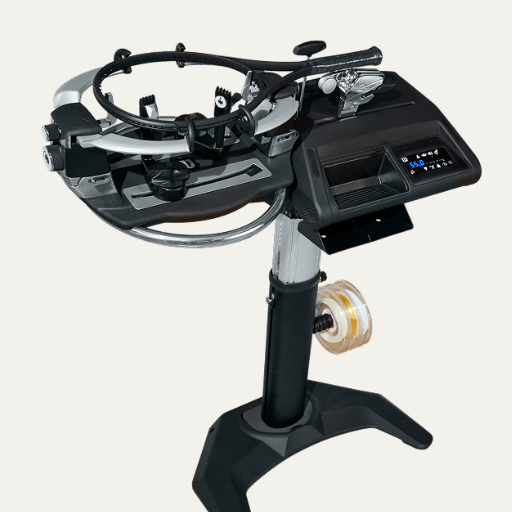
To protect your stringing machine and ensure its consistent performance life, the machine has to be regularly attended. This simply requires the user to clean all movable parts like the firm clamps, grippers, and tensioning mechanisms after every use. Accumulation of dust may occur, so applying a soft cloth or mild detergent may help prevent large heap-up and ensure perfect movement.
Regular inspection of all crucial parts in the machine is necessary in order to identify and rectify breaks, wear, or misalignment. Tighten any loose fasteners/screws with tools. The poorest wear is faced by the clamps and the strings in an instance, so always try to correct the problem or replace the parts that have been affected.
Lubricate the unit’s moving parts periodically for them to function correctly. It can be done applying sparingly a thin special-purpose oil designed for a mechanical equipment-system, preferably at areas such as tracks, tensioning mechanisms, and pivot points. Reducing friction helps increase the life of the unit. These best practices are thought to have kept stringing machine performance intact for many years.
Identifying Signs of Wear and Tear
Identifying signs of wear and tear in a stringing machine is imperative to retain what it is intended to do and ensure it stays functional for a long period. Some of the most common indicators of wear and tear include odd noises produced while in operation, say squeaky or rough, which usually imply that lubrication is required or there are parts under stress. Visually inspect the body areas like cracks, dents, or visibly worn-out parts in the frame or moving areas of the machine.
Another important sign would be the decrease in the accuracy of the tensioning. If the stringing machine consistently fails to keep string tension at the required levels or provides inconsistent string tension, problems in the tension mechanisms or calibration may be suspected. Conduct regular testing where possible on strings for uniformity, as well as testing to ensure that the result string meets requested specifications.
Nothing can signify the need for maintenance or replacement of specific components such as stiffness in operating the machine, or resistance when making adjustments. Routine inspections can be helpful in detecting and taking valid measures for immediate care so that the machine remains stable and competent for operational work, and further damage prevention.
Best Practices for Longevity
Proper maintenance of the stringing machine is essential to keeping it serviceable and healthy throughout its lifetime. The first step should be constructing a maintenance protocol that outlines the regular cleaning required for the machine. Accumulation of dust, grime, and debris can impair the operation and wear components. Cleaning the tool after every use reduces these risks and makes sure it performs much more efficiently.
Regular examination of the machine should be conducted for wear, stiffness, or visible damage to any moving parts such as the tensioning system and clamps. Regularly ensuring these parts remain well-lubricated as per the guidelines supplied by the manufacturer can lead to considerable savings over time. Another route of consideration is the prompt replacement of worn parts i.e., clamps or strings, for ensuring performance at its true consistent marvel.
Store an optical inspection system in an environment free of extreme temperatures or high humidity. Drastic ambient temperature changes could damage structural integrity and affect precision if not settled down by exposure to excessive humidity. By following these guidelines, you can ensure an extended a lifetime for your machine and maintain accuracy.
Frequently Asked Questions (FAQ)
Q: What is stringing machine calibration and why is it important?
A: Stringing machine calibration refers to the procedure of verifying and adjusting tension output of a racquet stringer in such a manner that the pounds indicated on the dial correspond to the actual tension exerted on the stringing. Proper calibration aims at ensuring reliable playability, avoids the same stroke of stringing life at any one time, and provides confidence in the results of a tennis shop or a racquet stringer. Check on the calibration on a regular basis to prevent any drifting that might come from use, impacts on the turntable, or any worn components.
Q: When do I need to check the calibration of my stringing machine?
A: Regularly—this would require one calibration for moderate usage at least once a month or before any tournament or resale. If you have a busy tennis shop or are using a lockout machine frequently and debatably poorly, it would be advisable to check the calibration more often. If there happens to be erratic behavior from the turntable or any inconsistent pound readings on the gauge, check it out and remedy it immediately.
Q: What tools do I need for calibration; in particular, of my string machine?
A: These will normally include a calibrated spring tension calibrator, preferably an electronic one, a reliable gauge, and sometimes a primary calibrator device sold by manufacturers like Gamma. The spring tension calibrator cuts the mark for most crank machines, and once you upgrade your tension calibrator, it serves 10-fold for a more sophisticated job.
Q: Can I calibrate a lockout machine the same way as a manual one?
A: Yes, you could calibrate a lockout machine, but the procedure would be different. While lockout machines are normally calibrated with an auto-tension mechanism, they have set tensions where they “lock out” upon reaching the desired fifty pounds; thus, you would have to verify whether this corresponds to the setting on the dial or gauge. Since you would use a spring tension calibrator or a digital tension meter, you should take care to follow the manufacturer’s instruction more than ever.
Q: In case my machine reads a few pounds off, lower or higher, how do I rectify that?
A: If the machine misses several pounds, first check the zero on the machine and its mechanical parts: turntable, clamps, and friction points. Then adjust the calibration to measure the offset or error. In some machines, there may be an adjustment screw or electronic offset setting to patch the tension on the machine to the gauge mark. Careful adjustment calls for repeated calibration; retain the margin of error within a pound, if feasible, as you string with your tennis racquet.
Q: How does an electronic calibrator compare with a spring tension calibrator?
A: A spring tension calibrator tends to be quite tough and inexpensive, and can be used for ordinary checks. On the other hand, an electronic calibrator usually offers faster and more precise results, often along with data logging. An upgrade of the tension calibrator in a tennis shop or among professional racquet stringers is the best way to deliver superior services, but many technicians still stick with a spring tension calibrator for their day-to-day stringing machine calibration.
Q: Is it common for stringers to make mistakes when calibrating their machines?
A: Surely yes. Typical mistakes include failure to warm up the machine, not verifying calibration under load, relying on an inaccurate gauge, and forgetting the turntable or the slack in the clamps. The other usually overlooked cause of wrong pound readings and inconsistent stringing is forgetting to check for calibration after any repairs or after the machine has been moved.
Q: Is it necessary to have my machine serviced by a professional or the manufacturer for calibration?
A: A service technician may be required if adjusting the stringer fails, or if a part that develops a malfunction, as the case might be for the lockout or turntable or for the electronic board. Another possibility is taking your machine to a reputable professional tennis shop for calibration using certified equipment. Periodical servicing of this machine is keeping it in good shape and avoiding catastrophic failures.
References
-
Online Measurement for Parameter Discovery in Fused Systems
A paper from MIT exploring calibration techniques and parameter mapping for machines under varying conditions.
Read more here -
Electric Power Generation, Transmission, and Distribution
OSHA’s guidelines highlight the importance of proper alignment and calibration of stringing machines to prevent equipment failure.
Read more here -
Catalog on Machine Practices and Processes
This catalog includes discussions on machine tools and practices, which could be relevant for understanding the import and use of stringing machines.
Read more here