Having the right tools can make all the difference in the world when it comes to learning the skill of stringing tennis and badminton rackets with calibration and perfection. These machines have changed how players, craftsmen, and experts can take care of their implements with precision, consistency, and speed. Whether you are a skilled stringer wishing to lift the levels of your art, or an eager beginner ready to begin learning, this guide contains everything you need to know—from inner workings to choosing the perfect fit—to unleash your stringing game and lead the way in performance creation!
Introduction to Electronic Stringing Machines

What is an Electronic Stringing Machine?
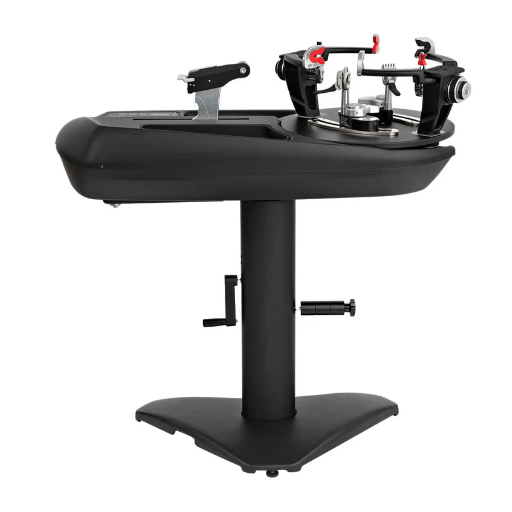
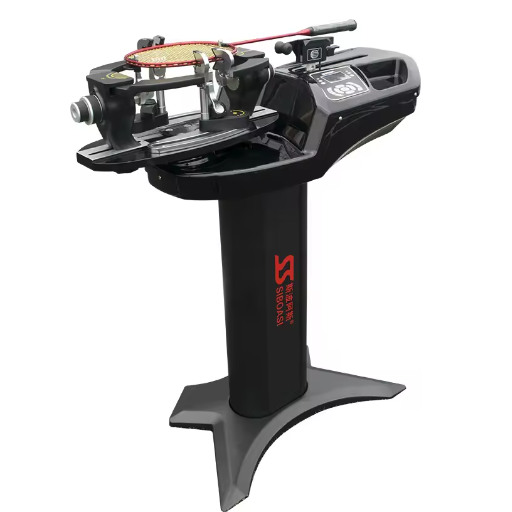
Electronic stringing machines are special devices designed to automate and improve the stringing process of racket sports like tennis, badminton, and squash. Unlike manual or mechanical stringing machines, the electronic stringing machine employs advanced technology to control, with precision, the string tensioning application. This further ensures consistency, accuracy, and efficiency during stringing, making electronic machines a favorite tool for serious athletes as well as professional stringers.
The key feature of a stringing machine is that it comes with an electric motor-driven tensioning system and allows the user to set the right level of tension for each string. They have digital controls that allow tension to be easily measured so that each string will perform at the same level. Consistent string tension will add to rackets’ durability, improve shot accuracy, and further enhance the performance of a game.
These machines are particularly beneficial for players and stringers who demand precision and consistency, as they minimize human error that may occur during manual stringing. Additionally, they often come with user-friendly designs and customizable settings, making them suitable for both beginners and experienced stringers. For the creation of professional-quality racket performance, an electronic stringing machine turns out to be the ultimate tool one needs.
Overview of Racquet Stringing
Racquet stringing is the process in which the strings are put on a racquet frame to enhance performance capabilities. One needs to aim for a certain blend of power, control, and comfort in the right proportions while playing. The techniques used and the tools supplying them may be very different, chosen by the preferences of the player and their playing style.
In actuality, the process starts with string type selection. Strings differ concerning materials, girth, and tension, and these impact the performance qualities of a racquet in terms of different playing skills. For example, high tensions allow for more control, but lower tensions provide significantly more power and ensure comfort. The right combination should ensure that the racquet fits the most specialized needs of the player.
Once the string type and tension are decided, the stringing process requires care and accuracy for the exceptional flexibility a professional tennis player might show. Specialized machines are used by the stringers to loop and feather the strings through the frame, either manually or electronically. A proper stringing operation is useful in terms of increased performance level, as it ensures the durability and longevity of the racquet. Frequent stringing is a must for competitive or regular players to instill an element of stability and reliability in the game.
Importance of Stringing in Racquet Sports
String alignment is crucial for high-performance gameplay and consistency. String tension and materials decide the power, feel, and control of the racquet and implement the desired attributes on the court. With strings well mounted and maintained, players can trust in the predictability of their equipment for responding to their strokes, minimizing variables in competitive or recreational settings.
The tension at which the strings are stressed is a central concern regarding performance. Higher tension results in a greater level of control as strings absorb less upon striking the ball, whereas lower tension offers greater power, making it possible for the player to hit the ball hard without the need for much effort. Additionally, string construction matters; it affects characteristics such as spin potential, comfort on the arm, and durability. For a player to better tune their racquet to their needs and playing style, they will need optimal adjustment.
Another note concerns frequent restringing as an essential condition, especially for very active players, as strings lose tension as a consequence of normal use. This progressive loss is known to impair the precision and power in returns, thus affecting the general rhythm and quality of the game. This is magnified when strings break over time, causing a temporary or permanent halt in practice or matches. Heeding the high requirements of a restringing program is considered essential for improved gameplay and enjoyment.
Benefits of Using Electronic Stringing Machines

Precision and Consistency in Tension
Electronic stringing machines are known in the industry for ensuring precision in tension, which is a major benefit to a player’s performance. This level of reliability in tension does not happen in manual stringing systems where the effect of even minor human errors could become noticeable. That consistency is precisely why it helps optimize control, accuracy, and power regarding ball touch on the strings.
The procedure involves automated tension procedures that are precise. It renders any kind of variation in tension—which occurs when manually stringing—moot. This precision is an important factor for advanced players who use specific string tension to their advantage; even the least distortion in tension plays a major role in their shots and performance.
What is more, the long life of strings and frames is guaranteed as no undue stress is loaded by the machine during the stringing process. This helps in saving both the equipment and over-frequent stringing costs. Ultimately, electronic stringing machines bring better athletic performance while preserving the integrity of the racket.
Speed and Efficiency Compared to Manual Stringers
Electronic stringing machines outstrip manual stringers in terms of both speed and efficiency. While manual stringing demands a lot of effort and time, electronic machines automate much of this process. As a result, the time required to get the racket strung up is significantly reduced. This is a vital benefit for professional sportsmen or athletic facilities that require many rackets strung quickly and continuously.
💡
Pro Tip
Unlike manual methods, electronic machines function according to well-specified string tension. This consistency helps maximize productivity—an unforgettable consideration for players invested in high-level racket skills. Consistency obviates unnecessary restringing, saving time and expenses in the long run.
Although beginners or solo sports enthusiasts may find the lower cost of traditional stringing appealing, electronic machines are faster, more precise, and significantly more efficient. They have the capacity to be utilized for high-quantity projects for professional purposes and make racket stringing better for both amateurs and professionals alike.
Reduced Strain and Increased Longevity of Rackets
The use of an electronic stringing machine greatly reduces the strain housed by a racket during the stringing process. The precision of these machines ensures that tension is evenly distributed, preventing undue strain caused by off-kilter forces. This targeted attention on maintaining uniform tension protects the frame from warping or cracking over time.
Perfect string tension achieved consistently can effectively increase the life of the strings and the racket. While stringing at the correct tension ensures maximum performance without wear from pressure inconsistency, the stability provided is especially important for those who restring frequently. Uniformity reduces stress on the frame with each successive restringing.
For competitive or recreational players with intricate requirements, these steps lead to a durable racket with consistent playability. The benefits of precision during stringing prevent racket damage under normal conditions and sustained use.
Key Features to Look for in an Electronic Stringing Machine
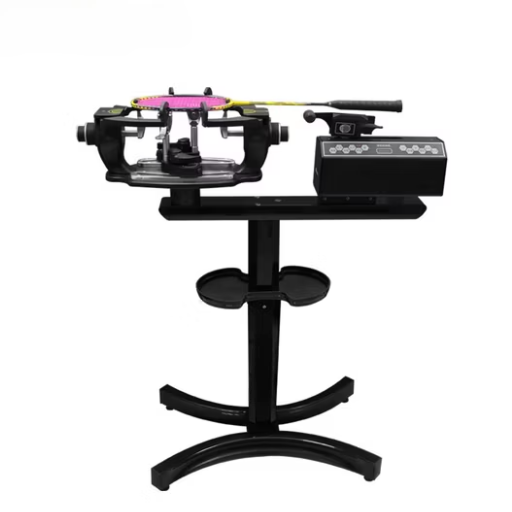
Types of Mounting Systems
In the case of an electronic machine, the mount system is a major consideration to ensure the racket is correctly contoured. There are two basic types: two-point and six-point. Each is designed with distinct limitations to cater to different requirements regarding precision and support.
- •
Two-Point System: Holds the racket at the top and bottom of the frame. It is lighter and simpler, great for quick jobs, but offers less support and may distort the frame under high tension. - •
Six-Point System: Provides stability secured at six critical frame points. This minimizes frame warping and meets the requirements of professional players who need high accuracy and reliability.
Adjustable Tension Settings
Adjustable tension settings permit players to adjust the string tension to fit their particular style. Higher tension offers more control and less stretch, while lower tension is perfect for power and larger sweet spots—ideal for players wanting extra energy and forgiveness on off-center hits.
The system helps players explore tensions until they figure out the perfect level for their game. Aggressive players may prefer tight strings for accuracy, while volleyers might offer less tension for smoother strokes. This adaptability is helpful for players at all skill levels to find individual-specific solutions.
Tension adjustment aids in making a racket versatile and user-friendly. Improved gaming experiences and reduced injury instances are ensured when these personalized adjustments are made, benefiting both recreational and professional players.
Compatibility with Different Racquet Types
Tension settings should be compatible with most modern racquet types built for sports and recreational use. Most racquets today allow for sets of adjustments, ensuring a wide range of tensions that allow players to fine-tune their equipment to complement their skill level.
Recreational racquets offer a limited margin for beginners to experiment without losing too much of the game. Advanced tennis racquets are produced to meet specific adaptations for professional players, allowing athletes to create maximum feel, power, and spin. It is important to adjust these tensions in accordance with manufacturer specifications to warrant optimal performance.
Understanding the Components of Electronic Stringing Machines

Clamps and Their Functions
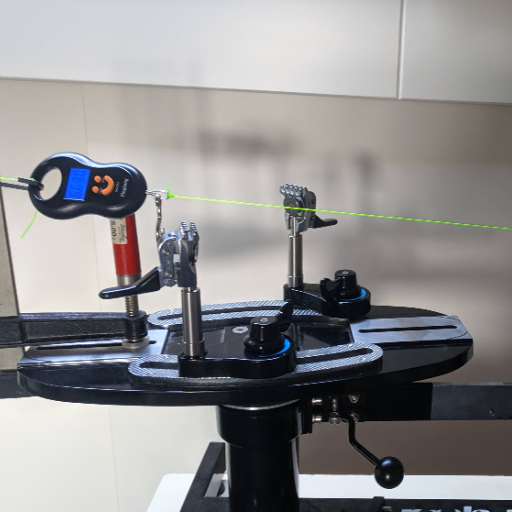
Clamps are essential because they secure the strings in place, allowing for a taut stream through the procedure. They privilege the recovery of tension while compensating for slipping or loosening while stringing other parts of the racket.
| Clamp Type | Description | Best For |
|---|---|---|
| Fixed Clamps | Connected directly to the machine base. | Professional & high-performance precision. |
| Flying Clamps | Not attached; grips two strings at once. | Portability and simpler setups. |
To maintain proper operation, regular maintenance is a must. This includes cleaning clamp surfaces to prevent slipping and inspecting for wear. Proper setting is vital; clamps should not be too tight (damaging the string) or too slack (letting the string loosen). Regular maintenance ensures a long lifespan and steady results.
The Role of the Awl and Plier in Stringing
The awl and pliers are indispensable tools. The awl is employed to guide stubborn strings through tight grommet holes with care so the frame is not harmed. It helps manipulate strings without causing fraying or snapping.
The main job of the plier is to grip, hold, and pull strings. This tool is useful for tightening knots and adjusting tension smoothly. Pliers provide the strength and fine grip needed to ensure strings do not slip or become weakened during the pattern creation.
For maximal output, both tools must be handled properly. The awl should be kept basic and lighthearted to avoid dimpling the string, while pliers should have functional teeth for firm gripping. Correct use ensures professional-quality results and maintains the racquet’s durability.
Heavy-Duty Components and Durability
Knowing the ingredients of an electronic machine is necessary for operational performance. These machines incorporate advanced materials for high tension requirements. Important parts for accurate tensioning include the tensioning system, clamps, and turntable.
The tension system is the essence of the stringer. A solid system provides accurate adjustments and stability. Using durable motors reduces the chances of inaccuracies affecting playability. Fixed clamps and turntables with 360° rotation enhance versatility and ensure professional results without compromising the racket’s integrity.
Best Practices for Using Electronic Stringing Machines

Preparing the Racquet for Stringing
- 1
Inspection
Fundamental to ensure no visible frame damages (cracks or weakened spots). Remove dirt or residue from the frame. - 2
String Removal
Gently remove strings using cutters. Cut in multiple places to disperse tension uniformly and check that grommets are intact. - 3
Setup
Select the string type and tension. Calibrate the machine before putting it into motion to maintain optimal performance.
Threading Techniques and Tips
To string correctly, you must understand the string path designed by the manufacturer. Put the string through the grommets appropriately for mains and crosses, ensuring it is free of twists, which would affect performance and tension.
Exert gentle, steady tension as you thread to ensure the material is not damaged. Use stringing awls to guide strings through tight grommets. Keeping strings straight helps in even tension distribution, affecting comfort and control. The final stage is tying off with appropriate knots—secure but not overly tightened—and revalidating the pattern for any mistakes.
Maintaining Your Electronic Stringing Machine
Cleaning the machine ensures accuracy and longevity. Use mild cleansers and soft materials to remove dust and fibers. Avoid using water directly on the machine; a dry cloth is preferred. Check movable elements, tracks, and components for wear or misalignment.
⚠️ Maintenance Note
Use recommended lubricants during scheduled tuning. Check tension calibration at regular intervals; an improperly calibrated machine reduces racquet longevity and performance. Use a tension-calibrating tool or professional service for recalibration.
Frequently Asked Questions (FAQ)
Q: What is it that an electronic stringing machine offers and how does it vary from that of a conventional drop or crank racquet stringing machine?
A: Electronic stringing machines entail the latest technology in tensioning and function by using motorized tensioners and digital control of the tension to set an accurate stringing tension. This differs from traditional drop weight or manual crank machines which rely on gravity or manual power. Electronic machines provide the capability for linear pull tension or constant pull tension, along with improved tension control and digital displays, making electronics a preference of professional stringers in search of consistent and precise stringing.
Q: Can an electronic stringing machine also do badminton stringing machines, too, and what kind of mounting systems are available?
A: Yes, there are a lot of electronic stringing machines for both tasks of tennis and badminton stringing machines. They mostly have portable six-point mounting systems or utilizing multiple supports to hold various racket frames securely, with interchangeable heads for maximum security. The superior models will have versatile mounting systems as well as swivel grippers for pole distortion in both racquet and shuttlecock frames.
Q: What should I look for in terms of tensioner technology — linear pull, constant pull, or other tension control systems?
A: Decide on the basis of your priority: the linear pull system gives a strict guarantee of withdrawing with equal pull all the way through; constant pull system is a higher-end feature that operates on string stretch. A digital tensioner can be paired with either linear or constant pull; hence combining the two technologies emphasizes uniformity in result consistency all across different string types, say multifilament, polyester, or hybrid strings.
Q: Which are important accessories and stringing tools that are essential when you are using an electronic stringing machine?
A: The accessories required to include a set of stringing tools comprising a starting clamp, gripper, cutting tools, pliers, and reel or spool holder. Swivel adaptors, stainless steel replacement parts, or some specialty tools designed for an easier mounting will add to the experience of professional stringing.
Q: What are the preference and priority for a good racket stringing machine with warranty and durability in mind?
A: The warranty and durability play a pivotal role. They prefer an engineering of comprehensive warranties covering electrical aspects and mechanical components. A good number of top-notch machines use stainless steel components, are patent-protected, and boast industrial-grade motors.
Q: Can an electronic stringing machine aid a dubiously professional stringer to be more definite, and which features could help to reach total accuracy in stringing?
A: Absolutely. An electronic stringing machine enhances consistency through programmability to different tension settings, by allowing precise control of tensioners, and by its option for repeatability in the linear pull or constant pull manner, as well as showing digital readings. Other than that, the reliability of the gripper, smooth swiveling for handling the clamp, and accurate tensioning around the reel can greatly diminish any human error. As mentioned above, precise stringing is a must to tournament-level quality and beyond while the professional stringer keeps on pushing measured performance enhancements.
References
-
The String Theorists’ Automated String Machine
This source discusses a machine designed to automate the stringing of tennis racquets, focusing on efficiency and waste reduction.
Read more here -
Automatic Bead Stringing Machine
This source discusses the design and functionality of stringing machines, including the use of CNC machines and electric components.
View Source -
Integrated Control Technology of Tension Stringing Equipment
A review of modern control technologies used in stringing equipment, focusing on advanced methods and applications.
View Source