As far as perfecting your game on the tennis court goes, choosing the correct string and stringing machine can help you gain an edge over your competitors. Be you a professional player optimizing equipment or a novice fascinated with rackets, learning about stringing machines and string options is vital. This guide aims to shed light on the tennis stringing world, allowing you the insights that can take your game to another level. We’ll equip you with every detail, like features of advanced stringing machines and the best strings for your playing style, so that you can make well-thought-out decisions. Prepare yourself to have full command of your racket and maximize your performance on the court.
What is a Tennis Stringing Machine?
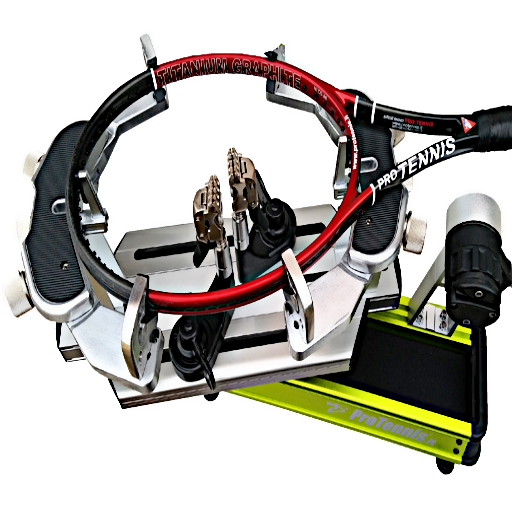
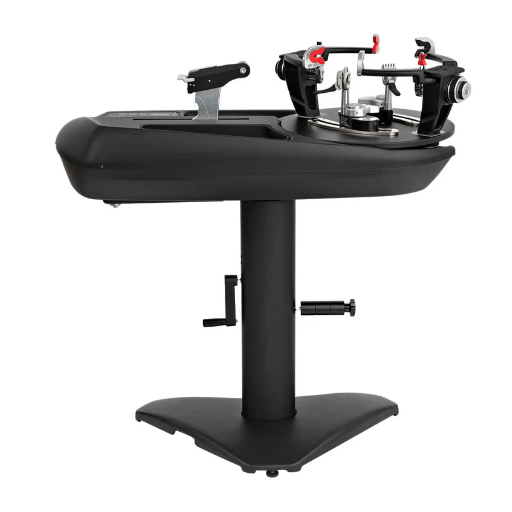
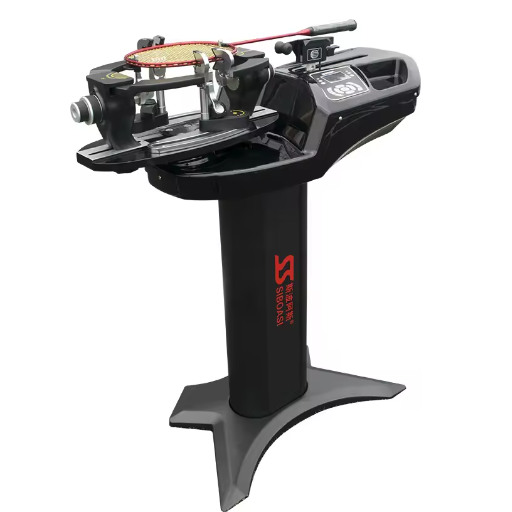
A tennis stringing machine is a specialized device used to set strings in a tennis racket accurately and uniformly. It allows for tensioning the strings at particular levels while keeping the racket frame in place, guaranteeing proper functioning and longevity. These machines come in various types, such as manual, electronic, and hybrid models, to suit different skill levels and usage. As with any device used to prepare rackets for play, the purpose of the tennis stringing machine is to string rackets accurately per the clients’ expectations.
How Does a Stringing Machine Work?
A tennis stringing machine is an accurate device that threads and tensions a racket’s strings according to the players’ specifications. The process usually starts with mounting the racket onto the machine for stability. Modern machines use advanced clamping systems that negate frame distortion during stringing.
The next step requires inserting the strings into the grommet holes of the racket, followed by a specific stringing pattern determined by the type of racket and the player. Guidance clues are usually set, and the string lacing done is never left loose. The string needs to be tensioned to a specific level, which is one of the vital aspects affecting the racket’s performance – power, control, and durability. Research suggests that most players fall between 40 and 70 lbs (18 to 32 kilograms), while professionals pick a certain number depending on their playing style.
Electronic stringing machines contain tension-controlled automatic systems complemented by level-controlled electronic sensors, which ensure that the tension applied is error-free. They also have more advanced options like pre-stretching the strings to lessen the void of tension. For instance, some high-end machines guarantee a tension accuracy of 0.1 lbs.
In contrast, operators can physically set the tension on manual or hybrid machines, which depends on mechanical systems. While less precise than their electronic counterparts, these models remain popular because of their cost and dependability.
In any case, a stringing machine is strung by a combination of machines and human robots that work seamlessly together mechanically and, in some cases, electronically, to provide superb stringing results so players perform well on the court.
Types of Stringing Machines Available
Each type of stringing machine has unique features that accommodate different preferences, needs, and budgets. Below is a compilation of five types that you can easily find:
- Drop Weight
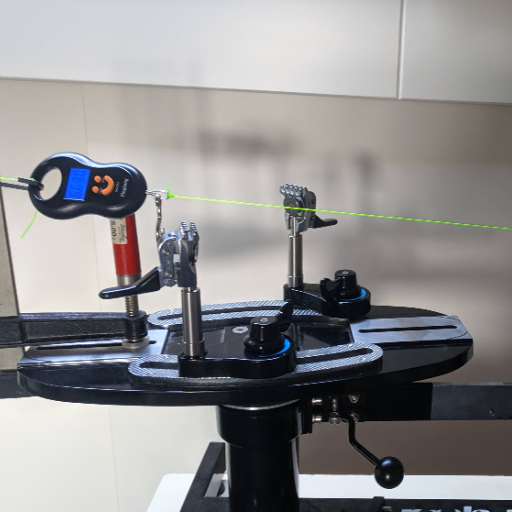
These machines apply string tension by weighting it with a hanging weight.
They are easy to maintain and have a low acquisition cost; however, they have longer clearing times and require more manual adjustments for precision.
- Manual Crank (Lockout) Stringing Machines
These machines are cranked open or closed to set the desired tension before stringing on the puller’s “capstan,” which is locked at the set position.
Manual crank models exccel in speed relative to drop weight machines, but are prone to tension discrepancies.
- Electronic Constant Pull Stringing Machines
From an engineering standpoint, these machines apply revolving motors to pull and maintain a preset tension on the string.
Due to sophisticated engineering behind them, they tend to be overestimated regarding their usefulness on an average stringer’s job. Thus, they are rarely seen outside of the tour level.
- Tabletop Stringing Machines
These machines are compact and easy to move, making them useful for amateur stringers or users with little space.
They come in both drop weight and manual crank versions.
- Floor-Standing Stringing Machines
Heavy-duty, with many features, these machines combine both requirements found in professional and frequent users.
They also include features like automatic tensioning electronics and comfort work stations.
Each category of stringing machine caters to a specific user type, from the professional stringer to the average tennis fan, and each has unique capabilities and features.
What Are the Key Features of a Stringing Machine?
When selecting a stringing machine, there are many critical components to evaluate as they affect the overall usability, accuracy, and productivity. Listed are five features that stand out:
- Tensioning System
The tensioning system controls how accurately and consistently the string tension is within the set limits.
Some options are manual (drop weight or crank) and electronic systems. An electrical system has more benefits in accuracy and ease of use.
- Mounting System
A secure mounting system enables the racket frame to be firmly stationary during the various stringing operations.
Common systems include 2-point and 6-point mounting, with 6-point mounting being superior in frame stability and protection.
- String Clamps
String clamps must be able to secure strings at the required position, preserving the required tension for the entire duration of the procedure.
Floating clamps and fixed clamps are the main methods used; fixed clamps are generally regarded as working better than floating ones.
- Durability and Build Quality
The design and construction of the machine will affect its life span and frequency of use.
Due to the frequent use of such machines, those with a robust metal frame and high-grade parts are ideal for professional use.
- Ease of Adjustment and Versatility
An ideal design includes a number of adjustable elements, which is more convenient, especially for rackets with different shapes and string patterns.
The most adaptable machines can be used in tennis, badminton, and squash.
Considering these features, users can decide which stringing machine is best for their personal or professional use.
Choosing the Right Tennis Stringing Machine
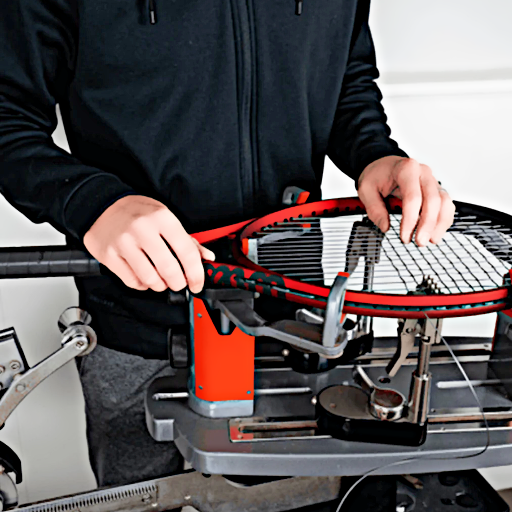
When selecting a tennis stringing machine, it’s best to evaluate your level of expertise, how often you use the machine, and your financial plan. Manual machines are probably to best choices for novice players or people who rarely play for fun because they are inexpensive and straightforward. Advanced players or professionals should search for electronic machines which provide absolute tension control and faster stringing speeds. Construction quality is more important than brand for all users, so make sure the device is well built and can adjust to different-sized rackets. For people who frequently do stringing work, features like memory and ease of adjustability can save time. Select a brand that has good support and customer reviews to ensure you get the best value for your investment
What to Look for in a Stringing Machine?
User preferences and the most recent technological advancements can aid in making the best decision for selecting a stringing machine. Below are some of the core areas to remember:
- Stringing Machines Need to Ensure High Precision and Accuracy
A modern stringing machine should ensure high accuracy when it comes to stringing tension. With digital electronic machines, tension setting is more precise and can be changed by as little as 0.1 pounds. Yonex and Gamma are two brands that have been praised for their tension precision, which for professional players tends to make or break a player’s consistency in racket performance.
- Speed of Stringing
For those who frequently or professionally string rackets, the time spent per racket becomes crucial. Advanced electronic pull mechanisms tend to outshine crank manual systems. Premium versions that come with pre-stretch functions also increase string durability and string loss over time.
- Stringing Machines Clamping Systems
The experience of stringing a clamp will primarily depend on the clamping system. Floating clamps are not preferred compared to fixed clamps since they are more stable and reliable, particularly for high-tension stringing. Searches for machines should focus on those with diamond-coated clamps since they can offer a stronger hold without damaging the strings.
- Durability and Build Quality
Look for a model with a durable steel or aluminum construction. Premium models, such as Wilson Baiardo, have solid construction and ergonomically designed features that improve durability and user comfort.
- Compatibility and Versatility
The machine must be able to support multiple types of rackets, including, but not limited to, tennis, badminton, and squash. For example, Pro Stringer MT500 is a versatile device, ideal for multi-sport stringers because of its universal compatibility.
- Additional Features
Advanced features aid stringing work. In electronic machines, custom pull tensions for different rackets can be saved under a memory setting, speeding up repeat work. The swivel base and other movable tool trays can further augment convenience during machine use.
Assessing a machine must consider the user’s skill level, budget, and the frequency of use. Considering these details alongside your chosen model will guarantee helpful features tailored to your needs.
Best Stringing Machines for Professionals
Stringing accuracy, construction quality, and additional features such as ease of use are prioritized for professional machines. According to recent trends and search statistics, some of the leading machines for professional use are the Wilson Baiardo, Gamma 8900 ELS, and Yonex Protech 8 Deluxe. These devices receive excellent reviews for their automatic tensioning devices, ergonomic features, and long-lasting durability.
The Wilson Baiardo case, for example, boasts an inventive six-point mounting system, complete with an ergonomic height alteration feature, perfect for professional stringers tailored for prolonged work periods. The Gamma 8900 ELS is renowned for its electric stringing, digital interfaces, and unrivaled smoothness, which boosts its appeal with tournament stringers. In the same class, the Yonex Protech 8 Deluxe is easier to handle because of its advanced construction and state-of-the-art facilities for professional rackets.
In conclusion, purchasing a machine will depend on one’s needs relative to work requirements. However, the machines discussed above can be suggested for adequate performance for professionals.
How to Determine the Right Tension for Your Racket?
It’s crucial to note the tension of your strings regarding your skills, style of play, type of racket, and racket specifics. For example, advanced players who generate their power muscles usually prefer higher string tension. This is because the player retains control and precision during the game. On the contrary, lower tension gives more power and larger sweet spot areas; therefore, this would be ideal for novices or those needing a softer touch.
Research suggests that most players fall within a tension range of 48 to 60 pounds, but testing is recommended. Beginners can start at [50] and work to 60 with experience. It is also advisable to consider the string type, as different materials such as polyester, nylon, or natural gut perform differently at various tensions. Ultimately, recurring experimentation alongside highly preferred options would be the ultimate solution to the ideal tension in the player’s game.
Understanding the Stringing Process
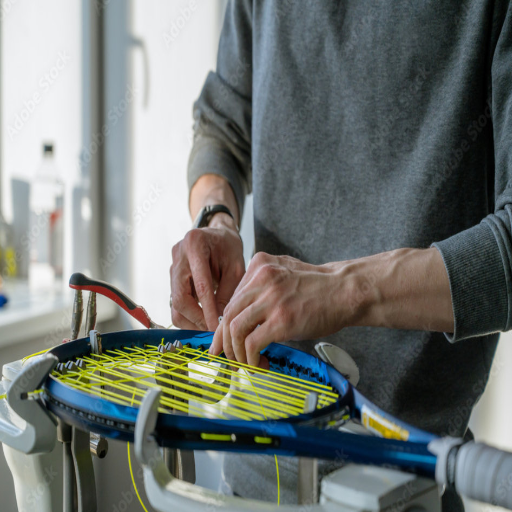
Achieving maximum performance and durability includes appropriately tuning the strings and regulating them. The strengthening machine must not be damaged to carry out the procedure correctly. After that, the strings are gathered in a particular order that allows for equal distribution. Following the player’s style and preferences, the required force is applied. The string framework impacts control, comfort, power, and many aspects. All pieces of string must be completely taut before being trimmed to finalize the procedure. To preserve the desired wear and maximize performance for the stringed racket, stringing must be done precisely, which requires effort.
Steps Involved in Racquet Stringing
The procedures executed in racquet stringing include preparing the racquet, stringing the mains and crosses, adjusting to the preferred tension, tying knots, and string alignment.
| Step | Details |
|---|---|
|
Preparation |
Mount the racquet securely |
|
Mains |
String verticals evenly |
|
Crosses |
Weave horizontals carefully |
|
Tension |
Adjust for string type |
|
Knots |
Use secure techniques |
|
Alignment |
Straighten strings |
Importance of Pre-Stretching Strings
The benefits of pre-stretching strings before installing them onto a racquet are invaluable and may improve a player’s performance and prolong the durability of the strings. Pre-stretching contributes the most towards prolonging string life by reducing initial tension loss, which helps the strings maintain consistent tension for a longer period. This stability translates to improved control and reliability during gameplay. Moreover, pre-stretching leads to reduction of string movement which ultimately causes reduced friction and wear, contributing to an overall increase in string life. This step benefits players who desire a more consistent feel on their racquet since it allows the strings to settle down into a more stable rest position. This step becomes crucial for most stringers who value performance and durability.
Best Types of Strings for Tennis Rackets
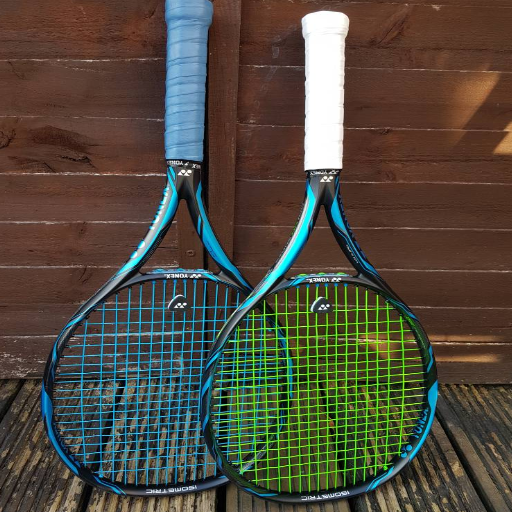
Each tennis player has different preferences, which means the choice of strings depends on one’s level of proficiency and skill set. Here are the most well-known types of strings:
- Natural Gut offers maximum comfort and arm-friendliness while keeping power and tension maintenance at an all-time high. This is great for players seeking a superior feel; however, it is expensive and has low durability.
- Synthetic Gut: This option is more economical and offers recreational players comfort, playability, and durability.
- Polyester (Poly) is stiffer than the other types but offers excellent durability and spin potential. It is popular among more advanced players who have faster swinging motions, but due to its discomfort, it isn’t as great for beginners.
- Multifilament is a better option for players who have arm injuries or prefer a softer feel while playing due to its comfort and power. It embodies the feel of the gut naturally and has excellent shock absorption.
As seen from above, the differences come down to personal priorities, such as comfort versus spin or durability, which are used to identify the most appropriate choice.
Natural Gut vs. Synthetic Strings: Which is Better?
Natural gut strings provide unmatched comfort and power while maintaining synthetic strings’ durability, affordability, and resistance to the elements.
| Key Point | Natural Gut | Synthetic |
|---|---|---|
|
Comfort |
High |
Moderate |
|
Power |
High |
Moderate |
|
Durability |
Low |
High |
|
Cost |
High |
Low |
|
Weather |
Sensitive |
Resistant |
|
Tension |
Maintains well |
Moderat |
Choosing the Right Tension and String Type
In this case, the appropriate form of tension, as well as the appropriate form of string, depends on these factors: style of play, proficiency, and unique tendencies. String tension is the amount of pull the racket strings have once placed in the racket, and it’s easy to see how it affects performance. The beginners, or the players with loose arms, would benefit from lower tensions, below 50 lbs, because these provide softer feels and more power. More skilled players prefer higher tensions, 55 kg and above, because that range usually offers the best control and spin value.
When the type of string is selected, remember some of the most notable factors, like string performance and comfort. In this case, analog gut strings. Remember, they offer optimal comfort and power. Other choices like polyester strings value more durability. These types of strings can be used in the set of nets, whereby the main poles are made of materials different from the cross poles. These various sets prove the expandable structure of nets even further. One can try working with other materials for the best deals and outcomes. Consultancy of a coach, or indeed an expert stringer, can come in handy.
Reference Sources
- Automatic Bead Stringing Machine -Explains the design and production stages of a stringing machine.
- The Risk Assessment of a Stringing Processing Line -Focuses on risk control and stringing process operations.
- Improved Tennis Racquet Stringer -Focuses on advances in tennis racquet stringing machines.
- An Automated Facility for Stringing the Large KLOE Chamber -Describes a specialized stringing machine design and automation for specific tasks..
- Top Stringing Machine Manufacturer and Supplier in China
Frequently Asked Questions (FAQs)
Q: What is the best tennis stringing machine for beginners?
A: For beginners, a drop-weight machine like the Klippermate is often recommended due to its affordability and ease of use. It provides a reliable string job without the complexity of electronic tension systems.
Q: How do I choose the right strings for my tennis racquet?
A: Choosing the right strings involves considering your playing style, skill level, and desired string tension. If you prefer more control, consider polyester strings; for power, look at multifilament options. Always refer to the recommended string tension for your racquet.
Q: What is string tension and why is it important?
A: String tension refers to the amount of force applied to the strings when strung in the racquet. It affects the feel and performance of the racquet. Correct tension can enhance control, power, and spin, making it crucial for a successful string job.
Q: What features should I look for in a professional stringing machine?
A: Look for a machine with a 6-point mounting system for stability, a reliable tension head like the Gamma Progression, and a tensioner that provides consistent string tension. Electronic machines can offer precision, but drop-weight machines are more affordable.
Q: How do I use clamps when stringing a racquet?
A: Clamps are used to hold the string in place while you tension other strings. Ensure that the clamp bases are secure on the racquet frame, and always use a swivel clamp for easier adjustments during the stringing process.
Q: Can I use a tennis stringing machine for badminton?
A: Yes, many stringing machines can accommodate badminton racquets, but you may need to adjust the mounting system and string tension according to the specific requirements of badminton strings.
Q: What is the difference between a crank machine and a drop-weight machine?
A: A crank machine uses a handle to pull the string to the desired tension, while a drop-weight machine relies on the weight of a hanging object to determine tension. Crank machines generally allow for quicker stringing, while drop-weight machines are often more affordable.
Q: How can I ensure the correct tension is reached while stringing?
A: To ensure the correct tension is reached, always follow the manufacturer’s guidelines for your racquet and use a reliable tension head. If using a drop-weight machine, wait until the weight is fully engaged before securing the string with a clamp.
Q: What is a rotational turntable and why is it important?
A: A rotational turntable allows the racquet to be easily rotated during stringing, making it easier to access different parts of the stringbed. This feature is important for maintaining an efficient workflow and ensuring even tension distribution across all strings.