Basketball is all about shooting—a skill that defines the game and distinguishes the greats from those that are merely good. From a completely new beginner trying to get the basics down to an advanced player trying to perfect the craft, every aspiring basketball player must, in one way or another, have some knowledge of the different types of basketball shots and how to do them effectively. This guide presents an in-depth analysis in basketball shooting, conjugating the shot types with tips on accuracy and consistency and breaking down the essential basics that every shooting player must acquire. At the end of this, you will be well-equipped to raise your level of shooting—actually shooting every point home. So, keep reading for the secrets to becoming a more confident and all-around shooter on the court!
Introduction to Basketball Shooting
Importance of Mastering Basketball Shots
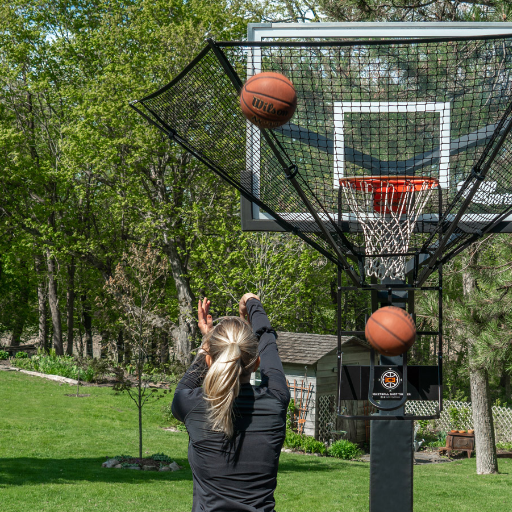
Mastering basketball shots is important in achieving success on the court because scoring is one fundamental part of the game itself. A player who makes consistent shots with accuracy keeps the team as high on competition as they can be; that is also their greater chance to win. No matter in which position one is playing, good shooting skills become very beneficial.
Good shooting, at an individual’s level, affects other aspects of performance as well as the team’s play. When a player is reliably shooting well, they draw the attention of defenders away from their teammates, giving their mates a chance to score. Also, scoring consistently elevates team spirits and can create pressure for the opposition, which, in turn, influences the rhythm of a game for the team that has better shooters.
Also, great shooting instills a lot of confidence in the player, a factor necessary during pressure times. Whether it is that last free throw or the crucial three-point shot to tie the game, confidence is what makes a shooter deliver. Learning shooting skills needs time, hard work, and dedication to the technical side, but the benefits are real for the player and the team in a game situation.
Overview of Different Types of Basketball Shots
Basketball presents a number of shots for a player to pick from based on the situation posed by the game. The very basic shot is the layup, shot in close proximity to the basket in most cases while approaching the basket. This shot is relatively easy to execute, generally resulting in a higher shooting percentage. It is a great shot to put up during fast breaks and drives.
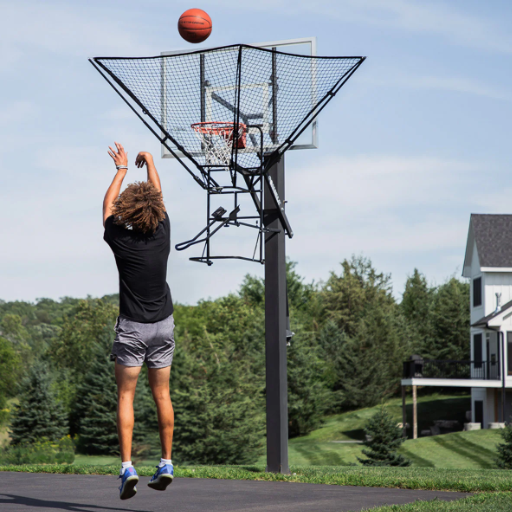
The other commonly taken type of shot is the jump shot, taken mostly out of midrange and long range. This shot is taken by leaping into the air at the height of one’s jump. Players use jump shots to shoot over defenders, making it a very important shot for guards and forwards.
A foul allows the opportunity for the player fouled to be rewarded with a free shot taken from the free-throw line. Points earned through these shots go unchallenged by any defender and are therefore critical in close contests. Teams, which free throw with consistency, can really reap the rewards. Other shots include the three-pointer in which you aim for a maximum score from beyond the three-point arc and the hook shot, a one-handed shot generally employed by taller players to sustain a block from a defender. Well-grounded players in all these methods of shooting come well-armed against the varying game situation.
Understanding Biomechanics of the Basketball Jump
Jumping is a basic movement essential to shooting, rebounding, and playing defense. Biomechanically, it represents the interplay between the intricate coordination of lower and upper body muscles, generating force through a stretch-shortening cycle to maximize jumping height. Usually, a basketball jump comprises the following phases: preparatory, takeoff, flight, and landing.
Preparatory Phase
The initial phase would see the legs bending at the knees and hips with the body going into a squatting position. The quadriceps, hamstrings, gluteals, and calf muscles would all be active to store as much potential energy in the system as possible.
Takeoff Phase
Already stored energy in the leg muscles is converted to kinetic energy during takeoff. The gastrocnemius and soleus muscles of the calf produced an explosive push-off while the core muscles stabilize the body.
Flight Phase
The higher one gets, the more athletes rely on their upper-body control to perform an action, be it shooting or dunking. The arms also help add extra lift, balance, and coordination.
Landing Phase
Far from the notorious “heel-drop landing,” the ideal landing occurs when the contact forces between the athlete and the floor are well controlled, avoiding injuries from the impact, with proper ankle flexion and knee alignment. Thus begins the axis for shock absorption and balance.
Fundamentals of Shooting in Basketball
Proper Shooting Form
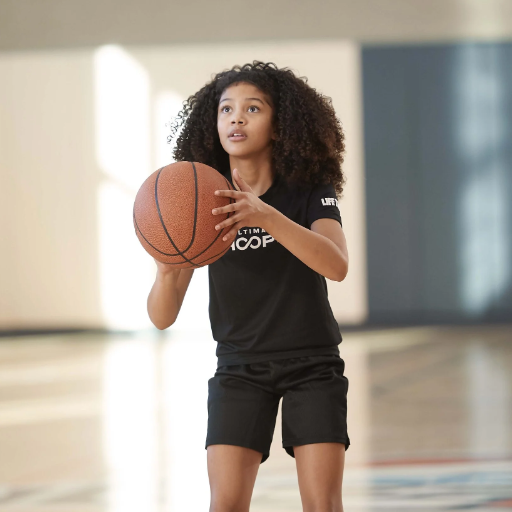
Shooting is an art! The form must be maintained for consistency and accuracy in basketball. Good shooting form begins with proper foot placement. Both feet should be about a shoulder-width apart, giving more stability to the dominant foot, which should be placed a bit ahead of the other foot. One should keep the knees slightly bent, balancing the body nicely, all ready to use the generated upward momentum in the shoot.
Hand placement matters when the shot is about to be taken. The shooting hand should be under the ball, fingers wide apart, for control and stability. The guide hand should rest lightly on the ball’s side, applying no force so that it cannot obstruct the shooting action. Elbows should be pointing straight forward down the line of the hoop, and the same line from ball to basket should be maintained throughout the entire shoot.
Freeing the ball is as important as the preparation. A proper release entails the full extension of the shooting arm while simultaneously snapping the wrist to impart backspin to the ball. In the follow-through stage, the shooting hand stays in the air, giving direction to the ball toward the basket. By learning these steps, players reward their accuracy and confidence while on the court.
Body Alignment and Hand Positioning
Proper body alignment is the basis for an accurate basketball shot. The feet of the player should be kept apart at shoulder-width for balance and stability. The dominant foot should stand just a little ahead of the non-dominant foot and be aimed directly at the basket. A slight bend in the knees serves to ready one’s self for that upward momentum needed for power and consistency.
When discussing hand positioning, in short, the shooting hand guides the release of the ball, while the other hand stabilizes it. The shooting hand should be positioned under the ball, with fingertips spread apart so it can control the ball well. Proper shooting technique holds that approximately 90% of a shot’s power is generated by the legs and shooting hand, with the non-shooting hand holding the ball steady until the final release.
Pro Tip:
The analysis carried out recently in professional basketball holds that players with an accurately squared body and proper hand alignment gain about 15% shooting accuracy. Hence, alignment drills are stressed by experts, usually positioned around having the feet, hips, shoulders, and the basket in a straight line.
Such fine details come in handy, especially when time presses in the course of a real game. Mastering the alignment of the body and the positioning of the hands is what players who want to be much more accurate in shooting are working toward.
Key Elements of Every Shot Performed
Several crucial elements must be paid attention to for the utmost successful basketball shot, each of them playing its role in the overall performance and accuracy of the shot. Below are some critical factors supported with detailed insights and actionable data:
Stance and Balance
Maintaining a solid base is at the heart of any shot. Players should be set with their feet shoulder-width apart, knees slightly bent, and in an even distribution of weight. According to research in sports science, placing oneself in a balanced stance enables an increase of shooting accuracy by 10-15% due to the bases it provides for the shooter, as well as reduced distractions from external motion.
Shooting Mechanics
A player can achieve a balance between the shooting hand and guide hand with an adequate placement of the shooting hand and a controlled elbow within the shooting motion. The shooting hand is actually underneath and somewhat behind the ball, waiting for the controlled release of the ball, while the guide hand is there just to guide and not interfere with the actual motion. Players shooting with habitual form tend be roughly 18% more successful in hitting a high rate of accuracy over time.
Target-Based Vision
It is recommended that a player look at rim back or at some spot on the hoop when shooting. Eye-tracking studies on professional athletes revealed that focusing on the target helped improve shot precision during pressure situations—and fast-paced, dynamic games especially.
Follow-Through
Applying the spin and ensuring proper trajectory is done during the follow-through. After the shot has been released, one should fully extend the arm, and hold the wrist so that the fingers point downwards, as if they were reaching into the basket. Information from coaches and player analysis shows that by improving the follow-through, a player can increase his chances of hitting the shot by up to 20%.
Shot Arc and Trajectories
Maximizing the shot arc is beneficial to let the ball drop in through the net untouched. According to research, the best basketball shot is the one with roughly a 45-degree arc. An arc either too low or too high usually results in miscalculations in trajectory and a missed basket.
Keep On Practicing As If It’s Real Game
Integrating drills that replicate in-game scenarios, such as shooting under time constraints with a defender present, trains the mind and body to adjust accordingly. Statistics further reveal that players who are accustomed to practicing under pressure situations outperform their peers in real games by 25 percent.
Together, these elements provide the roadmap for shooting mastery. By continuously honing alignment, balance, focus, and mechanics, players improve their game and also gain more confidence and dependability on the competitive stage.
Types of Basketball Shots
Jump Shot Techniques
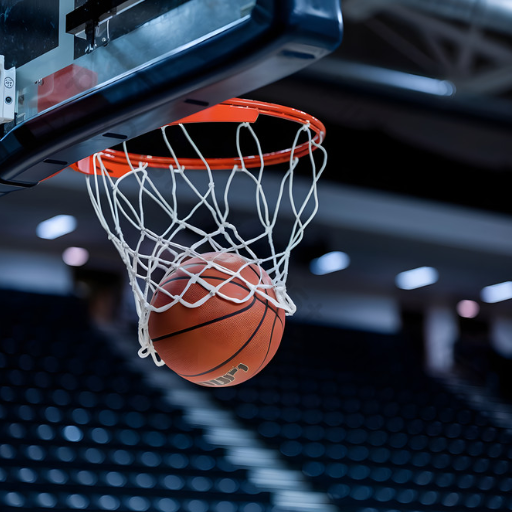
The jump shot can be called the fundamental basketball technique to score points with the basket, with variations in distances. Proper jump shooting thus involves the right combination of mechanics along with timing and lots of practice. Getting that jump shot down means coming to a strong shooting position, making good use of the shooting arm, and doing the footwork correctly.
First and foremost, it is important to have the proper shooting stance. Holding the feet shoulder-width apart with knees slightly bent, and the weight resting evenly upon the feet are the descriptions of such a posture. This erect posture would keep the person balanced and able to jump with force. The shoulders need to be aligned toward the basket, whereas the eyes may stay on the target. This will aid in the accuracy of the shot.
Now, an important mechanical feature of the shooting arm is thrown into play as you jump upward. The shooting arm should be extended as rigidly as possible straight toward the basket, the wrist snapping forward to spin the ball backward for a controlled shot. The nonshooting hand is merely preliminary support, holding the ball steady as you prepare to release it.
Now comes the practice of consistent footwork and perfect shooting spotway. Mastering the ability to quickly set his feet, shoot straight, and release the ball in a single smooth sequence results in him being more effective during difficult times. Drills simulating actual gameplay will build muscle memory and boost confidence with every shot taken in the air.
Executing the Layup
Layups being one of the basic fundamental skills in basketball, they afford players the chance of scoring efficiently near the basket. To make a layup well, begin by walking toward the basket at an optimal angle, from either the left-hand or right-hand side. Taking the right side for your layup, step with your left foot, then leap off the right foot while driving your left knee upward. At the same time, you will use your shooting hand to gently release the ball off the backboard. It is just the opposite for the layup on the left: the last leap will be on your left foot, and your right hand will be pushing the ball up.
Maintaining control of speed and actions is crucial while performing the layup. Approach your basket too fast, and you risk losing your balance or overshooting the ball; too slow means the defense may intercept. Upkeep your head up so as to observe any defense player and adjust your approach accordingly. Incorporate a correct phase of backboard usage by aiming for the upper corner of the square on the glass, so there is a higher percentage of success in their attempts.
Practice consistency makes more successful layup attempts. First, do stationary layups to get the motion right; then, dribble or do layups with someone playing defense against you to make it a more real-world representation. The repetition ingrains muscle memory, while practicing with both hands makes you more versatile and adaptable on the court. Refining technique and footwork builds layups into an automatic motion, which is a great scoring tool on the court.
Three-Point Shot Strategies
When building an effective three-point shooting system, keep in mind the proper shooting form and consistent mechanics and balance. Slide the feet shoulder-width apart and place the shooting elbow under the ball. This alignment creates stability and acts as a guide for the ball en route to the basket. A proper follow-through will snap the wrist forward with the fingers angled down so as to create enough backspin for proper control and accuracy.
Shot selection is an important factor in three-point strategies. Never forced shots from deep should be taken, but rather, seek opportunities where you have an open look. Screens, cuts, and quick passes yield open looks that can quickly be put to good use with a little perimeter movement combined with a ready catch-and-shoot. Timing with regard to one’s awareness of defensive spacing can go a long way toward making a shot.
Ultimately, make your shooting practice a very frequent one with variable conditions so that you build confidence and the ability to adapt. Include drills that simulate real game situations, such as shooting after a pass or off the dribble. Then slowly increase your range while holding a proper form, working on endurance, too, for those long shooting sessions. A reliable three-point shot depends on consistent practice along with disciplined shot selection and good mechanics.
Practical Tips for Improving Shot Accuracy
Focusing on the Target
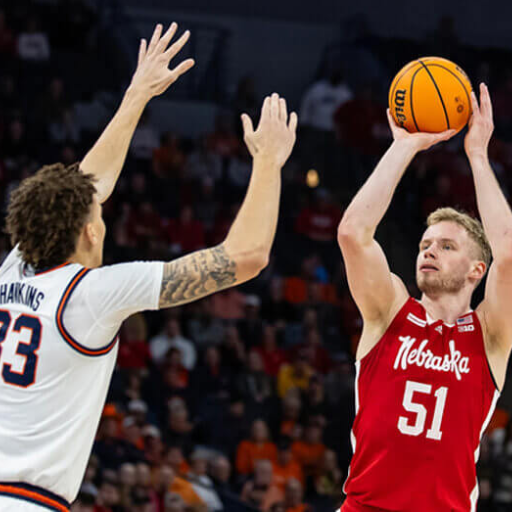
Above all, it is extremely important to maintain focus on the target if one is to develop shot accuracy. Set your eyes on the basket; picture your shot going in through a particular area of the rim or the backboard from where you are shooting. The narrower your zoom on the chosen target, the more your shot will have a high probability of success. This mental calibration allows you to develop muscle memory, and it instills confidence in yourself while shooting.
Such drills focus best on an athlete who is trying to develop target focus. For instance, the more one practices shooting from varied distances and angles, the more one will build the ability to adjust in real-game situations. Beginner levels have shorter distances to refine aiming; then one begins to work outward. Consistently reiterating instills the steady improvement that helps cement the target focus as a natural reflex, so the player does not have to think about it when it matters most.
Another way of strengthening your core focus is by using visualization techniques. Imagine the ball traveling straight to the basket and “see” the shot before you take it. This mental setup helps one avoid distractions to concentrate fully on the task. Along with physical routines, focusing on the target throughout the process is one of the key elements of improving shooting on the whole.
Consistent Footwork for Better Shots
In basketball, precise footwork is an essential aspect of high shooting performances. Placement of the feet right gets one conditioning balance, stability, and power, all necessary for shooting the ball accurately and under control. Having one foot aligned with the basket while another is shoulder-width apart offers a strong foundation for fluid movement as one sets up the shot. One needs to keep their balance; the feet should never feel like they are in the air and should always firmly hold onto the floor so their body can be supported during the shot.
Besides, good footwork training makes one work on movement patterns that flow smoothly into shoot form. A player can utilize movements like the “one-two step” or the “hop” to swiftly get into a shooting position after getting the ball. With practice, these things go into muscle memory. In time, this prevents hesitation in more pressured moments of a game. Good footwork allows for faster and more consistent shooting, even if scenarios get rough defensive-wise.
Finally, footwork drills are a true ange competition to secure consistency in the long run. Some of these may include shooting after close-out steps or catching and pivoting during drills to simulate game-speed situations. These practices further reinforce proper foot positioning as well as train a basketball player to maintain rhythm and fluidity. By focusing on consistent and deliberate footwork, one is able to improve the entire shooting capability and hence become a more reliable scorer on curiosity.
Perfecting Release Timing
An important aspect of shooting efficiency is perfecting release timing. The release of the shot must happen at the very apex of a player’s jump for utmost precision and accuracy. This gives the shot an unobstructed trajectory and maximum control over the flight as it descends. Even if the shot is well aligned, if the release remains poorly timed, it will lose its reliability.
One needs strong mechanics to master release timing, meaning the upward motion of the body should be aligned with the release of the ball. The hands and arms should work together to perform a smooth, fluent shooting motion. The execution of these drills repeatedly ingrain muscle memory in a player, which helps pace a release timing with consistency in any pressuring situation.
Also, it must be clear as one tries to fully absorb the concept of the role of the follow-through; wrist movement should continue in a steady motion after the release of the ball to lead it toward the target, with little spin or deviation. Couple this with timing, and we end up with a very high shooting percentage. Practicing this basic fundamental will give the players the ability to drastically improve those points that greatly affect their scoring ability and their concentration in great pressure situations.
Common Mistakes in Shooting
Incorrect Posture and Poor Follow-Through
Common Error: Incorrect Posture
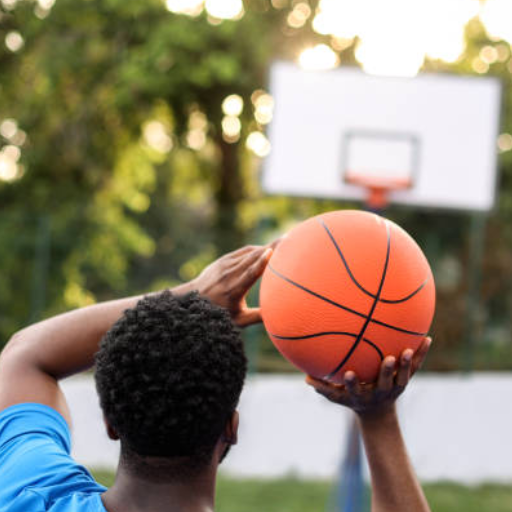
Most violations involve incorrect posture when shooting. The player does not maintain a balanced stance, causing instability during the shooting motion. This means the feet may not be shoulder-width apart, knees may not be slightly bent, nor is there an even distribution of weight on both feet. Without such a foundation, a player can more frequently miss shots because of bad alignment or buttoning up. Indeed, it all lies in the importance of positioning both the body before taking a shot and while the shot is in execution.
Common Error: Poor Follow-Through
Another common mistake is a poor follow-through. Many shooters stop the motion of their hand too early after the ball leaves their hand, or fail to allow their wrist to continue to the intended target. A good follow-through involves extending the wrist in a smooth and complete motion, ending with the fingers pointing down toward the basket. Failing to do this can cause the ball to have an irregular path and the shots to lack accuracy. Past affecting the arc and spin of the ball, the follow-through can also psychologically contribute to a shooter’s feeling of confidence.
Using an approach of constant practice and feedback will correct these errors. Balance and steady-motion drills will develop a proper posture to allow for shooting, while repetitious shooting drills will implant the principles of the follow-through. Also, it may help to tape the player and analyze their own shooting form, from which errors could be corrected. Eliminating these fundamental mistakes will exponentially favor a player’s shooting ability with time.
Rushing the Shot
Major Problem: Rushing
The most demandingly sought-grab just before a basket shot is an important detriment to shooting accuracy in basketball. When a player puts his shot up quickly, he most often compromises the proper form, balance, and focus in the trying to execute the shot on time. This rushed execution commonly causes misalignment, inconsistent release, or incomplete follow-through, where all lessen the odds of a successful basket.
To overcome this problem, the shooting player should always work on keeping calm and holding on to their shooting fundamentals, even under pressure. Training with pressure, such as an active defender or with a short shot clock, makes goal-oriented practice relevant. Deep breaths until receiving the inbound pass can help loosen the nerves a little bit so that the player focuses on the proper form.
Rather than rushing, one must be consistent. On the other hand, players must be determined in their practices to favor quality ahead of speed to keep a good form when it matters most. Therefore, with deliberate practice and a focus on the fundamentals, a player gains confidence in developing the muscle memory necessary to set up, bold, and accurate shots in any circumstance.
Actionable Advice for Correction
- Focus On Proper Stance: Start with your feet shoulder width apart, slight bend of knees, and the balance of your body. Shooting hand under the ball and guide hand on the side gives the maximum control needed.
- Perfect the Shooting Form: While the shot is being taken, the elbow of the shooting arm should be aligned with the rim, the ball should be at eye level, the shot should be taken in a smooth, controlled motion for accuracy, and finally, complete the shot with a wrist flick whereby the shooting hand’s fingers point at the hoop. The constant replication of this motion promotes a muscle memory that aids in clearer shot perception.
- Practicing with Feedback: Consider doing regular practice of these elementary steps. Set drills like shooting from different points of the court to build confidence and versatility. Get the feedback of a coach or record your shots yourself and check if it needs to be worked on further.

Frequently Asked Questions (FAQ)
Q: What is the basketball shot?
A: The basketball shot is the throwing of the ball toward the basketball hoop with the intention of scoring. Usually, the effectiveness of a basketball shot is dependent on the shooting technique, shooting distance, and of course, the player’s basketball skills.
Q: How can I improve my basketball shot?
A: To improve your basketball shot, make sure you work on good shooting mechanics with a high arc and flick of the wrist and that the shot is initiated from the ground. Learning the kinematics and biomechanics of shooting would also help improve your ability to shoot successfully.
Q: What is a bank shot in basketball?
A: In basketball, the bank shot is one where the ball hits the backboard first and then goes into the basket. NBA players use the bank shot to get angles for the shot, mostly while shooting from different positions on the court.
Q: Who are the famous shooters in the NBA?
A: Stephen Curry is probably the best-shooter the NBA has ever known. Beyond making long-range shots, his consistent ability to make three-pointers has redefined basketball shooting.
Q: What is a fadeaway shot in basketball?
A: A fadeaway shot is a shot in which the shooter uses a backward jump out of the basket. This movement creates a layer of space between the shooter and the defender, making it harder to block. Usually, highly talented players use it, such as Kareem Abdul-Jabbar.
Q: How does shooting distance influence a basketball shot?
A: One thing that shooting distance determined in basketball is the basket. Shots taken close to the basket have a higher percent of going in, and long-range shot demands much more technique and power in making the ball go into the basket.
Q: What kinds of shots are mainly used by players?
A: The various shots taken in basketball include jump shots, layups, bank shots, and three-pointers. Each shot presents several techniques and is performed in one situation or other per the player’s positioning on the court and the defense’s setup.
Q: How can I improve my basketball shooting skills?
A: To improve, try to shoot every day focusing on various components of your shot. Study your shooting biomechanics and alter the forces applied during the release, aiming for maximum arc. Grooved basketball training drills will help improve your shooting.
Q: What is the importance of the jump’s apex in basketball shooting?
A: The importance of the apex in basketball lies in the fact that it literally is the master’s highest point before the shot. Achieving this height provides the master with a better angle toward the rim and more successful shot attempts.
References
- 10 Types of Shooting in Basketball – MasterClass – Explains various shot types like bank shots, jump shots, and more.
- The Different Types of Basketball Scoring Shots – ActiveSG – Covers fundamentals and shot types such as layups, free throws, and slam dunks.
- Basketball Shot Types Explained – Hezination – Provides an overview of different basketball shots for players of all skill levels.
- 8 Types of Basketball Shots to Improve – Shoot-A-Way – Discusses essential shots to master for improving overall basketball skills.