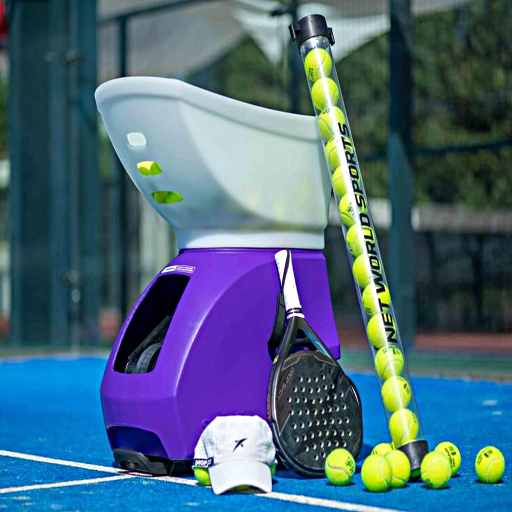
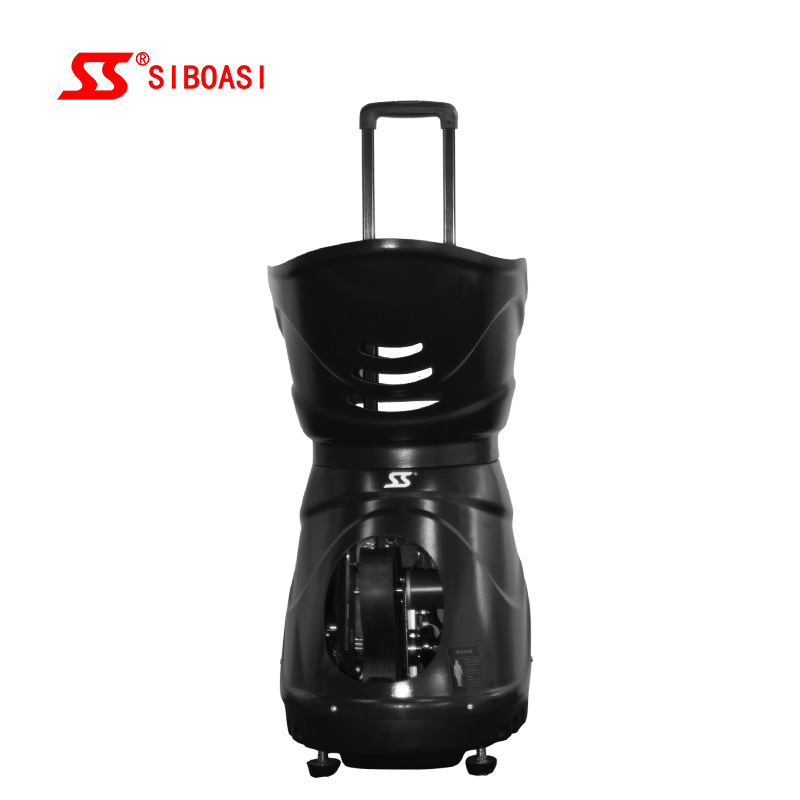
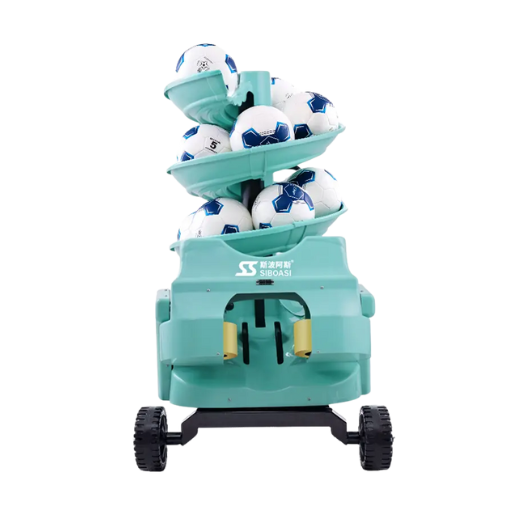
A major aspect of training in the sport of tennis lies in practice. Yet once a player has learned to hit a powerful serve, master the volley under pressure, or work his feet, practice then involves hundreds of variations of gameplay. A tennis ball machine fills these very needs by teaching players of all skill levels to work independently. This piece takes a research-oriented look into tennis ball machines while reviewing some of the best ball launcher options available today. From the high-tech advanced ball launchers to those inexpensive ball machines for beginners, we will help you out with the top choices working for various ratings, price points, and training needs.
Introduction to Tennis Ball Machines
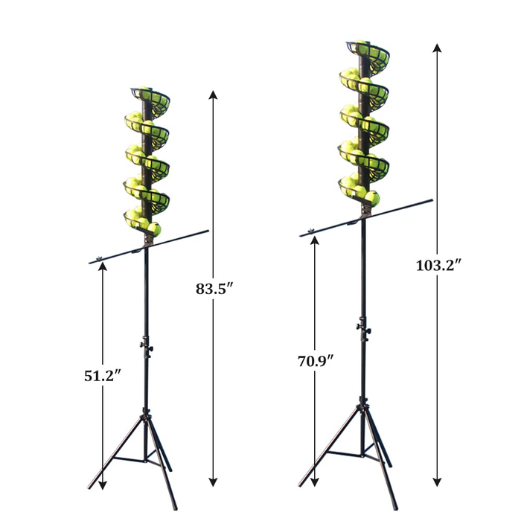
Tennis ball machines are technologically advanced training tools engineered for skill development of players by feeding consistent and repeatable shots. These machines are conducive to practicing volleying, groundstrokes, lobbing, or even serve returns, all without the need of setting up a partner for the exercises. Most of these are adjustable to customize speed, spin, and trajectory to fit the training needs of the user. Beginners will increase in confidence, and advanced players will sharpen techniques with this great tool for enhancing performance in the most efficient and effective manner.
What is a Tennis Ball Machine?
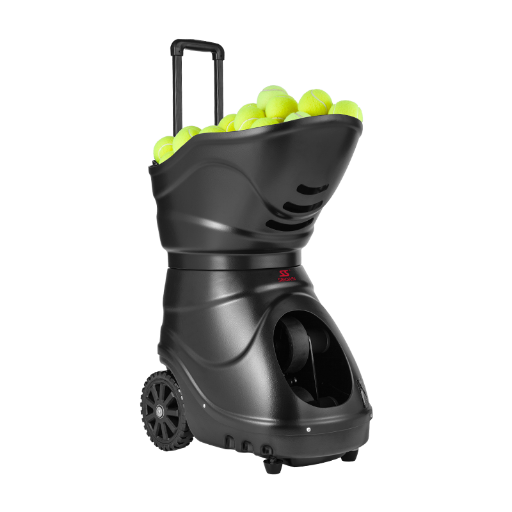
The tennis ball machine is an equipment that helps players of all levels improve their games by simulating real-time playing conditions with precision-engineered mechanics. Usually, machines pass tennis balls at various speeds, spins, and trajectories through motorized wheels or air-pressure systems. Now, most of these machines run on electrical energy or rechargeable batteries, thus allowing for use in all sorts of locations, from local courts to the personal backyard.
High-tech functions are incorporated in the more advanced models, such as programmable drills and remote control operation as well as oscillation to simulate certain hard-to-anticipate game situations. For example, some machines can pitch balls between 10 and 90 miles per hour with adjustable topspin and backspin for different kinds of drills. On top of that, portable versions starting at a mere 30 pounds exist for easier hauling and storage for recreational players. Huge ball hoppers that hold up to 300 balls encourage long training sessions without any disruptions.
These machines can be utilized by beginners practicing the basics at a fixed speed and coaches isolating specific strokes to enhance their students’ performance. Thanks to the advances in technology and ergonomics, tennis ball machines have turned into valuable pieces of equipment that provide an amalgamation of easy usage and state-of-the-art features toward improving on-court skills.
History and Evolution of Ball Launchers
Tracing the history of ball launchers takes us to the mid-1900s, when the first-ever tennis ball machines were developed, mainly for professional and instructional purposes. Early types were quite simple and somewhat mechanical in nature, shooting balls in steadied speed and angles. Revolutionary in training, the machines gave players the opportunity to practice, sharpen their skills, and perfect techniques without requiring another person.
Over the years, technology had a hand in major developments in the design and working of ball launchers. By the 1980s, machines able to be programmed to settings such as spin, speed, trajectory, and oscillation came on the scene. In other words, there was a fix on a simple monotonous act to a dynamic training aid to get one into the actual game setting.
This brings us into a world where the very best in ball launchers are now equipped with smart tech, wireless control, and app integration. Today’s machines can store probably all shot data ever created on this planet or accurately simulate all the shot spins- top spin or slice or flat-with ball intervals to suit a particular level of skill. Statistics prove that the preference for such devices by players at various stages is growing; consumer demand for tennis ball machines has thus maintained an average annual growth rate of about 6 percent over the last few years.
Some models feature environmental consciousness with rechargeable batteries and energy-efficient components. Whether for fun, competition, or coaching, ball launchers have remained useful tools in the enhancements of tennis, blending convenience with precision and innovation.
Benefits of Using a Tennis Ball Feeder Machine
Tennis ball feeding machines are multipurpose machines that serve a range of purposes, for beginner-level players working on basics as well as seasoned players sharpening intermediate skills. One of the key benefits is the constancy of ball delivery, wherein a player can carry out practices for particular strokes and try on accuracy in a manner that a variable human opponent cannot provide. That consistency is important to developing muscle memory, which is great for almost any sports skill acquisition.
Present-day tennis feeders boast modern features with adjustable control settings for speed, trajectory, and spin. Such programmable options can truly create highly customized practices for the user, allowing real-game simulation or targeting specific problems. For instance, a Lobster Elite or Spinshot model can send a ball anywhere from 20 mph to 80 mph, suitable for beginners or rigorous speed drills for advanced players.
The machines save lots of valuable time and energy during a training session. By not chasing after the ball in the court, players focus on practicing all the time, thus enhancing the quality of every training session. Coaches may also incorporate these devices into drill-based sessions where players repetitively practice specific shots, such as volleys or lobs, without any distraction.
For leisure players, such a device allows them to practice whenever they want without having to find a partner. With its ever-increasing number of compact, portable designs, it becomes increasingly easier for players to carry a ball machine to various sites. There is already evidence of rising usage of ball machines in tennis clubs and training centers worldwide, and the market is expected to grow at a CAGR of about 4% over the next five years, mainly stimulated by innovations such as app-controlled programming and lightweight models.
In essence, the utmost-efficient ball feeder machine is at any time consistent while versatile, syntheses that are enticing to any serious player or coach. As the design of these tools continues to evolve positively through technology, these devices have built the future of tennis training, where every single athlete can certainly work on their skills with precise efficiency.
Features of Tennis Ball Machines
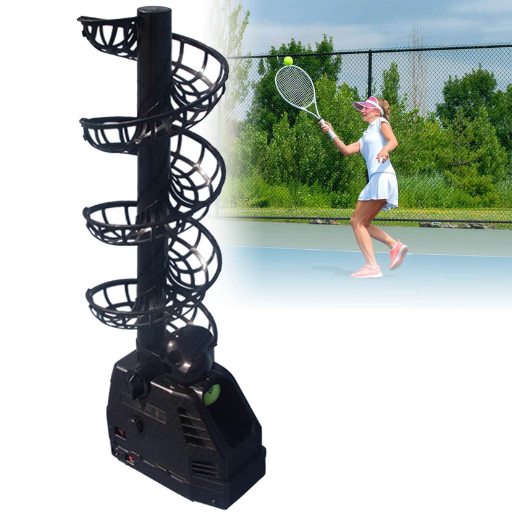
- Adjustable Ball Speed and Spin
These machines allow users to customize ball speed and spin, catering to various skill levels and training needs.
- Programmable Shot Patterns
Advanced models offer pre-set or customizable shot drills, simulating real-game scenarios to enhance practice sessions.
- Oscillation Settings
Horizontal and vertical oscillation features replicate realistic court coverage, challenging players to improve their footwork and reaction time.
- Ball Capacity
Most machines can hold a large number of tennis balls, ensuring continuous practice without frequent interruptions for reloading.
- Portability and Compact Design
Lightweight and foldable designs make these machines easy to transport and store, ideal for use in multiple locations.
- Remote Control and App Integration
Many modern devices include remote controls or app functionality, allowing users to adjust settings conveniently during practice.
- Power Source Options
Machines often operate on battery power, AC power, or a combination of both, offering flexibility for indoor or outdoor use.
These features make tennis ball machines a vital tool for players seeking structured and efficient training sessions.
Types of Tennis Ball Launchers
Types of tennis ball launchers include portable, programmable, and advanced models with features like spin and speed control.
| Type | Feature | Speed | Spin | Portability |
|---|---|---|---|---|
|
Portable |
Lightweight |
Moderate |
Basic |
High |
|
Programmable |
Custom settings |
Adjustable |
Advanced |
Moderate |
|
Advanced |
High-tech features |
High |
Precise |
Low |
|
Basic |
Simple design |
Low |
None |
High |
|
Spin-focused |
Spin control |
Moderate |
High |
Moderate |
Portable vs. Stationary Models
Portable models are lightweight and battery-powered for mobility, while stationary models are larger, offering advanced features but limited portability.
| Type | Feature | Power | Mobility | Cost |
|---|---|---|---|---|
|
Portable |
Lightweight |
Battery |
High |
Moderate |
|
Stationary |
Advanced settings |
Plug-in |
Low |
High |
|
Hybrid |
Versatile |
Both |
Moderate |
High |
Key Features: Speed, Spin, and Oscillation
The tennis ball machines are designed to simulate realistic scenarios during training, providing customizability concerning speed, spin, and oscillation. These characteristics enable the players to practice in a very effective manner and also develop a more strategic approach to honing their skills.
1. Speed Adjustability
New machines throw the ball at almost any velocity imaginable. They start from a very low speed, say 10 mph, which is considered excellent for beginners or for light warm-up drills, and then are capable of reaching speeds up to 80 mph and beyond, which is what an advanced player would like for fast-paced rally practice. This great speed variety enables all-level players to adjust their training intensities depending on their preference. For instance, these advanced machines often allow for customization of the interval between consecutive shots so users can do fast-paced rallies from the baseline or slower volley drills.
2. Spin Variations
Spin is among the elements that make modern tennis speed machines. Hence, a very good tennis ball machine may be able to put on the spin it is being taught to put onto the balls. These top machines differ in their operational principle, some are based on spinning wheels, while others use air pressure to simulate projectile trajectories and ball rotations. Some machines allow adjustments in the spin rate with great precision, enabling players to simulate anything from heavy topspin used for offensive baseline play to slices in defense or tactical use.
3. Dynamic Movement via Oscillation
One dynamic feature of oscillation in tennis ball machines is the staggered shooting. Gliding oscillation trains inadequate lateral court coverage, whereby the integration of vertical oscillation adds deep variations so that players react either to a very high-depth shot or a very low-depth one almost immediately. Thanks to the advanced level of technology, oscillation patterns can now be programmed by the players, simulating specific point situations, for example, corner-to-corner drills or volleys to baseline shots.
Put together, those 3 key features offer tennis ball machines that allow players to focus on specific areas in an entertaining fashion, making it an essential tool for the professional seeking to enhance their game performance.
Popular Tennis Ball Machine Models
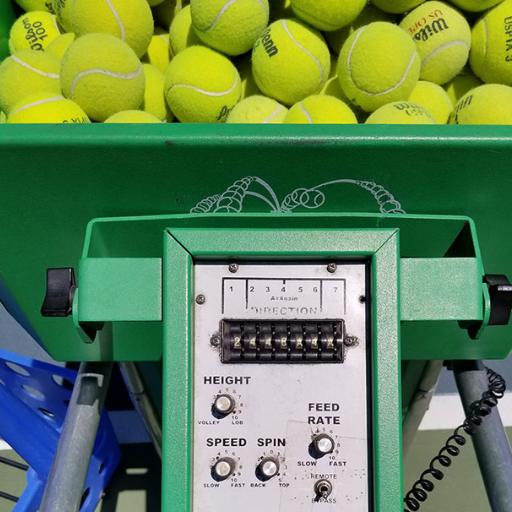
Popular tennis ball machine models include Spinfire Pro 2, Lobster Elite 2, and Tennis Tutor ProLite, known for their portability and advanced features.
| Model | Feature | Speed | Spin | Portability |
|---|---|---|---|---|
|
Spinfire Pro 2 |
Advanced settings |
High |
Precise |
Moderate |
|
Lobster Elite 2 |
Portable design |
Adjustable |
High |
High |
|
Tennis Tutor Pro |
Lightweight |
Moderate |
Basic |
High |
|
Baseliner Slam |
Beginner-friendly |
Low |
None |
High |
|
Nisplay Portable |
Dual motor |
High |
Top/backspin |
Moderate |
Playmate: Overview and Features
Playmate tennis ball machines are recognized for being highly durable, very accurate, and very modern technologically, so they are naturally the first choice among players and coaches. Built in the United States and with an aluminum frame design for long-lasting strength to withstand rigorous use over time, they live up to their reputation.
Another interesting feature is the interface-design that can be used by players to develop drills according to skill level, shot type, and intensity. For example, the Playmate iGENIE is geared towards beginners and recreational players with a very simple preset for lobs, volleys, and groundstrokes. The Playmate GRAND SLAM, on the other hand, is preferred by advanced players and professionals since it can throw balls that simulate hard match-style rallies and incorporates real-time shot adaptations.
With capacities often topping out at 300 balls, the higher-end models provide substantially less downtime to refill, a big plus for efficient training. And modern features such as two-line operation, random oscillation, and variable spin control give that little bit extra to allow a player to really work on something precise, from topspin to their backhand slice.
Playmate’s tradition has been one of advancement and compatibility. Offering integration options with a mobile app where users can control settings remotely, create customized drills, and track progress over time, along with a rechargeable, low-maintenance battery system, these Playmate tennis ball machines provide the best convenience-performance balance, making them a training partner almost every player should consider.
Silent Partner: Review and Performance
Silent Partner tennis ball machines are well known as reliable, precise, and affordable options, making an excellent choice for tennis buffs and professional players alike. Designed with user-friendly features, the tennis machines are intended for a broad spectrum of players-from beginners who want consistency to pros sharpening their own skills.
Value for money is one aspect where Silent Partner machines shine. Models such as the Silent Partner Edge Lite and Silent Partner Quest feature high-end capabilities such as configurable spin, oscillation, and shot programs, usually at prices that compete well with other brands of this caliber. Silent Partner machines are also sturdily manufactured, never wobbly in use for an hour or two; likewise, they are lightweight and easy to carry down to the court.
Another noteworthy aspect emphasized in design is shot variation and customization. Able to produce shots that range from light volleys of 10 mph to thunderous baseline returns of 95 mph, the machines cover all possible training scenarios on the court. Alternatively, and depending on the model, players may program topspin, backspin, and random oscillation to mimic actual match conditions.
Battery-wise, the Silent Partner machines shine as well. Charging is quick insofar as players have 5 hours of continuous gameplay on many models from a give-and-take basis. On top of that, plug-and-play using AC could keep the playing time uninterrupted.
Silent Partner machines are contextually designed to be affordable but full of technical features and specifications that allow players to develop their skills without breaking their piggy banks. Users describe the machines as being good-quality, easy to use, and perfect in improving one’s game.
Lobster: Comparison and Key Specs
Every tennis lover would have raved about Lobster tennis ball machines for their ingenious technology, intuitive design, and flexibility. The big selling point consists of being able to customize the shot with various speeds, spins, and heights, which will simulate working conditions for every skill level. Most models provide speed from 20 to 80 mph to suit the skill level of both beginners and experienced players.
Another nifty aspect of Lobsters is oscillation. Random horizontal, vertical, and full-court oscillation make sure you stay on your feet and responsive to practice. The elite line of products such as the Lobster Elite Three also offers triple oscillation, which is actually a combination of horizontal and vertical oscillation for further diversity of play.
Another very strong point is battery life, wherein many Lobster machines can offer 4 to 8 hours of usefulness on a single charging, making the machine ideal for long training sessions. For added convenience, some models support remote control through compatible devices, and an optional smartphone app can be used to change settings for spin, feed rate, and oscillation during practice.
Possible to transport from one place to another, the machines weigh 35 to 44 pounds, which is classified as a lightweight sit-and-go model; most have big wheels designed for easy transportation over different surfaces. Built for being durable, the best materials are used to give long performance reliability, even after years of use. And beside that, these are very flexible machines, with many options that allow plugging into the wall or running on external battery packs.
Lobster machines with their advanced features and sturdy build are a premium-quality solution for anybody looking to improve training sessions, either competitive players instigating hard drills or recreational ones working on skills. This, again, is an excellent investment for anyone trying to raise their playing ability by owning such high-grade equipment.
Choosing the Right Tennis Ball Machine
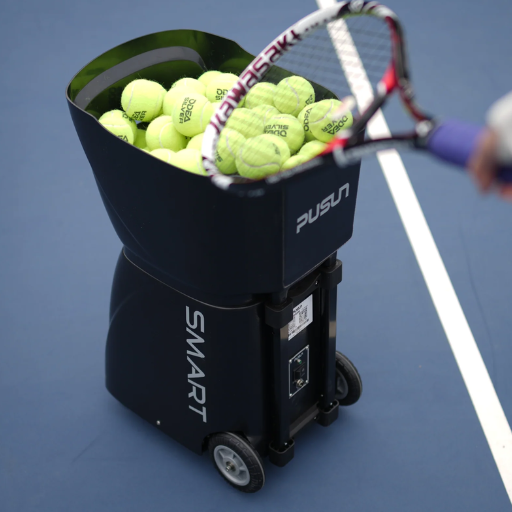
A tennis ball machine needs to be chosen with reference to your needs and skill level. Begin with ball capacity of the machine, oscillation settings, and speed range—that is pretty much the training intensity where it can fit in. Portability is a major concern too; lightweight or wheeled designs are good options. Then, consider the power source: battery-operated ones are the best option for outdoor use, whereas the plug-in ones are geared towards continuous operation. Lastly, ensure the ease of use and durability are in place and can fit your budget and training requirements.
Assessing Your Skill Level and Goals
In terms of tennis training, knowing your skill level and having specific goals goes a long way in ensuring optimal training. Beginner players generally concern themselves with fundamental techniques concerning get-up, stance, or ball control, while intermediate players improve on consistency, ball placement, and spin. Finally, advanced categories take a more significant approach concerning precision, speed, and strategic gameplay.
Assessing skill levels requires observation of proficiency levels for key shots: forehand, backhands, volleys, and serves. According to data from tennis professionals, rallies in the beginner category usually last about 3-5 shots, intermediates maintain about 6-10 shots, and advanced groups take nursery rhymes beyond 10 with ease.
Goals must be specific, measurable, and time-bound with varying examples for different skill categories. A beginner might set a goal of getting 70% serves in the box within three months, whereas an advanced player could target a 15% increase in match win ratio at the end of competitive season. Modern trends in sports performance clearly emphasize that cross-training and indicative drills accelerate the process.
Learning the proper alignment of skill levels to goals enables productive practice sessions and visible improvements in one’s tennis skills.
Key Accessories and Add-ons
To maximize the effectiveness of your tennis ball machine, investing in essential accessories and add-ons can significantly enhance your training experience. Below are some popular accessories, along with the benefits they provide and relevant details to help you make the right choices.
- External Battery Packs
Many tennis ball machines are portable, and an external battery pack ensures you can train longer without interruptions. High-capacity packs typically offer additional hours of operation, with some extending usage time up to 8 hours depending on the machine model. Look for lightweight and durable options for easy transportation.
- Remote Controls
A remote control allows you to adjust speed, spin, and trajectory settings from afar, providing convenience during solo sessions. Some advanced models now come with smartphone app connectivity, offering more intuitive ways to control your training parameters in real time. These systems provide seamless adjustments and allow for custom drills at the push of a button.
- Ball Hoppers and Feeders
Enhancing your ball machine with a large-capacity hopper allows for extended practice sessions without the need for frequent refilling. Standard hoppers can hold between 100-150 balls, while advanced options may accommodate up to 300 balls, making them ideal for extended drills or group training.
- Spin Control Add-ons
Spin control features are essential for practicing advanced techniques such as topspin or backspin. Upgraded spin wheels or add-ons ensure consistency in spin application, offering players a realistic simulation of match conditions. These add-ons are particularly useful for higher-level players aiming to perfect precision shots.
- Protective Covers
A high-quality protective cover shields your ball machine from dust, moisture, and wear and tear, significantly extending its lifespan. Opt for waterproof and UV-resistant materials, especially if you practice outdoors regularly. A good cover is a small investment that provides long-term value.
- Transport Accessories
Transporting your ball machine becomes easier with carry bags, wheel kits, or trolleys designed to handle different terrains. Sturdy wheels and ergonomic handles are essential for moving the machine between home, car, and court with ease.
- Oscillation Enhancements
Certain machines allow for add-ons that improve oscillation patterns, simulating unpredictable ball placement. This feature is valuable for improving agility and reaction time, as well as practicing real-game scenarios. Advanced models even offer programmable oscillation for tailored training sessions.
By selecting the right accessories, you can ensure your tennis ball machine meets your specific training needs, caters to your skill level, and helps you achieve peak performance.
Remote Control and Battery Options
Modern tennis ball machines are equipped with an abundant range of remote-control and power options, for complete training adaptability and convenience. A majority of machines use radio frequency-type remote systems. Thus, a player can stand near a practice wall and change settings of ball speed, angle of spin, feed rate, and direction of oscillation, rather than having to tend the machine itself all the time. Useful complimentary options include Bluetooth interfacing with a smartphone app, which offers the user complete control from their phone for an even simpler operation.
Once the power options are discussed, we find that most portable tennis ball machines use rechargeable lithium-ion batteries known for their light weight and good efficiency. These batteries can give you from 2 to 8 hours of playtime on one charge, depending on the machine and the intensity of use. Manufacturers offer external battery packs or larger-capacity batteries for those wishing to train for longer periods, so your practice never really halts. Most machines are also AC power-compatible, making them usable either in battery mode for portability or stationary AC use.
With the modes of power and remote integration working hand in hand, one truly enjoys the perfect machine operation and maximum flexibility alongside the uniqueness of their training preferences while laser-focused on their skills training.
Improving Your Tennis Performance
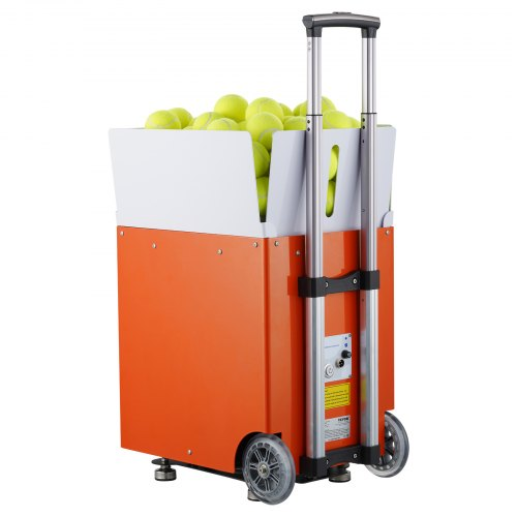
- Master the Basics
Focus on refining your grip, stance, and swing technique. Solid fundamentals are critical for consistent and powerful shots.
- Maintain Physical Fitness
Build strength, agility, and endurance through exercises like sprint drills, core workouts, and stretching routines. These directly enhance your performance on the court.
- Practice Regularly
Allocate dedicated time to practice serves, volleys, and groundstrokes. Consistent repetition helps improve muscle memory and sharpens your skills.
- Develop Match Strategy
Study your opponents and learn to adapt your playstyle. Position yourself strategically and anticipate their moves to stay ahead.
- Mental Focus
Stay calm under pressure by working on mental resilience. Techniques such as mindfulness or visualization can enhance focus and decision-making during matches.
Applying these focused strategies will help elevate your game and ensure consistent improvement over time.
Training Drills Using a Tennis Ball Launcher
Training using the tennis ball launcher has indeed improved the sessions, allowing working on individual areas of the game through a systematic and repetitive practice. I use it to work on footwork by positioning myself depending on shots at various speeds and angles. It helps so much to work on groundstrokes and volleys as well when the machine is adjusted to simulate realistic match-like situations. This sets me up to work on my precision, timing, and consistency all by myself.
Incorporating Spin and Speed Control
The addition of spin and speed controls to your training session amid a ball launcher will elevate your game to a professional level. Contemporary tennis ball launchers are equipped with features to accommodate adjustments for topspin and backspin to simulate various playing styles and strategies. Heavy topspin adjustments, for example, let players get used to the high-bouncing shots generally seen on clay courts, whereas backspin mimics low slicing returns used in defense.
Speed control stands alongside in importance so that it can prepare your practice for real-life occasions. Research suggests that the average speeds of balls during exchanges are above 75 mph, with serves coming in at rarely less than 110 to 130 mph in professional tennis. Working under a ball speed matching those in a kind of game situation will sharpen your reaction times and your positional sense. Tackling the speed settings with minor increments also helps the player build confidence and accuracy slowly, ultimately turning the court into a place that fosters increased dynamism and competitiveness. Having this at your disposal will let you organize a complete training session aimed at improving adaptability, precision, and game awareness.
Utilizing the Machine for Volley and Lob Drills
Mastering volleys and lobs is truly an eye opener for a player who wishes to add tactical charm in the art of play, and develop their court presence. Playing the machine can serve to drastically aid in the sharpening of these skills through regular, targeted practice. When volleying, the ball machine can be set at different ball speeds, angles, and heights-they mimic the situations encountered in an actual game and aid in hand-eye coordination. For example, setting the machine to shoot fast balls at the player would simulate net exchanges, thereby helping players to develop quick reflexes.
For practicing lobs, set your ball machine to send those high, lofty shots towards your side. It allows the player to better track the trajectory of the ball and concentrate on mastering the timing and control to send a perfect lob across to the opponent. Research concerning a training consistency indicates that such repetitive drills performed in a targeted fashion can lead to improvements of some 30% in control and placement whilst under match conditions for an earnest player. Following this, incorporating some random feed settings will mimic the unpredictability of real match play, whereby players must react in the blink of an eye – a key attribute for emerging victorious in competitive tennis clashes. Making use of these drills ensures that players build confidence when dealing with volleys and lobs, so they will produce great responses regardless of the situation they face.
Reference Sources
-
Tennis Ball Machine Demonstration
California State University, Los Angeles
Discusses the design and functionality of tennis ball machines for extended practice sessions. -
Motorized Tennis Ball Launcher
Rochester Institute of Technology (RIT)
Features a computer-controlled tennis ball launcher with advanced settings for spin, speed, and feed rate. -
Autonomous Tennis Ball Picker
Cornell University
Explores innovative technology for tennis ball collection and storage.
Frequently Asked Questions (FAQs)
What is a tennis ball feeder machine and how does it work?
A tennis ball feeder machine is a training tool designed to automate the feeding of tennis balls to players. It allows players to practice their shots without needing a partner. The machine can be adjusted to feed balls at various speeds and angles, helping players improve their technique and consistency. Many models feature an oscillator that can distribute balls across the court, simulating real-game conditions.
Can a pickleball machine be used for tennis training?
While designed primarily for pickleball, some pickleball machines can be adapted for tennis training. These machines often have features similar to tennis ball feeders, such as adjustable speeds and oscillation. However, it’s essential to choose a machine that can handle tennis balls adequately to ensure effective practice sessions.
What are the benefits of using a training machine on the tennis court?
Using a training machine on the tennis court provides numerous benefits for players. It allows for repetitive practice, which is crucial for skill development. Players can work on specific shots, such as serves or volleys, and adjust the machine to mimic different game scenarios. This consistent practice can help elevate a player’s game to the next level.
How does spin control work in a tennis ball feeder machine?
Spin control in a tennis ball feeder machine refers to the ability to adjust the amount of spin applied to the balls being fed. This feature is essential for players looking to practice topspin, backspin, or slice shots. By mastering different spins, players can enhance their overall game and better prepare for varied opponents on the court.
What features should I look for in a selection of tennis ball machines?
When selecting a tennis ball machine, consider features such as adjustable speeds, oscillation for random ball placement, and a hopper capacity that suits your practice needs. Lightweight design is also important for portability, especially if you plan to move the machine frequently. Additionally, look for models that offer free shipping to save on costs.
Are there tennis ball feeder machines with an external battery?
Yes, there are tennis ball feeder machines available with an external battery option. These models allow for extended playtime without being tethered to a power source, making them ideal for outdoor use on any tennis court. This feature enhances convenience and ensures that players can practice longer without interruptions.
How do I maintain my tennis training machine?
To maintain your tennis training machine, regularly check for any debris in the hopper and clean it to prevent jams. Ensure that the machine’s wheels and mechanisms are free of dirt and lubricated as necessary. Additionally, store the machine in a dry place to protect it from weather elements, especially if it has an external battery.
Can a tennis ball feeder machine help improve my skills as a tennis player?
Absolutely! A tennis ball feeder machine is an excellent training tool for tennis players of all levels. It allows for targeted practice, helping players focus on specific areas of their game. By providing consistent ball feeding, players can improve their timing, footwork, and shot accuracy, ultimately leading to better performance during matches.