Pickleball and tennis are two adored racket sports that share some similarities but are different in ways that dramatically affect the player experience. Should you be an ardent tennis player tempted to try pickleball, or a new player trying to decide which one suits your taste, then an understanding of the differences of the two sports is paramount. This article explores the differences between pickleball paddles and tennis rackets-from the layout of the courts and equipment, to the playing methods and convenience. By then, you will definitely be able to pinpoint which sport goes well with your temperament, skills, and fitness workload.
Understanding Court Dimensions
The dimensions of a pickleball court are much smaller compared to those of a tennis court. A standard pickleball court measures anywhere between 20 feet wide by 44 feet in length for singles as well as doubles. However, a tennis court measures 36 feet wide by 78 feet in length, with an area being allocated for both singles and doubles. You’re losing the chance to play pickleball simply because of these specifications, as the game is more suited to people of varying ability and physical fitness. Other main points about the center net are that the pickleball net stands lower at about 34 inches in the middle, while a tennis net stands 36 inches high.
Dimensions of a Tennis Court
Typically, the length of a tennis court is 78 feet (23.77 meters), and its width for singles is 27 feet (8.23 meters). However, for doubles, it becomes 36 feet (10.97 meters), since the additional alleys on either side of the court are included in its width. Crucial areas affecting gameplay are the service boxes, which are created by the center service line. Their dimensions are 21 feet (6.4 meters) in depth and 13.5 feet (4.11 meters) in width.
The net divides the court into two halves, with the net measuring 3 feet (0.91 meters) in height at the center and slightly higher, being 3.5 feet (1.07 meters) at the posts. Usually, some additional space surrounds the court, which helps with player movement. To provide a conventional amount of safety and playability, an area of 60 feet (18.29 meters) wide by 120 feet (36.58 meters) long around the court is suggested. These dimensions represent a compromise between being too precise and practical, allowing both the level of actual game and fun activities for two to take shape.
Dimensions of a Pickleball Court
A typical pickleball court is 20 feet wide and 44 feet long-the same dimensions for both singles and doubles.”consistency” means that the playing area remains standardized no matter how many players are involved. The net divides the court into two equal halves, standing 36 inches from the sidelines and slightly less, at 34 inches, in the middle, giving it an optimal height for play.
Further dividing the court are the various zones, including the non-volley zone or “kitchen,” extending 7 feet from the net on both sides. Beyond the non-volley zone, the area is divided into right and left service courts for organized serve placement. Beyond the playing lines, loA buffer is always recommended, which typically measures at least 10 feet on each side and 15 feet behind each baseline, providing ample room for player movement and safety.
The court is usually painted in colors with good contrast, for example, blue or green for the playing surface and white for boundary lines, to facilitate visibility during gameplay. The lines demarcate zones and aid focus during play, especially under different lighting conditions. Suitable materials for surface construction, asphalt, or a smooth finish concrete are selected for durability and even ball bounce, thus making the court viable for both indoor and outdoor play.
Comparison of Court Sizes
The court sizes are different for sports, with standardized dimensions being used to ensure fair play and an authentic game experience worldwide. A basketball court, for instance, measures 94 feet in length and has a width of 50 feet for professional play in environments like the NBA, but high school courts have dimensions of 84 feet by 50 feet. Tennis courts, meanwhile, are 78 feet long and 36 feet wide for doubles, but singles courts are narrower, being 27 feet wide. Badminton courts are even smaller, with doubles courts measuring 44 feet in length and 20 feet in width, whereas singles courts have a width of only 17 feet.
The volleyball court is 59 feet long and 29.5 feet wide. By comparison, the soccer field is much larger; professional matches are played on fields of sizes varying between 100 and 130 yards in length and 50-to-100 yards in width from one league or tournament requirement to another. Compact play is theorized by way of futsal, with countries scaling the specifications of the futsal court somewhere between 131 and 148 feet long and 65 to 82 feet wide.
All said, these differences in court or field sizes bring out the specific needs and gameplay strategies with which each sport grapples, trying to orient between universal standards and optimized design for competitive play.
Equipment Differences: Balls and Paddles
Sports equipment varies in its particular uses, given the unique demands of the sport. As an example, soccer employs a bigger sphere designed for foot control and aerodynamics, while futsal employs a smaller ball, heavier in weight, that suppresses bouncing to play on hard surfaces. Likewise, in racket sports, table tennis paddles (or rackets) will give more choices of materials and grips toward maximization of player control and speed for precision placement and rapid gameplay. Such variations in equipment are required to suit the specific conditions and techniques of each sport.
Tennis Ball vs. Pickleball Ball
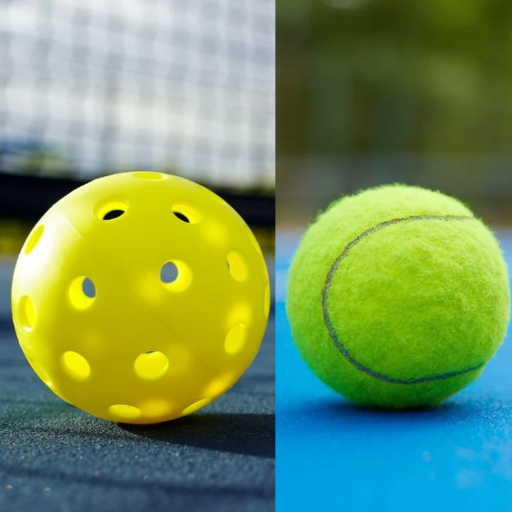
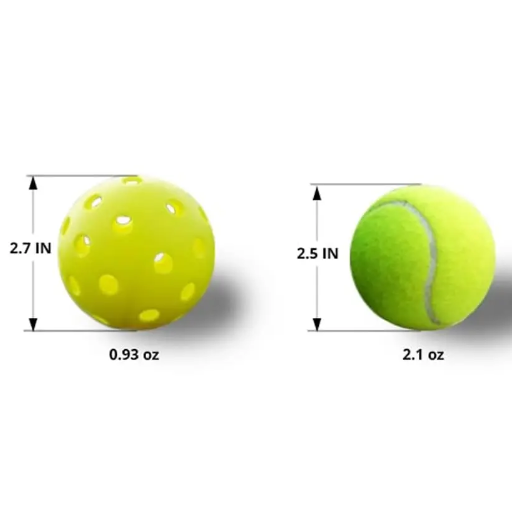
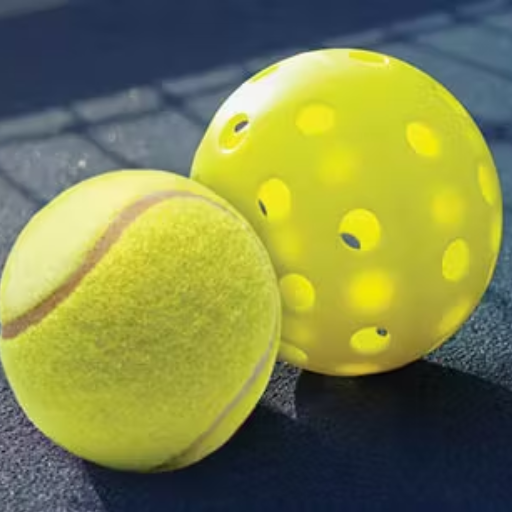
Tennis balls are heavier, fuzz-covered, and bounce higher, while pickleball balls are lighter, plastic, and have a lower, predictable bounce.
|
Parameter |
Tennis Ball |
Pickleball Ball |
|---|---|---|
|
Material |
Rubber, Fuzzy |
Plastic, Smooth |
|
Weight |
~2 oz |
~0.8-1 oz |
|
Diameter |
~2.7 inches |
~2.9 inches |
|
Bounce |
High, Variable |
Low, Predictable |
|
Texture |
Fuzzy |
Holey |
|
Durability |
Longer |
Shorter |
|
Usage |
Tennis Courts |
Multi-Surface |
Tennis Racket vs. Pickleball Paddle
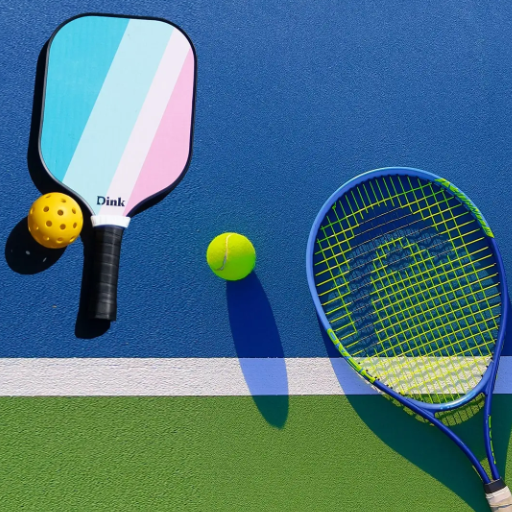
The design serves as a basic distinction between the two tools: one of a racket and the other of a paddle, catering to the unique demands of each sport. Generally, a standard tennis racket ranges between 27 and 29 inches in length, with a stringed surface made of polyester or nylon for power, control, or spin. Head size of modern tennis rackets vary with size but average from less than 85 sq. in. to 135 sq. in., said to average about 10-13 ounces, balancing on the edge between durability and maneuverability. These traits give the racket its suitability for tennis courts of such an ever vastness in land and power-oriented game.
A pickleball paddle is much smaller and compact. They range from 15.5 till 17 inches in length, with a solid face made of polymer, composite, or graphite. They weigh somewhat less, averaging 6-12 ounces, so as to offer greater control and faster reflexes for the fast exchanges of pickleball. Unlike tennis rackets, pickleball paddles are not stringed; instead, the ball response is merged into the fairly consistent construction of the paddle.
The biggest performance drift is between sweet spots. Tennis rackets with their big size and string surface give the players a bigger area in which to work effectively on ball contacts. Pickleball paddles, however, engage a smaller sweet spot that rewards precision and positioning. Also, the grip sizes are different too-the tennis grips tend to be bigger for using two hands for many shots like the double-handed backhand, whereas the smaller grips for the pickleball are designed for one hand and quick wrist work.
Material and Weight Considerations
If we make a comparison between racket and paddle sports concerning the aspects of material and weight, these very two factors largely characterize the performance and feel of the implement. Tennis rackets are largely made from the most advanced materials like graphite or carbon fiber or sometimes a mixture of these with some other composites so as to yield above-average durability and strength while remaining lightweight. Professional rackets tend to weigh between 9 and 12 ounces (255 to 340 grams). Weight distribution with respect to being head-heavy, head-light, or evenly balanced affects power and maneuverability so that different playing styles are rewarded.
Pickleball paddles, conversely, are made of lighter materials such as polymers for their cores and fiberglass or carbon fiber for their surfaces. Contemporary paddles weight between 6 and 8.5 ounces (170 to 240 grams), smack in the middle between control and power. A light paddle will give the player faster reaction times and sharper placement at the net, while heavier paddles generate power in groundstrokes and smashes.
The advancement of material science has made possible further enhancements to the offerings by way of vibration dampening and surface textures aimed at maximizing spin. For example, tungsten fibers or Kevlar fibers might be incorporated within tennis rackets to damp shock on impact, whereas pickleball paddles are more and more being textured on their face to increase ball control and spin capability. As the player appreciates such differences, he will be able to settle for the appropriation best suited to his level and style and thereby produce maximum performance on court.
Bounce Characteristics and Gameplay Impact
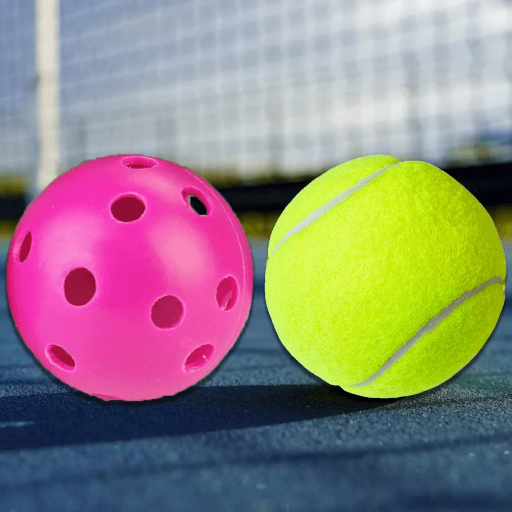
Tennis balls and pickleballs contrast with each other when it comes to their bounce characteristics, and these variations greatly affect the style of play. Since tennis balls’ pressurized core and felt surface result in a ball going higher and faster, the rallies are supposed to be longer. On the other hand, pickleballs consist of rigid plastic in a perforated, hollowed manner that allows for a low and controlled bounce, and rallies are shorter with strategic play. Hence, players need to adapt their timing, positioning, and techniques accordingly to ensure effective execution of these sports.
Bounce of Tennis Balls vs. Pickleballs
Depending on the form of the construction and all sorts of conditions, the bounce characteristics of tennis and pickleball are somewhat different from each other. Standard tennis balls are usually manufactured with a rubber core covered with wool or synthetic felt; when dropped from 100 inches, the pressurized tennis ball will bounce somewhere in the range of 53 to 58 inches. The International Tennis Federation or some governing body set these standards. The felt affects the spin and speed of the bounce of the ball; therefore, new and clean tennis balls bounce faster and higher compared to older and worn-out ones.
On the contrary, pickleballs are hard plastic balls with symmetrically spaced holes, dropping from the same height with bounce heights averaging from 30 to 34 inches according to USA Pickleball regulations. The perforations reduce the air resistance affecting the bounce, which is generally slower and more controlled. Temperature and the surface type matter greatly in the performance of a pickleball. For example, cooler conditions will harden the plastic, thus lowering the bounces even more, while warm temperatures favor the material’s flexibility, giving the ball an increased responsiveness.
Another important factor affecting the bounce of both balls is the court surface. The tennis ball will roll fast on hard courts such as concrete and asphalt while clay and grass surface will absorb the bounce as the impact is softer. Comparatively, pickleballs favor textured surfaces designed for their use as smooth flooring inhibits consistent bounce behavior. Knowing these conditions, the players can now adjust their game strategy for maximum precision and control.
How Bounce Affects Play
The bounce characteristics of a ball can determine the pace, accuracy, and every other strategical approach in a game. Tennis balls, under the supervision of the ITF (International Tennis Federation), have to be dropped from 100 inches onto a concrete floor and should rebound an approximate distance of 53-58 inches. This is to maintain consistency in ball behavior and enable professional players to train for an expected reaction from the ball. The bounce slows down on clay surfaces due to more shock absorption by the surface, which calls for a lot of movement and application of top-spin techniques.
Unlike pickleballs, which bounce differently, they display this because of their hard plastic construction and perforations. Studies show that on smoother grounds, pickleball bounce height departs from one to one with the various surfaces, thus endorsing the role of specific surface courts like concrete with texture. These types of surface courts help maintain uniform bounce, thus benefiting gameplay. Temperature is also a factor; cold temperatures can harden the balls and reduce bounce, while hot temperatures soften the material, yielding lively response.
These differences are resources that practitioners must exploit-to analyze surface types and material properties along with environmental conditions-to their advantage. Such analysis makes competition more strategic and challenges the adaptability of any player in exigent conditions.
Player Preferences Based on Bounce
Plays usually think differently about bounce with respect to comfort, or at times performance. For instance, tennis players like clay courts for the higher bounce offered by such a surface, allowing for longer rallies and scoring opportunities. Fast-paced players, on the other hand, might opt for hard courts or grass courts with faster and lower bounce, as this gives them more room for aggressive strokes and quicker reactions.
Research shows that players who prefer control and long rallies favor softer balls and surfaces, such as an indoor court, because these conditions limit the speed and randomness of the sport. On the other hand, champions and players relying on big serves and fast returns favor hard and fast surfaces–acrylic, concrete–that nurture speed and spin possibilities.
Sports body data analysis shows that a large chunk, 60 percent of professionals, change equipment and strategy with the bounce precision specification, hence underscoring the importance of bounce in competitive sports. It stands that if an athlete can understand how bounce interferes with a style of play, then the athlete can also cater to his style choice or tactics to promote optimal performance in diverse conditions.
Net Height and Court Surface Differences
The net height is at a standard: 3 feet in the middle and 3.5 feet at the side posts. This remains the same for all types of courts. However, all kinds of court surfaces affect play rather differently. Clay courts slow down the ball and create high bounces-great for baseliners. Grass courts give speed and a low, unpredictable bounce to the ball-good for serve-and-volley players. Hard courts sit in between speed and bounce-different from their counterparts-so that they can adapt to various ways of playing. One must understand these differences to perform well on each.
Tennis Net vs. Pickleball Net
Tennis nets are taller, wider, and more robust, while pickleball nets are shorter, narrower, and designed for smaller courts.
|
Parameter |
Tennis Net |
Pickleball Net |
|---|---|---|
|
Height (Posts) |
42 inches |
36 inches |
|
Height (Center) |
36 inches |
34 inches |
|
Width |
42 feet |
22 feet |
|
Material |
Nylon/Vinyl |
Nylon/Polyester |
|
Durability |
High |
Moderate |
|
Court Size |
Large |
Small |
Court Surface Variations
Tennis is played on a variety of surfaces, each offering unique characteristics that influence the speed, bounce, and overall gameplay. By understanding the attributes of each court type, players can adapt their techniques to maximize performance. Below is a detailed overview of the primary court surfaces:
- Hard Courts
- Description: Made of asphalt or concrete with an acrylic top layer, hard courts are known for their consistent bounce and moderate pace.
- Advantages:
- Offers a balanced game for all playing styles.
- Reliable surface for controlled shots and rallies.
- Data:
- Accounts for approximately 60% of professional tournaments.
- Common in events like the Australian Open and the U.S. Open.
- Clay Courts
- Description: Constructed from crushed brick, clay courts are slower surfaces that produce a high bounce.
- Advantages:
- Ideal for baseline players and those with good endurance.
- Encourages longer rallies and strategic play.
- Data:
- Dominates in regions like Europe and South America.
- Feature prominently in tournaments like the French Open.
- Grass Courts
- Description: The oldest type of tennis court, grass courts provide a fast-paced surface with low, unpredictable bounces.
- Advantages:
- Benefits players with strong serves and volleying skills.
- Rewards quick reflexes and adaptability.
- Data:
- Requires significant maintenance, making it less common.
- Iconic events like Wimbledon are played on grass.
- Carpet Courts
- Description: Made of removable materials like artificial turf or synthetic surfaces, carpet courts are rarely used professionally.
- Advantages:
- Provides a fast game with low bounce.
- Suitable for indoor play in colder climates.
- Data:
- Limited presence on modern professional tours.
- Historically used in niche tournaments and indoor clubs.
Each court surface brings its own challenges and benefits, requiring players and coaches to carefully craft strategies to thrive on the varying conditions. From the classic matches on Wimbledon’s grass to the grueling rallies of Roland Garros’ clay, these surfaces define the diversity and excitement of the sport.
Impact on Game Strategy
The court surface has a great influence on gameplay strategy and player performance. Each surface type affects the bounce of the ball, its movement, and how players’ footing responds to it, calling for specific tactical nuances.
Clay courts, for instance, are slow and have a high bounce, enabling good baseline players endowed with endurance and perfect topspin. Data reveals that clay-court greats like Rafael Nadal spin the ball harder and extend rallies in a bid to exhaust their adversaries. Recent match analyses of clay court players tell us they win more than 70 percent of service games despite the slow conditions, which makes it a totally different game from the other types.
But grass courts are fast, with the ball bouncing lower and unpredictably. This favors serve-and-volley players and those with big serves. Statistics from the bygone years of Wimbledon accounted for ace count of nearly 15 per match on grass, accentuating the demand for precision and aggressive strokes, by the then-goat servers namely Pete Sampras and Roger Federer.
Being medium paced and more predictable, hard courts make the game even. Such courts reward all-round players who capitalize on the amalgamation of both power and technique. According to analytical models, hard courts produce more balanced winning statistics, with an even spread of distracted success among aggressive hitters as well as defensive baseliners. This explains diversity in skills for champions from serving players to counter-punchers, visible at the U.S. Open.
Going through all such dynamics helps players and coaches shape techniques and game plans that build on their strengths and work to their weak points, thus being the greatest performance maximizer.
Key Differences in Gameplay and Strategy
The key differences in gameplay and strategy on various tennis court surfaces revolve around speed, ball bounce, and player adaptability:
- Clay Courts:
- Slower surface with higher ball bounce.
- Rewards endurance and consistency over power.
- Ideal for players who excel at constructing points and utilizing topspin.
- Grass Courts:
- Fastest surface with lower, unpredictable bounces.
- Favors aggressive players with strong serves and volleying skills.
- Demands quick reflexes and adaptability due to surface variability.
- Hard Courts:
- Balanced surface with moderate speed and consistent bounce.
- Accommodates a variety of playing styles from baseline rallies to serve-and-volley.
- Strategic flexibility is key, as it provides equal opportunities for offensive and defensive players.
By understanding these differences, players can tailor their strategies to leverage strengths and improve overall performance on any court.
Playing Pickleball on a Tennis Court
Playing pickleball on a tennis court can indeed occur with greater ease and bring more enjoyment, provided there exist some slight adjustments. In my case, my preference is to have temporary lines set up with tape or chalk, composing the smaller-sized pickleball court within the larger boundaries of a tennis court. The net should be adjusted so that the height is at 34 inches in the center, per pickleball rules. The larger tennis court offers more freedom of movement, so doubles in such a setting feel just as vibrant. With these few adjustments, one can readily turn a tennis court into a wonderful pickleball-playing area.
Strategies for Tennis Players Transitioning to Pickleball
When moving from tennis to pickleball, I mainly work on shifting my mental outlook and adapting to a faster game. I try to “send less power” into my shots because pickleball is more about control and placement rather than sheer force. One more thing to consider is that knowing the kitchen well is essential; emphasis is put upon dinking and soft shots to uphold consistency during rallies. Time to react at the net is a huge alternate major thing I guard, whereas quick exchanges during volleys are common. Lastly, I keep in mind the small court and work on my footwork and positioning to stay agile and cover ground efficiently.
Overall Differences in Gameplay Experience
I feel that the overall gameplay experience in pickleball is more dynamic yet controlled compared to tennis. The smaller court allows toward quicker reaction times and cautious ball placement rather than relying on power. The fast-paced volleying keeps me on my toes, while the emphasis on touch shots like dinks turns the game into something of cunning artistry and strategy. Adapting to the nuances makes it so especially entertaining for me.
Reference Sources
-
Upper extremity overuse injuries in racket and paddle sports: what sets tennis and pickleball apart? – A narrative review discussing differences in tennis and pickleball, including court and equipment specifications.
-
COMPUTATIONAL FLUID DYNAMICS ANALYSIS OF PICKLEBALLS – A detailed analysis referencing the USA Pickleball Official Rulebook, which includes ball specifications.
-
The perils of pickleball: A two decade analysis of upper and lower extremity injuries from America’s fastest growing sport – A study on pickleball’s growth and its implications, touching on equipment and gameplay differences.
Frequently Asked Questions (FAQs)
What are the key differences between pickleball and tennis?
The key differences between pickleball and tennis primarily lie in the size of the equipment and the court dimensions. A standard tennis ball has a diameter of about 2.7 inches, while a pickleball, resembling a wiffle ball, measures approximately 2.9 inches. Moreover, the tennis court is significantly larger compared to the pickleball court, which is 44 feet long for doubles play. These variations impact how each sport is played, as tennis players use rackets to hit the ball while pickleball players use paddles to strike the ball. Understanding these differences is essential for anyone looking to transition between the two sports.
How is a pickleball court different from a tennis court?
A pickleball court is different from a tennis court in several ways, primarily in size and layout. The dimensions of a standard tennis court are considerably larger, measuring 78 feet long and 36 feet wide for doubles play. In contrast, a pickleball court is only 44 feet long and 20 feet wide. This smaller court size allows for a quicker pace of play and different strategies. Additionally, the net height in pickleball is 36 inches at the posts, making it lower than the tennis net. These differences between the sports influence player movement and gameplay style.
What are the differences between tennis and pickleball equipment?
The differences between tennis and pickleball equipment are notable, with the most obvious being the racquet and ball used in each sport. Tennis players use a stringed racquet that is larger and designed for hitting a heavier, felt-covered ball. In contrast, pickleball players use a solid paddle made from wood or composite materials to hit a lightweight plastic ball with holes, often referred to as a wiffle ball. Additionally, the design and grip of the paddles vary significantly, catering to the unique playing style of pickleball. The equipment influences not only gameplay but also the skills required for each sport.
What is one of the biggest differences between pickleball and tennis?
One of the biggest differences between pickleball and tennis is the style of play and the rules governing each game. Pickleball allows players to serve underhand, which contrasts with the overhand serve commonly used in tennis. Furthermore, the scoring systems differ, with pickleball often using a rally scoring format while tennis has more complex scoring rules. These differences can affect how players strategize during matches, making it important for enthusiasts to understand the nuances of each sport. Additionally, the pace of pickleball is generally faster due to the smaller court size, allowing for quicker exchanges.
Are there similarities and differences in scoring between pickleball and tennis?
Yes, there are both similarities and differences in scoring between pickleball and tennis. Both sports aim to score points by hitting the ball in such a way that the opponent cannot return it. However, the scoring systems vary significantly. In tennis, players must win games and sets, while in pickleball, the scoring is typically done on a rally basis, meaning points can be scored regardless of which player serves. Additionally, tennis matches can be longer due to the larger court size and the number of points needed to win, while pickleball’s faster pace often leads to shorter matches. Understanding these scoring differences is crucial for players transitioning between the two sports.