When it comes to developing one’s tennis skills, regular practice is essential; however, it is when finding a sparring partner whose timings and skill level match our own that we grapple with a major difficulty. Perhaps, therefore, a tennis ball machine may be a solution. These machines are deemed the silent training partner of a player, offering a promise of raising one’s standard through permitting him or her to merely practice one shot repeatedly, improving their technique at their own pace. But is it worth spending money on? This article will take a look at the benefits and hurdles and things to consider before deciding whether to buy a tennis ball machine. If you are a novice trying to build confidence or an advanced player trying to refine your technique, read on to learn whether this can help you truly push your game to another level.
What is a Tennis Ball Machine and How Does it Work?

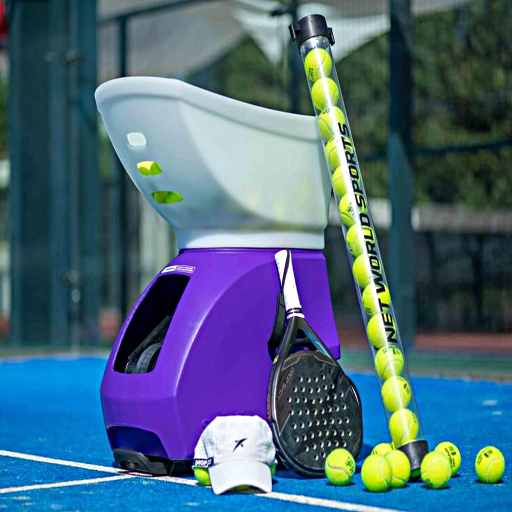
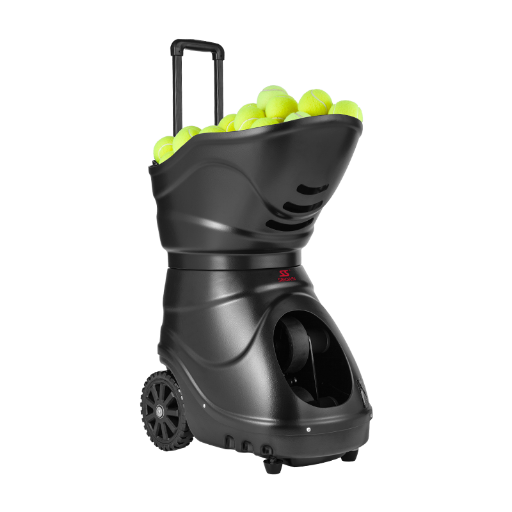
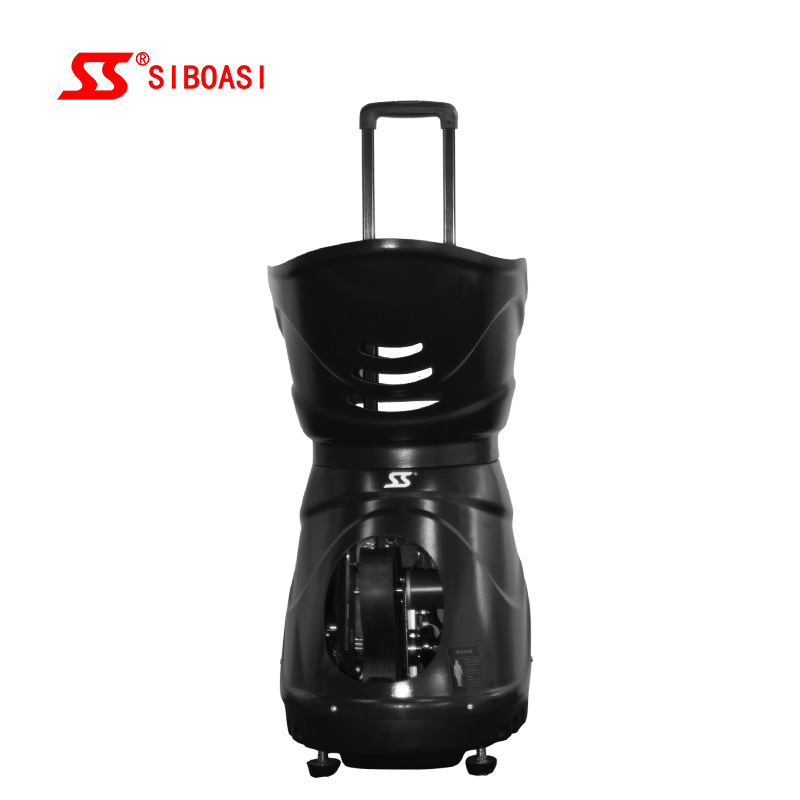
A tennis ball machine is a training machine designed to throw balls with variable speed, height, and angle, thus enabling players to refine their skills. Essentially, the machine is comprised of an internal motor that drives spinning wheels for propelling the balls. In most scenarios, users can even adjust spin, speed, and trajectory to give a realistic feel of playing conditions. The power source of the machine would be either a battery or an electrical outlet. It has a very high capacity for balls, thereby allowing more or less continuous and repetitious practice with little to no need of a partner. This really provides a valuable advantage for players at all levels who want to win from the practice at improving their technique and consistency.
Understanding the Basics of a Tennis Ball Machine
Current models in the tennis ball machine market are outfitted with a plethora of ergonomic features to increase skill development efficiently for the user. Nowadays, machines come with options for programming the drills: one setting may be for random oscillation to simulate unpredictable game situations. Speed settings range from 10 to 95 miles per hour, while players are able to experience practice against the whole gamut of variations, from slow lobs to sharp volleys.
Spin is another considerable term, as the majority allow machines for adjustment between topspin and backspin. This feature is so helpful in simulating real-match situations, so players can work on their reactions to the varying spins. Depending on the machine, it can also allow for a slight variation in flight path, varying from flat shots to deep baseline shots, all the way to hard smashes.
Ball capacity is another spec capable of varying, from fifty to over three hundred balls, allowing for extended intervals of practice without interruption for refilling. Battery life becomes essential if one is after portability; most can last anywhere from 4 to 8 hours on a single charge. Unplugged for charge is another option; stats of unlimited use can be made with plug-powered machines.
Most definitive improvements have been seen in the domain of remote controls, with most touting compatibility via smartphone apps. The most expensive tennis ball machines now provide the ability for a player to set parameters and begin drills remotely, shortening practice time considerably.
These characteristics make tennis ball machines an invaluable training tool for someone from any level of the tennis fraternity. By dissecting their individual strengths and narrowing that analysis down to a specification that fits your needs, you can get more out of practice sessions and the time you put on-court.
How Do Ball Machines Simulate Real Play?
Tennis ball machines are designed to replicate the dynamics of real gameplay by simulating various shot types, speeds, spins, and angles. Modern machines are equipped with adjustable settings that allow players to program drills mimicking scenarios they would encounter during a match. For example, spin mechanisms can add topspin or backspin to the ball, replicating the effects of different strokes from an opponent. Advanced models can even vary shot speeds, ranging from slow lobs at 10 mph to high-velocity drives exceeding 80 mph, simulating everything from beginner rallies to professional-level serves.
Furthermore, oscillation features play a significant role in creating unpredictability, with horizontal and vertical oscillation ensuring balls are fed to different areas of the court. This feature forces players to improve footwork and reaction times. Some high-end machines even offer random oscillation patterns that closely mimic the variability of an actual opponent’s shots.
Ball frequency control is another critical feature, allowing users to set the interval between shots. For instance, machines can deliver balls as frequently as every 2-3 seconds, simulating high-pressure drills, or increase intervals for less intense practice. Such settings are invaluable in improving endurance and consistency under real match conditions.
Additionally, some machines offer pre-programmed drills that simulate specific scenarios, like attacking baseline rallies or quick net exchanges. With customizable options and smart technologies, these machines effectively replicate the rhythm and complexity of competitive tennis, helping players sharpen their skills in a controlled environment.
Different Types of Ball Machines Available
There are several types of tennis ball machines available, each tailored to meet different player needs and skill levels. Understanding the features and specifications of these machines can help players choose the most suitable option:
- Basic Ball Machines
Designed for beginners or recreational players, these machines typically offer a limited range of features, such as a fixed ball speed and a steady feed rate. They are compact and often more affordable, making them an excellent choice for those new to the game or seeking casual practice. For instance, entry-level models may provide consistent feeds at speeds of 10-60 mph, allowing users to focus on improving basic strokes and timing.
- Programmable Ball Machines
Intermediate and advanced players often benefit from programmable machines. These machines allow users to customize drills, adjust ball speed, trajectory, spin, and interval settings, and even simulate real-match scenarios. With ball speeds of up to 90 mph and spin options for topspin or slice, programmable models are well-suited for refining technique and adapting to varied gameplay styles.
- Oscillating Ball Machines
Oscillating machines mimic the randomness of a live opponent by feeding balls to different areas of the court. They offer horizontal, vertical, or dual oscillation settings, challenging players to improve their footwork and reaction time. Some higher-end models feature random oscillation patterns, making practice sessions dynamic and unpredictable.
- Smart Ball Machines
Equipped with advanced technologies, smart ball machines connect with mobile apps and offer AI-driven training programs. Players can monitor and adjust settings like spin, elevation, or feed rate directly from their smartphones or tablets. Some models also feature data analytics, providing feedback on performance and helping players track improvement over time.
- Portable Ball Machines
For players who value convenience, portable ball machines are lightweight and easy to transport. Despite their compact size, many portable models still offer impressive features, such as adjustable speeds, spin controls, and oscillation. Their rechargeable batteries allow for several hours of use, making them perfect for on-the-go practice.
- High-Capacity Ball Machines
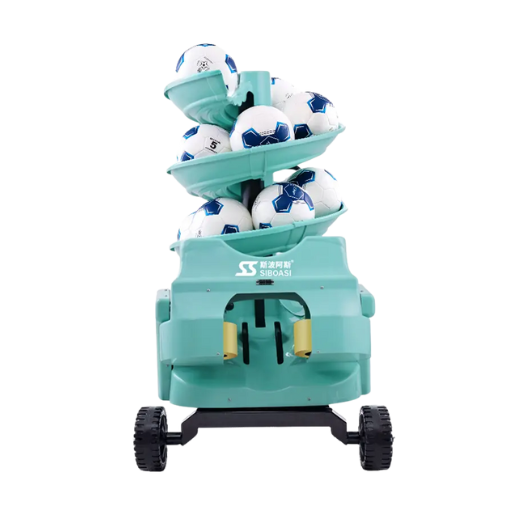
Ideal for coaches or group sessions, high-capacity models can hold hundreds of tennis balls, ensuring extended practice without frequent refilling. These machines are designed for endurance drills and can mimic game-like conditions with varied feed patterns, spins, and speeds.
When choosing a ball machine, factors such as skill level, practice goals, portability, and budget play a critical role. With the advancements in machine design and technology, players now have access to versatile tools that cater to precise training needs, ensuring an enriched practice experience.
How Can a Tennis Ball Machine Improve My Game?

A tennis ball machine is certainly a good tool to improve one’s game if one desires consistent, repetitive opportunities to improve a particular stroke or technique. It enhances muscle memory by launching balls at different speeds, angles, and spins, similar to what one would encounter on an actual court. In this controlled setting, players can hit their weaknesses, work on footwork, and even improve their timing skills. Using a ball machine also allows players to finish their workouts without a partner, giving them flexibility with inconvenient training hours.
Enhancing Your Forehand and Backhand Techniques
Improving your forehand and backhand techniques requires a combination of proper mechanics, consistent practice, and attention to detail. One essential aspect is grip. The Continental grip is frequently used for backhands, while the Eastern or Semi-Western grip works well for forehands, ensuring optimal control and power. According to recent biomechanical studies, maintaining a relaxed yet firm grip helps reduce strain and allows for a smoother stroke execution.
For forehand techniques, focus on generating topspin by brushing up on the ball during contact and ensuring appropriate follow-through. A study on tennis biomechanics highlights that creating a modern forehand “windshield wiper” motion helps maximize rotational power and spin, key to creating effective offensive shots. Stepping into the shot with the rear foot positioned for stability can further amplify force.
Backhand strokes, whether double-handed or single-handed, depend on proper body alignment and hip rotation. Keeping your shoulders parallel to the net while rotating your torso can improve precision and power. Players who struggle with stability often benefit from actively engaging their non-dominant arm to guide the racket in a two-handed backhand or balancing their stance in a single-handed stroke.
Statistics indicate that players who practice a variety of drills, such as cross-court rallies and down-the-line shots, see marked improvement in consistency. Regular repetition not only refines technique but also sharpens muscle memory, enabling faster adjustments during competitive matches.
Practicing Volleys and Lobs with Precision
Mastering volleys and lobs is the perfect blend of skill, timing, and anticipation. Positioning is critical for volleys, standing close to the net enhances command over the shot and makes it an assertive one. According to current coaching methodology, one should focus on keeping the racket considerably firm and wrist immobilized throughout contact with the ball. Letting the pace of your opponent’s shot do its work, and keeping the swing short and crisp, is the way to go.
When a player hits a lob, the car is that it should be high and sweeping-lob to clear off the opponent’s reach with an extra safety measure keeping it inside the baseline. Studies convey that focusing on precision drills, such as targeting high spots over the net, can tremendously increase players’ successful rates. Players that set aside time to practice defensive lobs in pressure situations further report a gain in their match-time performance, managing to overtly convert defensive situations into offensive ones. When well-executed, the volley and the lob belong to the most valuable weapons in any player’s tactical arsenal.
Improving Footwork and Ball Speed Response
Footwork and adapting to ball speed are the chief ingredients any player needs to be successful on a tennis court. Enhanced footwork increases agility and body positioning, which aids in the correct execution of shots. Research does confirm, however, that players who include agility ladder drills in their regimes improve their reaction time by as much as 15%. Besides, drills for lateral movement, such as side shuffles and cone drills, work to sharpen the side-to-side agility, a very important aspect of repositioning on the fast footing of a rally.
The ability to respond to ball speed is tightly linked to reaction time and anticipatory ability. A few studies state that in weeks, exposure of players to high-velocity ball drills, for instance, the utilization of ball machines capable of shooting balls at different speeds and angles, actually enhances player reflexes. The emphasis on training with balls served at a speed of over 60 mph will make players acquainted with possible match situations; hence they gain actual mileage while handling their big-time opponents.
An integrated training combining a set of footwork drills with high-speed stuff teaches players not just to physically feel great, but at the same time raises the awareness and strategic abilities of the player.
Choosing the Right Tennis Ball Machine for Your Needs

When choosing the right tennis ball machine, consider the following key factors:
- Skill Level – Beginners may benefit from simpler machines with basic functions, while advanced players might need machines with customizable settings, such as oscillation and varying ball speeds.
- Portability – Look for a lightweight machine with wheels if you need to move it frequently or transport it to different locations.
- Ball Capacity – For longer practice sessions, choose a machine with a larger ball hopper to minimize the need for frequent refilling.
- Power Source – Decide between battery-powered models, ideal for outdoor use, or plug-in machines if you’re practicing in a consistent location with power access.
- Budget – Set a clear budget and look for machines that deliver the best features for your price range.
By assessing these criteria, you can select a tennis ball machine that aligns with your training goals and practical needs.
Factors to Consider: Portability and Power Source
When it comes to portability, I prioritize lightweight designs and wheels to make transportation as easy as possible, especially if I need to move the machine frequently. For the power source, I prefer a battery-powered model for its flexibility and ability to use it anywhere, but I’d choose a plug-in option if I’m training in a fixed location with reliable power access. Both factors are key to ensuring the machine fits seamlessly into my training routine.
Comparing Models: Spinshot vs. Tennis Tutor
When comparing the Spinshot and Tennis Tutor machines, I focus on factors like portability, power options, and overall functionality. The Spinshot stands out for its compact design and app-controlled features, making it user-friendly and easy to customize training sessions. On the other hand, the Tennis Tutor offers excellent reliability and consistent ball delivery, but its slightly bulkier design may be less convenient for frequent transport. For my needs, the Spinshot’s lightweight build and technology-driven features align better with my preference for versatility and ease of use during training.
Is a Portable Tennis Ball Machine Right for You?
When considering whether a portable tennis ball machine is suitable for you, it is crucial to examine your specific training goals, budget, and lifestyle. For tennis enthusiasts who want to polish their skills, portable machines ensure maximum convenience and flexibility. Most machines are within 20-50 pounds in weight, so they are easy to carry about and store away but still pack a punch with features such as speed and spin settings, oscillation, and programmable drills. The Spinshot Player is one notable example, enabling players to fabricate custom drill sequences via phone app and thereby create simulated experiences of real matches. Pricing typically oscillates between $600 and $2,500 depending upon construction and workmanship.
Evidence indicates that portable tennis ball machines are most useful to grasp clutches that need a partner losely practicing with consistency. Users testify that consistent training with the machines strengthens footwork, hand-eye coordination, and shot accuracy, with many noting quantifiable improvements within weeks of continuous training. All contemporary machines today also possess rechargeable batteries that provide on-court time between 2 to 8 hours, depending on the model, thus suitable for long training sessions. In essence, a portable tennis ball machine might well be the best install for a player that values practice autonomy, cutting-edge equipment, and training-away-from-home.
Are Tennis Ball Machines a Suitable Practice Partner?

When it comes to practicing, tennis ball machines can be an excellent partner at every level of ability. They deliver the ball in a very consistent manner, allowing players to concentrate on specific skills such as feet movement, stroke, and timing. They provide various options for adjusting speed, spin, and trajectory, so as to simulate different game scenarios. Although unlike a player, it cannot be an unpredictable training partner, a goal-oriented machine allows one to work on their skills anytime they want.
Advantages Over a Human Hitting Partner
- Consistency
Ball machines offer unmatched consistency in ball delivery. Unlike human players who may tire or make unforced errors, these machines deliver precise and predictable shots, allowing players to practice specific strokes without interruption. Research shows that repetitive and consistent practice can lead to faster skill acquisition.
- Customizability
Modern ball machines provide various settings for speed, spin, trajectory, and feed rate. This allows users to simulate different playing styles and scenarios, from aggressive topspin shots to defensive lobs, ensuring well-rounded training tailored to individual needs.
- Flexibility in Scheduling
Unlike human partners who may have limited availability due to time or other commitments, ball machines are ready to practice whenever you are. This makes them an ideal tool for improving at your own pace, whether early in the morning or late at night.
- Focused Skill Development
Ball machines enable players to focus on specific aspects of their game without distractions. Whether perfecting backhand strokes, improving footwork, or mastering a volley, the machine provides consistent and repeatable conditions ideal for targeted practice.
- Endurance Training
With adjustable settings, ball machines can provide continuous workouts to improve stamina and endurance. Unlike a human partner who may fatigue, a machine can keep up with demanding, high-intensity training sessions, which helps simulate the physical demands of long matches.
- Cost-Effective in the Long Run
While the upfront investment in a ball machine may seem high, it becomes cost-effective over time compared to hiring a coach or regular sparring partners for practice sessions. The consistent availability also reduces dependency on external resources for training.
- Progress Tracking and Improvement
Many modern ball machines now come equipped with advanced technologies, such as app connectivity or data tracking features. These help players analyze their performance and monitor improvement over time, offering insights not easily provided by a human partner.
Limitations: What a Ball Machine Can’t Do
The ball machine may be extremely helpful to the tennis trainer, but it cannot make up for the true dynamics and all nuances of a game being played with a human opponent. A major limitation of this kind of training is its inability to simulate the in-game scenarios involving reading an opponent’s plan of attack, judging the different angles of spin, or reacting to varied tactical shot placements. Whereas in a live match, players often have to anticipate and react to the movements or decisions of their opponents in real time, the unidirectional and unchanging shots from ball machines are predictable and programmed in advance.
In addition to that, no advice or feedback is given by these ball machines on a player’s technique or form. Human trainers would analyze the player’s swing, footwork, and positioning, sharing corrective advice when necessary to improve their skills. In spite of all the features they provide, ball machines cannot mirror the attention and interaction of human-based feedback.
Another facet that presents a shortfall lies concerning endurance training. Playing against humans would give training for endurance since rounds would last unpredictably with timing length kept variable-low, Vary in intensity. On the other side, ball machines would offer consistent feeding patterns, which would go against unpredictability, essential for match ready.
In conclusion, studies show that although repetitive drills from ball machines enhance muscle memory, they are less adapted to improve match strategy and adaptability, which game experiences foster. So, while players can get better on certain technical grounds, there are things about playing and adapting to hundreds of possible match situations that are definitely missed out on.
Integrating a Ball Machine into Your Training Regimen
To maximize the benefits of a ball machine, it’s essential to incorporate it thoughtfully into your overall tennis training routine. A key advantage of using a ball machine is the ability to focus on repetitive practice of specific strokes. For example, dedicating 20-30 minutes per session to groundstrokes at varying speeds and spins can refine consistency and improve technique over time. Research indicates that repeated execution of correct strokes solidifies muscle memory, enabling players to perform under pressure during matches.
Modern ball machines also offer features such as oscillation settings, speed variations, and spin controls, mimicking the diversity of real-game situations. Utilizing these features can help improve footwork, shot selection, and reaction times. For instance, setting the machine to random oscillation mode can simulate rally scenarios, forcing you to adapt to the ball’s unpredictable direction. Additionally, statistics highlight that reactive drills of this nature enhance on-court agility, a critical factor in competitive tennis.
For advanced players, integrating drills that target specific weaknesses can yield long-term development. For instance, programming the machine to deliver high topspin shots or deep lobs can be an effective way to improve defensive skills. Furthermore, recent advancements in ball machine technology, such as app-controlled settings, allow for the creation of custom drills tailored to individual goals, maximizing efficiency and training precision.
However, to create a balanced training approach, pairing ball machine practice with live sessions against opponents is crucial. While the machine is ideal for isolating technical improvements, live play provides the experience of tactical adaptability and match pressure. By blending the structured, controlled environment of a ball machine with the unpredictability of real gameplay, players can achieve a more comprehensive development pathway.
Is Investing in a Tennis Ball Machine Worth It?

A tennis ball machine can be a worthy investment, especially if the player intends to practice alone and keep on improving on a consistent basis. One of its enormous advantages is the ability to work on shot repetition, focus on a particular skill, or ensure consistent practice with no dependence on whether a partner is available. At times, of course, its worth depends on your skill level, your training goals, and the money you are willing to spend. It immediately brings a beginner up to speed on fundamental strokes, while an advanced player can quickly select programming able to simulate virtually any style of play. When used in tandem with live practices and match-play strategy, a ball machine can be a truly powerful development tool for tennis.
Cost Analysis: Are Ball Machines Worth the Investment?
Considered a high initial outlay, the price of a tennis ball machine usually starts with an entry-level model of about $500 up to a very sophisticated one costing more than $5000. Such a large purchase may seem an investment worth making, but the development of a player could eventually cover the cost of this development. For instance, a private coaching fee of $50-$150 per hour could be set depending upon location and expertise. Comparatively, the endless number of practice sessions custom-tailored with a private ball machine purchase allows the player to simulate specific drills or application scenarios without paying for coaching time.
Some of the most modern ball machines are computer controlled with shot patterns, and control of spin, speed, etc., quite newer ranges of technology that a working tennis player is interested in technically mastering. The drills offered almost simulate the pressures applied in real tennis to one’s muscle memory and skill refinement. And secondly, for a player who may have issues with time, the ball machine offers the ability to manage that. Setting up lessons or arranging time with a partner is going to take up your time, while if you have a ball machine, the court is always available for you to maximize whenever you do find some spare time.
Durability and maintenance are factors to consider when determining cost-effectiveness. Those premium brands come with warranties of several years, and moreover, are made for rough treatment. This way, as time passes, the annualised cost of using the machine increases, particularly when used by players who practice the game a lot. On the downside to using a machine, there will be some small costs like buying replacement balls and maybe some repairs in the distant future, but this is the price you pay for the value that extends into your lifetime.
Whatsoever, many more things do enter into whether or not a ball machine is worth an investment or not. For someone seeking an ever-constant long improvement partner, gaining access to such a highly versatile training tool is remarkable enough that the reward sufficiently outweighs the purchase price.
Long-term Benefits for Serious Tennis Players
There are many advantages to having a quality ball machine for those tennis players committed to skill refinement over time. One of the very important aspects is enhancements due to the continual opportunity for practice. With these machines, players can work on proficiencies such as their backhand or volleys without being at the mercy of a training partner or coach, as they come with several pattern drills and speeds for a wide variety of shot types to simulate accordingly.
Keeping current industry trends in consideration, training regularly with a ball machine enhances muscle memory and accuracy that improves the precision of strokes into some measurable way. For instance, over an extended period of consistent training of six months or more, repetitive drills—training topspin or slice shots—can raise a player’s success rate on these two strokes by more than 20%. Similarly, programmable intensity above the ball helps players simulate different match-play scenarios where they can train themselves with anticipation and decision-making simultaneously.
And in the long run, all of these are impinged by the physical conditioning that accompanies these prolonged sessions of practice. Using the machine in a regular way will greatly assist in enhancing endurance, reflexes, and hand-eye coordination, all of which would be extremely substantial when going for some high-level competitive play. A year-long study involving amateur level players using ball machines showed some improvements in agility and overall match performance.
For players serious to winning their way to higher levels of the game, present-day ball machines truly become almost indispensable with their accuracy, adaptability, and control. With these machines, improvement goes beyond technical – it builds confidence and adaptability down on the court, which is essential in escorting towards the long-term success of the game.
Alternatives: Joining a Tennis Club or Hiring a Coach
In respect of skill enhancement and overall game strategy, hiring a coach or joining a tennis club offers some good variations with professional guidance and community involvement. When one joins a tennis club, one can periodically engage in matches, participate in tournaments and enjoy social networks that encourage all-around growth when choosing between dryland and on-court activities. Most clubs provide some form of structured training in fitness or even partner with certified coaches.”, “Industry sources report that a participant within well-organized tennis club circuits could reasonably expect a 20-30% improvement of his skill level in one year owing to constant exposure to higher level competition and deliberate practice schedules.”
On the flip side, hiring a private tennis coach obviously gives the player a tailor-made training plan. A tennis coach develops a plan aimed at working on weaknesses and polishing technique and tactical awareness. On one occasion, studies suggested that private lessons really lengthen the time taken for people to improve their ability, with individuals reporting improvements in skills with regular sessions that may occur within training from six to ten weeks. Hence, combining club membership, for one, by way of competitive exposure and private coaching, for the other, by way of personalized instruction, gives players the total package for representing the environment with individualized attention. This approach may be ideal when someone really wants a sudden well-position improvement in technical and strategic areas.
Reference Sources
-
Ball Machine Usage in Tennis: Movement Initiation and … – A study discussing the impact of ball machines on tennis practice, including potential advantages and limitations.
-
ECE 4760: The Autonomous Tennis Ball Picker – A project from Cornell University exploring tennis-related technology, which may provide insights into the utility of tennis ball machines.
Frequently Asked Questions (FAQs)
Q: What are the benefits of using a tennis ball machine?
A: A tennis ball machine is an amazing tool that allows you to practice specific shots, improve your game, and get a great workout. It feeds you balls consistently, helping you to work on your technique without needing a practice partner.
Q: Is a tennis ball machine worth the investment for serious tennis players?
A: Yes, for those who are serious about tennis, a ball machine is great as it provides opportunities to practice whenever you want, and work on specific areas of your game.
Q: How does a tennis ball machine help in improving your game?
A: A tennis ball machine helps you practice by allowing you to hit the ball repeatedly, which is key to muscle memory and improving your shots. It can simulate different spins and speeds, providing a versatile training experience.
Q: What should I consider when choosing a tennis ball machine?
A: Consider factors like portability, power source (battery powered one or AC power), top speed, and the number of balls it can hold. Brands like Lobster Sports, Spinshot Sports, and Spinfire offer various features to meet different needs.
Q: Can a tennis ball machine replace a practice partner?
A: While a ball machine is great for solo practice, it cannot entirely replace the dynamic feedback from a human partner. However, it’s the best option for consistent practice when finding a practice partner is difficult.
Q: Are there different types of tennis ball machines?
A: Yes, there are battery-powered ones and those that require AC power. Some machines, like the Slinger, are designed for portability, while others focus on advanced features like spin and speed adjustments.
Q: How do pressureless balls work with a tennis ball machine?
A: Pressureless balls are ideal for use with ball machines because they maintain their bounce over time, ensuring consistent performance throughout your session with a ball machine.
Q: How long can a battery-powered tennis ball machine last on a single charge?
A: The duration varies by model, but most battery-powered machines can last several hours. It’s important to ensure your batteries don’t die mid-session, so keep them charged or consider a machine with AC power for uninterrupted practice.
Q: Is a tennis ball machine suitable for beginners?
A: Yes, beginners can greatly benefit from a ball machine as it allows them to hit a bunch of balls at their own pace, helping to develop basic skills and confidence before joining a tennis team or playing at a local club.