Picking the right ball means everything if you are improving your squash game. A player can find numerous types of different squash balls intended for different skill levels and playing conditions that are essential to identifying which one would fit your needs only. This is especially important when using a squash ball machine for training. This guide takes the concept of understanding the squash ball types, their properties, and finally helps the customer make a good choice. Since you are either a total beginner in need of more time or a experienced player wishing to sharpen your skills, or you are still left to decide that is your choice. And, sure enough, it is time to get up in your game with the rightly designed ball for every challenge.
Understanding Squash Ball Types

Overview of Squash Balls
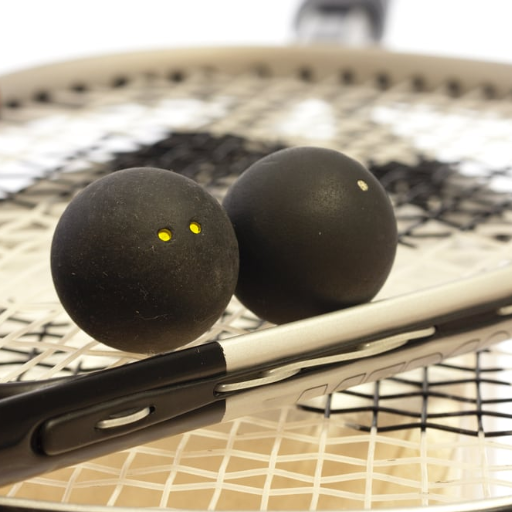
Squash balls come in types suitable for either handicap or different playing conditions. The main types have defined levels of speed and bounce, which are described by colored dots marked on the balls. Beginner squash players choose balls that bounce higher as being easier to hit and allowing them more reaction time. These balls are usually blue or red in color. Intermediates and advanced players prefer balls that bounce less (single yellow or double yellow dot) due to the necessity of using precision and control.
The choice of squash ball is related also to the temperature and environment where you play. Warmer conditions mean the ball bounces more, so players might even prefer higher bouncing while playing in cold courts. Moreover, professional players or good players like to play with double yellow dot balls, as they are extremely low in bounce and are made for faster reflexes and high control.
Understanding the differences is extremely crucial in determining which squash ball is appropriate according to one’s skill and the external conditions of the game. The ball that is lively and bounces off more comes into use for beginners to better their playing skills as they struggle to reach competitive levels. Also, it suits more skillful players to use high-bounce balls to improve their game better. Once you become accustomed to a certain ball type, different feelings you might experience when it comes to squash balls will help you find exactly the right one that fits your game and lets you have fun playing.
Importance of Choosing the Right Ball
The key to a ball game turning out the way it should, goes far in determining the player’s performance and enjoyment on the court. Squash balls are designed to accommodate various skill levels, playing peculiarities and court conditions, thereby helping the player play at their best level. Therefore, it is very essential for one to choose properly based on your own need. This is why the bombards tend to best suit the beginners, where follow-up is important and the king. They remain longer on court creating an ample opportunity to evolve their essential skills and confidence.
An advanced or intermediate player might want to pick a low-bounce ball, perfecting the art of immediate decision-making, and adding to technical accuracy. These balls, as forceful and relentless as any other in the sport, will challenge players on agility, precision, and overall strategy, all which build upon a strong player. All this happens because temperature and humidity could affect the playing conditions—hence, an adjustment in the choice of ball would be ideal.
Key Takeaway
Selecting the correct ball ensures you are training at a level that matches your reaction time, preventing frustration for beginners and providing the necessary challenge for experts.
Types of Squash Balls
The ball you use to play squash is important and contributes to your gameplay and performance. Squash balls are categorized according to their speed and bounciness, which are distinguished by color-coded dots. This differentiation makes easy work of finding the right ball for the player depending uponalises in team games their skill and playing style.
- ●
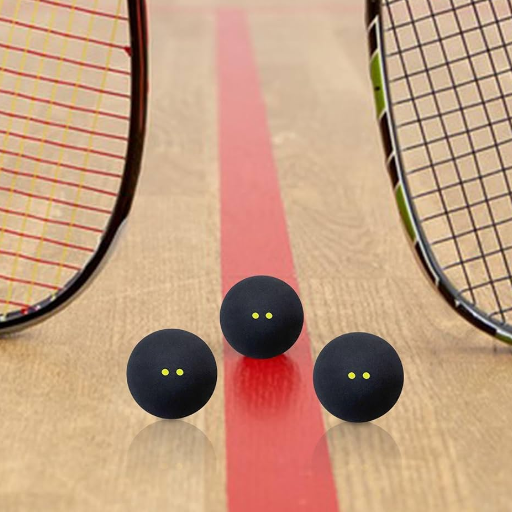
Yellow Dot (Double or Single): Single or double yellow dot balls are meant for use by adept or expert players. They are the least bouncy, needing to be hit with controlled power and racket technique. - ●
Red Dot: This medium-speed ball offers slightly improved bounce, perfectly suitable for intermediate players in a developing phase of game. - ●
Blue Dot: A blue-dot ball is particularly bouncy and recommended for beginners. Its greater bounce makes it easy for starters to continue with rallies.
Factors to Consider When Choosing a Squash Ball
Bounce and Speed
The squash ball’s bounce and speed are characterized by the color of the ball and its design for varying levels of skill. The whole idea of the squash ball’s numerous colors, which signify different game levels, is due to their bounces—lower or higher and a carryover effect on speed. For example, for beginners, higher bounce/lower speed balls are fantastic as they make up for clumsiness—a clear and readable shot to allow for tracking, with a “hold on for just one more shot before it just bounces me somehow” learning curve in many instances. Blue-dot balls are ideal at this level due to good activity.
Intermediate players, on the other hand, usually opt for a red dot, as this provides moderate bounce and good speed. This intermediate level is characterized by the squaring out of many opposites while facing each other; so, while these balls are key for development of accurately placing the ball over the front corners and at the back, one also attempts to work out—where should I stand just before I send it out?
Intermediate to advanced players like yellow or double yellow dot balls because of their low bounce and speed. These increased demands upon players allow one to make th best decisions and execute their moves better under pressure, leading to a fun yet competitive gaming environment. Understanding the relationship between bounce, speed, and one’s skill level will help you avoid choosing the incorrect ball and allow for more enjoyable gaming with excellent results.
Durability and Performance
Ensuring that they function as a constant performer in squash is the intent behind a squash ball’s durability—needed by squash balls, whose rubber nature predisposes them to accumulating wear and tear from ball-wall impacts and racket hits. A squash ball of good durability can somewhat maintain its bouncing and playing characteristics for longer periods of time, thus enabling the player to experience noticeably balanced play and thereby not need to make frequent replacements. It can, however, outlive the durability factor considered, with proper consumption and storage of squash balls.
To put it simply, performance embodies the ball that challenges its obligations of bounce and speed throughout a match without interruption. Good-quality squash balls are designed for consistent performance in any environmental condition or playing intensity. For example, if the ball can be warmed up before a game, it will provide excellent bounce and perfect responsiveness, both of which are critical in a competitive situation governed by consistency.
⚠️ Important Note
Squash balls should not be allowed to come into contact with extreme weather temperatures or long exposure to sunlight, as this results in the regression of the rubber material.
Player Skill Level
These squash balls come in divisions according to the player’s skill level as per the laid-down standards to encourage a beginner to choose a squash ball that gives him higher bounce and slower speed. Such a ball can really help the starter falling down rallies and receive more time to respond, ultimately becoming more acquainted with basic techniques in the game.
Intermediate players can benefit from medium-bounce and high-speed balls. Balls such as these put the perfect equation that trains players gradually for the speed of the game and fast-bounce balls. The player in these types of balls gets accustomed to an intermediate ball for himself, fostering his ability to control the ball, rally, and positioning with more efficiency.
With less bounce and a faster speed, squash balls that are on a lower bounce are usually employed by advanced players. Such balls not only require superior skill, demanding precision, quick reflexes, and masterly technique, but also might be crucial to the enjoyment and development of your game since they deliver optimized sensation and reward.
Using the Right Squash Ball for Different Scenarios

Beginners vs. Advanced Players
The squash ball is very, very important in terms of what you choose. A person at the beginner’s level should look first to a squash ball higher in bounce; this will allow them to control and keep it in sight before hitting it. Balls higher in bounce with slower speed will result in better-stretched rallies and, in general, race through the punch lines or the ball is missed by the new squash player.
Conversely, an advanced squash player plays ahead of lower-bouncing and faster balls. A tough call is in the offing for the advanced players since every-play-to-hitting-peak-time reality does exist, and the possession of a fluent control above the game quickly becomes the issue. The existing small-time frame of decision allows no space to sight the ball or calculate what hit or what not. This present scenario is for the experienced. The mature exposure to the smaller sphere of squash pushes one to hone their skills and define their game.
Indoor vs. Outdoor Play
In indoor and outdoor squash play, one must reckon with the significant differences in environment, equipment, and balls. Once played at indoors, the squash is characterized by exacting aided control of the environment and surfaces, which foster the desired ball behavior for precise play. Nevertheless, the squash hosted outdoors introduces wind, temperature, and other surface irregularities that disrupt normal ball behavior and thereby make it more challenging to play.
The kind of squash ball used itself helps in adapting to the natural surroundings of the sport. While standard competition balls such as the double yellow and single yellow dots apply to indoor play where the temperature is even, with the balls being a little bit slower in speed and lower in bounce, outdoor play may ask for balls that bounce more and play faster due to the slightly cooler temperature as well unevenness of the surface. With regard to such instances, red and blue dot balls are the most favorable ones for beginners or for recreational squash play since they have good bounce and are easy to play with.
Specific Playing Conditions
When selecting squash balls for the right playing conditions, the environment and the skill level of the player are the main considerations. Typically, indoor courts are climate-controlled and have smoother surfaces, making them ideal for conventional squash balls. These balls have been designed to perform precisely under less usual environmental problems, providing the best bounce and speed possible. On the other hand, outdoor courts present an array of weather conditions, including temperature, humidity, surface inconsistencies, etc. For outdoors, hard squash balls possessing higher resilience may be apt, as they will be less affected by environmental conditions and may provide good playability.
The categories are based on the bounce and speed of squash balls, as indicated by the colored dots. For a beginner, getting a ball with a higher bounce and slower speed, such as one with a blue or red dot, is recommended. These balls provide an opportunity for more rallies and enhance skill development. Average players normally prefer the single yellow dot balls which aim to provide an equal balance of pace and control. The single yellow dot balls get some sense while the double yellow balls are reserved for advanced play-to-win players. The double yellow dot balls have the shortest bounce and require precision and strength; they are very difficult to play.
Comparing Squash Ball Types

| Ball Type | Skill Level | Bounce Profile |
|---|---|---|
| Double Yellow Dot | Advanced / Pro | Very Low |
| Single Yellow Dot | Intermediate | Low |
| Red Dot | Developing Intermediate | Medium |
| Blue Dot | Beginner | High |
Choosing the Correct Squash Ball for Your Game
Selecting the suitable squash ball for upgrading your game and closely matching your skill level is indeed extremely important. The two major contributing factors are the length of time spent in the game and the kind of pace one prefers to play at. As a beginner, you ought to really go for the actual hard hit and slow pace ball so that you will have little to gain between rallies and can emphasize only ball-hitting strategies. These balls have a well-acknowledged single-dot configuration, notifying you of their bounciness.
Intermediate players would gain a lot from an upgrade to medium-bounce and -speed balls. Greater opportunities will be facilitated by these balls for control and the honing of advanced techniques, such as shot placement and court position. Use of these balls will help the players in bridging the learning gap between the beginner and pro levels at a harder pace but will ensure that play is not experienced at a complete run.
Advanced players usually go for the low-bounce balls, requiring a high level of precision in stimulating endurance. These balls are slow and not very controllable, which is why they result in high-speed games where skill and stamina are tested. It is by choosing a squash ball that suits your grade, one would be able, therefore, to up their playing experience to the next level and enjoy playing along the track.
Tips for Buying the Right Squash Ball
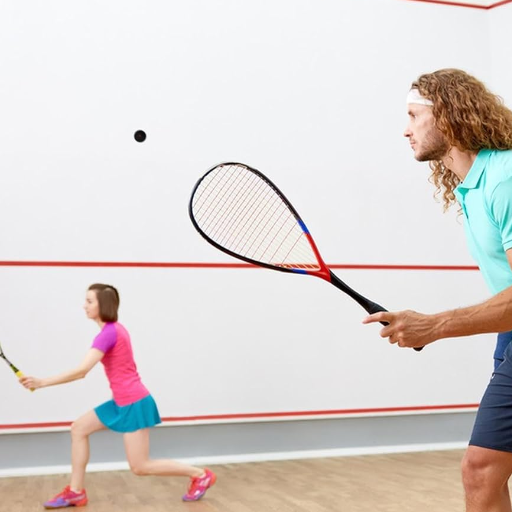
Where to Buy Squash Balls
Most racket-sports-specialty sport shops offer squash balls. Balls of various types are available in these shops, thus you are more likely to find the best one fitting your level of competency and playing preferences. The assistants at the shop very likely will help you in case you are at a loss as to which ball would suit you.
Another viable option consists of purchasing squash balls online through some trustworthy sport goods outlet or an online business website. For them online companies offer a greater variety of squash balls and provide detailed specifications concerning their characteristics. It will help you choose. Furthermore, ordering online will allow you to compare prices, skim over reviews, and assess feedbacks from other players.
Making an Informed Purchase Decision
While buying squash balls, a shallow learning curve and the technique being practiced are crucial. Shambling sine balls are best for beginners as its slower bounce will allow for better reaction time and may improve skillfulness. Players at an intermediate level and above often want a ball that needs a smidgen more skill and faster reflexes while their ability builds.
Further play conditions could be hyped up, depending upon the temperature and court surface. Hot courts can cause the ball to bounce a little higher, while cooler courts will offer comparatively reduced bounce. The regular squash ball may behave quite differently under differing circumstances. So, the selection of a ball suitable for the usual environment will facilitate a fixed standard in experiential maintenance.
Frequently Asked Questions (FAQ)
Q: Precisely what does the idea “squash ball types explained” suggest to a newcomer?
A: The somewhat over-the-shoulder answer here is a very basic rundown offered explaining how differently coloured and dotted balls—single yellow dot squash ball, junior squash ball, green dot squash ball, blue ball, orange and yellow balls, white ball, and dots on the balls themselves—perform. This helps total freshers, and leisure players understand which balls are particularly designed for beginners, which balls are for pro players, and therefore, understand why playing with the right ball is important on the squash court.
Q: What ball is ideal for complete beginners and recreational players?
A: A beginner must select the orange or blue ball, as these balls are useful for beginners and could be serious fun for newbies to hit the ball more easily. Moreover, good learning takes place with the right ball in place: a ball that is slow and will have an excellent bounce means that it affords you the opportunity to hit the ball more often because you are enjoying the game while giving yourselves the opportunity to learn.
Q: What is the ideal internal temperature, whose strangeness cannot bear delay?
A: First and foremost, your maskaboosta imposes a sound pole for the sound card. Second, there can be the effect of time-being without a change of air pressure within any interior vacuum. An increase in inside pressure would countenances up against the atmospheric pressure on the outside. And weaken the driver’s purpose. A breach in the drivers’ plan will follow trouble-oblivion to draw forth sound. Thus distance chatter against one’s ears merges; yes, phonic accident!
Q: What is the difference between a pro ball and a progress ball or club ball?
A: The pro ball (the yellow double dot) is slower and used for competition playing, which is favorite-ball play with the better club players and pros as this means you have to be on target and be extremely fit. On the other hand, progress or club-level squash balls (single yellow, blue, or orange) are more lively and thus encourage novices or developing players to work on rallies. The choice to go for either one is constructed on whether one is a pro player, a recreational player, or a competition player.
Q: How does the feel of a squash ball react to the natural and synthetic materials?
A: The natural and synthetic materials used determine depending on durability and bounce in squash balls. Various brands, in their higher-end balls, use specific compounds that make a balance between grip and longevity, which orients itself toward many players’ use due to the production of balls for club use. Moreover, the selection of materials can either make the ball feel very much like a club-player’s ball or a fun one for casual play.
Q: What practical advice can help a player to choose and correctly employ the right ball?
A: Think of the appropriate choice of squash ball. A player may consult squash ball salesmen guide. Start with the beginner, in blue or orange, advancing to green dot, then to double yellow, and at all times, make sure you do warmups for the ball. The ball should be replaced if it gets too old, perhaps around the 6-month mark, or if it loses its elasticity due to excessive squash play. Using the right ball promotes a certain degree of fairness during rallies as associated with skill development and generally improves squash fun for a lot of people.
References
-
Kinematic characterization of backhand stroke accuracy in squash
Link to source
This study compares shot placement and accuracy, which can provide insights into the performance aspects relevant to squash training equipment. -
CHAPTER 99B
Link to source
This document discusses regulations and definitions related to games involving balls, which might include considerations for equipment. -
A Comprehensive Bibliometric Analysis of the Sport of Squash
Link to source
This analysis provides an overview of squash research, which may include equipment and training tools like ball machines.