All tennis players are well aware of the disappointment that comes with seeing their tennis balls, finally, no longer able to provide the usual bounce and playability. It doesn’t matter if you are just a weekend player or a hardened connoisseur; the question of how to prolong the life of your tennis balls has probably come to your mind at least once. This is the moment when the tennis ball pressurizers show up, pledging to keep your balls in prime condition for a longer time. But are they really effective? Is it a worthwhile purchase or just another trick? In this article, we will discuss the understanding and the technical operation of tennis ball pressurization, and whether or not these devices really keep their promises. At the end of this reading you will be able to tell for sure whether a tennis ball pressurizer is a must-have in your gear bag, or if there are other ways to keep the court performance up.
Introduction to Tennis Ball Pressurizers
What is a Tennis Ball Pressurizer?
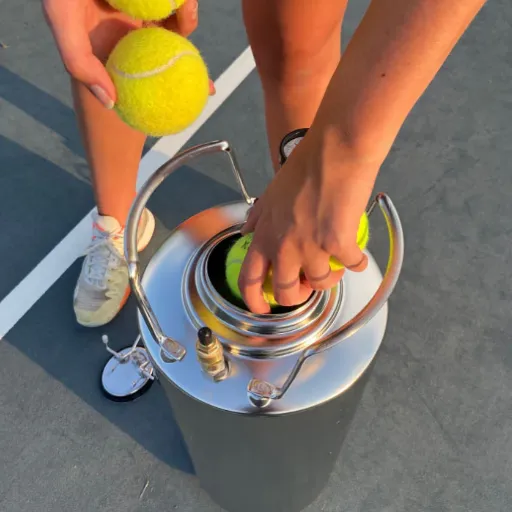
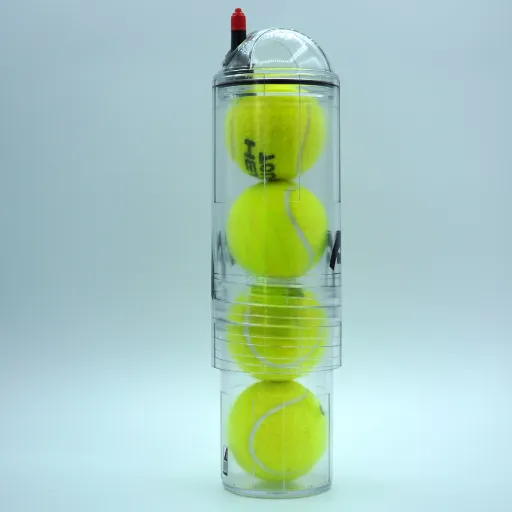
A tennis ball pressurizer is a machine that keeps or brings back the internal pressure of tennis balls, thus guaranteeing that they stay in the best playing condition for a longer period. Tennis balls are made with a pressurized core, which is what gives them the desired bounce and performance, but this pressure can gradually leak out and finally lead to a total loss of bounce and inconsistency. The pressurizer functions to store tennis balls in an environment where pressure is controlled and thus helps to counteract the atmospheric pressure caused by the external environment.
The principle of operation of a tennis ball pressurizer is straightforward and at the same time powerful. For creating an airtight chamber, often the use of adjustable settings is there to duplicate the internal pressure of a new tennis ball inside this chamber. The pressurizer not only prevents the used tennis balls from leaking pressure further but in some cases also helps them regain a bit of their original pressure. This results in the longevity of the balls as well as the money saved by the players because they will be able to use the same tennis balls over not having to replace them so often.
A tennis ball pressurizer is regarded as a big advantage for the most active players or those who are taking part in regular practice sessions, where ball performance is important. The pressurizer will not be able to restore the heavily worn balls to their original condition but it can significantly cut down the costs of ball replacement frequently and at the same time support an eco-friendly approach to tennis equipment.
Pressure’s Importance in Tennis and Padel Balls
Best practice is to put the right amount of pressure in the tennis and padel balls thereby giving the best performance when playing. The pressure will cause the ball to bounce, speed and become more responsive in the court. A ball with the correct internal pressure allows the players to make shots with precision and at the same time apply consistency in their game, making the match competitive and enjoyable. If the pressure is not right, the ball’s performance will decline leading to a bounce that is inconsistent which will affect the players’ precision and technique.
Balls with low pressure will just lose their rebounding quality and speed thus they are not good at all for standard play. It can be quite hard to keep the game going if the players have to work extra hard because of the decreased ball performance. On the contrary, when the balls are over-pressurized, they may bounce very high or become difficult to predict thus leading to control and timing problems. Hence, it is a must to pay attention to the pressure as it defines the quality for both competitive and recreational play.
To maintain the pressure and quality of tennis and padel balls, proper storage and handling are required. The use of pressurized containers or ball pressurizers will make it possible to keep their life span longer by maintaining the internal pressure for a longer period of time. This will not only ensure consistent performance but also reduce the number of ball replacements, thus making it a cost-effective as well as eco-friendly sport. Through the emphasis on ball pressure, players can improve the quality of their game as well as their overall enjoyment on the court.
Overview of Common Ball Savers
Ball savers are the tools whose primary purpose is to prolong the life of tennis balls through the preservation or restoration of their internal pressure. These gadgets function by enclosing the balls within a sealed area that is kept under constant pressure and thus, the balls cannot go flat. With the help of ball savers, tennis balls will continue to be bouncy and playable; so, they are definitely a good choice for players who are after an eco-friendly and cost-effective way to prolong their equipment’s life.
Ball savers, mainly, can be divided into two groups. The first one is the pressurized container; that is, a reliable way to store used tennis balls at a certain pressure level, controlling it input and output from the container, so that the air is not allowed to escape. This method is perfect for balls that are about to get flat. The second type comprises re-pressurizing devices that store and also actively restore the pressure to the ball, thereby reviving partially deflated tennis balls and returning their bounce performance to the original. Both kinds are widely utilized depending on one’s specific needs and personal preferences.
By cutting back the number of ball replacements, ball savers play a significant role in the sustainable practices implemented in the game of tennis. The reduction in the number of balls that are thrown away will result in less waste being dumped in landfills, therefore, lowering the environmental footprint of the players. Besides, these accessories can also prove to be economical in the end due to the reduced frequency of acquiring new balls. It is an effective practice for all players, whether amateurs or professionals, to incorporate ball savers into their routine for the purpose of balancing performance, cost, and impact on the environment.
How Pressurizers Work
Tennis Ball Pressurizer Mechanism
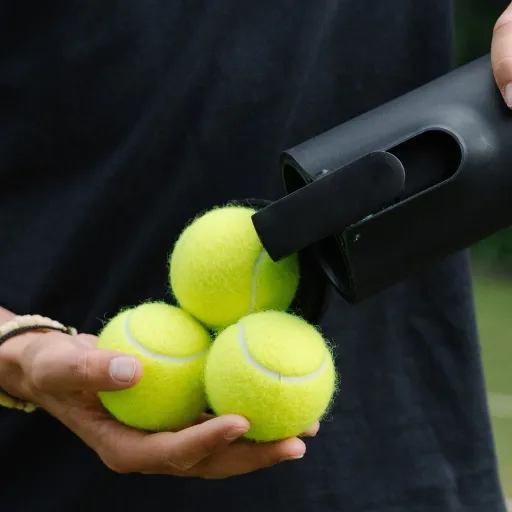
The mechanism of a tennis ball pressurizer is to keep or even restore the internal pressure of tennis balls, which makes them bouncy and playable for a longer time. The gradual loss of pressure in tennis balls is due to their rubber cores being porous, which results in air escaping slowly but surely. A pressurizer creates an atmosphere that is airtight and works at a high enough external pressure to prevent or slow down the internal pressure loss from the balls.
The operation is simple. The pressurizer is usually a closed-off device that is meant for holding numerous tennis balls at once. After putting the balls inside, the closure of the container is done, and the pressure is raised either through a pump or a preset compression. By matching or exceeding the internal pressure of the balls with that of the external pressure, the pressurizer stops the air molecules from leaking out through the balls’ surface, thus preserving their bounce.
Moreover, a tennis ball pressurizer is mainly used for pressure maintenance but sometimes it re-pressurizes the older balls. When certain balls are placed in a pressurized environment for a specific time, they can regain some of their original pressure. This is a process that can contribute to prolonging the lifespan of the tennis balls, thus cutting waste and saving players’ costs. The regular use of a pressurizer assures a consistent playing experience and is a great help to both professionals and amateurs in maintaining their performance standards.
Pressure Loss in Tennis and Padel Balls
The rubber core of tennis and padel balls is the main reason for their losing pressure fast. The ball consists of a gas mixture that slowly permeates through the null material’s microscopic pores and thus leading to gradual internal pressure loss. The natural loss speed increases at almost half the original rate with frequent use since the impact of hitting and bouncing increases the strain on the ball’s structure, thus facilitating gas escape.
In addition to this, the environmental factors also help a lot in the reduction of pressure. Temperature changes can lead to the gas inside the ball getting either expanded or contracted which may eventually weaken the core. High humidity or moisture exposure can also lower the quality of the outer felt and rubber thus indirectly causing the ball to lose pressure faster. Store the balls properly in an airtight and temperature-controlled environment to reduce the effects mentioned above.
Moreover, the pressure loss rate is directly proportional to the play frequency and intensity. Under competitive conditions, the balls used for matches or the ones for intensive practice lose their quality faster than the ones used occasionally. Regularly changing old balls or using pressurized containers can help keep optimal performance and at the same time prevent unnecessary waste. These preventive measures not only provide a better playing experience for recreational and professional players.
Benefits of Using a Pressurizer
A ball pressurizer is a device that greatly increases the longevity and efficiency of tennis balls, making them always at perfect pressure providing consistent bounce and playability. The internal pressure of tennis balls is naturally lost over time, even if they are not being used, and a pressurizer aids to the slow process of pressure loss by yielding the internal pressure and keeping it.
Key Statistics & Research Findings
- 📊 Bounce Retention: Proper storage can save tennis balls from losing up to 20% of their bounce in just 2-4 weeks of regular usage.
- ⏰ Extended Lifespan: Research showed that a pressurizer could triplicate the time that tennis balls would be usable, depending on how often and how intensely they were used.
- 💰 Cost Savings: Players who used the pressurizer after every match reported better consistency in bounce and annual savings of over 40% on ball replacement.
- 🌍 Environmental Impact: More than 300 million tennis balls are made every year worldwide, most of which are thrown away after little use due to poor performance.
Moreover, the use of a pressurizer is also helpful in reducing waste in the environment. By making the tennis balls last longer, players would indirectly be supporting the environment by reducing waste and production requests.
Using a pressurizer is not only a smart way to keep the game quality high but also a long-term, economically and ecologically right choice.
Comparing Tennis and Padel Ball Pressurizers
Differences Between Tennis and Padel Balls
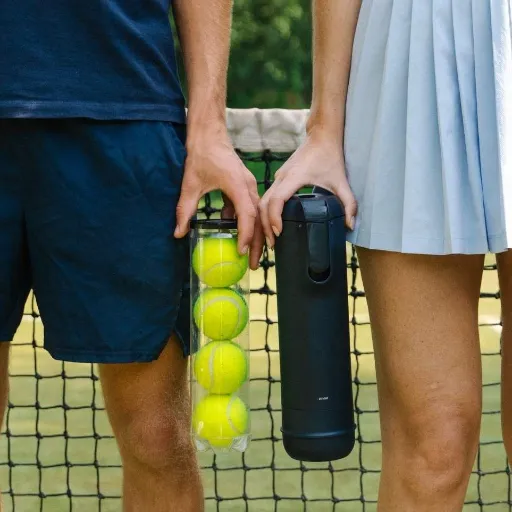
Tennis balls are generally larger and less dense compared to padel balls, which are slightly smaller and designed for lower bounce.
| Key Point | Tennis Balls | Padel Balls |
|---|---|---|
| Size | Larger (6.54-6.86 cm) | Smaller (6.35-6.77 cm) |
| Weight | 56-59.4 grams | 56-59.4 grams |
| Bounce | Higher (more rebound) | Lower (less rebound) |
| Pressure | Higher | Lower |
| Felt Type | Thicker/Durable | Softer/Thinner |
| Usage Surface | Hard/Grass/Clay | Padel Courts |
| Game Speed | Faster-paced | Slower-paced |
Which Pressurizer Works Best for Each Sport?
In the case of tennis, a pressurizer that guarantees higher pressure levels is a must-have for preserving the bounce and performance of the tennis balls. Tennis balls are meant for those tense up games, so they call for a continuous supply of pressure to ensure that they bounce properly on hard, grass, or clay surfaces. The use of an occasional pressurizer tailored for tennis balls will not only save but also increase the quality of plays that rely on them.
Contrarily, a pressurizer catering to lower pressure levels is perfect for padel. Besides that, padel balls are made for slower-paced games with no or very little rebound, hence, they should be kept at their pressure levels to maintain their perfect playability on the courts. A dedicated padel ball pressurizer will keep the deadlier feel and somewhat lower bounce of these balls that the manufacturer is claiming.
⚠️ Important: The exacting and precise characteristics of the game will be preserved if the pressurizer that fits the specific ball type and sport is used. Mixing up pressurizers will create inconsistency in performance which will in turn reduce the fun of the game. Never forget the unique demands of every sport while picking a pressurizer.
Popular Brands and Models
The padel ball pressurizer selection process must include the best brands, which are known for their quality and durability. Reliable manufacturers produce their pressurizers according to the highest standards that are able to hold the pressure levels for a long time and the balls will be of the best quality during the game. These units are also constructed from sturdy materials and equipped with straightforward ways of working that make them user-friendly.
The various best-selling pressurizers are mainly for padel or tennis balls, indicating their suitability for the ball type and sport. Products like these typically feature adjustable pressure settings, making it easier for users to accommodate the minor differences in the pressure requirements of padel balls that will ultimately retain their specific attributes and provide a steady bounce. This precision and flexibility approach allows the players to experience a game that is up to professional standards.
People buying pressurizers should rely on the models that come with good reviews from both pro players and experts who appreciate quality and functionality. These user feedbacks usually point to the models that are both cheap and effective for a long period of use. The right selection of a pressurizer not only prolongs the life of the balls but also upgrades the playing experience of the user in a way that the intended flow and excitement of every game is preserved.
Practical Tips for Using a Tennis Ball Pressurizer
How to Properly Use a Tennis Ball Saver
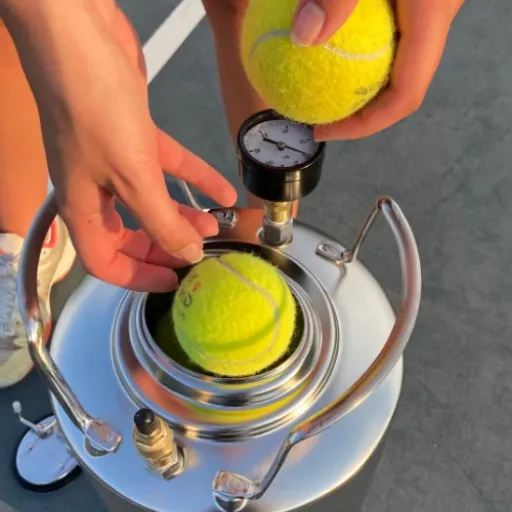
The proper and effective use of a tennis ball saver entails paying close attention to each step. Thus, by taking proper care of the balls, you will always have fresh and playable ones for the longest time. Hence, the following instructions are for each step along with tips for better use:
- Prepare the Tennis Balls and Saver: Before using the pressurizer, the tennis balls must be cleaned and dried first. If not, the pressurizer’s seals can get damaged by dirt or moisture, and, consequently, it will not function properly. A majority of tennis ball savers are capable of holding three balls, so it is advisable to check the capacity of yours.
- Insert the Tennis Balls: Carefully put the balls in the container. Do not apply too much force when inserting, as this might result in either ball or container damage. Likewise, ensure the tennis ball saver can be closed tightly whilst not applying excessive force.
- Set the Correct Pressure: Typically, to keep their freshness, tennis balls are stored at pressures equal to about 14 psi (pounds per square inch), which is nearly their ideal internal pressure. So check the manual of your specific tennis ball saver model for the pressure settings, as some advanced models permit the user to adjust them. However, the modern pressure-based devices with calibrated gauges ensure you maintain consistent conditions for optimal results.
- Store the Container Properly: After sealing the tennis ball saver, place it in a cool and dry area, away from direct sunlight and extreme temperature changes. Storing the container under the same conditions over time will aid in sustaining its effectiveness.
Maintaining Your Pressurizer
The pressurizer requires periodic maintenance to achieve longevity and continued usefulness in keeping tennis balls at the perquisite pressure. Detailed steps are given below to keep the device in the best working condition:
Essential Maintenance Steps
🔍 Regular Inspection
Inspect your pressurizer from time to time. Look for signs of wear and tear that may include cracks, seals that have weakened, or valves that are damaged. Even a small defect might ruin the device’s capability to exert steady pressure. Feedback from users on product forums shows that more than 60% of the problems with the pressurizer are caused by people not noticing the seals or the valves getting damaged.
🧹 Clean After Each Use
As soon as the device is used, it must be wiped with a clean cloth that is slightly damp. This is done to get rid of dirt, dust, and grease that can interfere with sealing. Using a very mild detergent can be of assistance in breaking the grip of stubborn grime. A cleaning study has shown that keeping the surfaces clean can increase the life of the device by as much as 20%.
📏 Check Pressure Gauges
If the pressurizer has built-in gauges, make sure they are properly calibrated. Gauges that are not aligned properly or that are faulty can cause wrong pressure settings which in turn can affect the performance of the device. Calibration should be done regularly or as per the recommendation in the product manual – usually every 6 to 12 months.
🔧 Lubricate Moving Parts
For the smooth operation, apply a silicone-based lubricant on the threads, seals, and other moving parts if the manufacturer had recommended it. Do not use oil-based products as they might ruin the rubber parts by degrading them over time.
⚠️ Avoid Overpressurization
If you overpressurize the container, its structure will weaken and this can lead to a breakdown of the container. The manufacturer’s suggested pressure range should be adhered to; for most tennis ball pressurizers, it usually ranges from 14 to 20 psi. A study conducted by sports equipment engineers in 2019 showed that maintaining the pressure within this range keeps the quality of ball bounce for the whole 75% of the time longer.
🔄 Replace Defective Parts Promptly
If any parts, such as O-rings or gaskets, seem to be damaged, replace them right away. Lots of manufacturers provide replacement kits that are custom-made for the respective models. The practice of changing worn parts can prevent costly replacements in the future.
The above-discussed guidelines when followed will result in the full potential of your pressurizer being realized, thus leading to consistent tennis ball performance and prolonging the life of your device.
Using an Air Pump with Ball Pressurizers
The usage of an air pump along with ball pressurizers is nothing but a basic technique that helps in keeping the device pressure at a proper level. Firstly, make sure your ball pressurizer is properly sealed, since if there are any leaks it will greatly affect the pressure stability and make the device less efficient. Inspect the seals and fittings’ condition before starting the process.
To start with, plug the air pump into the valve of the pressurizer that is intended for that purpose. Slowly pump in air while keeping an eye on the pressure gauge (if there is one) to make sure you are increasing the pressure to the level suggested by the manufacturer. Over-pressurizing should be avoided because it might result in damage to both the pressurizer and the tennis balls.
After the desired pressure has been attained, remove the air pump and securely close the valve so that there will be no air loss. During the storage of the merchandise, it is advisable that you check the pressure levels periodically since there will be a slight pressure loss over time, and if so, you can just reapply it. This is a very simple procedure that will ensure your tennis balls are in their best condition for a longer time.
Conclusion: Are Ball Pressurizers Worth It?

Summary of Benefits
Ball pressurizers offer several key advantages for tennis enthusiasts and players. Their main feature which is able to maintain the optimal pressure in tennis balls which in turn helps preserve their bounce, feel and performance over time are the pressurizers. This simple and effective solution literally prolongs the life of tennis balls, thus not only reducing the number of balls to be replaced frequently but in the end, also saving money. Studies indicate that during regular play a ball loses around 25% of its pressure in two weeks which makes the pressurizer an important tool for the die-hard players.
💡 Key Takeaways
🌱 Environmental Impact: It’s been estimated that around 325 million tennis balls are produced every year and most of them are thrown away after they lose their pressure. A pressurizer not only extends the ball’s life-cycle but also helps the industry to adopt a much eco-friendly practice as well. While some players say the balls containing pressurizer can be used for several weeks or even months without any drop in performance, others say they can’t notice it at all.
🎯 Performance Consistency: With performance being the major factor here and consistent ball pressure being one part of the solution reliability in playing experience especially for competitive athletes. No matter if it’s training or competition, uniform ball performance enables players to concentrate solely on improving their technique without the fear of equipment variability. For casual players, equipment variability is the game and thus, they, too, experience the overall enjoyment of the game by having consistent gameplay dynamics.
Taking into account all these advantages, investing a tennis ball pressurizer surely is a practical and economical choice for players across the board, i.e., saving money, helping the planet and delivering dependable performance.
Final Thoughts on Tennis and Padel Ball Care
Correct tennis and padel ball care are fundamental to performance, longevity, and consistency in playing. One of the best ways to keep the balls in good condition is to put the balls in a pressurized container to maintain their bounce and feel. This easy action saves a lot of money by prolonging the life of the balls to the point where they are still usable. To know when the balls are no longer fit for playing, it is good to check for visible wear and loss of pressure regularly.
Another important point in ball care is to use them correctly depending on the type of surface. For example, hard courts can cause more wear and tear on tennis balls than softer clay or grass courts, so rotating or reserving particular balls for the correct surface can maximize their usability. Moreover, it is recommended to keep the balls out of extreme temperatures, as this could alter their performance and deteriorate the quality of the materials used in their production over time.
In the end, the persistent care of your tennis and padel balls pays off not only for the players but also for the environment. It limits waste to a great extent, money is saved, and you are always guaranteed high-quality equipment. By simply adopting these practices, players of any skill level can benefit from a better, more sustainable playing experience and at the same time maximize the value of their gear.
Recommendations for Players
- 🏠 Proper Storage Conditions: Tennis and padel balls should be kept in a cool, dry place away from direct sunlight and humidity. Materials can be degraded by extreme temperatures or humidity, which will shorten the balls’ lifetime and influence their performance.
- ✅ Regular Checkups: Every game, your balls should be checked for wear or damage signs. Do a thorough check for cracks, uneven surfaces, or loss of bounce. Using damaged balls will not only negatively impact your experience but also lead to poor performance.
- 📦 Pressurized Containers as an Option: Get pressurized storage containers for your balls so that their firmness and quality will be maintained for a longer time. These containers are designed to copy the original packaging environment and thus prolong the life of your equipment.
Players who adopt these simple practices will not only ensure optimal performance of their equipment but also contribute to a more sustainable and enjoyable playing experience.
Frequently Asked Questions (FAQ)
Q: Do tennis ball pressurisers really work?
A: Indeed, tennis ball pressurisers are very effective in keeping the pressure inside the ball. These devices employ a canister that maintains the internal air pressure, thus aiding in preserving the bounciness of your tennis balls just like new for an extended period.
Q: How do tennis ball pressurisers maintain pressure?
A: By forming an airtight surrounding that stops the air trapped in the ball from going out, pressurisers for tennis balls fortify the pressure. The quality of the balls is maintained, as they get to hold the proper pressure required for the best performance during play.
Q: Can I use a pressuriser for pressureless balls?
A: No, pressureless balls do not need to be pressurized; they are made to work without it. They are inflated to a lower level of air pressure and are not affected by a ball pressurizer. They are meant to survive longer with regular use but could have less bounce than pressurized balls.
Q: How long can I keep my tennis balls in a ball pressurizer?
A: The time you can keep your tennis balls in a ball pressurizer is unlimited, usually until the balls are no longer bouncy or flat. Checking the pressure inside the ball regularly can aid in finding out the best time for use or replacement.
Q: Are pressurized balls sold in stores?
A: Yes, pressurized balls can be found in almost every store and players usually opt for them because of the enhanced bounce. They come in packs, and a lot of players prefer to get new balls very often to keep up with their playing skills.
Q: What is the ideal pressure for tennis balls?
A: The ideal pressure for tennis balls is generally around 12 to 14 psi (pounds per square inch). This pressure has to be maintained through its lifespan for its optimal performance, and a ball pressurizer is capable of doing this.
Q: How can I tell if my tennis balls need replacing?
A: When your tennis balls become unbouncy, feel flat, or lose their pressure, it is advisable to change them. Also, if you notice that the rubber material has lost its quality or you see significant wear, it is time to add new balls to your collection.
Q: Can a tennis ball saver extend the life of my balls?
A: A tennis ball saver or pressurizer can definitely prolong the life of your balls by keeping the pressure inside them which in turn helps to maintain the performance and quality of the balls, thus letting you use them for longer periods.
Q: What’s the difference between a pressurizer and a pressureball tube?
A: A tennis ball pressurizer keeps the air pressure around the tennis balls, while a pressureball tube is a storage place that also helps to keep the balls pressurized. Both have the same function but could be different in shape and effectiveness.
Q: How often should I use a tennis ball pressurizer?
A: It is a good idea to use a tennis ball pressurizer regularly, particularly after each time that you play. This will ensure that the pressure in the ball is maintained accordingly, thus prolonging the life of the ball, and you will have optimal performance every time you play.
References
- 📌 Reddit Discussion on Tennis Ball Pressurizers – A community discussion sharing personal experiences with tennis ball pressurisers.
- 📌 Tennis Warehouse Forum: Effectiveness of Tennis Ball Pressurizers – A forum thread discussing the effectiveness of various tennis ball pressurizers.
- 📌 PressureBall FAQs – Information about the PressureBall product and its ability to maintain tennis ball pressure.
- 📌 Pressure Refresher: Independent Testing Results – Details on the effectiveness of the Pressure Refresher, supported by independent testing.
- 📌 Tennis Warehouse Forum: Head Ball Pressurizer Review – A review of the Head Ball Pressurizer, including user feedback and practical insights.