Whether a beginner developing their fundamentals or an advanced player searching for polishing skills, an adequate training facility and equipment can be the deciding factors in pulling up the tennis game. These days, innovative tools abound in the market for the training of technique, consistency, and improving one performance on the court. In other words, this guide will navigate you through the selection of the best tennis training aids and essential gear to enhance your game further. From accuracy-oriented devices to tools that develop endurance, here lies a list of options suitable for any player. Unleashing your ultimate potential and walking onto the court with unwavering confidence await you!
Understanding Tennis Training Equipment

What Constitutes Tennis Training Aids?
Tennis training aids are basically tools or equipment designed to make players better at some aspects of the game. They could be working on hitting accuracy, footwork, or endurance. They complement the actual practice sessions and coaching, focusing on specific skills or areas that need improvement.
Common training aids, for example, include those to improve strokes and consistency-mainly, remainly bound nets and ball machines-which allow for repetitive shot-making, working on muscle memory and accuracy. In the meantime, others concentrate on agility and quickness-cones and ladders for footwork drills-make the player faster and more efficient on the court.
Therefore, strength and stamina building aids consist of resistance bands or weighted equipment. These systems essentially help the player to build physical endurance and power, which are necessary for persistent performance during matches. Any training aid can bring improvements to the player’s skillset and thus uplift the quality of their game.
The Importance of Selecting the Right Training Tools
To derive maximum performance from training and to minimize the risk of injury, it is necessary to select training tools. The tools should complement the athlete’s requirements, whether he wants to improve speed, agility, strength, or endurance. For example, resistance bands may be used to strengthen particular muscle groups requiring development, while agility ladders would help with coordination and balance skills. Hence, choosing tools to meet the individual needs will facilitate efficient and focused training.
Moreover, quality and safety include factors taken into consideration when training aids are selected. Inferior or inappropriate equipment can facilitate bad form, setting back an athlete’s progress, and possibly even inflicting injury. One should seek tools that will be durable and easy to operate to minimize any chance of an accident during training. Most definitely, it is advisable to consult coaches or experts to ensure that such equipment is up to the set safety standards and assists in the player’s development.
The capacity for adaptability and variety in the training tools should facilitate progressive improvements. Tools that accommodate different exercises or can be set to varying levels of intensity permit the slow progression of skills and fitness. This form of adaptability keeps the routines interesting and encourages one to put in consistent effort, both of which are vital for long-lasting success. With training tools selected to meet these criteria, players will be better able to develop specific athletic capabilities and apply those improvements to general game performance.
Overview of Different Types of Tennis Training Equipment
Tennis training equipment is paramount in the development of several so-called aspects of a tennis player’s game, ranging from technique and precision to fitness and agility. These tools are widely divided into three types during classification according to their purpose: skill development, fitness, or court practice.
- Equipment for Developing Skills Items under this category seek to develop and strengthen tennis techniques such as stroke precision, timing, or consistency. The typical and perhaps most well-known items are a rebound net or a ball machine, providing the opportunity to focus on practicing a selection of shots repetitively, including volleys, groundstrokes, or serves. These regular practices engrain muscle memory into a person and build confidence during actual match situations.
- Fitness Tools Agility ladders, bands, and medicine balls, among many other devices, are used to develop agility. These tools work out strength, flexibility, speed, and endurance-the four main attributes necessary for successful court movement and sustained performance throughout the game.
- Court-Specific Practice Aids Court-specific tools focus on simulating match conditions to improve other tactical aspects of the game. Markers, cones, and target zones may all be used in drills to train players in shot placement and court positioning. This equipment guarantees that players can apply their improvements to real-game situations.
Best Tennis Training Aids for Skill Development

Top Training Aids for Improving Topspin
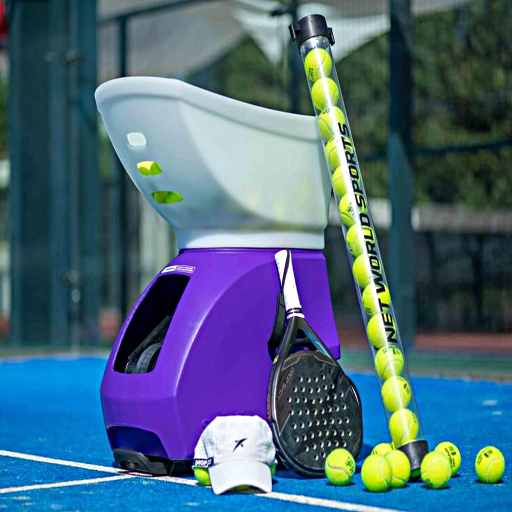
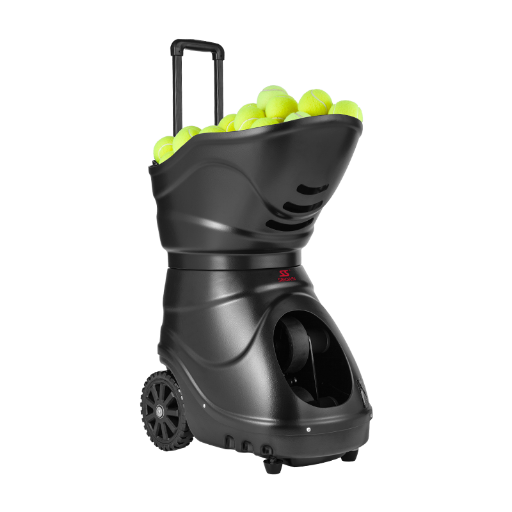
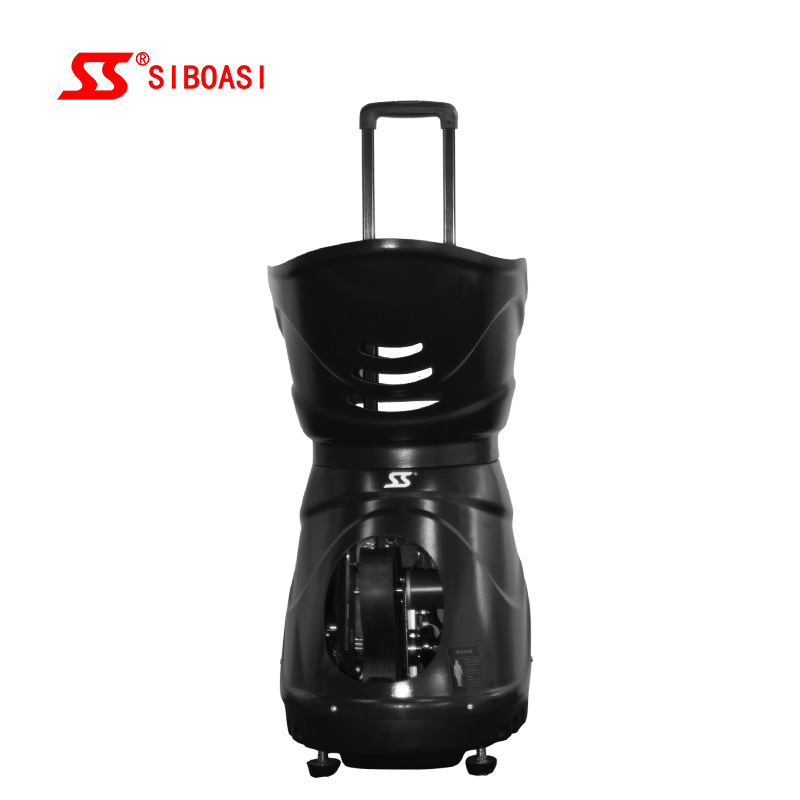
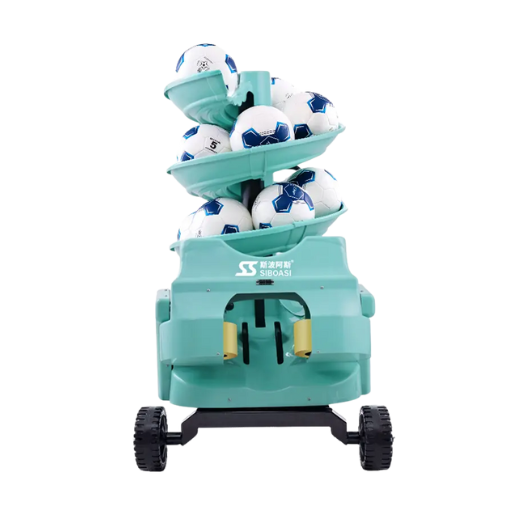
The automatic tennis ball machine ranks among the best training aids for topspin. Feeding balls that are accurate and consistent one at a time enables the player to focus on developing top spin purely through technique. From the ball machine, one can set spin, arc, and speed geared toward creating topspin, allowing the player to work on form and timing under very controlled conditions without outside distractions.
A ball machine ensures engagement in repetitive drills that are important for muscle memory and learning proper top-spin strokes. Players can work on raising the ball higher to generate increased spin or focus on modifying the racket angle just slightly to improve contact. Repetitive practice ingrains proper stroke mechanics into the player and aids in strengthening the player’s consistency and control in building an entire game around those improvements.
Moreover, the machine can simulate match situations by varying shot placements, prompting players to practice topspin from all corners of the court. This adjustability guarantees that what is learned during practice is usable in real match situations, making the automated ball machine an absolute blessing for any player wishing to take their topspin game to higher grounds.
Essential Gear for Enhancing Footwork
Footwork enhancement is dissimilar to other athlete performance enhancement aspects in terms of importance, as it affects the skill set in any sport coached by the athlete. It is the right gear, alongside the feedback, that could improve an athlete’s speed, agility, and movement efficiency. Below are some equipment and accessories, combined with recent information, to help put more steps into your game.
Lightweight Training Shoes
Modern training shoes are extremely lightweight with cushioning designed for comfort and responsiveness. You want to retain those that account for multidirectional movements and have a reinforced toe box for extra durability.
Agility Ladders
Agility ladders work perfectly and improve foot speed and coordination. It has recently been noted in scientific research that at professional levels, athletes may increase their agility by 20-25 percent through consistent use of ladder drills over a period of six weeks. The ladder should be portable and customizable so that you can tailor the exercises to your specific sport.
Resistance Bands
Resistance bands will always be an option for strengthening leg muscles and stabilizing joints that ultimately enable better footwork. Journal sources from the sports therapy domain inform that working with resistance bands improves lateral movement speed by 15%, given that this workout is conducted alongside dynamic stretches. They rank high on the portability scale, which means good training while on the go.
Compression Socks
If designed right, compression socks will support recovery processes of the muscles, enabling the athlete to recuperate more effectively after their practice sessions. Wearing these socks during heavy-intensity training could prevent fatigue while also building endurance.
Smart Insoles
On the advancements side of technology, the smart insoles feature motion sensors that serve as real-time feedback-cum-assessor units, measuring parameters such as balance, stride patterns, and pressure distribution.
By investing in these highly specialized tools and cutting-edge technologies, athletes can optimize performance in moving, in their motions with sharper coordination, and faster with precision.
Tools for Boosting Strength and Agility
Athletes are coordinated through strength and agility measures when using a combination of resistance training, wearable technology, and exercises using bodyweight. The resistance bands or adjustable weights allow one the flexibility to work on various fitness aspects simultaneously while implementing strength training into training. These tools are important for both power and mobility training, both of which in turn improve agility.
Indeed, wearable fitness tech also allows one to track progress towards strength and agility gains and point out areas that can be improved. Information regarding heart rate, motion, and caloric expenditures helps generate valuable insights into his/her performance. Based on this, smart adjustments can be made in his/her training toward better results. Besides, wearable tech can also time and remind for optimum recovery periods, which is critical for the steady gains in performance.
Lastly, bodyweight-building moves such as burpees, lunges, and plyo drills enhance strength and agility without any bulky gear. All these exercises use multiple muscle groups while also assisting with balance, coordination, and reaction time skills. Together with other equipment, these are included in an array of means for the development of efficient training geared toward enhanced physical performance. An athlete can develop backside training in explosiveness and precision necessary for targeted sports or different activities super-superbly through consistent application of these methods.
Choosing the Right Tennis Training Tools

Factors to Consider When Selecting Training Gear
Functionality and Purpose
The primary factor to consider in tennis training equipment is the functionality it serves relative to one’s training intent. Identify tools that fine-tune any area of one’s game; footwork would be one, or maybe accuracy, strength, or combination thereof. For example, agility drill tools work on one’s movement around the court, while resistance tools train strength and endurance. Set your goals first to know for sure how the gear will fit into your development.
Ease of Use and Adaptability
Choose equipment that is straightforward to use and can accommodate various skill levels or training setups. Because they are simple and versatile, such tools will fit naturally into a wide array of training exercises. Training equipment that is lightweight and easy to carry while requiring little to no setup will allow for maximum practice time and flexibility in both indoor and outdoor settings.
Quality and Durability
Color training tools lack the color of good materials, which is necessary for ensuring their safety, longevity, and reliability. Durability in the equipment required for training ensures that it withstands the rigors of regular use, unlike common equipment subject to failure during an important session. The best way to make bold decisions may be by going through tips or recommendations from well-known sources. Quality should be your first priority because training tools will serve as an investment and pay you back eventually.
Matching Equipment to Skill Levels: Beginners vs. Advanced
Choosing training equipment greatly depends on the athlete’s skill level. Beginners should consider simple equipment that is easy to use and promotes the fundamentals of technique and confidence. That being said, lightweight materials and components that may be adjusted and have clear instructions are the main ingredients for anyone just starting in training. This keeps the training accessible and prevents frustration or injury early on.
For the more advanced, the equipment must be suited to his or her skill and the treatment of the training. These athletes require high-grade instruments capable of producing precision and pushing limits. Adjustability and options for customization, strength, and specialized design all need to be included. Such a machine supports the fine-tuning of technique and the achievement of optimal performance.
Ultimately, safety, effectiveness, and the person’s stage of development must come into balance. Simple and supportive structures may help beginners, whereas advanced clients demand equipment that provides freedom and greater challenge. Identifying the needs of each level means the results and progress can take off.
Personalizing Your Training Experience
To truly achieve your fitness goals while simultaneously remaining motivated and excited, it is essential that your training be personalized. Customization into workouts begins with personal goals, which may be strength, weight loss, endurance, or flexibility. What is it that one wants to achieve, and training procedures need to be developed, relying significantly on these goals? Strength training can entail progressive resistance exercises, whilst getting more flexible could involve a little yoga or dynamic stretching.
Next, consider your fitness level or your physical condition. Beginners will be helped perhaps by easier exercises with lighter weights or shorter durations, while the more advanced can venture into complex exercises and increased intensity. Adaptations may be needed when there is an illness, injury, or any medical condition, and in such cases, consulting with a certified trainer or physical therapist would be best for adequate direction. It would seem that programs tailored to the individual promote greater adherence to training while decreasing injury risk. Such programs are, therefore, more beneficial in the long run.
Last, training includes a variety of exercises and feedback to ensure progress is continually made. Combining cardio, strength training, and flexibility exercises will prevent boredom and provide good overall fitness. Performance assessment should be regularly implemented to modify intensity, duration, or types of exercises accordingly, so the training plan grows along with the athlete. Researchers attest that tracking one’s own measures of progress (through fitness applications or journals) actually doubles the chance of actually following through on one’s promise to fitness. Making sense of the training to cater to your needs can make it tolerable for you as well as doing something worthwhile.
Effective Techniques for Using Tennis Training Equipment

Step-by-Step Guide to Using Common Training Tools
1. Tennis Ball Machines
Tennis ball machines are good training tools, focusing on consistency and correct reflex actions. To use them correctly, do as follows:
- Set speed and spin: Modern machines basically let you adjust the ball speed and spin-topspin or backspin. Beginners work best in slower speeds and minimal spin, so that they can concentrate on proper form.
- Try drills: Use these machines to simulate different scenarios like forehands, backhands, or volleys. For instance, set the oscillation of the machine to practice dynamic footwork.
- Track your progress: Data shows that most players gain about a 30-40% increase in accuracy over a few weeks of doing consistent practice with a machine.
2. Swing Trainers
Swing trainers aim at helping you improve form and grip. How to best do it follows:
- Attachment and alignment: Attach to your racket or hand while following the manual instructions for proper alignment.
- Repetition: One type of repetition is those rehearsed swings in which one develops finer wrist and elbow movements. Research shows that training by means of repeated motions will increase stroke accuracy by 25%.
- Analyze feedback: Most of today’s swing trainers are smart. You can sync it with your smartphone to analyze your grip and swings in real time.
3. Resistance Bands
Resistance bands are versatile strength-building tools that keep you from injury. To do so with your training:
- Choose the appropriate resistance level: Go for the lighter band if you have never gotten into strength training.
- Target key exercises: Shoulder rotations or lateral band walks are those that replicate the on-court movements. Studies show resistance training sets almost 50% against tennis injuries.
- Combine with stretches: Resistance bands can aid in stretching as well to develop flexibility.
4. Agility Ladders
Ladder drills improve footwork and movement on the court. To start:
- Lay out the ladder: Make sure it sits flat on an even surface.
- Drill regularly: Multipurpose drills, e.g., “two feet in, two feet out,” develop speed and coordination. Such exercises done three days several times a week can improve sprint times by 20% for players.
- Check performance: Step up to keep time with a stopwatch for various drills, observing improvement as the weeks go by.
5. Smart Sensors for Rackets
Smart sensors offer valuable information about how you maneuver through your swings and the position of impacts. To use:
- Attach the sensor to the racket: Fix the sensor onto the racket as per the user manual.
- Pair with mobile apps: Pair it to a phone/tablet and start reviewing metrics for speed, spin, and stroke efficiency. They say the more advanced players learn to get better during matches by identifying the faults through these metrics.
- Analyze data trends: Constant data collection helps set goals and work on weaknesses.
Combining the tools with a structured training plan enables players to achieve skill enhancement and better performance, as well as the upkeep of an injury-free status.
Integrating Equipment into Your Practice Routine
Introducing equipment during practice may greatly help in skill development and in tracking progress. One must identify weak areas in his/her respective sport o activity first. For example, if precision and timing are the focus, then any equipment with instant feedback, such as sensors or video analysis, should be used, since they indicate precisely what has to be adjusted. Hence, use this equipment regularly, i.e Every time you train so that your decisions related to your improvement will be based on data.
Organize your sessions so that time is allocated for equipment or apparatus exercises, and at least equal time for the immediate application in scenario-based assessment. The first stage is to work on single or combined techniques or drills using an equipment method that establishes how well the corrective changes were applied. Secondly, work with game-like situations so the corrections can be applied and studied to see if the adjustments translate into better real-world performance. This sort of training checks that the skills are not purely theoretical but rather practical and adaptable to competitive situations.
Finally, assess the equipment that you are using as to its performance, and evaluate the data collected over time for pattern identification and measurement in your own growth. You might have to change how the equipment is being used as well as your training as progression takes place. Remember, equipment is there to help but cannot replace hard practice and discipline. The better you can incorporate this equipment into a well-thought-out scheme, the more that they will help you make steady gains in your performance.
Maximizing Performance with Consistent Training
Consistent training is essential for reaching your optimal performance levels, as it builds endurance, strength, and skill proficiency over time. By adhering to a regular schedule, you allow your body to adapt and improve progressively, fostering a steady increase in performance capacity. Importantly, consistency isn’t just about frequency—it’s also about maintaining quality and focus during each session. Clearly defined goals and structured routines help sustain motivation and make measurable improvements achievable.
To maximize performance, balancing intensity and recovery is critical. Overtraining can lead to fatigue or injury, hindering progress, while insufficient effort can stall development altogether. Including rest days and varying the intensity of your sessions allows your body to recover and grow stronger. Incorporating a mix of activities, such as strength training, endurance exercises, and flexibility work, can also promote overall fitness and prevent burnout.
Tracking your progress is equally important in consistent training. Recording metrics such as workout duration, intensity, and personal bests provides feedback on what’s working and where adjustments are needed. This data helps refine your approach and ensures your efforts align with your goals. Ultimately, sustained commitment paired with mindful adjustments will lead to steady and measurable performance gains over time.
Expert Recommendations and Product Reviews

Top-Rated Tennis Training Aids of the Year
Good training aids become a blessing when it comes to enhancing a particular skill of tennis like serving, accuracy, or even footwork. This year’s best tennis training aids highlight the honing of technical skills alongside the emphasis on physical conditioning, hence making a great training program for any student. For training to be effective, such tools must provide uniform feedback while setting up scenarios resembling actual game situations.
Under swing accuracy and precision category lie one of the very popular categories. These are often target or feedback systems to help players improve their strokes for greater consistency. Something that would help place a ball during practice, so that players can really work on their control and accuracy in drills, which prepares them much more for competitive matches.
Another list of highly recommended items focuses on agility and footwork. Speed ladders, reaction dummies, and coordination trainers rank highly on building speed, balance, and the ability to make quick changes in direction. These are very important skills for every tennis player, so they feel fast while moving on the court. Choosing the training aid relevant to a person’s skill level and goals can really contribute to the growth of their performance.
Expert Insights on the Best Training Equipment
The right training equipment has to be procured to build the critical skills of tennis agility, strength, or precision. For fine footwork and speed, a speed ladder or cones, for instance, can be used to practice rapid changes of direction and at the same time, take care of balance. These might be very simple tools, but they are very effective for building on-court mobility, which is a significant aspect of a player’s performance in tennis.
Ball targets or ball machines, meanwhile, will help players with the development of stroke mechanics and ball control. Repetitive practice allows players to fine-tune their swinging techniques and the consistency of execution. Furthermore, the ball machine provides players with the functionality to work on their volleys, returns, and groundstrokes, and even spread on skill development.
Competitive play requires both strength and endurance. Resistance bands or medicine balls for conditioning focus on core strength and stability-building. When included in a player’s training routine, they enhance power generation, maintain form during bouts, and help prevent injuries caused by the intensity of competition. Good-quality equipment aligned with individual needs and performance requirements ensures a balanced growth in sports performance capacity.
Comparative Analysis of Popular Training Tools
While choosing any piece of training equipment for tennis, the hallmark of a good decision is according to its influence on skill development, enhancing performance, and injury prevention. Resistance bands are versatile enough to use for training strength and flexibility. They are light and portable and can be used to focus on muscular areas of particular importance in tennis: the shoulders, core, and legs. Being low-impact, resistance bands will suit any player and can save them from overuse injuries.
Medicine balls develop explosive power and coordination. They are best gym tools with plenty of on-court exercises through a coordinated action of rotational throws or slams that strengthen the core and enhance shot execution. This tool is also very useful in drills with another player, offering a more dynamic experience.
The return walls and ball machines contribute a great deal to polishing reflexes, timing, and accuracy. Return walls work fantastically when developing repetitive strokes and footwork without outside help, whereas the ball machine adjusts ball speed and spin to actual conditions. Both provide opportunities for players to work alone, which makes them important when a player wants to work alone on perfection. Ultimately, the choice depends on what an athlete is working toward, but a mixture of all could promote overall development.
Frequently Asked Questions (FAQ)
Q: What is the best tennis training equipment for beginners?
A: For beginners, the best tennis training equipment includes lightweight racquets, training balls, and portable tennis rebounders. These training aids help with the practicing of swing paths, building muscle memory for the new players, thereby giving them effective training sessions.
Q: How can tennis training equipment enhance my game?
A: Tennis training equipment like the topspin pro or eye coach specialises in isolating certain skills, such as hitting with topspin, or learning how to kick serve. Using training equipment to work on specific skills can really improve performance on the court.
Q: What training aids would be effective for advanced players?
A: Ball machines and adjustable cones tend to be good training aids for advanced players. These can simulate real-match scenarios helping to perfect every stroke and swings mechanics, including forehands and backhands.
Q: How do I select the right tennis training equipment that suits my needs?
A: Selecting the right tennis training equipment depends on your level of play and specific things you want to work on. A novice may just purchase simple training tools, while an advanced player might seek equipment that helps in developing a specific technique, say, windshield wiper swing or kick serve.
Q: Do tennis training aids help improve my competitive performance?
A: Yes, tennis training aids do enhance your performance on court during matches. Improvement in match time is evident because the player trains with equipment that focuses on isolated skills and mechanics, such as shot accuracy and strength of serves, which goes on to imbibe confidence in the player during match time on-court.
Q: What drills can one carry out using tennis training equipment?
A: There are a lot of drills one can attempt using tennis training equipment. For instance, volley drills with a partner, topspin drills utilizing the topspin pro, or hits by a ball machine. All are designed to assist players in timing, footwork, or hanging on to the sweet spot.
Q: How often would I be wise to use tennis training equipment for training?
A: Training should preferably be done using tennis training equipment regularly, in fact, multiple times per week. Well-rehearsed exercises build up the muscle memory of the players, and they keep developing their skills and techniques.
Q: Could you name some tennis tools that may be taken on a trip for training?
A: There are resistance bands, training ropes, and small ball machines available. These tools can serve as a warm-up, strength training, and skill maintenance program while access to a tennis court is limited.
Q: Who is Joe Dinoffer, and what is his role in tennis training?
A: One or more Italian-style tennis coaches and authors specializing in effective training methods. His methods and training aids have helped many players to improve their games through a set of structured practices and drills concentrating on the required skills. His methods focus on isolating skills and crank up the training.
References
The Tennis Tribe: A comprehensive guide reviewing the 15 best tennis training aids for players and coaches. Visit here.
Tennis Express: An online store offering a wide range of tennis training aids and equipment to enhance your workouts. Visit here.
eBay – Tennis Training Aids: A marketplace for finding deals on various tennis training aids from different brands. Visit here.
Tennis Warehouse: One of the largest online retailers for tennis gear, including training equipment, racquets, and shoes. Visit here.