Basketball is a game demanding precision, skill, and agility. Did you know that the size of a basketball can determine your performance on the court? Whether you are a beginner learning the basics or a seasoned player setting out to improve your skills, choosing the right basketball size is an often neglected step. Difficult to decide upon? This guide simplifies that. Everything you need to know about basketball sizes will be covered here: from age-appropriate suggestions to how size affects the game. By the end of this guide, you will confidently make a well-informed decision, guaranteeing that your basketball experience is enjoyable and productive.
Understanding Basketball Size
What is the Standard Basketball Size?
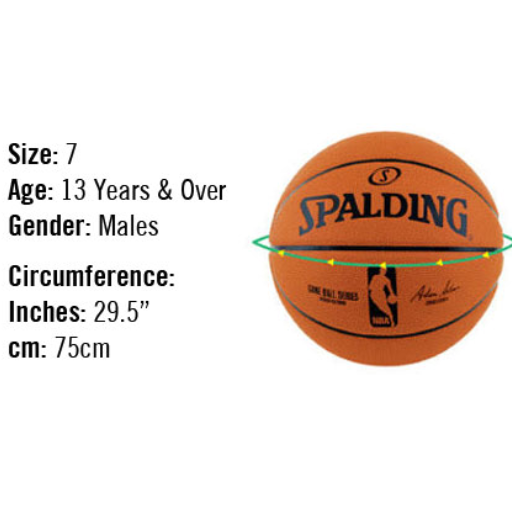
The standard basketball size varies with the league and age of its players. Here’s a comprehensive breakdown of official basketball sizes:
Importance of Choosing the Right Size Basketball
People of all ages and skill levels need to have the correct size of basketball. Right-sizing the basketball offers players comfortable ball handling which in turn improves control, confidence, and performance. It discourages frustration and supports the learning of the correct technique, a very important consideration for younger players in their formative stage of learning key motor skills.
With kids and other beginners, if a ball is too big and heavy, it interferes with proper handling and shooting techniques. Frustrated with an oversized ball, more often than not, players develop bad habits, making it harder for them to learn the right way to dribble, pass, and shoot. By contrast, picking a size appropriate for their ages and strength lets them concentrate on refining these basics of the game, which form a solid basis for further growth.
Moreover, the right basketball size also promotes the aspect of safety. Balls that are weighted too much can bring about the dangers of hand and wrist injuries, especially if played with for long periods. With the correct size chosen, players may practice and compete without much strain or fatigue and thus have a great time being health-conscious while enhancing themselves.
Impact of Basketball Size on Gameplay
A basketball’s size profoundly impacts gameplay by changing control, accuracy, and comfort for the players. With such a significance, this ensures the suitability of the correct basketball size; with the custom-fitted size, the players can anytime stand a chance of dribbling, passing, and shooting well. When the ball feels too big or too heavy to be controlled, a player may find it hard to really entrust their skills to its use during drills or games.
For younger players, an appropriately timed basketball will assist in characterizing the proper technique and shaping precise muscle memory from an early age. This is crucial for attaining further enhancement in skills and confidence on the court. On the contrary, using a basketball that is either too large or small for a child can cause improper hand placements or incorrect shooting techniques to develop, thus losing in the long run some important core basics of the right way to do things.
Optimal basketball size minimizes even the risk of injuries. If the ball is too heavy or awkward to grip, it can place undue stress on the hands or wrists, especially during prolonged play. Ensuring they use whatever size fits their age and physical capability promotes safety and enjoyment, thus providing an environment best suited for growth and performance.
Official Basketball Sizes for Different Leagues

NBA Basketball Size Regulations
NBA Official Size: The official size of an NBA basketball has its circumference measuring 29.5 inches or 75 cm and its weight measuring 22 ounces or 623.70 grams. Known more of “Size 7,” this is the size used during all NBA games and in professional-level men’s basketball.
The NBA chose this size, possibly for the dexterity of professional athletes-prefer control, precise measures, and articulation while performing. The size is optimum, meaning that the basketball at this size measures the highest efficiency in handling, shooting, dribbling, and passing suitable for the highest degree of skills and physicality in the league.
Set balls of the same size and weight help in training and preparation. A player could practice with confidence knowing that what he uses for training on the ball is the same as what he would use in professional games. The criteria point not only to the NBA standards but professional basketball leagues worldwide that aspire to meet these standards.
WNBA Basketball Size Specifications
WNBA Official Size: The WNBA basketball is custom-built to satisfy the needs of the league’s players, subject to professional standards. The official WNBA basketball size is 28.5 inches in circumference, which is just a little smaller than the NBA basketball. This is a Size 6 basketball, weighing approximately 20 ounces.
Being light enough for players to handle but sturdy enough to allow for professional play, this gives the ball a balanced feel in dribbling, passing, and shooting, letting the players play the game at the highest level.
Not only WNBA games do adhere to these size standards, but these standards have found widespread acceptance in the world of basketball for women worldwide, training-based competitions constituting the twin pillars in this regard. Such consistent standards enable a player to develop confidence and technique while using equipment that mirrors the conditions of professional games.
FIBA and NCAA Basketball Size Guidelines
Both FIBA and NCAA follow specific basketball size guidelines to maintain consistency in the game and also to ensure its fairness. The size 6 ball is the standard size for women’s basketball, with a circumference of 28.5 inches (72.5 cm) and a weight of about 20 ounces (567 grams), as opposed to the male basketball size of 7 having 29.5 inches (75 cm) and 22 ounces (623 grams) of circumference and weight, respectively.
For men’s basketball, the standard size ball is size 7, having a circumference of 29.5 inches (75 cm) and weighing approximately 22 ounces (623 grams). This testing size is utilized in FIBA and NCAA tournaments alike, accounting for and respecting male players’ physical requirements and tastes encoded at a professional-collegiate level.
The consistent application of these guidelines supports the development of players and creates a uniform experience across all FIBA and NCAA basketball competitions. With such standardization, athletes practice and compete under conditions reflecting professional standards, thereby furthering skill development and providing for equal play at different levels of basketball.
Basketball Sizes by Age and Gender
Youth Basketball Sizes for Different Age Groups
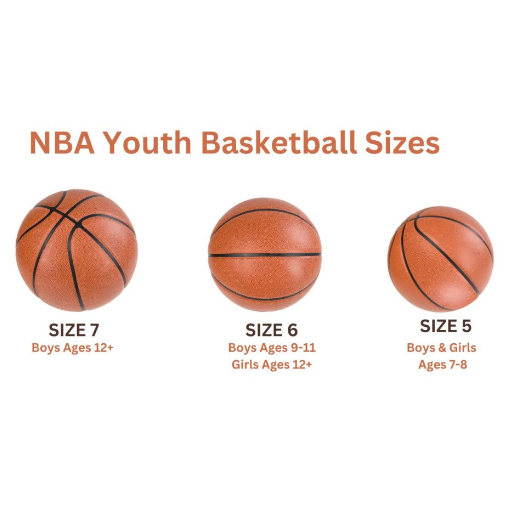
The ball size for youth basketball is chosen in accordance with age groups to ensure its correct handling, skill development, and enjoyment of the game. A proper basketball size would tend to help very young players in learning to shoot, pass, and dribble with proper technique.
Keeping the right basketball size for each age group helps foster skill development and better experience. This smaller and lighter ball is easier for young hands to grasp, ensuring they can learn basic skills without frustration.
Gender-Specific Basketball Sizes
Female Basketball (14+ years)
- Size 6 basketball
- 28.5 inches circumference
- 20 ounces weight
- Used in high school, collegiate, and professional levels
Male Basketball (14+ years)
- Size 7 basketball
- 29.5 inches circumference
- 22 ounces weight
- Used in high school, collegiate, and professional levels
The implementation of proper basketball dimensions helps provide fairness in the competitive sport. This develops the players’ skill set by associating the size of the ball with the child’s age, gender, and physical level. This kind of uniformity ensures safety while further encouraging the advancement of performance on the court.
Transitioning Between Basketball Sizes
The transition between basketball sizes is a stage that is an important part of the player’s development and allows adequate adaptation to equipment during periods of growth. Children start their early years with smaller basketballs appropriate for their age and physical abilities, such as the size-4 or size-5, allowing them to dribble, pass, and shoot correctly.
By mid-adolescence, players should be using the intermediate diameter-6 ball most commonly recommended for younger teens and for girls. This stage forms a bridge between the youth-size balls and the official top-grade size balls as it allows them to refine their skating without being put off by the weight or dimensions.
Finally, older teen-age boys and men use the size 7 basketball, the official size used at the professional level. Now the players must adapt to the demands of the larger ball, where precision and control become critical. Following a structure like this ensures that as these players keep growing, their transitions are supported to enhance performance.
Materials and Construction of Basketballs
Common Materials Used in Basketballs
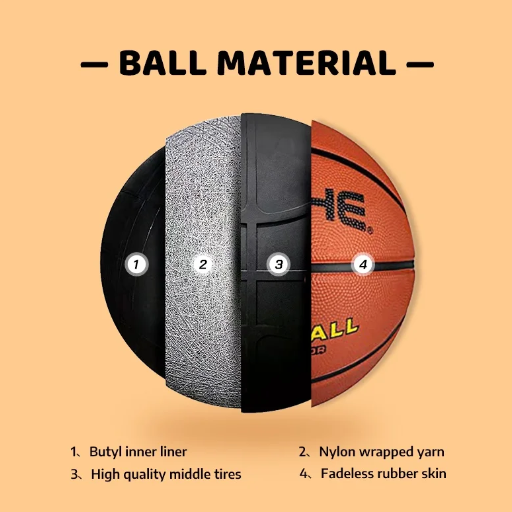
Three basic materials are used in making basketballs: leather, composite leather, and rubber. Each one offers a certain feel, durability, and level of performance, which makes it suitable for some playing conditions.
Leather
Considered the premium-grade product, leather is mostly used for professional indoor games. It grips and gives good control but needs some time for breaking in before it functions perfectly.
Composite Leather
A man-made option with the same general feel as leather but is less expensive and more versatile in use. It can be used largely for both indoor and outdoor sports since it requires less breaking in and is fairly sturdy.
Rubber
The highest durability and least expense earn rubber basketballs consideration for outdoor courts or casual play. Being tough against abrasive surfaces, though they provide less grip and control compared to leather or composite.
How Construction Affects Basketball Performance
The type of construction of a ball significantly affects its performance in terms of grip, bounce, durability, and suitability. The outer finish determines the handling capabilities of a ball. For example, a leather ball offers a good grip and control and is used indoors, while a rubber ball is preferred for the outdoors due to its nature of greater durability but is comparatively limited in handling.
Being a Cartesian construction, the inside, including the bladders and carcasses, bounce back into performance and air retention. There is no question that a good bladder is important for a maintained-air pressure and hence a predictable responsive bounce. Additionally, a carcass that retains its shape well will translate into reliable performance over time.
Next, the weight and size of a basketball, which are determined by its construction standards, are very important to a game’s play. Balls meeting regulation size and weight ensure the playing experience is consistent; this would be important in practice as well as in competitive games.
Durability and Maintenance of Basketballs
The durability of a basketball mainly depends on its materials and the conditions to which it is subjected. Indoor basketballs feature leather or composite materials, which work best on smooth, indoor court surfaces. However, these materials wear away quickly if used on coarse, outdoor surfaces. Conversely, outdoor basketballs often feature rubber or synthetic materials, capable of withstanding abrasive outdoor conditions.
Maintenance Tips:
- Store in a cool, dry place when not in use
- Maintain proper air pressure (7.5 to 8.5 psi)
- Clean with a damp cloth and avoid overexposure to moisture
- Use appropriate ball for appropriate surface (indoor vs outdoor)
Following these basic maintenance practices while being aware of the special needs of indoor and outdoor basketballs ensures that players always have the best playing experience and translates into prolonged usage for the ball.
Choosing the Right Size Basketball
Tips for Selecting the Most Appropriate Basketball
Step-by-Step Selection Process:
- Determine the appropriate size: Consider age, gender, and skill level to select from sizes 5, 6, or 7
- Consider the material: Choose leather/composite for indoor use or rubber/synthetic for outdoor play
- Test for comfort: Ensure the ball feels comfortable and matches playing style
- Check regulations: Verify size requirements for league or competitive play
Considerations for Casual Play vs. Competitive Sports
Casual Play
- Size flexibility based on player preference
- Age-appropriate sizing for comfort
- Material choice based on playing surface
- Emphasis on enjoyment and skill development
Competitive Sports
- Strict adherence to league regulations
- Official size requirements (Size 6 for women, Size 7 for men)
- Consistent standards across all levels
- Proper inflation pressure (7.5-8.5 psi)
Proper basketball sizes make controlling basketballs easier and shooting them more accurately, permitting more enjoyment of gameplay, be it during casual or competitive basketball, according to skill level and purpose. This simple yet important consideration will go a long way in improving one’s experience in the field.
Frequently Asked Questions About Basketball Sizes
Why is it crucial to employ the proper size basketball?
The right-sized ball offers an entire advantage to developing skills and enhancing comfort during the play period. An older player or a beginner might find it difficult to dribble, shoot, or pass when faced with larger or heavier balls, thus becoming an impediment to his or her progress. Conversely, too small a basketball will allow for the development of poor techniques.
For competitive play, leagues and age categories typically prescribe official ball sizes. Familiarity with the right size helps enhance confidence and technical ability and minimize strains or injury to players during play.
How do I select a basketball size for youngsters?
Ease of handling should be the utmost consideration for young beginners. For children aged 9-11 years, a Size 5 basketball is generally recommended, for its smaller size and lesser weight suit their emerging strength and motor skills. For younger kids, like 5- to 8-year-olds, something even smaller, Size 4 or mini basketball, will help develop basic skills in dribbling and shooting.
In buying a basketball, keep in mind both size recommendations for age and actual comfort and ability of the player to do something with the ball. Letting the young player try some sizes will help find what fits his or her needs.
Additional Frequently Asked Questions
References
- Basketball Dimensions & Drawings – Provides official dimensions and specifications for basketballs used in professional games.
- Guide To Basketball Sizes By Age & Gender – Offers a detailed guide on basketball sizes based on age and gender.
- Basketball Sizes Chart (PDF) – A chart that outlines basketball sizes for different levels of play, including high school, college, and professional levels.
- Guide for basketball training
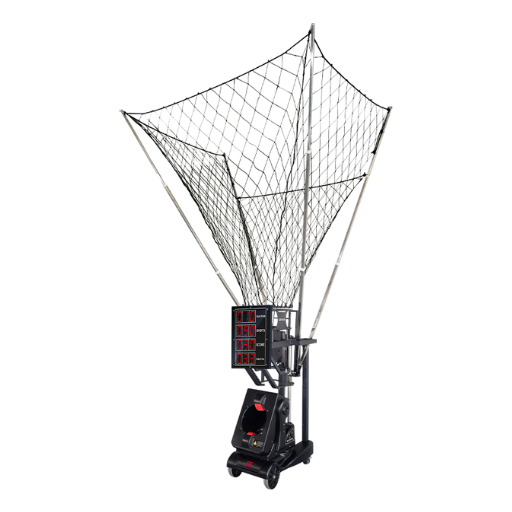
- Top Basketball Shooting Machine Manufacturer and Supplier in China