Sports equipment designs often conceal beautiful engineering stories, and few examples bring out this better than the golf ball and tennis ball. From the very tiny, precisely designed dimples on a golf ball to the intricately woven fabric of the tennis ball, these designs have become a few of those aspects that far from being aesthetic have seen years of experimental procedure and innovation geared toward getting the highest level of performance. Why then do golf balls have dimples? How does the fuzz of a tennis ball affect gameplay? This article is about the wonderful collision of design, physics, and functionality that these two iconic tools of sport present. Whether you consider yourself a sports person, a design enthusiast, or just someone who wonders how everyday objects come to life, there is much more than meets the eye awaiting you with some learning and a few surprises.
Introduction to Tennis Balls and Golf Balls

Designs of tennis balls and golf balls vary drastically to match the divergent demands of their respective sports. Bigger in size with felt cover, tennis balls bounce off different surfaces so that the player has maximal control and visibility during the play. Golf balls, on the other hand, are smaller with hard dimpled surfaces to reduce drag and increase distance when hit. Thus, these focal design features affect the very manner in which each type of ball acts during the game in ways that help enhance performance and player experience completely into different directions.
Overview of Tennis Balls
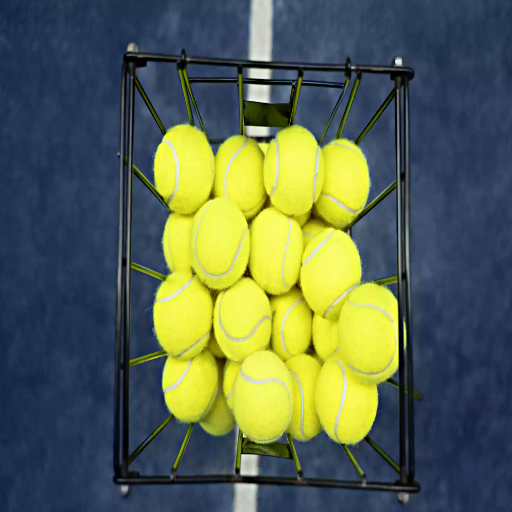
Tennis balls are engineered with extreme precision in propulsion so that they may bring about consistency, durability, and performance in the game. A cashball usual modern tennis ball consists of a pressurized rubber core with an outer layer of high-quality felt, which is durable. The felt permits longevity to the speed and bounce, and the feel of the ball allows the player to exert misplaced control and precision on his side of the court.
A standard tennis ball should weigh from 56-59.4 g and have a diameter of 2.57-2.70 in, as per the stringent criteria set up by the ITF. Clubs classify their tennis balls into three categories, that is, Type 1 (fast), Type 2 (medium), and Type 3 (slow), to adapt to the various court surfaces, which consist of grass, clay, and hard courts. These categories also constitute ball speeds that are expected to combine well with a given surface to enhance playability on that surface.
Besides that, manufacturers make pressurized and pressureless tennis balls. Inside pressurized balls is air or nitrogen so that they mean to offer a rather lively bounce. Once a ball loses its air, the bounce starts to deteriorate, and so does the life of the ball. Pressureless balls rely on rubber bouncing; hence, they are preferred for their longevity and are mostly used during practice sessions.
New developments in tennis ball technology include felt material that resists wear and tear, also compensates for seal problems; fluorescent yellow has been the color for professional tennis balls since the 1970s. According to studies, the bright color provides excellent visibility for players, spectators, and even those watching a match on television, especially under varied lighting conditions. These advancements are raising the competitive spirit and ensuring that the petroleum ball will last through each match filled with fast-paced action.
Overview of Golf Balls
The development of golf balls dates back to prehistoric times and the first manufactured golf balls were sculpted from wood. The gutta-percha golf ball evolved at the middle of the eighteenth century, and the rubber-core golf ball arrived in the early 1900s and changed the way the game was played with great force. Modern golf balls are in evolution with respect to precision, distance, and responsiveness so as to meet the needs of every player, be it a professional or a beginner.
Throughout the years, conventional golf balls have mainly been those with a multi-layered construction comprising a core, mantle, and outer cover. The core is usually made of compression-resistant rubber or some material alike, to store energy at impact and release it for maximum distance. Surrounding this core is the mantle, which helps optimize spin rates and control during the flight of the ball. Then, the outer cover helps take care of the ball’s durability and feel, with urethane or ionomer usually being considered for this step.
The aerodynamic character of golf balls counts hugely towards their performance. The dimples are externally engineered to reduce drag and increase lift, allowing for a more steady trajectory and distance. From about 300 to 500 dimples are generally applied on the surface, usually with variations by manufacturer and model to fine-tune the outcome that is most appropriate for a particular style of play. The industry analysts say all of these advancements have contributed toward a steady bettering in shot accuracy, with players of lower handicap favoring balls with higher spin rates to allow them to have greenside control.
Golf balls are also classified by compression rates views 30 to 120, with lower compression being softer and for slower swing speeds, implying that they are for beginners and casual players. However, high compression balls are harder and for the guy who’s going at that higher swing speed so that you get the maximum energy transfer for power and distance.
Data reports from around the world in support of advanced material technology and engineering levels indicate professional golfers clock distances beyond 300 yards consistently, while at the same time aiding the recreational players to enrich their overall performance. Innovations that are making an output to both the game and erosion of the environment through increasingly sustainable developments: for instance, some new models boast biodegradable cores and recyclable packaging.
Significance of Dimples in Golf Balls
Dimples on golf balls play a crucial role in determining their aerodynamics and overall performance. They are specifically designed to reduce air resistance and increase lift, allowing the ball to travel farther and maintain better stability in flight. Without dimples, golf balls would face more drag, causing them to fall short of their potential distance.
Modern golf ball designs typically feature between 300 to 500 dimples on their surface, each strategically placed to optimize airflow. These dimples create a turbulent boundary layer of air around the ball, minimizing the drag caused by pressure differences as the ball moves through the air. This aerodynamic efficiency results in improved speed and control for players.
Additionally, advancements in dimple designs have led to enhanced consistency and performance. For instance, studies have demonstrated that symmetrical dimple arrangements can maximize lift while maintaining spin stability. Furthermore, wind tunnel tests have shown that specialty patterns, like hexagonal or shallow dimples, can provide up to 20% better energy retention during long drives, contributing to greater overall distance.
These developments in dimple technology not only benefit professional players but also offer recreational golfers more control, accuracy, and forgiveness during play. With continued innovation, dimple designs are being fine-tuned to adapt to various playing conditions, ensuring optimal performance for all skill levels.
Size and Weight Comparison
A golf ball is standardized in size and weight so that the performance may remain constant. A golf ball cannot weigh more than 1.62 ounces (45.93 grams) while possessing a diameter of at least 1.68 inches (42.67 millimeters) as per the official dictionary United States Golf Association (USGA) specifications. Such specifications exist so that there is fairness and uniformity in the game; all players circumscribe themselves equally in their level of skill or brand of equipment used.
Standard Dimensions of Tennis Balls
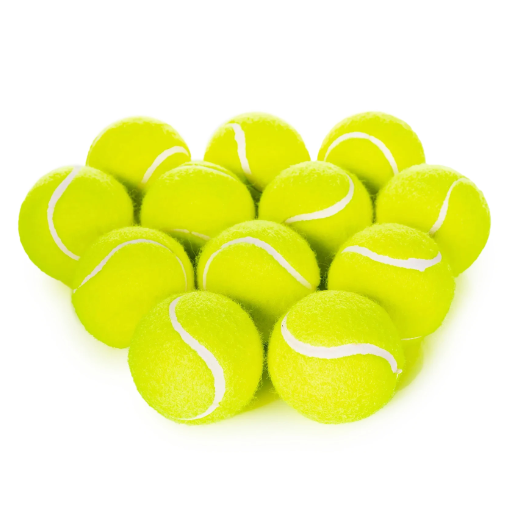
Tennis balls are manufactured following the regulations set forth by the International Tennis Federation (ITF) so as to guarantee fair play and consistency in performance. The ball must have a minimum diameter of 2.57 inches (6.54 centimeters) and a maximum of 2.70 inches (6.86 centimeters). Also, the weight must range from 1.975 ounces (56.0 grams) to 2.095 ounces (59.4 grams). Thus, these specifications are set for balls on which all professional tournaments shall be played, while also ensuring that the very conditions of speed, bounce, and durability obtained from these balls in a match are at their best. Then to ensure unique aerodynamic properties and control by the player, the felt is usually made from a mixture of natural and artificial fibers, thereby providing optimal visibility under different conditions of the court and longer lifespan for the balls.
Standard Dimensions of Golf Balls
A particular size and weight specification for golf balls guarantees inconsistency and performance through numerous playing atmospheres. As laid out by the international standards set forth by the USGA and The R&A, a golf ball can have nothing less than a diameter of 1.68 in. (42.67 mm). The least size ensures that the ball can appropriately interact with club faces and aerodynamic effects necessary for controlled flight. In addition, from a weight perspective, a golf ball cannot be heavier than 1.62 ounces (45.93 grams) so as to prevent any unfair advantage with respect to distance and flight behavior during play.
The current construction of golf balls makes use of materials and engineering techniques so as to create performance effects like spin, compression, and durability. The cover is made of tough materials like urethane or ionomer, which provide an excellent balance of feel, control, and scuff-resistance. The dimples-this number ranges from between 300 and 500-are sculpted and arranged to optimize airflow and diminish drag so that the ball can travel farther and with greater stability during flight. These parameters and design features ensure that all golfers, from beginners to professionals, get the consistent and reliable performance needed to drive off the tee or putt on the green.
Weight Differences Between the Two Balls
Weighting of a golf ball is considered carefully to ensure it performs consistently. The USGA dictates the maximum weight that can be certified for use with golf balls to be 1.620 ounces (45.93 grams). This specification is therefore important as it directly influences the aerodynamics of a ball, how far it travels, and how it is controlled in play.
On the other hand, other training or novelty balls have such different weights that, there can be a meaningful comparison: They try to make lightweight range balls that weigh under 1.620 ounces so that they cannot go so far, while weighted balls for training can weigh more than that to increase a player’s strength or to improve swing mechanics.
Depending on the weight, the player will feel different in terms of trajectory and spin rates: heavier ones give more stability against wind, and lighter ones suffer more air resistance, thus shortening their travel distance. Given these facts, golfers are then interested to select a ball that best suits their style and the conditions of the course.
Understanding these weight-based differences empowers golfers in making the perfect choice for their needs while purchasing golf balls, be it for accuracy, distance, or just practice.
Material Composition

A golf ball is constructed by using different kinds of synthetic materials in an attempt to optimize performance. The cover is mostly made from urethane or ionomer to give it durability and control. The core is usually made from rubber or rubber-like material; it transfers energy maximally for distance. In the case of multi-layered balls, some layers of thermoplastics or similar materials can be employed to enhance individual performance attributes like spin control and feel. Each material acts in unison to provide the modern golfer with durability, distance, and accuracy.
Materials Used in Tennis Balls
The tennis balls are manufactured with a combination of specialized materials that consider performance, durability, and consistency on the courts. The outer covering usually made of a felt blend consisting of wool and nylon gives the ball its unique feel and aerodynamic properties. More expensive balls will have a felt with a higher wool content to enhance performance and durability, especially with aggressive playing styles.
Within the ball is a rubber core that is pressurized. The pressurization method, usually filling the core with one part compressed air and one part nitrogen, is what gives high-quality tennis balls their bouncy feel. Authentic pressurized balls keep about 12 psi (pounds per square inch) above the atmospheric pressure inside the core. Some unpressurized or pressureless balls though, are made to last. They depend on the rubber constitution for bounce and are great for standard back-and-forth matches where their playability is good with the passage of time.
Eco-friendly production may rank equally alongside these technical specifications, with some manufacturers keen on sustainable materials and recycling programs aimed at reducing the environmental detriment caused by tennis balls. Constant developments in material science go hand-in-hand with trying to improve the player’s experience and addressing sustainability concerns in this day and age.
Materials Used in Golf Balls
Golf balls are meticulously designed using a combination of advanced materials to achieve optimal performance, durability, and control. Most modern golf balls are constructed with multiple layers, each serving a specific function to enhance a player’s game.
- Core Materials
At the heart of a golf ball is the core, typically made of rubber or synthetic polymers. The core greatly influences the ball’s compression, which determines energy transfer and distance. Advanced formulations often include polybutadiene—a high-energy rubber compound—known for its elasticity and resilience, allowing longer drives.
- Mantle Layers
Surrounding the core, mantle layers are designed to optimize energy transfer while balancing spin and control. These layers are often made of thermoplastic or ionomer blends, providing a mix of softness for control and firmness for energy retention. Multi-layer designs allow manufacturers to create balls tailored for specific swing speeds and playing conditions.
- Cover Materials
The outer shell of the golf ball is typically made from urethane or ionomer materials. Urethane is a soft, durable material that offers better spin control and shot precision, making it popular among professional and advanced players. Ionomer, on the other hand, is harder and more durable, often favored for recreational and budget-friendly golf balls due to its resistance to scuffing.
- Dimples and Aerodynamics
Dimples on the surface of a golf ball are often designed with precise materials and coatings to enhance aerodynamics. Some advanced coatings include hydrophobic layers that repel water, ensuring consistent performance in wet conditions. On average, a golf ball generally features between 300-500 dimples, meticulously arranged to reduce drag and increase lift for longer, straighter shots.
Impact of Material on Performance
Different materials in the golf ball will give it distinct characteristics that shape its behavior in terms of distance, spin, and durability. Nowadays, golf balls are mostly manufactured in a multilayer format whereby in most cases, it features a high-energy core covered by an ionomer or urethane cover. Urethane covers are preferred by professionals and advanced players because they allow for higher spin control and softness to perfect feel for short-game shots. On the other hand, ionomer covers provide durability and greater distance for the beginner and recreational player.
There is evidence that at low swing speeds, the softer compression balls perform best because when there is less hardness upon compression of the ball nearer to the club, it allows for more energy transfer, so the ball covers good distance for the given swing speed. For example, most ball manufacturers will classify balls into low compression-rated balls (usually between 40-60) for beginners, and high compression (above 90) for golfers who swing faster. To make it fair, all golfers should be able to find a ball that will enhance their game. In addition, newer materials such as hybrid cores and graphene-infused layers are being added to help bridge spin control and durability technologies without sacrificing performance.
Looking at durability, there are data indicating that urethane balls, though softer, might scuff more over time, particularly on wedge and iron shots. Ionomer-based balls, on the other hand, tend to retain their integrity a little longer but do seem to relinquish some short-game control to a greater degree. Ultimately, material innovations improve performance and increase manufacturers’ ability to address different player needs, which consequently maximizes enjoyment and satisfaction on a golf course.
Aerodynamics of Golf Balls and Tennis Balls

Golf and tennis balls don’t approach aerodynamics similarly because of their design and use method. Golf balls have dimples to diminish drag and cause lift by organizing the airflow, thereby giving them the ability to travel further and be controlled better. These dimples allowed air to flow very smoothly over the surface of the ball, minimizing drag. With the opposite intention, tennis balls have a fuzzy felt cover to increase drag. This drag permits the ball to move slowly enough and bounce with feel during play. Both are molded to meet the needs of their sport and act as a compromise between performance and control for best results.
Understanding Drag and Lift
Drag and lift are forces of aerodynamics governing performance attributes of sporting goods, from balls to athlete attire. When an object in motion faces resistance from air, drag is created upon it. Lift, on the contrary, is the force acting perpendicular, mostly upward, along with lateral action. These forces interact to bring about effects on speed, trajectory, and stability in sports.
For example, backspin in golf is the primary lift generated by the Magnus effect, allowing the ball to remain airborne longer. It has been suggested that a golf ball experiences approximately 50 percent less drag with its dimpled pattern than a smooth one, which among other things improves distance and accuracy. Conversely, the streamlined surfaces on cycling helmets and suits reduce drag, thus enhancing speed and conservation of energy. A 5-percent reduction in drag corresponds to gaining multiple minutes in cycling time over a long distance.
Detailed consideration about drag and lift may be found in sports like football. Over the years, ball designs have evolved to create an almost perfect balance between drag and lift forces. For instance, FIFA-approved balls are tested rigorously for consistency in drag and lift behavior, affecting everything from free kicks to long passes. This kind of obsession with aerodynamics guarantees fair play and the best gameplay possible.
Advances in the understanding of drag and lift have greatly enhanced the design of sports equipment, aiding athletes in pushing the performance envelope further in their respective sports. Manufacturers and trainers control these forces to optimize speed, endurance, and accuracy-they give players at every level science-backed enhancements on which to improve.
Role of Dimples in Reducing Drag
In helping reduce drag and, therefore, increase efficiency, dimples have specific applications, such as in the design of sporting equipment. Scientifically speaking, dimples manipulate airflow. When air flows over a smooth surface, it forms a laminar flow-an orderly flow but one susceptible to separation resulting in high drag. However, with the application of dimples, turbulence is created in the thin air layer closest to the surface called the boundary layer. This turbulence works by reducing flow separation; it keeps the air clinging to the surface longer, unusually cutting down on drag.
For example, in golf ball design, dimples reduce drag up to 50 percent as compared to smooth ones, allowing the smooth ball to be propelled twice the distance given the same conditions. Studies in cycling meanwhile show that the use of dimpled patterns over helmets and equipments reduce aerodynamic drag, which ultimately maximizes speed for the pro racers. This evidence presents a clear-cut advantage of precision engineering and aerodynamic principles in the application of dimple designs for performance enhancement in various terms.
Boundary Layer Effects in Both Balls
The behavior of the boundary layer is critical to the aerodynamic characteristics of smooth and dimpled golf balls. In simple terms, a boundary layer is a thin layer of fluid-like air beside the surface of an object passing through it. For smooth balls, the boundary layer is more likely to remain laminar in nature. Laminar or smooth flow separates early from the surface of the ball, creating a vast zone of low-pressure turbulence termed a wake behind the ball. This larger wake size results in increased drag forces, thereby reducing the range of the ball and stability in flight.
Dimple patterns, however, tend to disrupt the boundary layer, inducing a transition from laminar to turbulent flow. Though turbulent flow promotes more mixing within the boundary layer, it also allows the flow to remain attached to the ball’s surface for a longer distance-to-first separation, thereby limiting the size of the wake. So this drag reduction helps in the increased aerodynamic efficiency of the dimpled ball. Research has demonstrated that under the same conditions, dimpled golf balls travel nearly twice the range of the smooth golf balls-that is a huge gain!
The same sort of concept is applied in baseball and cricket, where seam positions or surface textures also manipulate the boundary layer to affect lift, curve, or drag, turning elevation or curvature into a game of strategy and precision. Engineers seek to understand these phenomena through state-of-the-art wind tunnel testing and computational modeling, so that design changes can be applied with precision toward optimal performance.
Performance Differences in Sports

Performance differences in sports can be attributed to factors such as equipment design, athlete skill, environmental conditions, and biomechanics.
|
Key Point |
Parameter |
Details |
|---|---|---|
|
Equipment |
Material |
Impact on aerodynamics |
|
Athlete Skill |
Precision |
Technique and accuracy |
|
Environment |
Weather |
Wind, humidity effects |
|
Biomechanics |
Force Mechanics |
Posture, power, motion |
|
Surface |
Texture |
Grip, bounce impact |
|
Strategy |
Tactics |
Techniques in gameplay |
How Each Ball Travels in Its Game
In my opinion, ball movement in any sport is influenced by its design, the materials from which it is made, and its interaction with the environment. A baseball’s seams create turbulent flow, which significantly influences its motion and gives the pitchers an option to throw curveballs or fastballs. The tennis ball’s fuzzy surface gives it favorable aerodynamic characteristics to allow controlled spin and bounce off. In contrast, the smooth panels and stitching pattern on a soccer ball give it a strategically predictable flight path when struck. Each ball is designed so as to promote the dynamics and requirements of its particular type of sport, which makes each sport rather special and exciting to play.
Unique Characteristics of Golf Balls
Golf ball dimples are designed very much like an airplane’s wing to reduce drag and increase lift for more accurate flight. The ball is constructed with a core that varies in compressions to influence distance and feel, while the material of the cover gives control and spin to the player. These features come together to tailor performance for various playing styles and skill levels.
Unique Characteristics of Tennis Balls
While thinking about tennis balls, their bright and fuzzy exterior is what immediately attracts one. The construction aims at durability and also at providing grip to the strings of the racket so that better control may be exerted. The core inside offers enough pressure to keep the balls bouncing and reacting well while being played with. Also, these balls are a standard shape and weight, allowing for unfailing performance on clay, grass, and hard courts. Through this, players depend on precision and speed in every game.
Reference Sources
-
University of Florida – Tennis and Golf Balls: This page provides detailed information about the physical properties of tennis and golf balls.
-
PMC – Sports Balls as Potential SARS-CoV-2 Transmission Vectors: This study discusses the surface characteristics of various sports balls, including tennis and golf balls.
-
PubMed – Sports Balls as Potential SARS-CoV-2 Transmission Vectors: Another authoritative source analyzing the surface properties of sports balls, including tennis and golf balls.
Frequently Asked Questions (FAQs)
What is the ball size difference between a golf ball and a tennis ball?
The size of a standard golf ball is approximately 1.68 inches in diameter, while a tennis ball measures about 2.57 inches. This means that the tennis ball is significantly larger than the golf ball, which can affect their performance during play. The larger ball size of the tennis ball contributes to its bounce and the way it interacts with racquets or surfaces on the tennis court. Additionally, the difference in ball size can influence the drag forces they experience when traveling through the air. A golf ball’s smaller size allows it to have a lower air resistance compared to the smoother, larger tennis ball.
How does the drag due to the delayed separation affect a tennis ball and a golf ball?
Drag due to the delayed separation is a critical factor in understanding how both the golf ball and tennis ball behave in flight. The golf ball’s design features dimples that create turbulence, which helps reduce drag and allows it to travel farther. In contrast, the tennis ball has a fuzzy surface that induces turbulence differently, affecting its trajectory and speed. As the tennis ball travels through the air, its larger surface area interacts with air resistance differently than the more streamlined golf ball. Thus, understanding the physics of drag can help players optimize their techniques for both golf and tennis.
What are the differences in how a tennis ball travels compared to a golf ball?
A tennis ball actually travels differently than a golf ball due to its size, weight, and surface texture. The tennis ball is designed to bounce and is made with a solid rubber core and felt covering, which allows it to maintain its shape and provide a good grip for players. In contrast, a golf ball is heavier and has a unique dimpled surface, which helps it cut through the air efficiently. When hit, a tennis ball starts to spin more noticeably, affecting its path and bounce on the tennis court. A golf ball, however, tends to have a flatter trajectory due to its smaller size and aerodynamic design.
How does the coefficient of friction differ between a golf ball and a tennis ball?
The coefficient of friction varies between a golf ball and a tennis ball due to their respective surfaces. The smooth ball surface of a golf ball creates less friction when it strikes the club, allowing for more efficient energy transfer and distance. On the other hand, the fuzzy surface of a tennis ball leads to higher friction when it makes contact with the racquet or the court, resulting in a greater grip and control for players. This difference in surface interaction is crucial for the performance of both balls in their respective sports, influencing how each ball reacts during play. Understanding these differences can help players make informed choices about equipment and techniques in both golf and tennis.