Basketball has always been a test of skill, strategy, and sheer never-say-die attitude; each and every detail makes the difference in finishing good rather than great. Whether you are an aspiring player working hard to get better skills or someone already in the professional’s domain hoping to get on with a training regimen that gives him an edge on court, one thing is clear: what’s important are the right kinds of training aids and complementary practice techniques. This post is all about training techniques and equipment that help you improve your basketball skills by means of innovation in tools and function-based training. From fine-tuning your shot to footwork moldings, we’ll be sharing practical pointers and equipment aimed to take players at each level to the highest level. Get ready to get enlightened about unlocking your basketball training!!
Importance of Basketball Training Equipment
1 Enhancing Athletic Performance
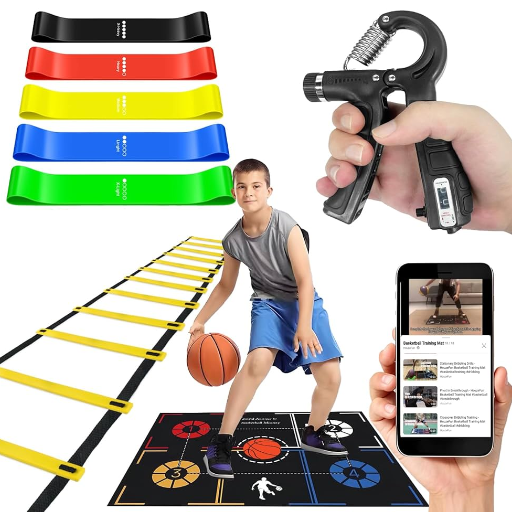
Putting the training equipment to use enhances athletes’ performance by honing certain skills that the sport of basketball might demand. Resistance bands, agility ladders, and shooting aids work to hone the speed, precision, and endurance of an athlete. Such training equipment is designed to test reaction time, coordination, and strategic thinking ability in near-real gameplay environments across a spectrum of drills.
To pinpoint training tools, they address players’ strengths and weaknesses. Resistance tools are useful in developing explosive power, essential for jumping and fast movements, while agility tools concentrate on improving footwork and balance. The more the exercises being performed by the player reflect the intense demands of competitive play, the better it is for preparing players for real-game situations.
Furthermore, equipment-based training structures practice sessions, ensuring their efficient conduct by allowing players to measure skills and track improvement in abilities such as shooting accuracy or footwork speed. Immediate feedback given through fix-ups enables players to polish their skills and step onwards in achieving their performance targets. Investment in the basketball equipment means building an athlete who is apt to thrive in any circumstance.
2 Skill Development through Specialized Aids
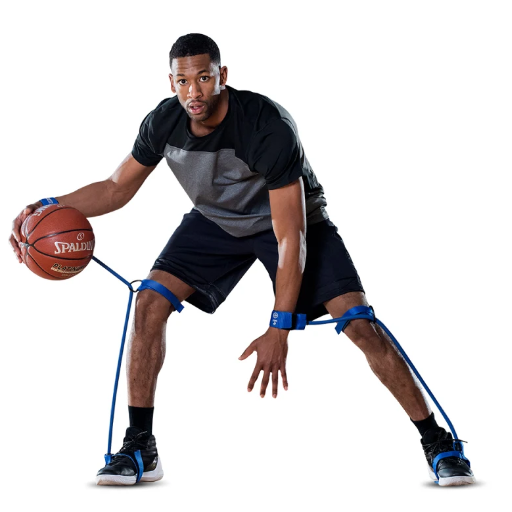
Specialized aids play a vital role in supporting skill development for basketball players through customized solutions targeted at specific problems. Such aids are basically tools and equipment to improve dribbling, shooting, and defensive skills while ensuring the player practices correct techniques and maintains consistency. For instance, dribbling aids improve hand-eye coordination and ball control, while shooting trainers help in maintaining correct shooting form and release.
Use of these tools enhances the core skill set for the athletes and builds instilled confidence within. When players rehearse with aids that bring forth game scenarios, they develop muscle memory, hindering them from cracking under pressure. In fact, specialized aids facilitate endless drills and polish skill-building efforts; that is skill enhancement through repetition refined continuously by feedback, enabling the players to monitor the improvements made while focusing on areas that need further development.
Hence, it creates a systematic and fruitful way of practicing the game. These also help prepare players physically and with techniques for the challenges encountered in competitive games. At its best, implementation of these aids alongside a lucid coaching system and sincere dedication shall liberate the bound potential of an athlete and take them into another competitive level on the court.
Benefits of Using Training Equipment
The use of training equipment is mainly to provide athletes with a systematic way with which to improve their skills and, ultimately, performance. Exercises can target certain aspects of a player’s game: strength, endurance, or technique-hence there is complete freedom for specialized training, given the athlete’s needs and goals. Training with such appliances also develops the player’s weaknesses and thereby guarantees progress.
Some types of training equipment help with injury prevention. Training may be intended to help maintain balance and flexibility and in muscle coordination, thus preventing strains and other injuries. In essence, continuous use of equipment encourages proper form and body mechanics, which will be useful to maintain longevity and performance in various sports environments.
Also, equipment allows one to track one’s progress with highly variable and consistent means. Changes in resistance, performing drills against the clock, and counting repetitions are some performance metrics that athletes use. Having objective means to measure their improvement will keep their minds focused on training and further build confidence during competition, thereby equipping them for the demands of competitive play.
Types of Basketball Training Equipment

Shooting Aids for Accuracy and Consistency
If you have taught a young basketball player the principles of shooting, it is usually advised to keep the non-shooting arm out of the way during the shot. The idea is to develop a smooth shooting motion with the correct wrist action. After the basics are taught, the child can practice without any aids. It is important to note that the amount of time during which an aid is used should be short to allow for further darting development with larger muscle groups when using the shooting aid.
Formation can also go awry with respect to hand placement, release angle, or follow-through; all these factors can affect the success of the shot. Any of these should be corrected in shooting training. Correcting these basics will help the player build muscle memory and shoot well.
Some aids will keep the hand aligned with the shooter’s forearm so that after the ball touches the finger pads, it is expected to have the proper spin and smooth trajectory. The player learns to shoot balanced and controlled, which is very important for consistent shooting results. Other aids give immediate feedback to the shooter if he or she makes a wrong move, so a timely adjustment can be made, and the player learns from his or her errors in practice.
For coaches and athletes, applying shooting aids in their daily training regimen provides a tangible and measurable benefit as time progresses. The aids instill focus and discipline in players trying to cultivate their skills and develop confidence on the court. Used consistently, shooting aids can be a very handy resource in helping players improve shooting accuracy and forging greater success rates during the games.
Agility Ladders for Enhanced Footwork
The agility ladder is among the tools that can be used to master footwork, speed, and agility. The ladder assists athletes in honing their coordination by demanding precise and controlled movements during the drills. Continuous practice on the agility ladder would sharpen a player’s reactivity to stimuli and ability to change direction, vital traits for thriving in competitive sports.
Balance and coordination balance one of the main benefits offered by agility ladders. Fast movements of the feet during ladder drills train an athlete’s internal sensations so that they can support their body in correct posture, even while under pressure. This, in turn, greatly decreases the possibility of an injury occurring within games or training sessions and also enhances movement efficiency.
In addition to agility training, the ladder impartiveness builds endurance and cardiovascular health. A driller will, of course, incorporate high-intensity ladder drills into training to build endurance so that an athlete can maintain high effort and power for long periods. In general, ladder drills present an adaptable and efficient way for athletes to fine-tune their footwork, boost physical conditioning, and gain an edge over their competitors in the sport of their choice.
Resistance Bands for Strength and Endurance
Resistance bands are truly versatile tools for improving strength and endurance. Depending on their resistance level, these bands are lightweight and portable and fit all levels of fitness, thereby becoming a perfect tool for building and maintaining muscle strength. The bands provide constant resistance during the range of motion, thereby engaging multiple muscle groups and allowing for a very controlled form of exercise. All of these factors make resistance bands ideal for strength training exercises like squats, bicep curls, and lateral band walks.
For endurance training, resistance bands are incorporated into circuit training or dynamic workouts involving the repetition of movements. With higher reps and resistance band exercises, muscles are trained to perform under sustained stress; hence, the pack helps stamina-building activities. This kind of training increases muscle fiber endurance and fosters physical conditioning in all domains-from the simple activities of daily living to athletic performance.
They are also safe bands that can cause injury and are good to be joint-friendly, which supports rehabilitation or simple exercise programs beneficial to seniors and beyond. The bands are flexible enough, allowing different exercises to occur at home, in the gym, or on the road. Resistance bands have all levels of resistance and fitness goals that want to be slowly developed without heavy or bulky types of equipment for use in exercises. Be it strength or stamina-building exercises, resistance bands constitute one essential piece of equipment for efficient work.
Choosing the Right Basketball Training Equipment
Key Factors to Consider
Age and Skill Level
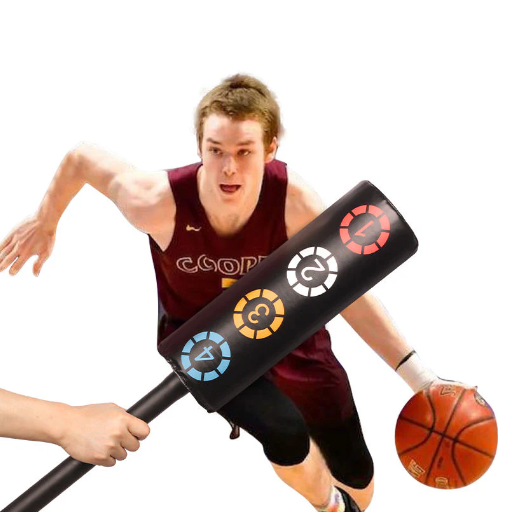
In selecting equipment for basketball training, age and skill level must undoubtedly be considered in order to ensure an appropriate and effective development of the player. For younger or beginner players, there should be lightweight equipment geared toward building fundamental skills, and it should not overwhelm. Adjustable hoops, smaller basketballs, and agility ladders are all great options for this group. All of these training aids give players the chance to work on their hand-eye coordination, shooting accuracy, and basic footwork measures.
The intermediate group of players usually presents some foundational skills while requiring advanced equipment to challenge their progress and improve their game. Resistance bands work for strength training, weighted basketballs develop more powerful shooting, and cones allow for even the more technical drills of dribbling. The equipment focuses on refining their technique while building their strength and endurance, directly preparing them for competitive playing.
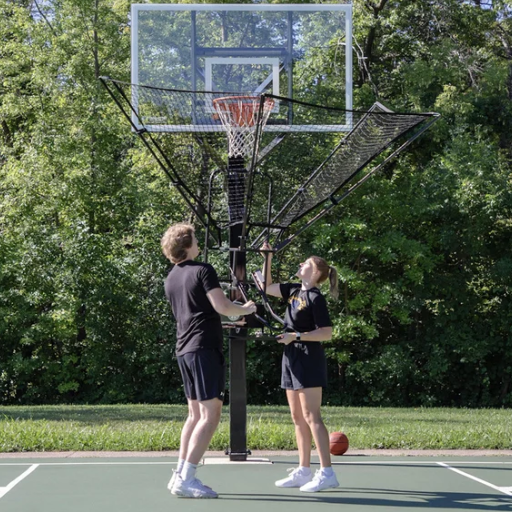
For the advanced players and professionals, equipment should aim at specialized skill development and specific game situations. Training aids such as rebound nets, shot trackers, and balance trainers go into the orchestrating of an athlete’s precision, speed, and tactical knowledge of the game. It is equally important to bring in those that simulate real-game pressure and consequently, preparation for real competition at the upper level. Irrespective of level, an age- and proficiency-based training system will surely bring out the best in all players.
Individual Training Goals and Preferences
When working on an individual training program it is always important to put focus on the actual needs of the athlete and what goals they have to accomplish. Such goals are meant to consider the level being currently demonstrated by an athlete, areas in which they feel an improvement is needed, and the physical and psychological dimensions of their respective sports. For instance, fundamentals could be the major concern for a novice, while another athlete might be interested in developing fine motor skills or strategic decision-making.
Athlete preference is to be considered equally in determining training plans. Working on drills and activities that attract the athlete’s interests will keep motivation from waning. The athlete must be asked for continuous feedback as to keep the training entertaining while improving on the weaknesses. Such interaction empowers the sense of ownership and responsibility, which consequently leads to greater program adherence.
In the end, measurable progress is exceedingly essential for training success on a personal front. Establishing concrete, attainable objectives-the athlete may want to target a specific percentage increase in shooting accuracy, or an increase in endurance allowing longer sessions so training days do not become a drag-allows tracking of the performer. Periodic reassessments and modifications guarantee that growth-promoting training approaches remain viable, while constructive criticism nurtures an environment where incremental improvements take place every time.
Budget-Friendly Options for Quality Equipment
Everything is considered about affine training needs and priorities, and negotiating for cheap training equipment is the first step. Other key skills include dribbling, shooting, and agility. Use cones, resistance bands, and weighted basketballs to practice key basketball skills in an affordable way.
Used or refurbished items also make for great budget options. Sports stores, online marketplaces, and community groups would likely have secondhand basketball gear in decent shape. This way, a player can get durable training gear at a very low price and not necessarily compromise on the quality because of the price.
Also, consider some DIY solutions for training drills should your funds be meager. Chairs, for example, can be used to set up agility drills, while ropes can aid running drills or ball-handling skills. An ounce of innovation and cunning might even outsell the coarsest advertisement in the markets as far as creating rustic yet fruitful training facilities.
Training Guides for Different Skill Levels
Beginners: Starting with the Basics
Being a beginner, the training should focus primarily on one set of exercises and techniques that lay a foundation. These exercises train strength, flexibility, and coordination with little risk of injury. Such activities as body-weight training, light jogging, and simple stretching accommodate warming up and allow gradual preparation for more demanding tasks. Semantics would be critical here; the focus should be on instilling correct form and healthy habits right from the onset by knowing the right way of doing these movements.
Beginners would do better to work on consistency rather than intensity. Moderate training conducted regularly is a far better training option than the intense one conducted sporadically. Forming a habit of exercise a couple of times a week builds endurance and primes motivation, which otherwise will very much drain enthusiasm. In between workouts, ensure that you designate rest days for the body to obtain adequate recovery and to prevent burnout.
Last but not least, setting realistic goals is essential for beginner training. Begin with achievable targets such as a gradual increase in the number of repetitions or simple gains in speed. When an individual tracks his or her progress, the motivation level increases, and the person gains clarity on how far he or she has actually come. Losers lack patience; winners remain dedicated to the basics for the end goal. Through this, a beginner can definitely build a platform for future achievements.
Intermediate Players: Developing Versatile Skills
Being at an intermediate level means building upon the foundation of technical skill and developing versatility in one’s abilities. This stage entails polishing of existing techniques, while learning proper application thereof on higher levels, whereby various situations may warrant divergent strategies. Examples of such situations include paying attention to situational awareness and making decisions under pressure for accelerated overall improvement. By practicing against simulated game-like situations and analysing performances from past encounters, a player can find weaknesses and work to strengthen them.
Building versatility assumes much about the building of a balanced set of physical and mental attributes. Endurance and agility training enhance one’s ability to maintain performance during prolonged activity or even matches. More than ever, hypothesized resilience may be essential as intermediate players in many cases meet greater challenges from opponents having a greater degree of skill. Practicing focus and not losing composure while under pressure might help with confidence and consistency in performance.
Lastly, an intermediate player should commence blending tactical awareness into his or her play. Advanced strategies are critical, especially in anticipating the moves of their opposition. Studying theories of the game, watching the pros, or going with a coach from high levels are all worthwhile ways to find this insight. By efficiently integrating physical ability with mental perseverance and strategic thinking, intermediate players lay a sound basis on which to build the progression toward mastering their craft.
Advanced Athletes: Fine-tuning Performance
Fine tuning for advanced athletes rests on optimizing both physical and mental components of their training. At this stage, slight margin gains bring huge differences, and the whole attention turns to fine-tuning the technique, maintaining physical aptitude, and ironing out possible intra-personal weaknesses. Hence, individualized training regimes that develop certain skills and improve whole efficiency are employed so that an athlete is always consciously aware of everything that goes into a better performance: every movement takes him or her toward success, and every decision gets made with good outcomes in mind.
Maintaining big performances is an integral component of recovery and injury prevention. Stretching, mobility work, and adequate rest should be given prime importance so that eliminating the onset of overuse injuries is ensured. Periodic evaluation by the relevant professionals can really help to detect problems that could eventually be solved with time. Nutrition stands on a different level where dietary plans should be designed according to the needs of the athlete to regain energy and to encourage rapid recovery.
A lofty stage where mental fortress becomes a differentiator. Advanced athletes often go to sports psychologists to brainstorm ways of managing situations of high pressure with clear focus and confidence. Visualization, being mindful, and setting goals are commonplace techniques to mentally trigger one’s self. By balancing training, recovery, and mental fortitude, advanced athletes continue to break through ceilings and achieve excellence in their sport.
Incorporating Training Equipment into Routines
Sample Drills for Effective Practice
Drills establish the foundation for rehearsing skills and performance. Below are some practical applications of drills that target several athletic abilities:
Agility and Speed Drill
Create a course with cones in a zigzag or ladder pattern. Athletes perform sprints, shuffles, and even back pedals, emphasizing time and precision when getting through the course. This drill is designed for reacting to stimuli and changing directions quickly, applicable to sports that require fast movements.
Strength and Endurance Drill
Applying circuit training that works with bodyweight exercises like push-ups, squats, and planks is extremely important. Multiple sets with minimal rest constitute the workout and thus build muscular strength, ensuring increased endurance for the athlete to bear the harshness of long periods of performance.
Game-Specific Skill Drill
Motivation can be leaned upon during sport-specific training where the idea is to simulate typical scenarios occurring within a real competition. For instance, basketball players may practice dribble-and-shoot scenarios to simulate game situations with time limitations. Repeating the same drill under pressure builds confidence for the athletes and fine-tunes their skills during competition.
Simultaneous programs working on agility, strength, and sport-specific skills may contribute to the improvement of training effectiveness by athletes. Continuous alterations of the set of drills are necessary to maintain an athlete’s interest.
Balancing Court Practice with Equipment Use
Balancing court practice with equipment practice is something that is considered important for an athlete’s development. Court practice focuses on teamwork, fine-tuning game strategies and skills in real-time applications, while equipment training works on specific issues like strength, endurance or motor skills. A good mix of both will deliver an overall improvement and will ready the athlete for any demands of the game. To help the athlete meet different requirements of the game, this should be considered in designing training programs.
If there is to be a balance, then equipment will be used in accordance with whatever goals are set during the court practice. Resistance bands can apply an excellent stimulus to explosive movements that are used in court drills, as can agility ladders. These pieces of equipment should be seen as adjuncts and never substitutes for the application of skills that take place on the court. Thus, dedicated sessions for equipment-based training should be scheduled while integrating these sessions into court training whenever possible, ensuring equal priority between skill and conditioning.
In the end, the moment to achieve balance is every time when purposeful planning is done. Hence it is up to coaches and trainers to structure a training program that sees time adequately set aside for skill work on the court while using the equipment to mitigate an athlete’s particular weaknesses. The same well-rounded approach will also ensure that an athlete can go into games in peak condition while with its diversity in practice, it prevents the bulk of practice routines from becoming stale.
Tips for Maximizing Training Sessions
Set Clear Goals
Each training session must start with clear objectives. Coaches and athletes share the setting of specific goals for the session that are consistent with the overall training plan: Improving a skill, building endurance, or working on a slight deficiency. Goals guide the athlete to direct his or her attention toward a task, thus leading to productivity.
Quality Over Quantity
The more precise and intense the training, the better the results. The time an athlete spends doing drills must be spent executing correct technique rather than simply running through a lot of exercises; that would only lead to injury. It is always better to work safely for some stipulated time taking care of execution than long work time, risking injury.
Rest and Recovery
Breaks and recovery periods are vital in this endeavor. Proper planning is needed to have enough rest periods between high-intensity sessions. Recovery time increases focus and energy for another exercise, thereby in the end giving better results.

Frequently Asked Questions (FAQ)
What are basketball training equipments?
Basketball training equipment includes almost every tool that a player can be used to tweak, better, and enhance the skills and performance of an athlete in the court. This can be basketball shooting aids, dribble sticks, rebounder machines, or weighted balls for any type of drills, be it shooting technique, dribbling drills, or shooting mechanics.
How can training aids help my shooting skills?
The training aids include tools like the perfect jump shot strap or shooting workout, which help a player develop shooting mechanics and shooting techniques. Regular use of these aids encourages the player to concentrate on his shooting hand, improve technique and form, and in the process improve his game to a newer level.
What dribbling exercises are effective for basketball players?
Dribbling exercises empower the player to develop the required skills, such as ball control and speed, by means of a dribble stick. Through solo assists, the players pursue mechanisms akin to game situations with instilled dribbling and shooting methods so that they can let their ultimate potential loose on the court.
Why is a basketball court important for training?
A basketball court allows the players to actually perform drills that they intend to carry out under game conditions. Players learn the art of shooting, passing the ball, and dribbling, thereby working upon their drills and improving their game-theoretically and practically.
How are the training equipments used by basketball coaches?
Coaches employ training equipment to develop specific drills for the players. During sessions, these coaches put into practice basketball training aids to further the skills of shooting, arm strength, and offensive and defensive drills, all aimed at fostering the full potential of each athlete.
What use does a rebounder have in training?
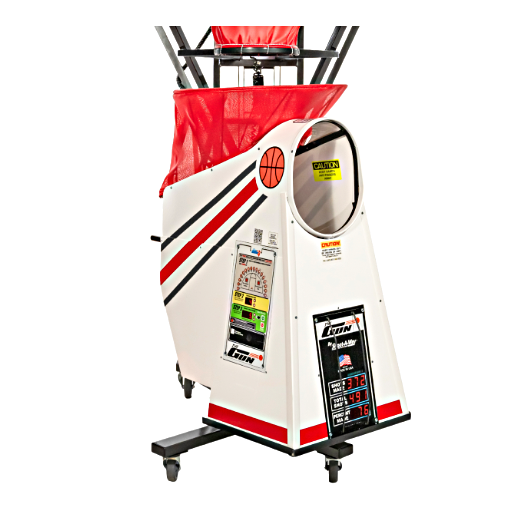
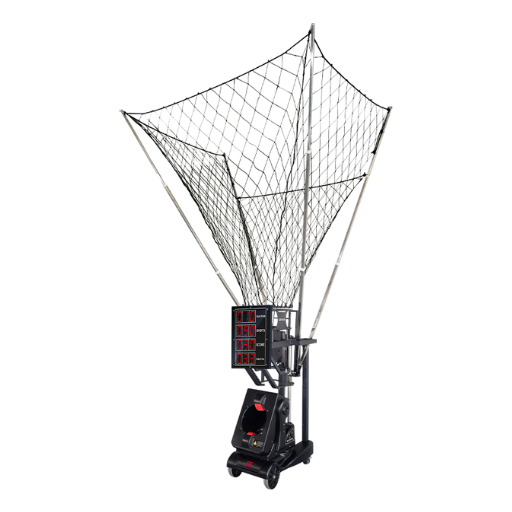
It is an indispensable piece of training equipment during basketball training which aids in practicing and perfecting shooting and rebounding. With a rebounder, complete the bases of shooting, jump shot, and general shooting by getting immediate feedback of their shot for the player.
Are there any advantages to using weighted balls in basketball performance?
Yes, weighted balls do help in building arm strength and perfecting a shooting technique. Using weighted balls in shooting drills helps players build muscle memory and refine their shooting technique so they can use their jump shot in a productive way during games.
What are passing drills in basketball training meant to work on?
Passing drills enhance strategies and communication on the floor. They assist with spacing, timing, and execution of passes. Such aids enable players to better their passing skills as a team and minimize turnovers in games.
How do you practice dribbling and shooting at the same time?
Simultaneous practice of dribbling and shooting involves drill work whereby players have to dribble before shooting. Using the thumbing method during a jump shot or working solo assists better to develop the two main skills and prepare players for game situations.
What should a player focus on while making perfect shots?
Making a perfect shot requires shooting technique, hand placement, and body alignment. Shooting should be practiced regularly so that with the help of coaches, and mechanical shooting trainers, players can work on their skills and become a consistent accurate shooter.
References
- Basketball Training Equipment – Dick’s Sporting Goods – A wide selection of basketball training equipment from top brands, including SKLZ.
- Revolutionizing Traditional Basketball Training Equipment – Discusses innovative approaches to traditional basketball training tools like cones.
- The Official D-Slide Basketball Training Equipment – A product designed to improve defensive slides, lateral quickness, and other basketball skills.
- guide for basketball shot training equipment