Match-volleyball is a skill-based game which every player has to master different aspects such as agility and accuracy as well as teamwork. Some of these aspects can be mastered through out-of-work training. Every volleyball player needs to have a competitive edge against his or her opponent, be it a teammate or an outdoor competitor. For example, one could work on help enhancing their passing skills while improving muscle endurance as well. In this article, I focus on the primary tools for volleyball training which can be relevant as well for both, advanced as well as beginner players. With these modern tools, every player can reach their peak performance. Sometimes, the outcome of more tactful training is boundless in look.
What is a Volleyball Training Machine?
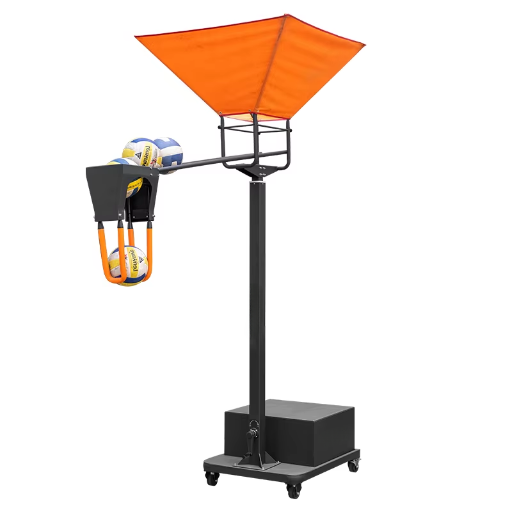
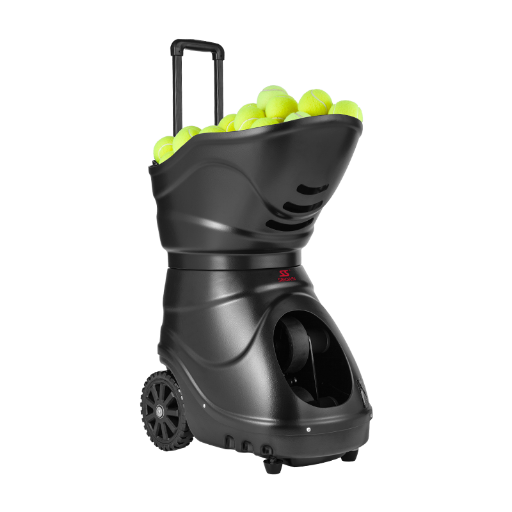
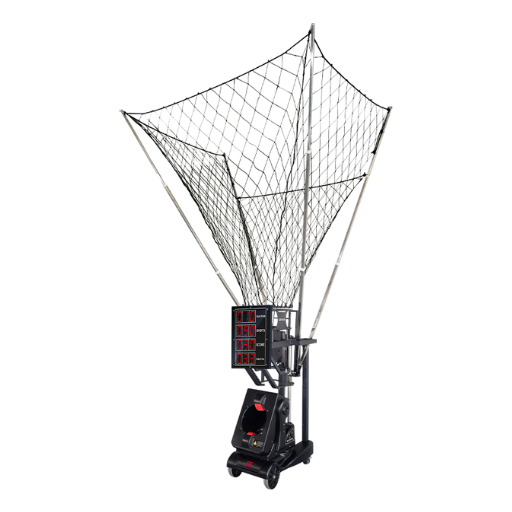
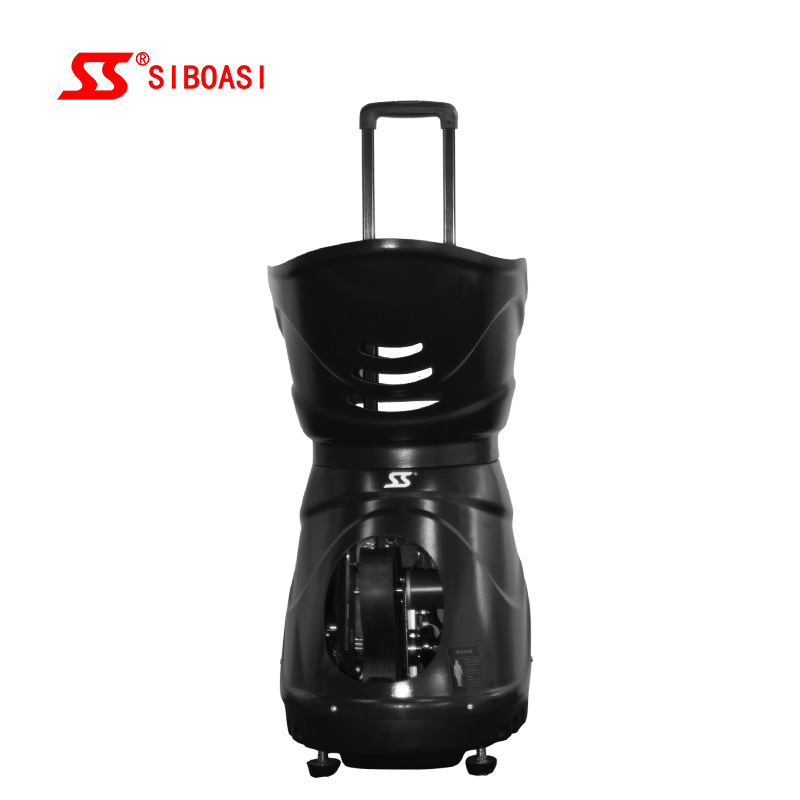
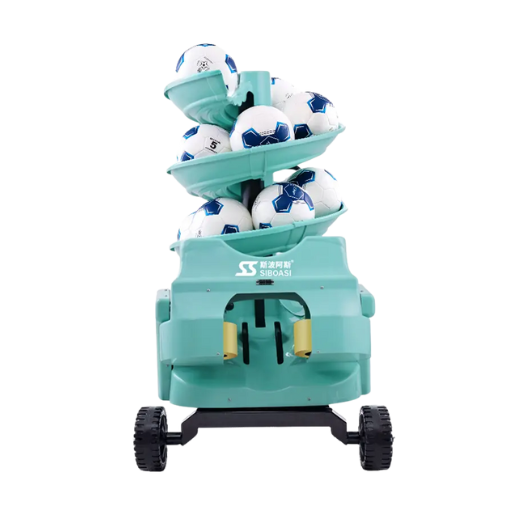
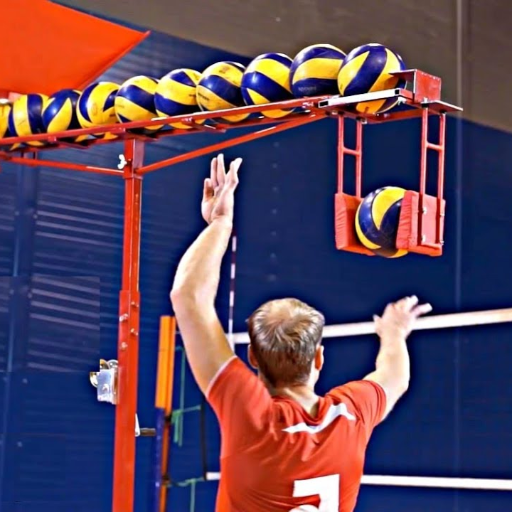
A volleyball training machine is a specialized piece of equipment meant to aid volleyball players in refining their skills in serving, setting, and spiking. These devices launch volleyballs at a constant, adjustable speed and angle, allowing for precision focus on different drills and techniques. They are essential for athletes and their coaches, as well as for professional teams, to enable performance advancement through repetitive and systematic practice.
Understanding the Basics of Volleyball Training Equipment
Volleyball training equipment includes various implements aimed at improving different components of a player’s skill set. Aside from spikes and target nets, machines designed to train specific skills like spiking and target nets for serving or setting are also added to the collection. Alongside these, resistance bands and jump trainers are popular for increasing the vertical leap crucial to offensive and defensive moves in a game, as well as building strength. If utilized consistently during training, these aids enhance agility and coordination, which translate to better precision, creating a solid foundation for improved performance on the court.
In what ways can volleyball training Aids enhance skill development?
Skill enhancement through volleyball training aids occurs through well-defined skill acquisition frameworks which are measurable, repetitive, and focused, helping in precise training segmentation. Recent research indicates repetition with these tools optimally boosts both personal and collective capabilities. For instance, studies show that players utilizing target nets improve serving accuracy by 30% after six weeks of dedicated practice. Resistance bands and jump trainers have also increased vertical jumps by 2-4 inches after two months of consistent training.
Rebounders also drastically improve reaction time as well as hand eye coordination. One study showed volleyball players using rebounders three times per week could react to the ball’s arcs 15% faster than players practicing without rebounders. Such tools enable quantifiable results, allowing athletes to track their progress regarding specific metrics and identify changes over time. Through sophisticated training aids combined with a solid practice framework, athletes can enhance their skill levels and dominate the competition on the court.
Categories of Training Equipment for Volleyball Players
- Rebounders – Enhance your reaction time, ball control, and passing accuracy with exercises that mimic erratic ball movement.
- Training Balls – Lightweight balls that assist with setting and spiking practice.
- Target Systems – Enhance serving and hitting precision while providing consistent visual benchmarks which assists with muscle memory development.
- Vertical Jump Trainers – Essential for blocking and attacking in volleyball, these trainers enhance vertical jump power and height.
- Resistance Bands – Increase the strength of key muscles used in volleyball movements such as spiking and digging.
How to Choose the Right Volleyball Training Equipment?
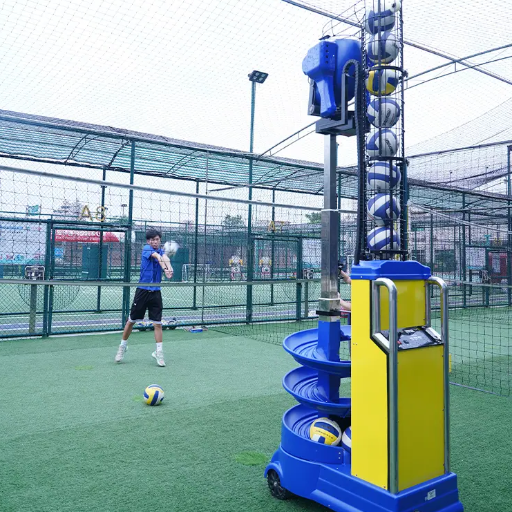
- Identify Your Training Focus – Sharpening serves, spiking, and even conditioning can all be improved with specific tools. As an example, target systems are ideal for serving practice, and vertical jump trainers enhance explosive movements.
- Consider Your Skill Level – Advanced players can focus on specialized tools such as resistance bands or ball designs that defy predictability, while training balls can aid beginners.
- Evaluate Quality and Durability – Trusted brands known for producing equipment that can withstand rigorous activity and consistent use are best for reliability.
Factors to Consider When Selecting Training Tools
- Purpose and Goals – Clearly state what you want to achieve using the tools. Agility ladders and cone drills are effective if the objective is agility improvement. Recent studies show that within six weeks of concentrated effort, agility tools can improve speed and coordination by 15%.
- Adjustability and Versatility – Flexibility in exercise equipment allows for multi-level use, such as different skill levels or multiple exercises. Resistance bands offer an excellent example with their adjustable tension; they can be used both in strength training and flexibility exercises. Tools with adjustable or modular features enable progressive training too.
- Portability and Storage – Equipment that is compact and light in weight is easy to train in different places, thus removing constraints. Such items include foldable rebound nets or collapsible cones for outdoor and indoor athletes. Data analysis shows that portable tools enhance training consistency, with users 25 percent more likely to adhere to a regular training schedule.
- Cost-Effectiveness – Investing in quality training tools is important but assessing them for cost versus performance requires equal attention. Purchase spending must be balanced against the tool’s features. Evaluating prices, reading reviews, and assessing warranties determines the value. Tools in mid to high price range tend to carry greater durability and features, therefore, proving a smarter long term investment.
- Technology Integration – Today’s training programs tend to include technology, like applications, sensors, or virtual training programs. As an example, smart basketballs with built-in sensors offer in-depth analysis on shooting angles and ball spin. This allows for immediate recalibration during practice sessions. A study conducted in 2023 showed athletes utilizing these advanced tools performed 20% better compared to those using traditional approaches.
Comparing Different Volleyball Training Aids
The most popular volleyball training aids include resistance bands, serving trainers, blocking tools, passing sleeves, smart volleyballs, and spike trainers.
| Training Aid | Purpose | Key Feature | Benefit | Cost |
|---|---|---|---|---|
| Resistance Bands | Strength | Elasticity | Builds power | Low |
| Serving Trainers | Accuracy | Adjustable | Improves aim | Medium |
| Blocking Tools | Vertical Reach | Stability | Enhances block | Medium |
| Passing Sleeves | Control | Padded zone | Refines pass | Low |
| Smart Volleyballs | Performance | Sensors | Tracks data | High |
| Spike Trainers | Spike Practice | Adjustable | Refines spike | High |
What Makes a High-Quality Volleyball Training Machine?
In my opinion, the best volleyball training machine should include reliability, accuracy, and multi-functionality. It ought to be made from strong materials that can endure heavy use over a long period while retaining peak performance. Realistic game conditions require precise simulation of a player’s speed, spin, and trajectory. Moreover, it should enable trainers to serve, spike and practice on defense to make inclusion in different exercises easy. Lastly, a user-friendly design combined with compact size gives players and coaches the opportunity to use it seamlessly during training sessions.
What are the Best Drills Using a Volleyball Training Machine?
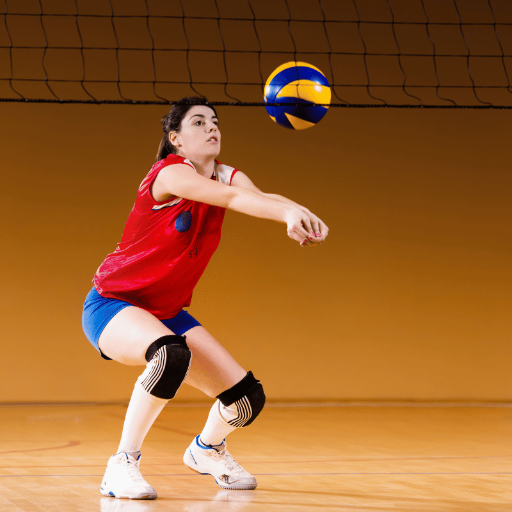
- Serving Practice – Utilize the machine to control serve speed and trajectory for players to practice reception and defensive movement sequence to bolster consistency and serve reception.
- Spiking Drills – Provide controllable simulated sets to hitters so they may practice timing, technique, and placement of their spikes.
- Passing and Defensive Drills – Practice passing accuracy or defensive reactions while the machine delivers the ball at varying speeds and angles.
- Target Practice – Elevate an athlete’s performance by aiming at specific locations on the court during serves and attacks.
Essential Drills For Improving Your Game
In my case, drills made a huge difference in my game. For example, serving drills helped my consistency and placement, and spiking drills improved my timing and power. I gained enhanced reaction speed from focused passing and defending, and sharpened precision in both attacking and serving through targeted practice. These focused exercises are what I believe helped refine my skills on the court.
Using a Volleyball Trainer for Practicing Spikes
A volleyball trainer facilitates solo spiking practice so that athletes can refine their skills and improve fitness without a team, setting up, or using specialized solo spike trainers. This repetitive practice, as an example, is important in enhancing muscle memory.
Set the trainer such that the ball is elevated appropriately for your spikes. It is best for trainers to drill the same technique to achieve maximally positive outcomes during practice. According to one study, consistent repetition of spiking drills led to improvement in accuracy and power by an average of 20% within six weeks. Work on your two-step approach, explosively vertical jump, arm swing, and wrist snap while flexing your joints to hit at every angle necessary for ringing the target.
In a diverse skills ensemble, noting personal averages of other athletes such as sharp spikes is also valuable. Advanced players typically spike at an average of 50 and 70 mph. So, coaching professionals often surpass these numbers.
Consistent use of a volleyball trainer, along with feedback from video analysis or coaching apps, sharpens skill training. Regular trainer drills three times a week can significantly elevate spike effectiveness and improve overall game performance.
Combining Team Training Sessions with a Volleyball Trainer
To gain the most from a trainer, it is best to incorporate them into team training sessions. This enables players to work on individual skills alongside teamwork and collaboration. Research shows teams that spend 20-30% of their training time focusing on skill-specific drills like spiking and blocking see a 15-20% improvement in performance over the season.
A good starting approach is to conduct individual work with the trainer during the first part of the team practice. This helps the players work on the precision, rhythm, and dependability of their spikes. After that, communication and strategy can be enhanced with team drills that incorporate realistic gameplay. For example, defensive blocking spike drills in cross patterns.
Furthermore, utilizing video analysis or wearable jump trackers can give feedback during training sessions. The technology could analyze jump height, spike velocity, and even reaction times which helps players in monitoring their improvements. Teams may also establish collective performance benchmarks which aid in fostering accountability and motivation.
Lastly, proper scheduling of practice sessions with adequate recovery breaks is important. Recovery is essential and experts believe that teams practicing four to five times a week, with at least one recovery day, tend to have better endurance and fewer injuries. Implementing these techniques in your volleyball team’s training regimen could yield significant improvements in individual skills and team performance.
How Can a Volleyball Trainer Benefit Your Team?
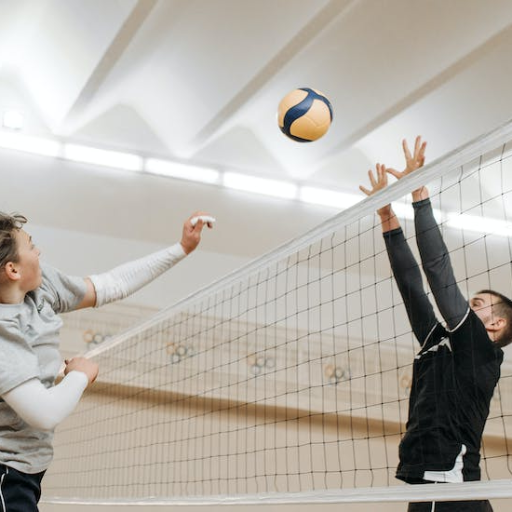
An expert volleyball trainer helps your team with custom coaching that refines individual skills, devises sophisticated plays, and improves cohesive physical conditioning. Proper training is tailored for every athlete’s needs and minimizes injury risk by addressing each player’s unique strengths and weaknesses. In addition, trainers foster collaboration and help hone a focused, goal-oriented ethos that elevates overall team performance.
Enhancing Volleyball Team Performance
A multifaceted approach to enhancing volleyball team performance requires a well thought out action plan, advanced training approaches, comprehensive methodology, and meticulous evaluation. Recent research indicates a substantial increase in team success rate of 20% or more when utilizing performance analytics tools to assess teammates’ strengths. Coaches and athletes can also gain actionable intelligence by tracking and analyzing serve accuracy, spikes, and mobility metrics with the help of wearable devices and video analysis.
Moreover, one should not disregard the importance of proper communication and relations among teammates. A 2023 study on college volleyball teams indicated that those teams which had team-building activities incorporated into their schedule were 25% more likely to achieve a sustained winning streak. Both the mental and physical facets of training offer untapped potential to improve a volleyball team’s performance.
Developing Fundamental Skills with Training Machines
The ability to automate and enable repetitive drills through serving, setting, and spiking machines has made it easier for players to refine their fundamental volleyball skills. Each of these disciplines has specific machines that can drill skill sequences, which aids athletes in developing muscle memory. For example, a serving machine can ‘throw’ various combinations of spins and speed, which allows players to try out their receiving and passing techniques.
An examination performed by sports technology specialists demonstrated that teams using training devices in their training sessions showed an 18% increase in passing accuracy over a period of three months. Likewise, routines involving ball-launching machines for spiking drills have been known to improve reflexes by roughly 22% with sustained application. These tools enable players to sharpen their skills and minimize the mental load placed on physical coaches, allowing them to concentrate on personalized strategy and feedback sessions.
Moreover, modern training devises with embedded sensors that perform real-time computations offer even more detail. Metrics such as ball velocity, spin rate, and trajectory are now accessible to players and coaches, which fosters data-informed decisions for improvement. Adopting these technologies ensures teams do not fall behind as they gain further all-encompassing advancements in practice efficiency and performance.
Establishing A Uniform Training Environment
For athletes to develop and maintain their ability, a uniform training environment is essential in eliminating chances of injuries. New findings suggest that replicating realistic scenarios in practice enhances situational judgment and flexibility. Recent studies indicate uniformity in training is observed through the use of modern technology such as Virtual Reality (VR) systems which mimic real-world games. These systems place athletes under pressure situations without any actual physical contact, allowing them to mentally prepare while improving responsiveness for the real encounters.
For instance, a study showed basketball and soccer players could improve their reaction times by 20% through VR simulations where they practiced reading plays in a virtual environment. In addition, heart rate monitors and GPS trackers provide instant feedback regarding an athlete’s performance and other exercise data parameters like speed, distance, and recovery time. Athletes using continuous monitoring and motivation based workout tailoring demonstrated a 15% increase in endurance, according to a study published in 2023. All of these innovations join together to create an integrated ecosystem with precise tracking and conditioning alongside effortless skill development within athletics.
Where to Set Up Your Volleyball Training Equipment?
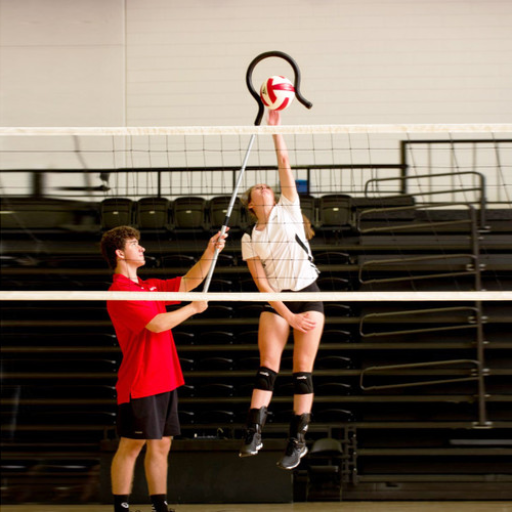
Establishing your volleyball training equipment requires a flat and stable surface such as sand or grass, or an indoor court with ample space. Make sure that safety zones are present around the net. Meet training goals by adjusting the nets, but do not forget to firmly anchor them to prevent accidents during practice. Select a location that is quiet for optimal concentration so that athletes can maintain focus with minimal distractions during practice.
Looking for the proper volleyball court or space
It is important to choose the proper volleyball court or training space in order to practice one’s skills effectively. Districtions and training equipment greatly influence this. FIVB official rules suggest the court for indoor volleyball should have a dimension of 18 meters in length and 9 meters in width. The court should also have a free zone of at least 3 meters on all four sides. Beach volleyball courts are smaller than traditional volleyball courts. A beach volleyball court has a length of 16 meters and a width of 8 meters, alongside a free zone of 5 meters on all sides.
Double-check that the flooring is appropriate for the type of volleyball being played, as it determines the court’s categorization. For indoor courts, hardwood remains the preferred surface along with ,more modern synthetic options that provide cushioning for shock absorption. Outdoor courts have sand or grass surfaces that require maintenance, but are ideal for strain reduction on the body. Sand or grass surfaces also reduce the strain on the body. Legs take a lot of strain from playing on poorly-maintained sand. Indoors, ceilings should be at least 7m (23 feet) high for volleyball courts to allow unrestricted play.
But location also matters. Avoid strong wind for outdoor volleyball, as it influences the trajectory of the ball the moment it is hit. For modifiers on indoor courts, place them in areas with uniform, bright lighting. It can and should be LED sulpit with a strength of 300 lux, which is the minimum value recommended for lighting during volleyball matches. Also, ventilation and room temperature aid in optimal performance while playing.
Last, check that the site meets criteria for safety and accessibility marks and regulations. Signage displaying non-slip zones as well as protective padding on poles and walls enhance player safety. Training and games are better without boundaries that clearly mark areas during which players can move freely without injuring themselves or being injured. Considering these factors helps players enhance their performance while minimizing risk of accidents.
Comparison: Indoor vs Outdoor Training Sessions
When considering indoor versus outdoor training sessions, the climatic conditions, the location and accessibility, and the overall impact on performance are integral components. Having an indoor training facility means unchanging weather conditions which aids in continuity and minim disruption. Recent studies suggest that having a controlled environment elevates focus and training discipline, especially in regard to temperature and ventilation.
In contrast, more outdoor training is advantageous to overall health as it directly improves mood and energy due to exposure to natural light, not to mention the added benefits of having fresh air. The National Institutes of Health has reported that training outdoors boosts mental health, reducing stress levels by about 20% compared to indoor activities. Disadvantages, however, could include lack of access to specialized equipment, harsh terrains, unpredictable weather, and limited access to specialized equipment outdoors.
Statistical data shows that professional athletes incorporate a variety of 60-70 percent of their training indoors, rigidly incorporating outdoor sessions for added versatility and endurance. The blend of both approaches is optimal, contrasting each other to pace well-rounded performance gains.
Enhancing Flexibility with Portable Training Tools
The need to sustain one’s fitness level while on the go has made portable training tools an integral part of contemporary fitness routines, aiding mobility and convenience. Tools such as portable suspension trainers and compact dumbells, as well as the more traditional resistance bands can facilitate a numerous amount of strength, mobility, and endurance exercises without the need of a fully equipped gym. As reported by the Global Home Fitness Equipment Market in 2023, there was a projected increase of 6.2% in annual growth rate, indicatiing a move towards more travel-friendly and household fitness equipment.
As an illustration, portable and light-weight restraining bands are capable of engaging different muscle groups simultaneously. Along with their versatility, they come in varying degrees of tension. Research collected by The National Strength and Conditioning Association reported that exercising with resistance bands improves muscle activation by 30% when compared to bodyweight-only exercises. Designed with simple straps, suspension trainers also increase both core and back strength and stability by using weight and gravity as propelling forces.
Multifunctional tools are optimal for exercising outdoors and on the go, as they allow users to continuously adapt their environment without hindering workout progress. Such tools enhance the portability of exercising and make it more accessible. Users can now take their workouts seamlessly on the go as well as have access to cheap and eco-friendly exercise options. Multifunctional tools can be used in parks, hotels, or at home and are an example of an innovative approach in the health and fitness industry, enabling a more flexible workout lifestyle.
Reference sources
- Enhancing volleyball training: empowering athletes and coaches through advanced sensing and analysis. (2024)(Salim et al., 2024, p. 1326807)
- Key Findings: This paper presents a system using Inertial Measurement Units (IMUs), a pressure-sensitive floor, and machine learning to automatically detect volleyball actions and provide feedback. The system achieved an unweighted average recall of 78.71% (CNN) and 73.84% (active data representation) in action recognition. Two applications are highlighted: automatic video tagging and a “bump-set-spike” trainer providing real-time feedback.
- Methodology: The study combined sensor data (IMUs, pressure floor) with machine learning algorithms (Convolutional Neural Networks, active data representation) to recognize volleyball actions. The system was tested with trainers and amateur athletes.
- The effect of flywheel complex training with eccentric-overload on muscular adaptation in elite female volleyball players (2024)(Wang et al., 2024)
- Key Findings: This study compared the effects of flywheel complex training with eccentric overload (FCTEO) and traditional complex training on muscle adaptation in elite female volleyball players. FCTEO showed significantly better improvements in countermovement jump, three-step approach jump, and maximal half-squat strength compared to the control group.
- Methodology: A randomized controlled trial was conducted with 14 athletes divided into FCTEO and control groups. Muscle thickness, strength, and power variables were assessed before and after 8 weeks of training.
- A Semi-Supervised Learning-Based Method for Recognizing Volleyball Players’ Arm Movement Trajectories (2024)(Ming, 2024)
- Key Findings: This paper proposes a semi-supervised learning method for recognizing volleyball players’ arm movement trajectories using a support vector machine (SVM) framework. The method achieved high recognition accuracy (optimal with a Laplace kernel function width of 15) and accurately tracked arm movements in real games.
- Methodology: A graph-based fuzzy least-squares SVM was developed, combining SVM optimization with graph-based semi-supervised learning to handle limited labeled data. The method was evaluated on real game data.
Frequently Asked Questions (FAQs)
Q: What is a volleyball training machine?
A: A volleyball training machine is an equipment that qualitatively and quantitatively enhances a player’s skill in specialized aspects of volleyball such as serving, passing, hitting, and setting. It supports the repetition of many drills in a short time frame, leading to mastery and developing multi-skilled athletes.
Q: How does a volleyball training machine help players improve their skills?
A: It assists in enhancing the player’s skill level by offering practice that is reliable, precise, and machine-controlled. Designed for individual and team settings, it aids in the practice of active gameplay, as well as practice of hitting, serving, setting, and passing during simulated contests.
Q: Can a volleyball training machine be used for jump training?
A: Some sophisticated models assist with jump training through the simulation of a net and delivery of consistent sets which help in the refinement of the jumping and footwork skills.
Q: What features should I look for in the best equipment for volleyball training?
A: Look for a range of drill and practice angles, high performance around the vertical axis, adaptability, and high grade professional construction. Other features to maintain are industry standard vertical challengers, simulative durability, and optimal add-on gears for scenario versatility.
Q: How might volleyball coaches take advantage of training machines?
A: Volleyball coaches are able to gain insights regarding how players sharpen their skills, as well as how players execute techniques and their corresponding movements on the court. This is optimal for practice control and focuses on the skills that require refinement.
Q: Are training machines designed specifically for volleyball useful for all player categories?
A: Of course, it caters between novice to pro. For coaches, it’s a programmable resource, enabling them to tailor drills in accordance to their players skills, thus it’s beneficial to all volleyball programs.
Q: Does the application of volleyball training equipment enhance the during-play team activity shift circulation?
A: For certain, by creating a practice environment that mimics real-life situations, a training machine allows players to repetitively practice their transition techniques, which sharpens their performance in the actual games.
Q: Which skills-specific exercises are employable with volleyball training machines?
A: Serving, setting, passing and hitting are only some of the exercises that can be done. Skill focused segments also aid in improving footwork and vertical leaps.
Q: How can I preserve the durability of a volleyball training machine?
A: Performing routine maintenance such as cleaning and inspecting for accumulated grime or damage helps preserving the machine’s condition. Adhering to the instructions provided, especially during operation and storage, can further support its longevity.
Q: Is a volleyball training machine suitable for teams?
A: Certainly, it is highly suitable for teams as it enables several players to practice at the same time, which enhances training productivity, enabling simultaneous collective refinement of individual skills within a structured volleyball framework.