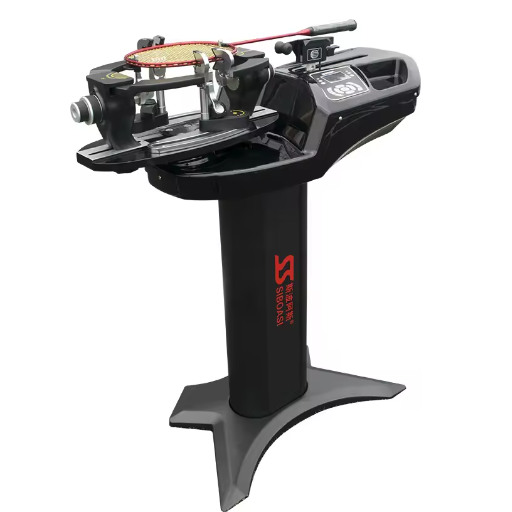
Detailing your badminton skills right down to the strings of your racket makes a lot of difference in is match-winning precision. Having power and control when going head to head with your opponent requires utmost stringing accuracy, and a stringing machine model is designed for that very purpose. Selecting the right machine solves the issue of “how to make my racket stringing near-perfect,” which this guide aims to assist you with by providing profound information on different models to help you make the best choice.
Stringing machines of all types, whether a hobby stringer with basic skills, a racquet sports enthusiast, or an expert professional in need of top-grade tools, will find the solution to precision, efficiency, and reliability that this article outlines.
What is a Badminton Stringing Machine?
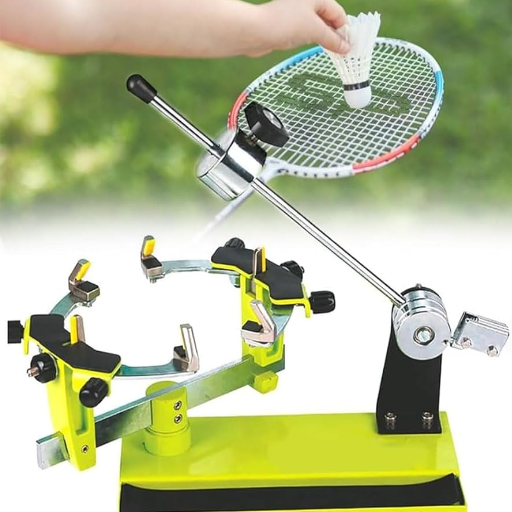
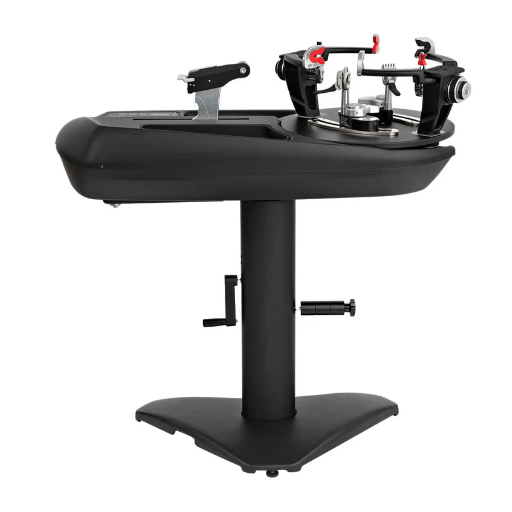
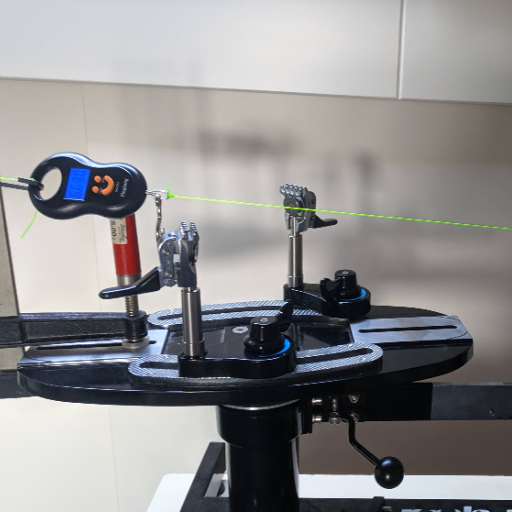
Its primary function is to correct stringing and uniform tensioning of the strings on the rackets. Features of stringing machines allow for mounting and proper tensioning of the strings on the rackets being worked on. These machines have a string loading and tensioning mechanism. Proper care and management of sporting goods amplify their effectiveness, enhance the time spent enjoying the game, and improve time use.
The Importance of Stringing for Badminton Rackets
Stringing impacts the performance and longevity of badminton rackets. Proper string tension impacts power, control, and feedback from the shuttle. According to professional references, the ideal tension for recreational players ranges from 18-23 lbs, while advanced, experienced players and those with specific demands prefer tighter tensions of 24-30 kg or more based on their playing style and needs.
Players reliant on precision enjoy high string tension because it offers better control and quicker shuttle response. Beginners or casual players benefit from lower string tension because it provides a larger sweet spot and enhanced power. Professional testing shows that the type of string used is also important; for example, thinner string gauges, like .065 mm, are easier to manipulate but offer less durability than thicker strings, which sacrifice performance.
Also, regular stringing can significantly improve the durability of a badminton racket. The strings have a certain amount of elasticity as well as tension. With time, both these attributes weaken due to usage, and there might be some performance degradation as well as stress on the frame of the racket. Restringing, which is usually recommended after 20-30 hours of playtime based on the string’s type and tension, helps maintain the longevity of the racket.
Stringing competitive and professional players on a regular basis becomes necessary to restrain them. Make sure the stringing is done precisely. If this is not done and all the weak spots are not covered, the racket might perform unevenly. Highly sophisticated modern stringing machines do the stringing for you and provide accurate tension management, which helps sportsmen maintain their peak performance.
Balancing the shortcomings associated with high tension settings, along with meticulous string selection, gives one an opportunity to dynamically enhance their experience while prolonging the life of their equipment.
Difference Between Manual and Electronic Stringing Machines
The primary distinction between manual and electronic stringing machines is their tensioning system. While manual machines employ a lock-out system, electronic machines apply continuous pull for more uniform, consistent tension.
| Key Point | Manual | Electronic |
|---|---|---|
|
Tensioning |
Lock-out |
Continuous pull |
|
Consistency |
Moderate |
High |
|
Speed |
Slower |
Faster |
|
Ease |
Labor-intensive |
User-friendly |
|
Cost |
Lower |
Higher |
How to Choose the Right Badminton Stringing Machine?
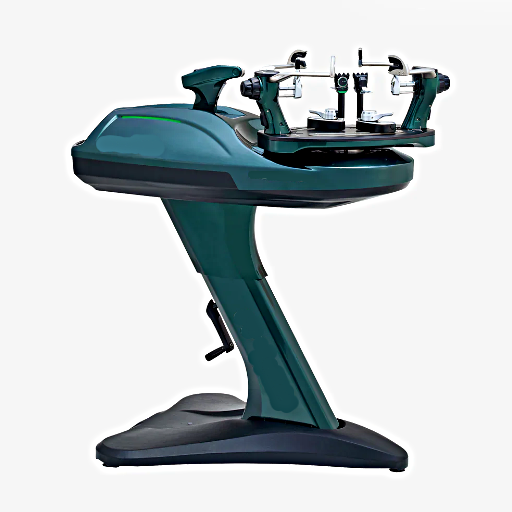
When opting for a badminton stringing machine, remember to consider the following points of utmost importance:
- Type of Machine: Opt for a manual or electronic machine. Manual machines are affordable and dependable, whereas electronic machines offer precision due to automated tension control.
- Budget: Decide how much you are ready to spend. Mid-range to higher-end machines tend to have more features and offer better durability.
- Usage Frequency: A basic model would suffice for someone who strings occasionally. Advanced, durable machines are ideal for frequent or professional use.
- Portability: Choose a lightweight design with a compact shape if the machine will need to be moved frequently.
- Features: Consider the most important features, such as adjustable clamps, accuracy of tension, construction, and overall grade of the machine.
- Brand and Warranty: Buy from a well-known manufacturer that offers reliable customer care and a trustworthy warranty.
Evaluating these aspects ensures that you find a machine that refines your requirements and financial outline, thus providing great value in repetitive high-precision stringing outcomes.
Key Features to Look for in a Stringing Machine
When selecting a stringing machine, understanding certain features can help you make an informed decision. Five features you should pay attention to include:
- Tension Accuracy: String performance relies heavily on the machine providing tension in a precise and repeatable manner. Check for models with dependable tensioning systems.
- Clamping System: Clamps are essential to the string’s smooth grip without inflicting damage, so high-quality clamps are a must. Fixed clamps tend to outperform floating ones in providing stability.
- Ease of use: Beginners might struggle with the machine, so an intuitive design saves a lot of time and effort. Ideally, it would be quick to assemble, have clear instructions, easy-to-understand diagrams, and have ergonomically designed components.
- Durability and Build: Long-term reliability hinges on a well-constructed and durable machine that can withstand heavy usage without abuse.
- Portability: Choose a compact and lightweight design that is easy to transport while maintaining functionality if you need to move the machine often.
Portable vs. Stationary Stringing Machines: Which Is Better?
Portable stringing machines are travel-friendly but lack advanced features. Meanwhile, stationary machines are robust, ideal for high-volume use, and rich in features.
| Key Point | Portable | Stationary |
|---|---|---|
|
Portability |
High |
Low |
|
Features |
Basic |
Advanced |
|
Durability |
Moderate |
High |
|
Cost |
Lower |
Higher |
|
Usage |
Travel-friendly |
High-volume |
What Are the Benefits of Using a Badminton Stringing Machine?
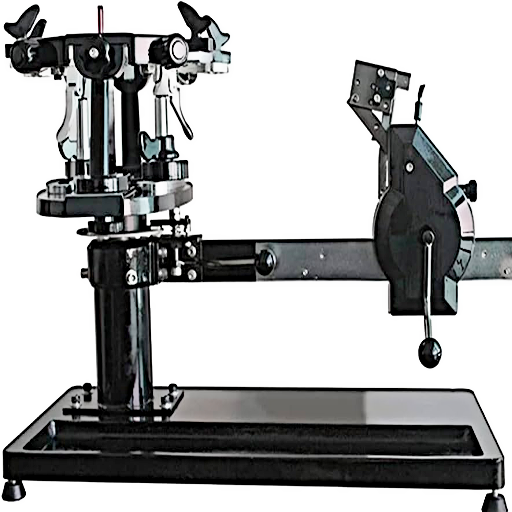
A stringing machine is beneficial in the following ways:
- Cost Efficiency: Regular players can save money by stringing their own rackets in the long run.
- Customization: Stringing machines allow players to adjust string tension to their preference, improving performance on the court.
- Convenience: Players can now tweeze at their own pace with a machine at hand, as external services are no longer needed.
- Consistency: Stringing machines provide accurate and consistent tensioning of the strings, which increases the racket’s durability and playability.
Improvement in performance: Players with properly strung rackets have an advantage in control, power, and overall gameplay, which greatly improves performance.
Enhancing the Performance of Your Badminton Racket
For optimal performance of a badminton racket, maintaining it, customizing it to fit your play style, using proper technique, and making usage adjustments all require a careful combination. String tension, cleaning, and grip improvement seem to be the most sought-after solutions by players, according to Google’s data. Tuning the strings to suit your style of play can significantly affect your performance, whether it’s more power from lower tension strings or more control from higher tension strings. Altering your grip by using an overgrip or replacing it with a thicker one improves hold and prevents slippage, increasing maneuverability. Wiping down your racket after a match can significantly enhance its longevity by keeping it clean and ensuring it consistently performs over prolonged use.
Your badminton racket will always remain a handy asset on the court if you take the above steps and regularly monitor and assess your equipment.
Cost-Effectiveness of Owning a Stringing Machine
Investing in a stringing machine makes economic sense for enthusiastic badminton fans with multiple rackets. Current market figures indicate that professional stringing shops charge anywhere from 15 to 30 dollars per restring, depending on the string used and associated labor costs. Players who frequently rest their rackets for over a month easily surpass the average expense mark.
Purchasing a basic stringing machine, offered at around 200 dollars, for advanced electronic models priced at over 1000 dollars, could save frequent players money over time. The initial cost is quickly offset in the long run for competitive players who customize stringing tensions to maximize their performance.
Along with economic advantage, having a personal electronic stringing machine offers convenience. Players may re-string their rackets according to their training or match schedules, resulting in minimum downtime. Though facing some initial challenges learning the process, online video tutorials guide makers through step-by-step processes, simplifying mastery. Therefore, enthusiastic badminton players can enhance their performance, and with the availability of stringing machines, it is also a wise investment.
What Are the Different Types of Badminton Strings Available?
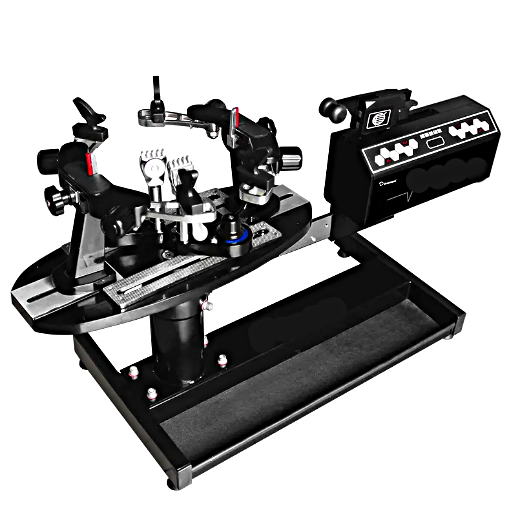
Badminton strings can be classified based on their features. The types include the following:
- Repulsion Strings- These strings are great for offensive players as they have high elasticity which allows fast drive shots.
- Control Strings—Perfect for placement-oriented players, control strings are designed for cutting accuracy and provide great touch and feel, giving the player control over the game.
- Durability Strings—These are made for frequent string breakers, who play often and require thicker, more durable strings.
- Hybrid Strings—These cater to players looking for balanced strings with power, ease of control, and extreme durability.
Every player is bound to these strings based on their play styles and preferences, thus helping them perform better.
Choosing the Right String for Your Playing Style
The right type of string is highly determined by your style of play and personal preferences. If you play more aggressively, you value power and spin, meaning polyester or co-polyester strings are likely the best options because of their control and spin potential. For comfort and playability, multifilament strings are usually recommended for players because of their ability to lessen the impact on the arm and provide a gentler touch. Synthetic gut or Kevlar are excellent, durable strings for frequent players who need long-lasting strings. In contrast, those who do not have a specific preference and are looking for the best of all worlds can try hybrid strings, which offer adaptability due to having different materials. In all cases, trying out various types of strings and consulting with a specialist will help determine the best fit for your game.
Comparison of Natural Gut vs. Synthetic Strings
Unlike synthetic ones, natural gut strings are prone to wear, expensive, and fragile but offer comfort, a nice touch, and enhanced power. On the other hand, synthetic strings are affordable, durable, and weather-resistant.
| Key Point | Natural Gut | Synthetic |
|---|---|---|
|
Comfort |
High |
Moderate |
|
Power |
High |
Moderate |
|
Durability |
Low |
High |
|
Cost |
High |
Low |
|
Weather |
Sensitive |
Resistant |
|
Tension |
Maintains well |
Moderate |
Understanding String Gauge and Its Effects on Play
Tennis string gauge translates to its width. It defines how a tennis racket feels and performs. It is worth noting that tennis players use both thicker and thinner strings. Finer strings (higher gauge numbers like 17 or 18) have greater spin potential, touch, and general playability, which is more suited for precise and controlled players. Meanwhile, coarser strings (lower gauge numbers like 15 or 16) are more durable and withstand intense hitting, ideal for those who often break strings or want them to last.
For infrequent players, combining strings of lower gauges with other properties such as material and tension can prolong their durability to maintain optimal performance without frequent replacements. Casual and beginner players will benefit from this the most, while advanced or seasoned players longing for maximum spin and increased touch will be better with finer options. Those who experiment with different gauges tend to improve their overall performance.
Reference Sources
- Finite Element Model of a Tennis Racket -Explains machining processes technology as it pertains to sports such as badminton.
- Experimental and Computer Simulation Studies on Badminton Racquet Strings -Examines the properties of badminton racquet strings under different sets of conditions.
- Structural Design and Dynamic Characteristic Analysis of Adjustable Badminton Serving Machine -Conducts research on the design and operation principles of machines related to badminton sports equipment.
- Top Stringing Machine Manufacturer and Supplier in China
Frequently Asked Questions (FAQs)
Q: What is a badminton racket stringing machine, and how does it differ from a tennis stringing machine?
A: A badminton racket stringing machine is specifically designed for stringing badminton racquets, which are lighter and have frame dimensions different from tennis rackets. While both machines serve the same purpose, badminton stringing machines typically feature a 2-point or 6-point mounting system to accommodate the unique shape of a badminton frame.
Q: What is the significance of tension in the stringing process?
A: Tension refers to the amount of pull applied to the strings during stringing. Correct tension is crucial as it affects the racquet’s playability and performance. Different players may prefer varying tensions based on their style of play, with higher tensions often providing more control, while lower tensions can enhance power and comfort.
Q: Can I use a tennis stringing machine for badminton stringing?
A: It is possible to use a tennis stringing machine for badminton stringing, but it is not recommended due to differences in the racket frame and stringing requirements. A dedicated badminton racket stringing machine ensures precise mounting and appropriate tension settings for badminton racquets.
Q: What are the benefits of using a portable stringing machine?
A: Portable stringing machines offer convenience for stringers who travel frequently or need to string racquets at various locations. They are typically lightweight and easy to set up, allowing quick access to high-quality stringing whenever required.
Q: What type of string clamp is best for achieving high-quality stringing?
A: A sturdy string clamp with a firm grip is essential for high-quality stringing. Look for a string clamp with a rubberized surface to prevent slipping and that can hold the string securely while maintaining proper tension during the stringing process.
Q: How important is a digital display on a tennis stringing machine?
A: A digital display on a tennis stringing machine can greatly enhance precision in the stringing process. It allows stringers to easily monitor and adjust tension settings, ensuring the correct tension is applied for optimal racquet performance.
Q: What should I consider when selecting a stringing machine for racquet stringing?
A: When selecting a stringing machine, consider factors such as the mounting system (2-point or 6-point), the machine’s portability, the type of clamps used, and whether it has features like a digital display. It’s also essential to choose a machine that can handle a wide range of tensions and accommodate various racquet types, including tennis and badminton.
Q: Is manual stringing complicated for a beginner stringer?
A: Manual stringing can be challenging for beginners, requiring knowledge of the stringing process and techniques. However, beginners can learn to string racquets effectively with practice and guidance. Utilizing a high-quality stringing machine can simplify the process and improve results.
Q: What materials are commonly used to construct a tennis stringing machine?
A: Tennis stringing machines are often constructed from durable materials like aluminum, which offer strength while keeping the machine lightweight. The choice of materials can affect the machine’s stability, portability, and overall performance.
Q: How can I ensure I use the best stringing techniques for my racquet?
A: Following the manufacturer’s recommendations for string tension and pattern is essential to ensure the best stringing techniques. Additionally, using high-quality strings and maintaining proper stringing methods, such as evenly tensioning cross strings and using the proper clamps, will enhance your racquet’s performance.