Basketball says for accuracy: it demands the agility to move around and choose where to place its shots. While developing basketball skills in any way demands time on the court, indoor training is best for elevating excellence. Should you be a rookie needing some fundamentals covered, or a seasoned player polishing advanced techniques, this is the best environment to work on your game. The post is the ultimate guide for promoting your indoor basketball practice. The drills, skills, and tactics will have you performing at your peak. Whether we’re talking about shooting drills, footwork, or hand-eye coordination, get started taking indoor basketball skills to another level. Stay tuned for insights, tips, and workables to let you shine!
Understanding Indoor Basketball Training
What is Indoor Basketball Training?
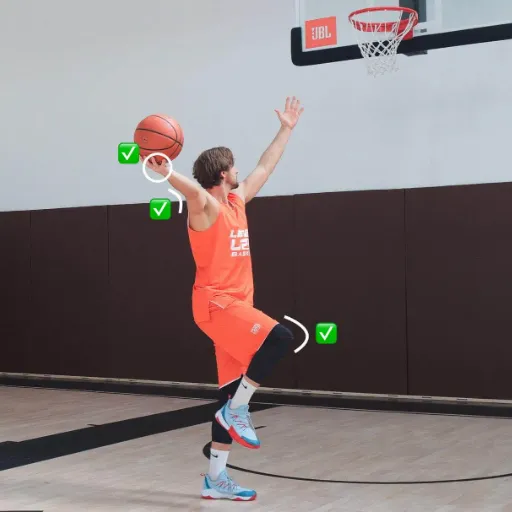
Indoor basketball training is a structured practice session held in an indoor facility, where players are taught to improve their skills, technique, and performance in basketball. These facilities may ensure that the training is held in controlled environments, where elements like weather or lighting conditions cannot interfere.
Essentially, this training will focus on different components of shooting, dribbling, and defensive position and footwork. Some drills are customized for real-game situations so that players may learn to adapt on their own in different situations. A significant benefit of this training indoors is access to specialized equipment, such as shooting machines or padded walls, to aid in practice.
Indoor training caters to players of all experience levels, ranging from beginners to professionals. It is based on objective skill development. The coaches can observe closely how an individual develops and even give feedback at the given moment. Weather-related interruptions are denied as in the controlled environment, so more time is given to the players to refine their skills.
Benefits of Indoor Training Facilities
Indoor discipline provides a consistent and reliable environment in which to develop skills. Being unaffected by the weather, athletes are able to train throughout the year without any hindrance. Hence, respective practice schedules are carried on, resulting in considerable performance improvements with time.
Another key advantage is having an inside-controlled environment. Designed with the athletes’ safety and efficiency in mind, indoor spaces offer appropriate conditions such as flooring, lighting, and equipment. Trainers and coaches can apply close supervision over the actual training programs, with feedback being delivered immediately and amendments being carried out on the program right there at the moment; this sort of emphasis helps athletes perfect their techniques and realize their full potential.
On the flip side, interior locations might possess some advanced technology and equipment not usually available outdoors. In the proper setting, tools such as video analysis and performance-tracking devices aid precise measurements of the athlete’s progress. With all these, it certainly maintains a high-growth focus atmosphere that allows for all-around development and success, thus very worthy of consideration as training for athletes of all ranks.
Basketball Skill Development under an Indoor Environment
The indoor environment nurtures the basketball skill-development process by way of providing conditions to go in sync with precise practice with focus and determination on certain tasks. Outdoor courts go through weather changes, whereas indoor courts have constant lighting, temperature, and floor surface; all of them make it possible for an athlete to really focus on the skill, avoiding any distractions, allowing players to improve on their performance and technique over time.
The indoor environment also allows for more goal-specific skill-building apparatus such as adjustable baskets, shooting machines, and video analysis systems for perfecting drills in shooting, dribbling, or defensive tactics. The athletes get time to use such advanced equipment to analyze their game strategies and make relevant modifications, which enhances the rapid building of skills.
Lastly, being inside an environment usually stimulates the structured and competitive atmosphere that is required for enhancing one’s skills. Many factors contribute to these drills and scrimmages to make them official training occasions that approximate in intensity actual game scenarios. Such opportunities keep players’ physical capacity at its finest while fostering better decision-making, cooperation, and mental toughness, each crucial in the actual basketball game.
Essential Skills for Basketball Players

Key Skills to Train in Basketball
To excel at basketball, players have to develop certain fundamental skills that affect their individual performance while contributing to the success of the team. They are:
Shooting Accuracy
Shooting remains one of the foremost skills in the game of basketball. Recent studies have shown that NBA players have a field goal percentage of about 47.5%. Players can improve on their shooting by working on their techniques, follow-through, and consistency. Free-throw shooting, spot-up shooting, and video review are very good drills to help boost accuracy and confidence on the court.
Ball Handling
The best ball handler can drive the tempo of the game; ball handling can enhance one’s ability to become a fourth-quarter player. Players have dribble methods that are the best for them; learning when and how to perform them increases one’s skill set. Training should include practicing crossovers, behind-the-back moves, and fast dribbling. These will improve one’s ball control and adaptability when things get rough defensively.
Defense
In winning games, defense alone holds the same amount of importance as offense. A very good defense would combine lateral movement, anticipation, and shot contesting. Top defensive teams in the NBA usually allow their opponents to score fewer than 105 points per game in average. Defenders can work on their instincts through drills that focus on both man-to-man and zone defenses.
Rebounding
Rebounding can create massive momentum for a particular team. Offensive and defensive rebounding revolve around positioning, timing, and strength. Dennis Rodman and Russell Westbrook have shown that above everything else, rebounding requires effort and technique.
Passing and Court Vision
Good passing promotes good basketball that creates scoring opportunities. Players have to work on chest passes, bounce passes, and no-look passes. Vision drills and scrimmages train players to see the court and anticipate the movements of a teammate.
Physical Fitness and Conditioning
Basketball places immense demand on physical strength. High-endurance players typically run up to about 2.5 miles per game. Speed and agility drills should be done in conjunction with endurance work so athletes can perform at their best throughout the game.
Mental Toughness and Decision-Making
With split-second decisions, critical plays are decided. In practice, scenarios will be visualized, and scrimmages played under pressure to develop mental toughness, focus, and adaptability for real-game situations.
Working on these areas will enable the players to improve their skills and be ready for higher levels of competition. Along with hard work and practice, these skills offer players the platform upon which basketball excellence is built.
Dribbling Skills: Techniques and Drills
Dribbling is a fundamental basketball skill by which a player moves the ball to score points, passes, or simply to maintain possession while being gently harassed by the opponent. Players should get familiar with the basic dribbling technique before stepping into more complex moves. Some of the important techniques to be considered are keeping the body low for balance, always using the fingertips rather than the palm while controlling the ball, and keeping it close in order to protect it from being stolen by the opponent. Players are advised to always practice dribbling with both their nondominant and their dominant hands.
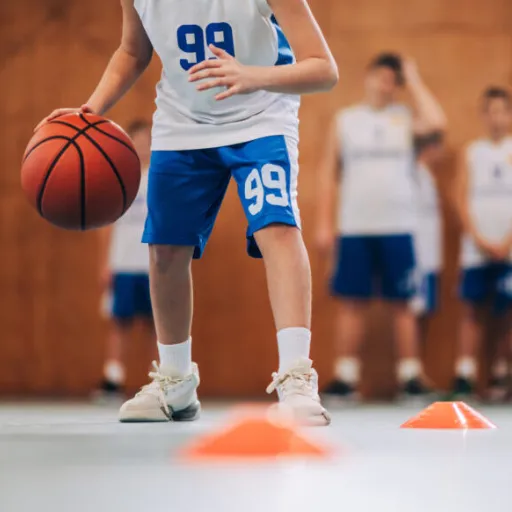
For example, dribbling drills that work best involve a combination of drills done while remaining still and those involving movement. When done stationary, players are forced to keep control of the ball, often involving drill exercises such as Figure 8s and pound dribbles. Movement-based drills, like zig-zag dribbling and cone weaves, help in calming spatial awareness and agility, intimately simulating game situations. Repeated practice under varying levels of pressure will increase confidence in proficient ball handling during competitive play.
Dribbling drills may then progress to include more advanced moves such as crossover dribbles, behind-the-back dribbles, and spin dribbles. These moves help offensively in the smooth execution of plays and opening spaces against tight defensive coverages. Intentional practice, alongside constructive feedback, will lead to the further development of these skills, adequately preparing the athlete for advanced levels of basketball competition.
Importance of Passing and Shooting Techniques
Passing and shooting are among the very basic skills of basketball, as they directly affect the offensive production of teams and ultimately the success of the team on the given day. Passing well means better ball movement, thus creating more opportunities for the teammate and dilating the defensive setup for blockage of fast-break opportunities. Passing will help build team coordination so shots can be taken at a higher percentage and are rewarded with more points on the scoreboard. Learning various passing techniques, such as chest passing, bounce passing, and overhead passing, will enable players to refine their skills for different situations during the game.
The shooting skills are just as important since they are how points are scored in basketball. When shooting, the basis of a person’s form and alignment should be maximized for accuracy against any opposing condition. However, one’s skill in shooting should be cultivated through a variety of different shots, including free-throw shots, jump shots, and three-point shots. Shooting consistently builds confidence and guarantees reliability when it counts in a game.
Strong passing and shooting fundamentals and techniques must be blended to complete an offensive analysis. Good passers produce the best origination possibilities for their shooters, and good shooters keep the pressure on the opposing defenders. Repetitive drills, working as a team, and fundamentals allow the players to become equipped with everything they need to excel in both individual development and stand close to their team, which will help in competition outcomes.
Effective Training Drills for Skill Development

Individual Drills for Skill Improvement
Individual drills help an athlete to hone their court skills with the view of proficiency on the court being important to team success. The more focused the practice, the more players can practice technique and gain confidence in their skills. Accordingly, some drills that improve basic basketball abilities are:
Dribbling Drills
To further refine ball-handling skills, dribbling drills are done by the players in standing positions with variations of right-hand, left-hand, crossovers, and speed dribbling. Players dribble in a zigzag pattern between cones placed as obstacles in a drill known as the “cone weave” drill. Great emphasis is placed on control and precision. When well practiced, it builds muscle memory and enhances the player’s maneuverability under defensive pressure.
Shooting Drills
Shooting by itself can be developed with repetition and focused training. The spot-shooting drill has the player shooting from various spots around the court to improve his accuracy. While shooting, players should concentrate on their form, follow-through, and balance. Slowly working up to shooting at game speed gets the player prepared for the actual competitive setup.
Passing Drills
When it comes to games, passing is a fairly important aspect of teamwork. Working individually means that such work helps pinpoint passing accuracy and quick decision-making. Passing-wall drills involve a player bouncing chest passes, bounce passes, and overhead passes against a wall; such passes build arm strength and accuracy so that players can begin to make more rapid passes in MCs.
Executing such drills regularly during the course of training will let the players attain the rudiments required for their personal growth as well as team enhancement.
Group Drills for Team Coordination
Group drills aim to bolster coordination, communication, and synergy during gameplay. An excellent drill that is used to improve coordination is called “circle passing.” Players form a circle and pass the ball quickly among themselves while maintaining either eye contact or verbal communication so that the ball movement remains fluent, direct, and accurate. This drill trains players in fast decision-making and instills the trust needed for true team play.
Another important group drill is “team defensive rotations,” where players synchronize to anticipate and react to defensive gaps while maintaining their defensive line. Consequently, the coach may rotate the actual scenario, for example, offensive pressure or moving between defensive zones. The basis of the problem is to get teammates always working as one and instantaneously responsive.
Finally, the so-called “small-sided scrimmage” is a very good drill for team coordination. The teams are split into smaller units which enable the players to practice plays or strategies in a protected environment. It is in fact the setting where they could polish their communication skills, adapting to dynamic and intense scenarios. Training sessions that include group exercises will certainly enhance team bonding, so that the team members collaborate into one single well-oiled mechanism on the court or the field.
Shooting Machine for Better Shooting Form
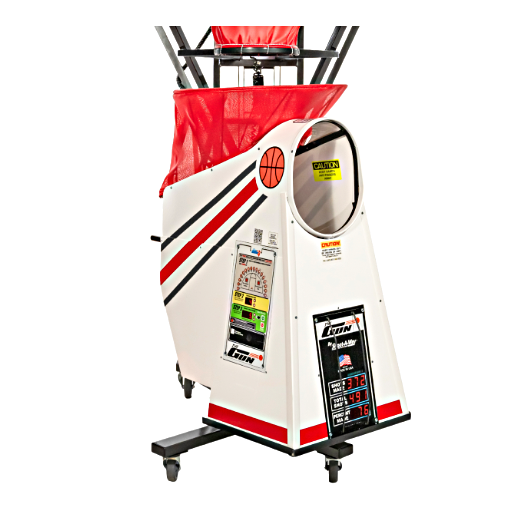
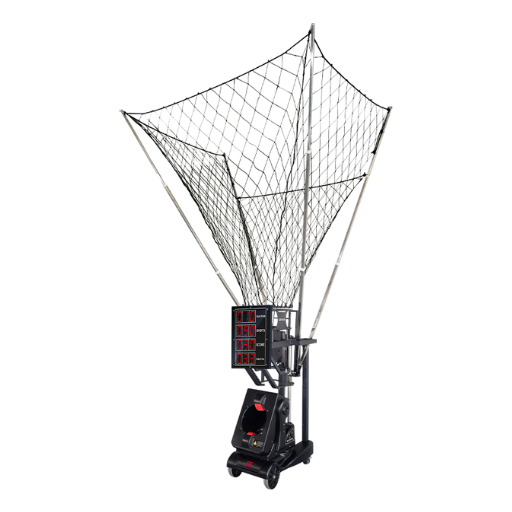
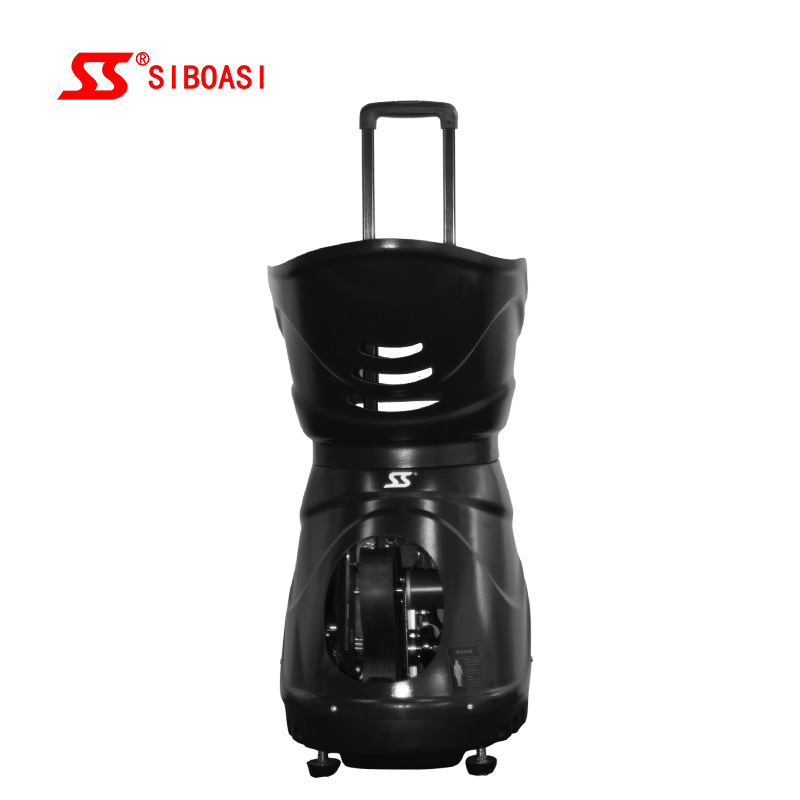
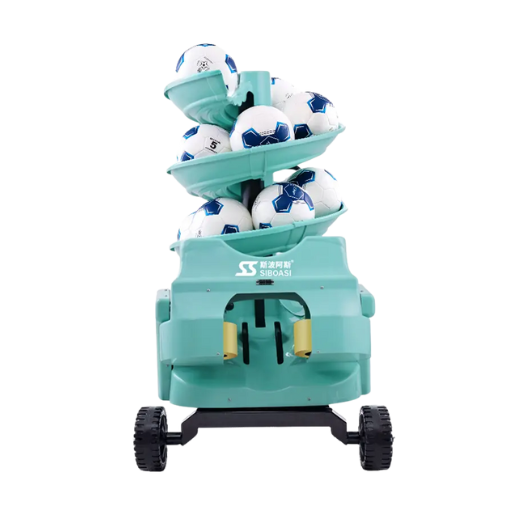
The use of a shooting machine provides an excellent way for players to develop shooting form through repetition in a controlled and efficient environment. It focuses their attention on proper technique, such as setting up with appropriate alignment, follow-through, and release. Practicing with hundreds of shots in any single session promotes muscle memory, which is the gluing agent for form consistency.
On the other hand, most shooting machines retrieve rebounds automatically and pass the ball back to the persons doing the shooting. It would allow players to stay focused on working the mechanics without interruptions. Setting adjustments allow the machine to pass at different speeds and trajectories so that players maintain varying degrees of challenge while sharpening accuracy as they age.
A shooting machine pouring out shots can be capable of simulating the conditions of a real game. Some machines allow for dynamic drills where the player might be required to shoot from various angles, distances, or positions in a very short time: incorporating game-like situations in practice better prepares the player for accurate and consistent shooting during the real game. Therefore, the shooting machine can be a wonderful asset for any athlete looking to improve his shooting.
Equipment Recommendations for Home and Gym

Choosing the Right Basketball Hoop
Location utilization of the basketball court should be thereby put-to-consideration. Portable hoops can be set up in smaller, indoor areas. These hoops are adjustable and easily movable, hence they need not be set up permanently. Out-resorts such as driveway, or backyard-in, provide sturdy grounds for very steady hoops, although installation must be done with quite some care. Unlike portable hoops which can be massed and erected anywhere, an in-ground hoop requires installation into the ground.
The other factor to consider involves the adjustability of the hoop’s height. Adjustable hoops are suitable for all ages and skills with the hoop lowered for younger players or those barely learning the game. A standard hoop is fixed at 10 feet and is used by top-notch players practicing at regulation height. Make sure the adjustment mechanism on the hoop you pick is reliable because the hoop will generally be shared by players of varying ability levels.
Lastly, you should consider the type and size of the backboard. Being made of tempered glass, they provide the best rebound and are preferred for serious play. However, they tend to be pricier. For casual use, polycarbonate and acrylic backboards offer more durability and are cheaper. Standard sizes of backboards fall within 44 to 72 inches; bigger backboards would be used for more advanced or competitive play, whereas smaller options would be placed in limited spaces or for a beginner. By carefully weighing these options, you can go for the basketball hoop that would best fit your needs and enhance your playing experience.
Essential Gear for Indoor Training Sessions
The right gear for indoor basketball training can really improve one’s performance and thus attain good results. The following are the key pieces of gear and their importance:
With such an essential gear with you, you are now set for efficient and focused indoor training. When you combine the right tools with hard work, you cannot help but get better at the game.
Fitness Equipment to Enhance Performance
Being performance-enhancing tools in sports or fitness routines, equipment must be chosen with the utmost care. Fitness equipment ensures improved physical strength and efficient training sessions with clear objectives, so that the tools used to fix a certain target can greatly influence one’s progress in addition to minimizing the risk of injury.
Resistance Bands are one of the most easily used gym equipment to add to training. Light in weight and portable, they are good for developing strength in a variety of muscle groups. Resistance bands can be used for warm-up, strength training, or injuries, making them a handy option for athletes at any level.
Now comes one regular product-a stability ball-which works wonders in strengthening the core, along with good balance and flexibility. Having a few sessions with the ball will surely improve your posture and coordination. It also trains those muscles that provide stability for tight athletic performances. Now, working on some of those basics will further increase one’s fitness level in tandem with the achievement of desired targets.
Finding the Right Coach or Trainer
Qualities to Look for in a Basketball Trainer
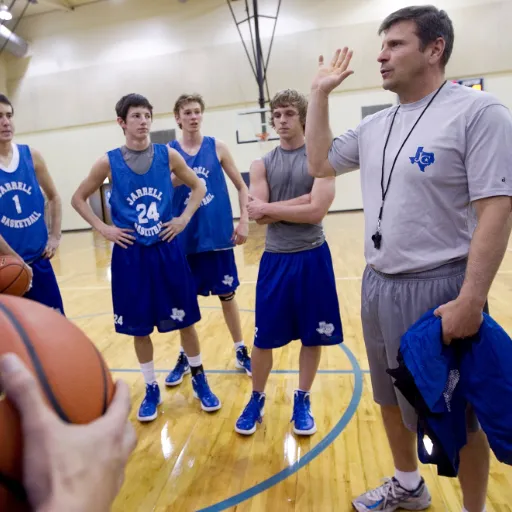
One of the paramount qualities in selecting a basketball trainer is knowledge. A good trainer should first establish himself in the fundamentals of the game: shooting, passing, dribbling, and defending. This would help them instill correct techniques in developing solid fundamentals in their players. Trainers should have either playing experience or be into modern training concepts and strategies to keep up with current trends in the sport.
Other than knowledge, one critical quality is communication. Trainers will need to explain drills and concepts clearly, according to the needs of each player. They must build up players with encouragement and constructive criticism. It is very important that a trainer create a positive and productive environment. Watch how much a trainer adapts his style based on the player’s level of skill and their learning style.
Last but not least, the greatest basketball coach should be endowed with ultimate patience and dedication for long-term player development. Improvement in basketball takes quite some time and steady effort; hence, a coach must be committed to the growth of the players. Coaches who set realistic goals, monitor their progress, and stay consistent in their approach toward guiding their players will be in a better position to help these athletes achieve their potential. By having such a coach, players will have a better chance of succeeding both in life and on the court.
Benefits of Joining a Basketball Class or Membership
Joining a basketball class or membership offers diverse advantages that promote physical health and personal development. Primarily, basketball is an awesome cardiovascular activity; it develops endurance and fortifies muscles. Staying active by way of playing basketball helps maintain ideal weights and improves coordination and balance.
Working as a team as well as working communication skills are taught by basketball classes; in team situations, players have to communicate with each other, brainstorm problems with, and support each other, all of which are lessons applicable in real life. The participants also get another chance to socialize and make long-lasting friendships, forging a spirit of community and belonging.
The organized form of basketball would provide a picture of coaching and required facilities. Coaches could teach and guide according to the skill levels of individuals: They could help players refine their techniques and strengthen their understanding of the game. In a structured environment, it feels natural for participants to stay motivated, set goals, and work toward measuring progress, thus allowing their growth not only as athletes but also as individuals.
How to Maximize Coaching Sessions
Good preparation is the number-one point to take into account when considering how to maximize coaching time. Players should prepare themselves to begin self-development immediately on their part at a coaching session. This means getting in the right mindset and body, being geared up and warmed up. One might say that the player would have an idea about what he or she trains on during the session and would go on to communicate this well toward a better focus with the coach; so, time would directly be spent on those skills or strategies that really matter. Both the player and coach should have clear goals agreed upon so that they can form in one direction and do so productively.
Active sessions with participation are equally important. The players must keep an open mind while they listen to the feedback right after receiving instruction. Asking questions relevant to the subject shows engagement and helps clear up the instructions and reinforces learning. Everyone else is growing by pushing themselves a step further beyond their comfort zone and asking for constant feedback.
Corrective reflection and the actual practicing after it should occur immediately after the session so as to reinforce the desired change in behavior. Participants, beyond just recalling what they learned, must review the key points of the session all-important drills or techniques addressed during the hour of training. Their progress can be traced back over time. When they commit themselves to development beyond the coaching environment, the relatively short time that coaches have to work with them will be well spent on the maximization of their physical talents and their development as well-rounded individuals.
Frequently Asked Questions (FAQ)
Q: What is indoor basketball training?
A: Indoor basketball training implies practicing in a controlled setting to develop basketball skills, practice shooting, and improve athleticism. These training sessions can be imparted to youth, individuals, or small groups, refining the skills of players in an environment where every distraction is kept away.
Q: Why must youth basketball players undergo skills training?
A: It is essential for youth basketball players to participate in skills training to become proficient in fundamental techniques related to dribbling, passing, and shooting. When engaging in indoor basketball skills training, young athletes can fast-track their learning, improve their work ethic, and build the confidence to actually go out and perform in the leagues.
Q: How would I be able to improve my basketball shooting indoors?
A: While shooting form is emphasized in free-throw shooting in the outdoors, basketball shooting at an indoor arena requires repetition of drilling with the focus on the proper form technique. Skills training, like shooting off the dribble or in catch-and-shoot scenarios, will better their shooting accuracy and consistency. Doing it regularly in a controlled environment helps in gaining muscle memory that results in enhanced performance during the games.
Q: What types of drills are included in indoor basketball training?
A: Indoor basketball training will include things like shooting drills, ball-handling drills, defensive positioning drills, and of course scrimmages. This lab-like setting helps trainers to observe every nuance of the player’s movements and to offer insight into what might be the best trainable focus for the player at any given time to achieve maximum effectiveness.
Q: How frequently should I be involved in indoor basketball training?
A: Frequency of indoor basketball training depends on individual goals and schedules. However, for serious improvements, one must have the training sessions at least a few times a week. Assessment once every month can track the improvements and tailor training plans accordingly.
Q: Can indoor basketball training work for adult players?
A: Yes, the indoor basketball training serves the adult players better, too. Whether one wants to improve skills to play just for recreation or to appear in a league, given training will undoubtedly raise up she or he. Working on a few skills in small-group training sessions might provide a useful environment for progressing.
Q: How should I identify a good indoor basketball training program?
A: When looking for some indoor basketball training, ensure you consider the factors about the expertise of trainers, indoor training schedules, and their focus on skill development. Hence, programs with individualized training plans that go into a multitude of basketball drills would cater better to you and help you reach your objectives.
Q: How do I find expert trainers for indoor basketball training?
A: The method of finding an expert trainer for indoor basketball training depends on sports clubs, community centers, or websites. Try to work with those trainers who are able to prove that they develop skills in players and are trained to coach youth or adult basketball. Website reviews and personal testimonials may give you another viewpoint to consider before hiring a trainer.
Q: How does individual indoor basketball training differ from small group training?
A: The individual sessions concentrate on the private training setup. This method depends on the circumstances facing the individual athlete and requires very personal attention and feedback. The small group training situation allows players to work against each other, thus encouraging competition while at the same time maintaining companionship. Both serve to take one’s basketball skills further toward overall performance.
References
- 4 Basketball Drills You Can Do Inside Your House – A guide featuring simple and effective indoor basketball drills.
- 37 Basketball Training Tips, Strategies, and Secrets – A comprehensive list of training tips to elevate basketball skills.
- 21 At-HOME Basketball Training Strategies (YouTube) – A video resource with practical indoor training strategies and workouts.
- Shoot 360 – A platform combining advanced technology and coaching to improve basketball skills indoors.
- HoopGrind – Basketball Training & Development – A program offering customized basketball training and development for players and coaches.