Basketball is a very fast-paced and exhilarating sport that combines skill, strategy, and teamwork. No matter if it’s your very first time to step on the floor or intend to polish your knowledge of the game, knowing the basic rules is a fundamental element that will enhance your performance. This guide will simplify the core elements of basketball for a newbie to grasp the basics while also offering insights for the more advanced player. From grasping the procedures of dribbling and scoring to understanding the rules of player positions and game flow, this gives an interesting and clear overview that will have you ready to play or watch. Get ready for the action and raise your basketball savvy!
Fundamental Skills in Basketball

Mastering Shooting
Bearing in mind that the art of shooting is fundamental to any basketball player, it is the very act that produces points. For a shooting player, it is technique, consistency, and practice that guarantee the perfect shot. A proper shooting motion would have the dominant hand placed right under the basketball, the elbow bent at ninety degrees, and afterward, a smooth motion of the hand as if reaching into a cookie jar. Repetition helps in creating muscle memory, which through the passage of time gets translated into gaining precision.
Shot selection and timing are other important factors affecting shooting. A player has to be in a balanced position while taking open shots that are within his range. Learning to shoot either during a fast break, off a pass, or once you have created space from your dribble will greatly strengthen your impact on any game.
Ultimately, the key to becoming a consistent shooter is practice and a strong mindset. Free-throw drills, spot shooting exercises, and shooting off the dribble are all inked onto a list of practices that improve one’s confidence and stamina. Besides practicing in the gym, it is equally important to maintain the right attitude and remain calm and composed in the face of pressure during the game, thus perfecting the conversion of every scoring opportunity that does come along. Working upon these components will turn any player into a trusty shooter, and hence a valuable asset for the team.
Effective Passing Strategies
One of the most crucial aspects in basketball is passing and thus teamwork, and it is one of the elements that guarantee smooth gameplay. In other words, passing relies on two key elements: precision and timing. A player should always give the ball almost directly into his/her teammate’s hands or to his/her preferred position so that it cannot be intercepted. It has to be on proper timing, so that the pass arrives when the teammate is ready to proceed with the direction of the play.
Another passing strategy is to maintain a heightened awareness of what is happening on the court. Players keep their heads up as they observe the movement of fellow team members and opponents alike. This will allow them to discern the exact moments when their teammates are open and when the opposition is setting traps. Faking out a defender using ball or body feints enables a pass to become safer or opens a better passing angle.
Practicing different kinds of passes is the last strategy—for instance, chest passes, bounce passes, and overhead passes—to fit into different game scenarios. Each pass is suitable for a specific situation: for example, bounce passes are ideal for passing to a teammate in motion in heavy traffic, while overhead passes are great for sending the ball over opposing defenders. Repeated practice of these passing styles coupled with team trust and communication will greatly improve passing and, hence, team efficiency.
Defensive Techniques
An effective basketball defense is one that fuses acting individual skills and coordination involving the entire team. An equally important aspect of the defense is maintaining a defensive stance-the feet are placed shoulder-width apart, the knees flexed ever so slightly, while the arms are somewhat extended and ready to react to any stimulus given by the opponent. Henceforth, to stay low and maintain equilibrium provides more control over speed and direction in the arduous task of opposing offensive moves.
Another method used in defense is controlling the one to whom points are being denied by either staying close or even anticipating their every step. The defenders must strive to be between their opponent and the goal post while doing their best to keep track of the ball. From this perspective, it becomes evident that communication with one’s teammates is crucial; players must be ready to rotate quickly or even double-team an opposing player to prevent any disadvantage from arising to their foes.
Lastly, elevating the defensive abilities through shot blocking, steals, and rebounds adds value to the collective effort. Blocking needs careful timing and calculations so as not to commit a foul; whereas stealing qualifications are those of interpreting movements and intercepting passes in the making. The rebounding contest, be it offensive or defensive, outright figure in seizing possession and changing the course of the game. Hence, repetitive practising, in unison with a well-formulated defensive game plan, is the unwavering backbone of any formidable lineup against any offensive tall order.
Understanding the Basic Rules of Basketball
Scoring Points: How to Score in Basketball
Other ways of scoring depend on a player getting the basketball through the basket of the other team. Points are given depending on how the attempt is scored. A field goal counts for two points if the shot is attempted inside the three-point line, but shots taken beyond are counted for three points and termed three-pointers. Some accuracy and timing, along with proper shooting form, are necessary for a successful attempt.
Free throws are an alternative single-point shot given after two opposing teams’ fouls. They are taken from the free-throw line without any defense pressure. Free throws can tip the balance in decisive moments of a game. Therefore, it is very important for players to become consistent free-throw shooters.
Players often base it all on teamwork, strategic passing, or good positioning to open up avenues for scoring. Fast breaks, pick-and-rolls, or cuts to the basket generate open shots. Besides skill, scoring depends on creative collaboration and an effective community action plan.
Types of Fouls and Violations in Basketball
Throughout the years, basketball has developed a vast number of fouls and violations, keeping the game fair and competitive. The rule forbids acts of physical contact, such as hitting, pushing, or holding an opponent, usually in some way interfering with an opponent’s ability to play. The most common fouls are personal fouls, which usually allow free throws or awarding the ball for possession to the opposing side. Technical and flagrant fouls are given for more severe or unsportsmanlike conduct and are accompanied by other penalties.
Violations are rule infraction violations without any physical contact. Typical violations include traveling, i.e., when the player makes too many steps without dribbling, and double dribbling, defined as dribbling, stopping the dribble, and then dribbling again. Other common violations are shot-clock violations, where a team fails to attempt a shot within the time allotted by the 24-second shot clock, and backcourt violations that occur when a team sends the ball back into the backcourt.
Knowing these fouls and violations makes a good player and admits basketball to the play. Those who follow the rules do so for a smooth flow of the game and true spirit of sportsmanship. The officials shall enforce these rules impartially so that it may become an unattractiveness for both players and fans.
Player Positions Explained
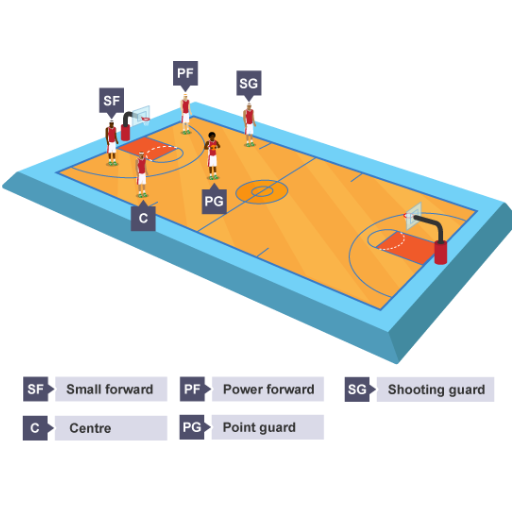
Basketball consists of five main positions, each with specific responsibilities to contribute to the team’s winning effort. They are point guard, shooting guard, small forward, power forward, and center. Each player on the court is assigned a specific area of responsibility and has specialized sets of skills patterned after their job.
A point guard is often considered a “floor general” who manages plays by setting the table, controlling tempo, and more. They have excellent ball handling skills and a big-picture strategic mind, enabling them to execute passes to teammates who then convert on scoring opportunities. The shooting guard is primarily responsible for scoring points, often from long range, but will also contribute on the defensive side.
Small forwards are versatile scorers and defenders, capable of bridging the gap between guards and forwards. Next, the power forward is the somewhat younger and less tall brother of the center, both of whom dominate the paint area to help with rebounds and inside scoring. The tallest player usually takes the center position and is tasked with dominating near the basket: blocking shots, getting rebounds, and scoring on short shots. These responsibilities merge into a balanced team inside court structure.
Advanced Basketball Rules
Common Violations in Basketball
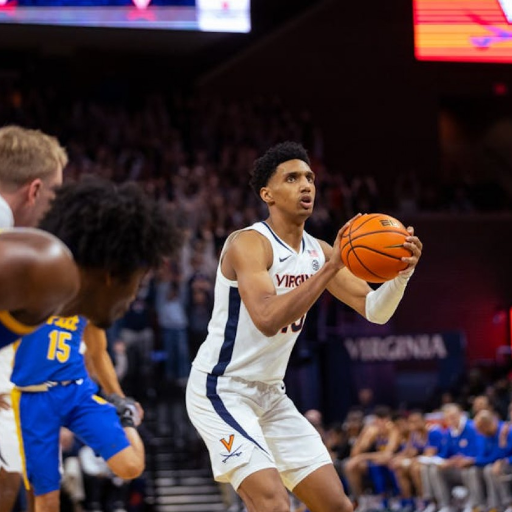
Basketball is endowed with a set of rules that maintain fair play and violations occur when these rules stand broken. Among the most common violations is traveling, which happens when a player holding the ball takes too many steps without dribbling. This kills the flow of the game and carries away possession with the opposite team.
Another common one is double dribbling. It happens when a player comes to a stop while dribbling, momentarily holds the ball, and then begins dribbling again. This rule exists so that the player does not get an advantage by resuming the movement after pausing.
Shot clock violation must also be mentioned, which occurs when your team has failed to put a shot on the rim within the time afforded by the league rules. The application of these violations serves to keep the pace of the game flowing and to keep equity in the contest, hence making them so vital to the very life of basketball.
Understanding Free Throws and Technical Fouls
Free throws are one of the essential elements that allow any team to score one unguessed point, unopposed, one-on-one in the game, provided that specified fouls have been committed. Certain fouls might be illegal defensive contact with a shooter, technical fouls for unsportsmanlike conduct, etc. Any free throw successful scores one point; the shooter has a certain time to shoot, with no interference allowed. Usually, this is when free throws get really important-gaining or extending a lead with a close game at hand.
Technical fouls, on the flip side, go against game conduct and order, sometimes being synonymous with unsportsmanlike conduct. These fouls can be committed by a player, coach, or a team. Examples would be excessive complaining about the referees, cursing, or intentionally delaying the game. When a technical is called, the opposing team will get one or more free throws and possession of the ball, potentially causing a significant momentum shift.
Free throws and technical fouls remind us that discipline, focus, and a respect for the rules are cornerstone concepts in basketball. While free throws reward those who can take advantage of precise intention and cool execution, technical fouls stand as punishments for disruptive behaviors that keep the game fair and respectful. An awareness of free throws and technical fouls is important not only to athletes but also to spectators, who can cultivate a complete appreciation for the sport’s dynamics.
Game Duration and Overtime Rules
The structure of basketball consists of a set timescale, governing all the rules of a regular play and those under an overtime. Professional basketball games technically have four quarters of 12 minutes per quarter. In a collegiate game, however, anything from two halves of 20 minutes can be in effect. Things such as fouls, time-outs, or the passing out of bounds stop the clock; thus, the actual time to view a game is much longer than the allotted time of play.
If both teams are tied in regulation time, the teams move on to overtime to decide the winner. An overtime period lasts five minutes under regular play rules. Overtime continues for as many periods until one side at the end of a period has more points scored than the other. This, hence, keeps a game from finishing in a tie just to keep the competitive spirit of the game.
Other important aspects of the rules prevail through overtime such as team fouls and timeout allowances, although a slight modification can take place according to the governing body in question. For instance, teams may be entitled to an extra timeout when overtime commences. Such rules are helpful in ensuring that the games end in an exciting manner while still keeping the balance of fairness and strategy in play courts.
Strategies for Playing Basketball

Offensive Plays and Setups
Offensive plays in basketball are set strategies for teams to get the ball into the basket against the defense. These plays are designed to get an open look at the basket through tactics such as spacing, ball movement, and player positioning. Offenses work against defenses with skills, both of their own and profiting from teamwork, to pull off plays.
One of the many offensive setups is the pick-and-roll; a teammate goes to set a screen for the ball handler to create either space or mismatches. As this usually has the defense making very fast decisions, one defender is usually left with the offender open to make a shot or drive to the basket. The other offensive setup is the motion offense, which constantly has players moving and passing to create ever-changing scoring opportunities. This keeps the defense constantly out of alignment and exploits their weak points.
Another instance of such strategies includes fast breaks to optimize all transitions after rebounds or turnovers. This puts speed in use, and quick minds help snatch points before opponents establish their defense. When these offensive strategies are correctly implemented and applied with creativity, teams are guaranteed to score the maximum with strategic variety.
Defensive Strategies and Principles
In team sports, defensive strategies are designed to interrupt the opponent’s offense while strengthening defensive formations. The predominant principle is man-to-man defense, where each player takes it upon himself or herself to mark an opponent. This requires agility and anticipation and excellent communication so that no opposing player is left unmarked or can take advantage of openings with a quick pass.
Zone defense has also been decried by coaches, especially against fast teams or highly skilled offensive players, as this style of defense relies heavily on teamwork and positioning and less on individual match-ups. A good zone defense forces opponents into lower-percentage shots and the momentum begins to sway in favor of the defending side.
Lastly, proper footwork, active stance, and quick transition between offense and defense are some of the defensive principles that will ensure success. A great defense stops points from being scored, turning them around into points for fast-break occasions. Teams aggressively executing these things in defense are usually resilient and hold better control throughout the game.
The Importance of Teamwork in Basketball
Teamwork is the foundation of success in basketball. At its heart, basketball is a joint effort that requires created communication, coordination, and trust among several teammates. Each player may contribute differently, such as scoring, defending, or setting plays, but they are all interdependent. With good teamwork, all players complement the strengths and remedy the weaknesses of their teammates in a common effort much greater than the sum of its parts.
One of the main aspects of teamwork in basketball is communication. While on the court, players must converse almost constantly, sharing information about defensive coverage, offensive plays, situational changes to be made, and more. This constant dialogue keeps the team organized and helps ensure they operate as a single entity. Also, trust among teammates cannot really be overstated. They are supposed to trust each other for making the right decisions and holding discipline and confidence in the implementation of strategies.
More efficient teamwork is a key reasoning for this. The teammobility working for the opening shot, working together for easy grading chances; defensive mobility and working together for shutting down the opponent and forcing turnovers. The most successful teams are those in which unselfishness and cooperation are emphasized, as they maximize their potential through each individual’s strengths.
Tips for Beginners and Intermediate Players

How to Improve Your Skills
Skill enhancement is a result of continuous application coupled with concentrated efforts on fundamentals. Set aside regular time to practice basics like dribbling, passing, shooting, or defending. Slowly work on perfecting these fundamental movements as they are just simple skills that evolve into higher-ranking strategies. Segmenting your practice could even help in working on specific areas of improvement.
Once you have begun practicing, ask the feedback or help of an experienced player or coach who is able to assess your technique and give suitable advice on what works on your weaknesses and what does not. A bit more of research through high-level competition or viewing some videos might inspire some others’ ideas or approaches to incorporate into your own set of training.
Physical conditioning and mental toughness must come last. Conditioning should support endurance, strength, and flexibility on the court or field; meanwhile, the mindset should really help to focus and be able to adapt under pressure. Thereby, technical development combined with physical and mental conditioning act to walk in parallel toward steady progression in your skills.
Common Mistakes to Avoid
- Neglecting Fundamentals: One of the big ones consists of overlooking the basics and overemphasizing some cool or advanced skills. Improvement is always about the basics; skipping training on these makes for a hard area in performance later on.
- Overtraining and Not Taking Enough Rest: If an athlete pushes too hard and does not really recover for long, then there is more chance that he can meet burnout or injured. Rest is such a wonderful ingredient in the pantheon of progress because the rest encourages the body to adapt into something better and stronger. Consider balancing your intensive training with adequate rest and recovering from setbacks.
- Failure to Get Feedback: Without feedback being given on a regular basis, constructive feedback, bad habits or simply plateaued development can show up. From a coach, mentor, or peer, feedback serves to point out the things that need to be changed or improved but remain unnoticed by the candidate himself. Search always for feedback and be open to it.
Resources for Learning and Practicing Basketball
To learn and practice basketball, one must have the right tools and resources to aid in actual improvement. Online sites offer massive varieties of tutorial and instructional videos from dribbling and shooting, from defensive methods and set-ups. These kinds of resources are good with beginners, as they offer step-by-step explanations with visuals that can be replayed for further insight if necessary. Top this off with websites that offer online resources in the form of progressive drills and conditioning exercises, and the urge to keep learning becomes almost impossible to set aside.
Local basketball clubs also present an ideal opportunity to sit with trainers and observers to learn and practice the sport inside and out from emergency drills to real-life play situations. Once inside, a set of skills are put into practice, aspects of real-time play will be adjusted, and opportunities will be provided to express one’s style of play. With many others at your side, they also instill a sense of competition and teamwork; they can offer feedback or encouragement, something that is always helpful as building confidence and learning about baseball in the field can do wonders.
Frequently Asked Questions (FAQ)
Q: How do you play basketball?
A: Basketball is played with two teams of five players each, with the aim of scoring points by shooting the ball into a hoop that is 10 feet above the ground. The game is played on a basketball court where players assign themselves roles such as passing, dribbling, and shooting to reach the opposition’s basket.
Q: What happens if the score is tied at the end of regulation?
A: Should a game find itself locked in a tie at the conclusion of a regulation time, it might then proceed to overtime periods until a winner is decided. The teams play until one team exits an overtime period leading in points over the other.
Q: Please explain how to score a basket.
A: To put the ball through the rim means the player has “scored a basket.” When a player scores a basket with a field goal from inside the three-point line, points are tallied for two; greater than three supports three points, and with a foul occasioned in a shooting attempt, free throws that add to one point each will be allowed.
Q: What is a free throw, and when is it awarded?
A: A player is awarded free throws when he is fouled in the act of shooting. He shall be given one or more opportunities to shoot the ball from the free-throw line unimpeded by defenders and shall be awarded one point per free throw.
Q: How does a defensive player steal the ball?
A: The defensive player predicts the moves of the offense and gets himself in position with fast hands to strip the ball when the opponent is dribbling or passing.
Q: What happens if a player is fouled?
A: If there is a foul, mostly when a foul occurs on a player in the act of shooting, free throws are given. The player attacked shall take the free throws from the free-throw line, and the number of free throws depends on the kind of foul committed.
Q: How long can he/she hold the ball?
A: If a player keeps holding the ball without passing, dribbling, or shooting, the most time the player may hold it is for 10 seconds. Upon time expiry, the other team shall be given the ball as a possession.
Q: What is the meaning of the pivot foot in basketball?
A: The pivot foot is so important that it affords the player to stay in position while moving. A player who stops dribbling must establish a pivot foot to avoid a traveling violation, which is committed once he/she takes too many steps without dribbling.
Q: How is the NBA different from a regular basketball game?
A: By the NBA or the National Basketball Association mentioned, it has its set of rules and regulations, which may slightly differ in some respects from those of other leagues or occasional games. The games are played at a professional level, where much emphasis is placed on skill acquisition and strategy in the gameplay, often presenting the best artists in the game of basketball.
References
- How to Play Basketball: The Basics, Rules, & Fundamentals – WikiHow: A comprehensive guide covering the basics, rules, and fundamentals of basketball.
- Nothing But Net: Basketball Guide for Beginners – Coming Home Magazine: A beginner-friendly guide that explains basketball rules, basics, and tips.
- Basketball Basic Rules – PDF Guide: A concise document outlining the basic rules of basketball.
- Guide for basketball train
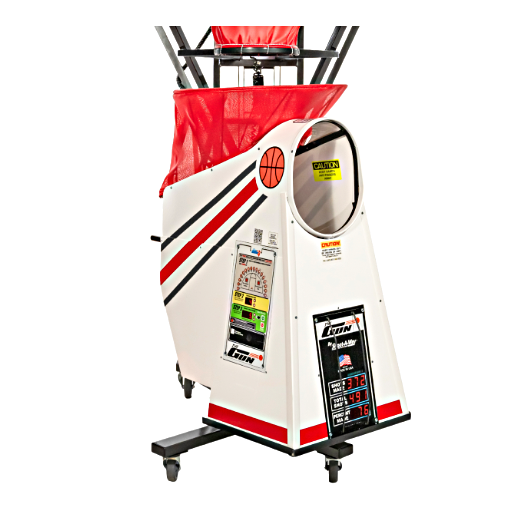
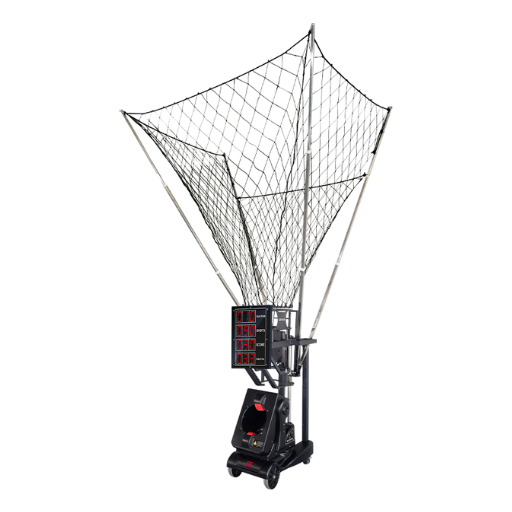
- Top Basketball Shooting Machine Manufacturer and Supplier in China