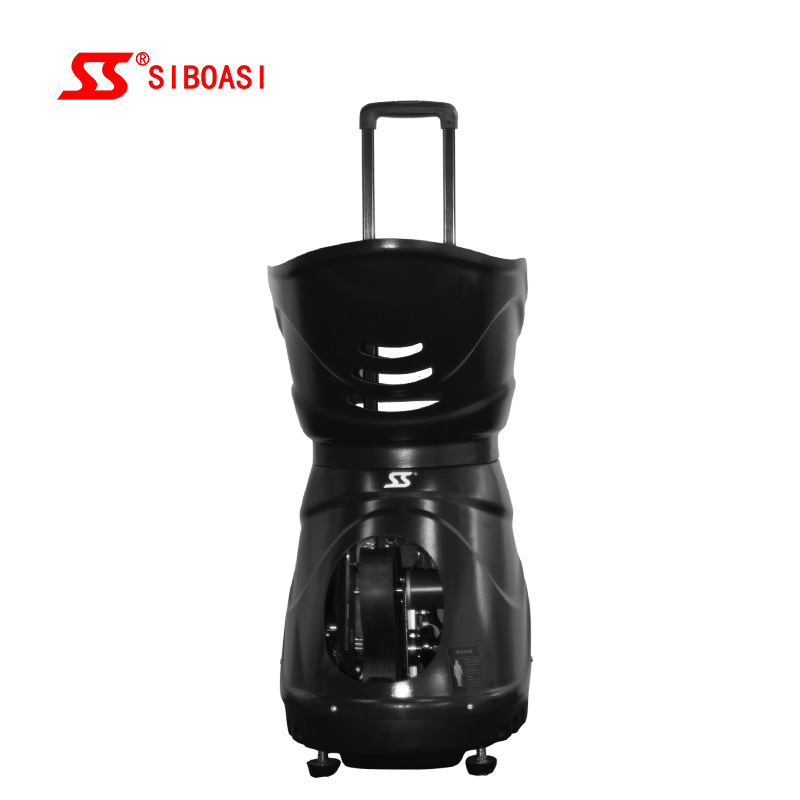
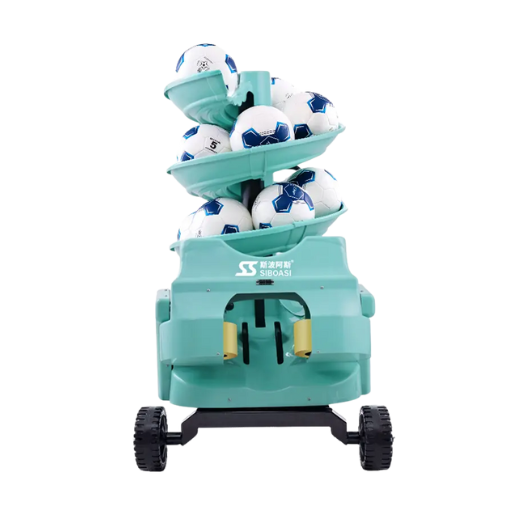
Do you have the desire to enhance your tennis skills but find it difficult to practice regularly? Then let’s talk about indoor tennis ball machines, the modern invention that is perfect for your training needs, regardless of the weather. These machines have been programmed to create realistic in-game situations by providing accurate shots, different levels of speed and spins, and so on—all these can be done in the comfort of your home or indoor court. No matter if you are a newbie wanting to get rid of your shyness or an expert wanting to sharpen your skills in a certain area, this article is going to reveal to you the indoor tennis ball machines’ advantages and flexibility. So, keep watching as we investigate how this state-of-the-art device can take your tennis playing skills to a whole new level.
Introduction to Tennis Ball Machines

What is a Tennis Ball Machine?
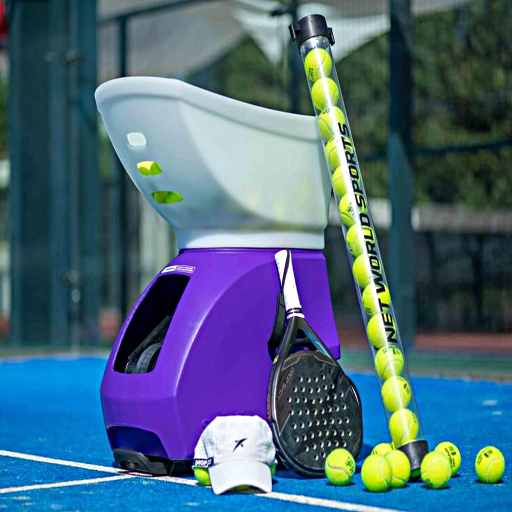
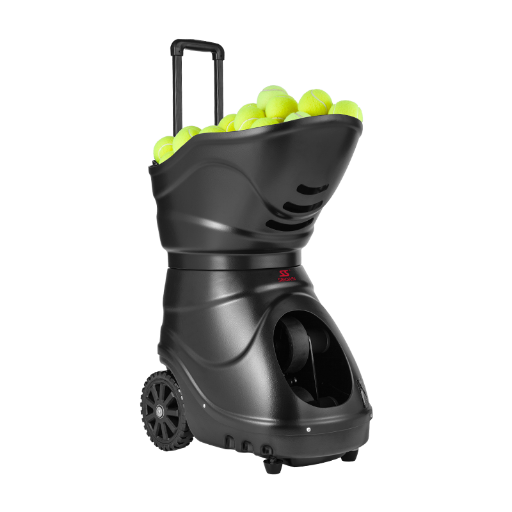
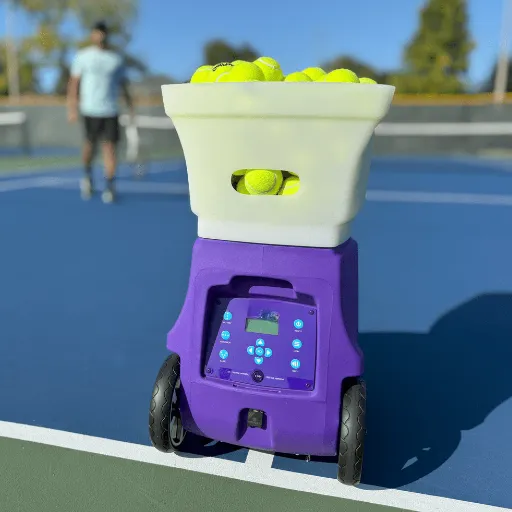
A tennis ball machine is an apparatus that enables tennis players to practice and enhance their skills independently. It operates by ejecting balls cleverly at different speeds, angles, and intervals, thus allowing players to work on their specific game areas like footwork, strokes, and timing. These machines are commonly used by players of all levels—novice, intermediate, and professional—as a dependable training aid.
The primary purpose of a tennis ball machine is to recreate the conditions of a real tennis match. Most machines allow users to adjust parameters such as ball speed, spin, and oscillation to simulate various playing situations. This adaptability gives players the chance to practice and master the return of different shots, ranging from simple lobs to fast volleys, which in turn improves their court presence and overall skill.
Tennis ball machines are very helpful for practicing alone, as they give a constant supply of balls without the need for a hitting partner. Therefore, they become a perfect tool for acquiring skills slowly and gradually at convenience. If a player uses a tennis ball machine regularly, he/she not only improve but also develop the technique and confidence essential for winning through matches.
Benefits of Using a Tennis Ball Machine
1Consistent Practice
The tennis ball machine guarantees the highest level of consistency which is not even comparable to a human hitting partner. This very often leads to the practitioners being able to execute the same specific shots continuously, and this is the best way to professionalize or at least reduce the time for the process of learning the strokes and getting muscle memory.
2Adjustable Training Options
The modern tennis ball machines are equipped with many features that allow them to mimic the different types of opponents. The players can customize the much-desired spin (topspin or backspin), oscillation, and speed of the machine according to their needs. They can even play different kinds of simulations that involve finding and practicing the opponent’s weak spots.
3Efficiency and Convenience
One of the best features of these machines for their users is that they can use them whenever they want and practice on their own. Also, the players don’t have to wait for the training partner or coach; they can do their practice according to their pace and time. Self-paced repetitive drills are known to gradually improve skill retention, and hence the players become more confident during matches.
4Improved Footwork and Endurance
Some machines can shoot balls randomly in different spots on the court and this feature is called random oscillation. Players being forced to move fast and change their positions are the major benefits of this feature as it improves their speed, agility, and overall stamina.
5Cost-Effectiveness in the Long Run
The price tag of a tennis ball machine with high quality that is very durable ranges from $500 to $5,000 making it a somewhat expensive item to buy initially; however, it can turn out to be a cost-effective investment for the player’s long-term improvement. They do not have to hire a hitting partner or book more coaching sessions to do repetitive drills.
6Support for All Skill Levels
Tennis ball machines go from beginner-level players who just need to sharpen their basic strokes, to intermediate players who are practicing for matches, to advanced players that are working on their competitive game, and they can all be done by the same machine.
Choosing the Right Ball Machine
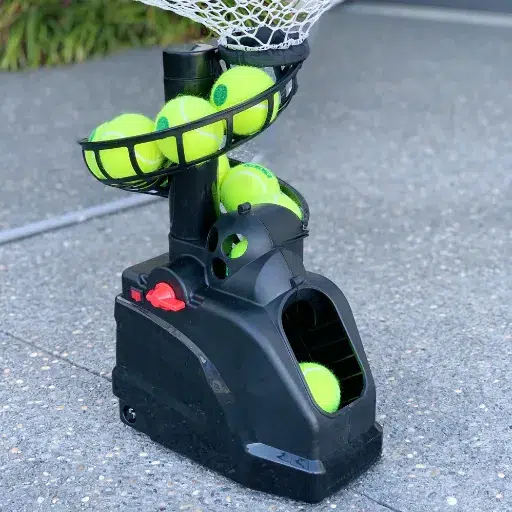
Key Features to Consider in a Tennis Ball Machine
Selecting a tennis ball machine can be an overwhelming task if one is not well-versed in its features. Therefore, knowing the main considerations that will guide your choice, based on your level of expertise, playing style, and financial resources, will make matters a lot easier:
| Feature | Description |
|---|---|
| Capacity | The ball capacity of a machine is the major factor that determines the number of tennis balls that it can hold at a time. Generally speaking, ball machines’ capacities vary between 50 and 300 balls. For instance, if you were an advanced player or working on the endurance aspect of the game, then a larger capacity would be right for you, as you would want to practice for a longer time without having to refill the machine so often. |
| Oscillation Settings | Automatic tennis ball machines of today frequently allow for horizontal, vertical, or even random oscillation settings. With this, the delivery of balls will vary, thus giving the players a more realistic feel of match conditions. Programmable oscillation patterns may be a feature in advanced machines so that practice drills can be made more dynamic than ever. |
| Ball Speed and Feed Rate | The speed of the ball usually varies from 10 mph for beginners to more than 80 mph for experts. Likewise, the feed rate – that is, the interval between ball launch – can range from 1 to 10 seconds. Regular changing of the settings for the speed and feed rate will help even beginners simulate the hardest rally conditions and thus will favor each player’s skills. |
| Spin Control | Competitors in tennis know that topspin and backspin are absolute musts. Some of the most expensive machines let players adjust the spin settings according to their preferences, thus being able to practice with different types of shots coming at them and even being able to switch their court familiarity. |
| Power Source | There are basically two types of tennis ball machines: battery-operated and AC-powered. Indoor courts are generally incompatible with battery-operated machines, while at most outdoor locations, battery-operated machines, although not offering continuous play, are allowed. Battery-operated machines, which are powered by rechargeable batteries, provide 2-8 hours of use per charge and are thus ideal for usage outdoors. On the other hand, machines that work with alternating current do not require electric outlets and thus provide uninterrupted play. |
| Remote Control and App Functionality | Most of the modern machines are equipped with the option of controlling them through a wireless remote or using a smartphone app. Players can the change the settings without having to stop their practice in their settings like speed, spin, and oscillation with the help of the wireless remotes or smartphone app control. Such innovations make the practice sessions more comfortable and customizable. |
| Portability and Weight | Ball machines come in different sizes and strengths, and that determines their weight range. So one can find a lightweight (20-30 lbs) machine for easy carrying or a heavy one (50+ lbs) with wheels for movement. If you want a portable one, make it a point to check if the machine is easy to carry or move. |
| Budget and Warranty | You will find various prices for tennis ball machines that range from $500 to over $5,000. The more affordable machines with the most basic features have the least resistance to use by casual players, whereas, on the other hand, competitive athletes might require premium models with advanced options. Moreover, do pay attention to the warranty period – usually between 1 to 3 years – that comes with the machine, as it will provide you with peace of mind in the long run. |
💡 Pro Tip: Taking into account these factors and matching them with your needs, you will be able to select the proper tennis ball machine that will take your game to the next level.
Comparing Pro Tennis Ball Machines
The most important aspects are considered to get the best option for professional tennis ball machines. First of all, consider the machine’s ball capacity and oscillation features. The higher the ball capacity, the longer the practice session and the fewer the refilling drills; on the other hand, the adjustable oscillation guarantees a variety of shots that imitate real-game scenarios. Also, machines that are made for advanced players usually add random or programmable oscillation and this means a more dynamic training experience for the player.
Secondly, look at the speed and spin capabilities of the machine. Professional tennis ball machines are known for their offering of a wide range of ball speeds that can be adjusted to suit everything from warm-ups to high-paced drills. The same goes for spin settings which give players the power to determine their playing style and also to practice dealing with different shot types. The ability to change these features helps the player to develop his or her skills more advanced.
Lastly, portability and ease of use should be considered as well. Pro machines are usually stronger, but their transportability and setup time may affect the convenience of your training. It would be best if you considered the models that come with wheels and those that are lightweight for easy transport. Moreover, offering simple controls or remote usability can make the whole process smooth, meaning that your practice will be less distracted and more effective. If you take a closer look at these points, you will, without a doubt, discover a machine that will take your game to a pro level.
Customer Reviews: Insights from Other Users
⭐ What Users Are Saying
Portability Matters: Training equipment selections are often made by the users based on the portability of the machines as one of the most important factors. Reviews also point out that moving the equipment around is greatly assisted by having lightweight models with wheels; this is especially true for those who have to practice in different places frequently. The time and effort saved by this convenience can be very significant in improving the overall user experience.
Ease of Use: The ease of use of the controls is another point that comes up often in the reviews. The customers are very often the ones who appreciate the machines with the simplest settings and control via remote as they say that these functions lead to smoother and more focused training sessions. Simple controls not only minimize distractions but also enable users to change their practice settings quickly without interrupting their flow.
Durability is Key: Durability, on the other hand, is the factor that most consistently comes up in reviews as the reason for long-term satisfaction. The majority of users suggest buying machines that feel solid and well-made, as this usually means good performance in the long run. Quality assurance means the machine can handle constant usage as it becomes a choice for serious and recreational athletes. Unearthing the shared insights can help you choose the equipment that perfectly fits your needs.
Training Effectively with a Tennis Ball Machine

Establishing Your Home Training System
Careful training with a ball machine requires proper setup in order to get the most out of your practice sessions. First of all, choose a place where there is enough room for both moving and collecting the balls consistently. A flat surface is ideal, tennis courts or open backyards, just make sure the area is safe and there are no obstructions that might cause problems for either the machine or your practice.
Now set the machine to your skill level and the area of training you want to focus on. Beginners can first slow down the speed and simply place the ball to concentrate on consistency and form. More experienced players can gradually increase the speed, add spins or even try random shot placements to bring match conditions in. The adjustments to the settings will help you to gradually increase your skills along with the current training level without making it difficult.
Finally, plan your drills properly. Schedule your session by breaking it into shots like forehand, backhand, and volley and setting very specific targets for each shot. Also, make it a point to take breaks and review your performance at intervals to keep the effectiveness and sustainability of your training. If you follow these guidelines, you will be able to make a home training system that is conducive to your tennis improvement goals.
AI-Powered Features as an Ally in Training
The AI-powered features are capable of enhancing tennis training to a great extent, as they can give insights and feedback that are very personal to the player. With the help of advanced detection of movement and evaluation, the AI tools can monitor the player’s performance, measure the techniques and suggest where improvements are needed with high accuracy. The tools provide feedback on strikes, footwork, and overall form instantly, thus helping players to develop their skills more quickly than with conventional methods. Over and above this, AI-facilitated video analysis can catch very minor errors that the player might not be aware of, thus giving a more complete assessment.
Besides just the technique, AI could also aid in developing the strategy. The systems could analyze the data of either the practice or the competition and spot the trends in the opponent’s playing and recommend counter-strategies. The players could then use such information to customize their practice and deepen their understanding of the game’s tactics. Additionally, the AI tools generally come with features such as shot placement tracking and spin analysis, which in turn allow the players to try out new styles of play and fine-tune them.
Lastly, AI-based scheduling and monitoring performance could make the whole training process more organized and focused on reaching goals. These systems are able to design personalized training plans according to each person’s level of skill and progress, thus allowing gradual improvement. Moreover, the systems could keep an eye on the output and fatigue of an athlete and this would help in preventing overtraining and at the same time encouraging recovery. The players who use AI features during their tennis training are certainly going to get a mixed, data-controlled, and gradual skill-building approach.
Enhancing Court Coverage and Shot Variety with AI
The role of AI in the court coverage aspect of tennis is very significant; it can analyze players’ movements and suggest optimal positions for them. AI models fed with data from past matches can spot the spots where the player might have difficulties reaching shots and instruct them to boost their agility and reaction time, accordingly. This not only assures players to respond to their opponent’s shots more efficiently, but also allows them to control the game by positioning themselves in the right spots on the court.
As to shot variety, AI can examine a player’s technique and reveal the areas that need to be diversified. Let’s say, a player is relying too much on forehand shots, then AI can propose workouts and tactics that could enhance the backhand or volley skills. The gaining of these various skills by a player leads to much unpredictability in his/her game, and thus, it becomes more difficult for the rivals to guess his/her next move. Besides, AI can give feedback on the players’ practice shots in real-time, which helps players to become more accurate in shooting and also develop their shot styles.
Summary: The use of AI in the training of tennis players brings about a data-centric method of improving both court command and shot diversity. Players can work on their weaknesses and master new skills that not only add to their court presence but also make them less predictable. The innovations of technology, alongside regular practice, keep pushing and spreading one’s winning over competitors in a systematic and sustainable way.
Advanced Training Techniques
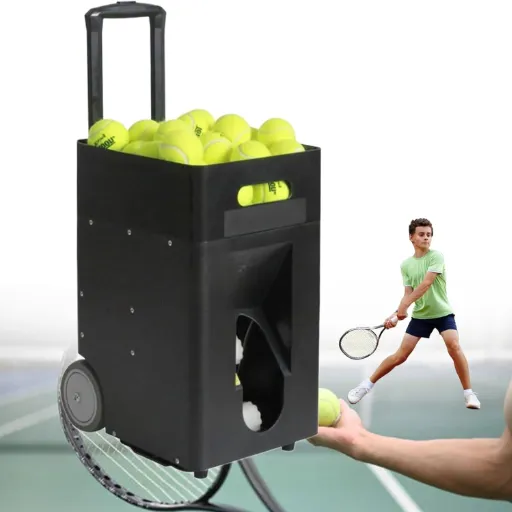
Developing Pro-Level Skills with a Ball Machine
A ball machine is one of the best tools for an aspiring tennis player as it not only enhances the player’s basic skills but also, the maker of the machine helps him/to become the best. The machine is really a dozen highly trained coaches in one. It gives ball delivery like a machine so the player can make mistakes. This is going to be hard during the practice sessions, but the bearings will have been developed so one can confidently execute his/her strokes when it really counts during the match. This kind of practice is extremely beneficial for taking the strokes to the level of perfection, where the player’s shooting accuracy has increased overall.
The capability of a ball machine is another major plus. The player has the possibility of deciding the match conditions through manipulating the parameters like speed, spin, height, and feeding rate. For instance, setting up the machine so that it gives topspin or slice shots can help the player get ready for a certain opponent’s style of play. Furthermore, the control over the ball’s landing area is not only helpful for the players to get the right kind of training but also to practice rallies or shots along the court.
The ball machine’s regular use brings along the growth of both stamina and accuracy. The player will not only be able to endure the long practice sessions but also will be able to focus remarkably well when he/she is under pressure. For maximum results, the players should alternate ball machine training with live play against opponents to ensure that they have a balanced and unpredictability-incorporating preparation. This way the dynamics of structured repetition and real-match both create the foundation of the evenly skilled player who is destined for success in the court.
Incorporating Feedback Systems into Your Practice
Integrating feedback systems into practice sessions is an indispensable step for ongoing development and enhancement. Players get feedback which gives them an idea of their performance, thus making it easier for them to recognize their strong points and weak areas. It is very useful for athletes to take advantage of immediate feedback during practice in the form of ball trajectory, footwork, or positioning observations so that they can make quick adjustments while their technique is still fresh in their minds and thus optimize it.
A very productive way of introducing feedback is by cooperating with trainers who will be able to give the players specific, constructive advice during and after practice. Trainers can utilize either video analysis or direct observations to pinpoint the most crucial areas and ensure that the players are fully aware of the necessary changes to be made in order to boost their performance. Feedback from peers can also be quite valuable since teammates are often in a position to provide a different view and consequently help recognize weaknesses that are not noticeable to the particular player.
Moreover, players can also utilize the self-assessment tools that allow them to evaluate their progress independently such as reflective journaling or reviewing recorded matches. This not only promotes self-awareness but also accountability which are both very important for long-term development. Using several feedback methods together creates a comprehensive practice strategy, which guarantees that players not only sharpen their skills but also acquire the ability to change and improve on their own.
Creating a Structured Training Routine
An indoor tennis ball machine is an essential device that helps develop a well-planned training routine. It gives the player the opportunity to practice being consistent by delivering balls with exact speeds, spins, and angles. Thus, the player can work on his technique and footwork without the unpredictability of a partner, which is the ideal way to refine skills. Customizing drills to hit the target of the practice area like forehands, backhands, volleys, and others, gives a player the advantage of a well-rounded practice
To achieve an effective routine, it is first of all necessary to set clear goals for each session. Next, the player can use the machine to warm up with basic shots, increasing the pace or spin according to his/her skill level. Doing interval drills, such as switching between forehands and backhands or simulating match situations, is an excellent way to get better at reacting and building up your ability to last through the game. Also, be systematically vary your routines to avoid getting stuck at one level and to keep your concentration during the practice.
At last, along with the ball machine training, carry out periodic self-assessments and get feedback from a coach if possible. Also, recording practice sessions will help you analyze your strengths and weaknesses. Moreover, combining directed drills with constant evaluation assures balanced growth, hence, players can continuously optimize their performance. An indoor tennis ball machine, used in accordance with a structured plan, will be a very effective tool in developing both the technical and strategic aspects of a player’s game.
Maximizing Your Training Sessions
Tips for Effective Practice with a Tennis Ball Machine
Goal Setting for Every Session
At the start of a practice, set specific aims for the session. Be it a forehand, backhand, or volley improvement, a plan that is specific adds more to your practice. For instance, if one of your goals is to work on your forehand with topspin, then set the machine to hit balls that have medium speed and height which are good for practicing this shot.
Speed, Spin, and Trajectory Change
The latest tennis ball machines can change speed, spin, and trajectory to suit your requirements. Take advantage of these settings to make training like real matches. For example, the topspin can be set for practicing against players with powerful shots or backspin can be used when improving defense on the court. A research study conducted by Tennis Tech Research has found that changing the height of the balls during practice helps to strengthen both cognitive and motor skills, thus making the players more flexible in matches.
Match Scenarios Simulation
In order to compete, one should train under similar conditions to those of a real match. The mentioned drills for strokes of different wells should be done in alternation and quickly in a row, resembling the uncertainty of a real tennis game. For a player during interval training, it is easier to develop the stamina and to make the right choices.
Monitoring and Assessing Your Performance
During practice sessions, video recording can be a very useful tool for checking your form, footwork and analyzing shot execution issues. Research shows that players who have gone through their recorded sessions increase their accuracy and consistency by almost 15%. Finding errors and reviewing for improvement over time guarantees slow but large improvement.
Working on Proper Footwork
During practice a tennis ball machine will be the teacher helping a player to build skills in a certain area since it offers the same drills continuously. Each time shoot from the correct high spot and do not forget to perform the split steps to keep your body in balance. A research team has found that a player with good footwork can effectively cut his recovery time down and also can get the right court position quicker during the match.
Go on with the Challenge
Increase the difficulty of drills gradually as you develop your self-confidence in certain aspects. In the beginning, let the speed be low and the spin gentle, and then move to faster deliveries with the varying spins. Progressive overload in training is said to lead to 20% faster learning curves in technical skills, thus, coaching experts have been convinced.
✅ Key Takeaway: Players using the full potential of a tennis ball machine with consistent effort and evaluation can drastically improve their game, subsequently bridging the gap between practice and competition effectively.
Common Mistakes to Avoid During Training
❌Skipping Warm-Ups
One mistake that is very common for players to do during training is ignoring the necessity of warming up properly. Not doing warm-ups reduces the chance of injuries but at the same time, it also limits the player’s capacity to practice effectively. Always set aside time for jumping jacks and light jogging to make your muscles ready for vigorous exercise.
⚠️Overtraining Without Recovery
Another item among frequent errors is overtraining without sufficient recovery. Long and hard practices can result in tiredness, lower performance, and even injuries that take a long time to heal. To get the benefits of training gradually, make sure you take enough time off between training sessions and keep a training plan that is not too demanding.
📉Neglecting Progress Assessment
Finally, not assessing one’s progress regularly might slow down the growth. Working on one’s skills without receiving any input or making any changes might only strengthen the bad habits instead of getting rid of them. Use video analysis, coach feedback, or self-assessment tools to spot weaknesses and grow your skills consistently.
How to Make Your Machine a Training Partner
The use of your machine as a training partner can play a significant role in the development of your skills. First, make sure that the machine is appropriately set up for your intended use and is in good working condition. During your practice, avoid interruptions caused by malfunctions by following the manufacturer’s recommendations for adjustments and maintenance.
When your machine is ready on your part, you should set specific goals for every training session. For example, reaction time, accuracy or endurance could be your main focus in the training. Adjust the machine’s settings to mimic the different conditions or intensities and slowly increase the difficulty as your skills get better. Training should be done at the same time each day, and performance should be monitored by metrics available in the equipment or by using an external tool like a stopwatch or score sheets that help to note down improvements.
Moreover, change things up in your practice to not only keep the sessions fun but also to develop different skills. Change up the machine’s speed, angles, or patterns to challenge you in ways you have not done before. Make sure to take short breaks to avoid getting tired and after each session allow some time for self-assessment, where you will look at your progress and modify your strategy accordingly for the next practice. If used with discipline and proper planning, your machine can become a trustworthy partner in achieving your training goals.
Frequently Asked Questions (FAQ)
Q: What is an indoor tennis serve machine?
A: An indoor tennis serve machine is a kind of apparatus that throws tennis balls at diverse speeds and spins, permitting the players to sharpen their skills in a controlled atmosphere. Such machines are suitable for players who wish to be skilled but do not want to look for a partner.
Q: What are the benefits of using the best tennis serve machine?
A: The top tennis serve machines provide non-stop practice sessions and come with features like adjustable speed settings (up to 100 mph), spin options, and programmable workouts. This flexibility is a boon for all types of players, as it aids in skill development.
Q: Can I use a portable tennis serve machine indoors?
A: Absolutely. Portable tennis serve machines are meant for indoor practices, which is why they are easy to set up and practice in confined areas. Their portable design empowers you to do home tennis practice even in places where space is a constraint.
Q: How can I extend the battery life of my indoor tennis serve machine?
A: Confirm that the battery of the machine is fully charged before use and do not keep it connected for a long time to extend battery life. Practicing indoors with an AC adapter also benefits from prolonging battery life.
Q: What types of practice can I do with a tennis ball machine?
A: There are several practices that you can perform with a tennis ball machine such as baseline shots, volleys, and serves. It gives you the option to tailor your practice according to your needs which makes it suitable for players of all stages.
Q: Is an indoor tennis ball machine suitable for beginners?
A: Definitely, an indoor tennis ball machine is awesome for novice players as it provides gradual enhancement of their skills. The machine’s flexible options permit beginners to work at their own pace which in turn fosters confidence and perfects the technique.
Q: How do I set up an indoor tennis ball machine for practice?
A: The process of setting up an indoor tennis ball machine is quite easy. First, select the spot where you want to practice, put the tennis balls in the machine, and if necessary, connect the power supply. After that adjust the settings for speed and spin, and your practice session is ready to begin.
Q: What are the advantages of using an AI tennis ball machine?
A: One of the biggest advantages of an AI tennis ball machine is that it can not only analyze your performance but also adjust your serve accordingly, thus giving you a more personalized training experience. This technology could definitely help the players to pinpoint their weaknesses and proper on improvement areas, thus making their practice less effective overall.
References
- Tenniszon – Tennis Ball Machines – Features a variety of tennis ball machines with adjustable speed, spin, and custom drills for all skill levels.
- American Racket Sports Association – Best Tennis Ball Machines for 2025 – Highlights top tennis ball machines for 2025, focusing on portability and performance.
- Tennis Warehouse Forum – Latest Ball Machines – A community discussion about the latest tennis ball machines, including user reviews and recommendations.
- OnCourt OffCourt – Infinity Play System with Multi-Twist Mini Ball Machine – Showcases a self-feeding system for various types of balls, ideal for indoor practice.