Free throw shooting is an art of precision and technique, combined with consistency. One crucial element should be at the core of every great shot: accurate hand placement. Whether it is a player who has been playing for ages and still working on that shot or a beginner wishing to improve, hand placement will determine whether your shot goes in or not and how much control you have over it. The article takes you through the basics of hand placement and talks about how it can affect your shooting form and release, plus actions you can take to improve your game. You are about to acquire the magic ingredient that will bring sharper, more consistent shots and improved performance on the court-about to!!
The Importance of Proper Hand Placement in Basketball Shooting

Impact on Shooting Accuracy
In basketball, hand placement is surely one of the most important stimuli for basket accuracy. The correct placement of the hands allows a proper balance and release control, which control directly affect the shot trajectory, and consistency. Lacking a proper hand position because the other trends for accuracy assumes all along the supposed accuracy category can result in a lot of missed shots.
The shooting hand, in most cases the dominant hand, should position itself under the basketball with the fingers widely splayed in order to provide stability and control to the ball. The other hand controls the ball from the side to ensure the shot is lined up correctly. This assists in keeping the follow-through straight and reduces the likelihood that the ball will drift sideways. Repeating this procedure will, in the long run, augment the accuracy of the shooting to a great extent.
Besides, the backspin of the basketball is produced by the correct application of the hand, which is the key for a profitable shot. Backspin, when well administered, carries the ball in a stable flight and ensures the soft landing of the ball on the rim, thereby more occasionally having it bounce towards smooth bounce-ins. Constant emphasis on hand positioning during practice can, therefore, promote muscle memory that guarantees performing reliable and accurate shots under pressure.
Enhancing Consistency and Control
Good shooting mechanics coupled with constant drilling form the basis of consistency and control in basketball shooting. Strive for a balanced stance, i.e., feet shoulder-width apart; keep in mind that your shooting elbow should also be exactly below the ball. These little motions help in building a shooting motion that can be repeated over and over. Apart from that, fix your eyes on the target, maybe the back of the rim.
Repetition builds muscle memory. Work on drills that emphasize hand position, backspin, and release timing to improve your shot. For instance, the form shoot allows you to work close to the basket focusing on the technique. Over time, increasing distance tests that the mechanics stay intact under more challenging conditions.
Lastly, the player must maintain considerable mental focus and confidence for control to take place and occur. Breathing or visualization methods help calm down the nerves in stressful situations, meaning players will have precision while executing a shot. Watching recorded gameplay or now and then going to a mentor to get constructive criticism offers further ways to improve and develop reliability in shooting.
Common Mistakes and Their Consequences
One mistake among players is that they tend not to maintain proper technique all the time. Poor form can lead to unstable foot placement and very little accuracy, which makes it very difficult to realize the intent of very precise shots when under pressure. The consequences of this are seen in a lack of consistency, erosion of confidence, and limited progression. Therefore, players must set their focus on the fundamentals and practice them regularly.
Intermittent neglect of mental preparation is another common mistake. Mental preparation is just as crucial as physical skill. Players who pay no heed to applying mental focus or managing stress effectively often find themselves left without control, especially when the situation demands it. In such cases, one might witness a rushed decision, unfocused shots, or missed opportunities. Implementing strategies such as deep breathing and visualizing can aid in staying calm and executing under pressure.
Then there remains over-reliance on instinct in the absence of gameplay analysis. Players who reject to observe their own strong points and weaknesses, through feedback or video review, certainly miss the chance to improve. Without such critical evaluation, bad habits can go unnoticed and firmly ingrained into player skills, which ultimately slow long-term development. Thus, the learning process is improved by actively seeking constructive criticism and targeted work toward improvement.
Understanding the Mechanics of Hand Placement

Positioning the Shooting Hand
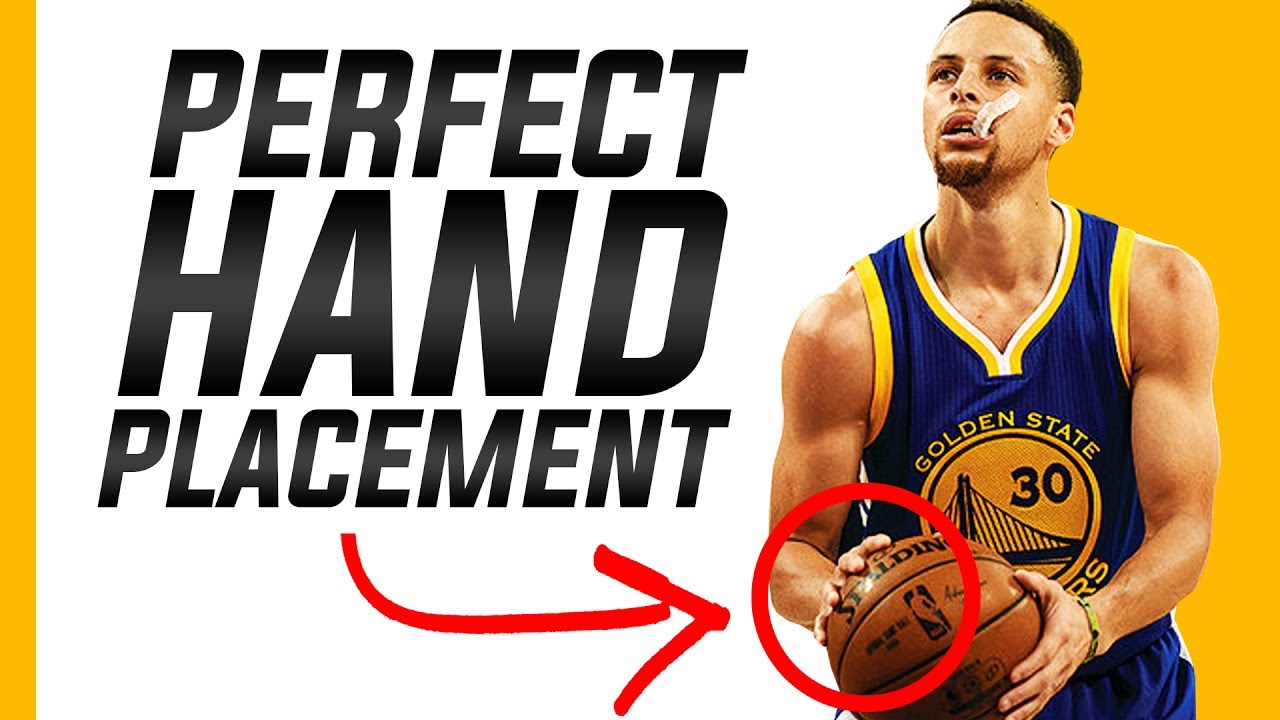
The proper positioning of the shooting hand is crucial to instilling accuracy and consistency. First, the shooting hand remains underneath the ball with fingers spread evenly to provide a better base. This offers better control of the ball and minimizes the chance of slipping during the shooting motion.
Ideally, the palm of the shooting hand should be slightly away from the ball, with most of the contact being made with just the fingertips. This will reduce tension within the shooting hand and ensure a smooth release. Extending from this, the thumb is going to angle naturally toward the lower side of the ball to provide balanced placement. This will allow the shot to be guided rather than forced with unnecessary pressure.
The wrist, on the other hand, has to be loose and allowed to follow through for the shot. The fingers should be the last part of the hand to contact the ball for a clean release. Over time, these mechanics develop into an ingrained shooting habit that reinforces accuracy.
Aligning the Guide Hand
Achieving alignment is another factor essential for correct shooting form. The guide hand is not supposed to provide any force to throw the ball; hence, it should reconcile with stabilizing the shot to give it balance and control. To do this, the hand should just be lightly resting on the side of the ball, and the fingers should be pointing upward. Do not grip the ball with the guide hand as this might add tension, reducing accuracy.
Afterwards, at the moment of releasing the ball, the guide hand usually has to be held still to avoid preventing the action of shooting. A common error is putting sideways pressure on the ball with the guide hand which interferes with the ball’s true path. Hence, concentrate on having the guide hand remain still and relaxed while utilizing the shooting hand to lead the ball towards the basket.
A great way to boost your shooting mechanics over a given period is to practice proper guide hand alignment consistently. Through repetition, you build muscle memory; thus, your shots become more steadily controlled and accurate. Keep in mind: the guide hand is only ever supposed to be supporting. The lighter and steadier your touch, the better your shooting technique will become.
Finger Placement and Grip
Getting the finger placement and grip right assures consistency and accuracy in your shooting. Holding the basketball, spread your fingers to attain maximum control. Your fingertips should just touch the ball; meanwhile, the palm should be raised slightly above the surface. This helps give you more control over the ball and allows for a clean release from the shooting action.
Now your shooting hand should be placed with the middle portion of the fingers right on the seams of the basketball, which in turn produces good rotation and backspin. A good spin keeps the ball stable in the air and maximizes the chance of the shot going in. Your index or middle finger (whichever you prefer) should be aligned on center as the ball leaves your hand to give you accuracy and consistency.
Because of course, you never want to tense your hand so as to not hamper miraculously at fluidity, and there it goes so loose that it cannot impart control. So, try maintaining this kind of balanced grip during the drills so that you develop a somewhat natural feeling for the ball. Improving your finger placement and grip will take you down the road toward better and more confident shooting.
Step-by-Step Guide to Perfect Hand Placement
Correct Hand Position for Shooting
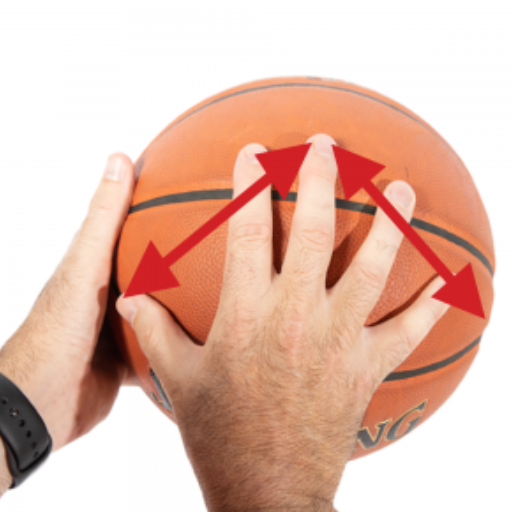
With proper hand position, your shot can be made more consistent as well as more accurate. According to shooting technicians, your shooting hand should be comfortably underneath the ball with fingers apart for better control. The ball should lie lightly on the tips of your fingers rather than resting on the palm, as this will ensure a razor-sharp release when you shoot. The weaker or guiding hand is crucial to the stabilization of the ball; however, it should exert no force during the shot, acting only to maintain balance.
Key Statistics:
Research shows that proper backspin execution can help shots become 20% more accurate because of the way the ball reacts with the rim.
Two things are particularly critical when it comes to the placement of your index finger and thumb. Research says that the index finger should line up with the valve or a seam of the basketball to help serve as a visual prompt for more consistent rotation. An optimal backspin in execution requires a proper follow-through wherein the wrist is snapped forward, allowing the fingers to point downward, resembling a gooseneck.
Ensure that your elbow is in full alignment, just directly beneath the ball, forming almost a 90-degree angle. This makes the shooting motion straight and fluid, eliminating anything extraneous that could detract from the shot. Working on this technique often, combining drills for hand placement with exercises for shooting form, will help to build muscle memory and shooting confidence.
Alignment of the Wrist and Arm
Wrist or forearm positioning always matters, and so, it is important to maintain consistency for the actual shooting. A shooter should keep the wrist comfortably flexed with the hand underneath the basketball in order to support it. This flexed wrist should smoothly snap forward from release as the ball leaves the hand, producing the required backspin on the ball. Letting the wrist be relaxed yet controlled during the release yields greater accuracy.
Never allow the arm to stray from any straight course when doing the actual shooting. The shooting arm can begin with the elbow in and somewhat bent almost at a right angle and then extend upward and outward directly toward the basket. Avoid flaying the elbow out, and this will interfere with the aim of the shot. Having the elbow in and correctly placed will keep the action smooth and will guarantee that the ball is properly channeled toward its destination.
In contrast, quite a few do suggest that fine-tune wrist and arm alignment through constant practice to heighten shooting effectiveness. Little drills like one-handed shots near the basket will do wonders to solidifying that good technique. Focusing on those bare basics, players work toward hand control as far as error reduction and the pursuit of bigger shooting percentage with time.
Role of the Middle Finger in Control
In the arc of a basketball shot, the middle finger has to be that last contact that guides the ball into its trajectory path toward a basket of next shot precision. Other books and training trainers note that the finger is the one providing balance and precision by controlling the spin and direction of the shot; whereas, according to Tom Amberry, a shooting mechanics expert, the middle finger is especially important because it channels release energy in the direction intended, causing reduced scatter and inconsistencies.
Professional Insights:
Top-notch shooters like Stephen Curry and Kevin Durant put in time behind drills that target finger alignment and follow-through, with the middle finger playing a crucial role.
Newer basketball analytics find that players with more refined finger control tend to have higher free-throw and field-goal percentages, especially emphasizing the middle finger. Biomechanics studies have found that proper alignment and the right pressure from the middle finger can help improve shooting consistency by up to 20%—making it central to effective shooting methodologies.
Such drills targeted at middle finger strength and control will allow players to increase their accuracy and mechanics, which are instrumental in better performance on the court.
Expert Tips for Improving Shooting Form

Insights from Professional Players
Professional players often stress rhythm and consistency in one’s shooting form. Many elite players build their rhythm from foot placement and balance. Ensuring that one’s feet are aimed properly toward the basket is the base of being accurate. Keeping feet shoulder-width apart, slightly staggered so that weight can flow more smoothly during the shot, is one key thing that these players are taught.
Another tip being offered by the professionals frequently is to maintain right hand placement on the basketball. The shooting hand has to go under the ball with fingers comfortably spread apart while the other hand holds it for support but should not interfere with the ball’s trajectory. This release imparts backspin on the ball, thereby increasing the probability of it entering the net smoothly.
Lastly, if one needs to listen to all advices given concerning shooting by numerous professionals, follow-through must be emphasized strongly. Once the ball is released from the hand, a correct follow-through or snapping of the wrist toward the basket, or just pointing toward the basket helps accuracy and control. Repeated practice of this motion leads to muscle memory, which provides a measure of consistent mechanics in actual shooting situations. These methods, coupled with practice, have been able to improve innumerable professional players’ shooting skills.
Coaches’ Recommendations for Aspiring Shooters
- Focus on Proper Shooting Form: Coaches maintain that getting the shooting form right is the primary prerequisite for long-term success. Standing with one’s feet shoulder-width apart, knees slightly bent, and lying in balance while taking the shot is an excellent basis from which to work. Other recent research details the concept of “arc optimization,” where the perfect arc for a basketball shot is considered to be roughly 45 degrees for maximum accuracy.
- Dedicated Practice and Repetition: Experts recommend dedicated, consistent practice to enhance shooting skills. According to a 2023 study published in the Journal of Sports Sciences, players who spend at least 20 minutes a day practicing shooting develop muscle memory and shot consistency after three weeks. Coaches also recommend splitting shooting practice between free throws, mid-range shots, and three-pointers to cover all shooting aspects.
- Film and Analyze Your Shots: Reviewing video footage of one’s technique can provide foundational insights prenatally. There are modern tools available to players nowadays with which they can measure their form, release angle, and hand position during the shoot: video analyzing apps and motion capture software. Coaches have been pointing with their data-driven feedback as to an actual measurable increase of skill in various athletes-the research shows that those players who review with analysis tools their shots get 15% more efficiency on their shooting than those without.
- Mental Preparation and Visualization: Mental fortitude adds a lot, especially in pressure situations, to a shooter’s performancivity. Coaches will always urge athletes to practice visualization techniques, imagining themselves making shots successfully during the game. Studies in 2022 have demonstrated that athletes who used visualization regularly fared better in response to performance-related stress and showed enhanced accuracy under pressure.
Advanced Technology Tip:
More advanced shooting trackers provide instant feedback on shot angles or rotation spin. Data derived from professional players indicate that a backspin of three revolutions per second is best correlated with successful shots.
Building Good Habits for Consistency
Developing skillful mechanics over and over, purposeful practice, and mental conditioning form the pillars of consistency in shooting. Players should work hard to maintain a routine full of well-defined goals and meaningful practice time along with honest self-assessments. One beneficial feature for confidence building on the floor is to have a consistent pre-shot procedure, which aids in building muscle memory and confidence.
Players should also emphasize quality practice. Practicing bad form hundreds of times is far less valuable than doing it correctly 30 times. Breaking down the shot into various elements such as foot positioning, follow-through, and release will slowly and surely eventually bring on improvement.
Ultimately, aiming to track improvements and set small achievable goals will be imperative to help maintain motivation. The players could keep a practice log, which is a day-to-day activity where information is recorded or use statistical tracking in tracking shooting percentages to identify patterns or areas of focus for improvement. Combining these habits with a growth mindset and regular feedback will certainly lead to increased consistency and long-term success for their shooting skills.
Frequently Asked Questions about Hand Placement

Adjusting for Different Shot Styles
| Shot Type | Hand Placement | Key Focus |
|---|---|---|
| Jump Shot | Shooting hand under ball, fingers spread, guide hand on side | Uninterrupted, flowing follow-through |
| Set Shot | Emphasis on stability, shooting hand centered | Reduce movement for precision |
| Layup | Shooting hand shifts for control, minimal guide hand use | Quick and soft release |
| Floater | Soft release higher up, shooting hand creates arc | Evade defender timing |
It is important to practice all these variations in hand placement according to the type of shot, so as to become more versatile and efficient in-game.
Hand Placement for Long-Distance Shots
When attempting long-distance shots, proper hand placement is crucial to maintain accuracy and consistency. The shooting hand should comfortably rest under the ball with the fingers spread wide to provide stability and control. The ball should primarily sit on the fingertips rather than the palm, which allows for a clean and precise release. Meanwhile, the guide hand should lightly touch the side of the ball to help with alignment but not interfere with the shooting motion.
The shooting motion starts with the ball aligned with the dominant eye and your elbow positioned under the ball, forming a straight line from the shoulder to the rim. The guide hand remains stationary on the side as the shooting hand propels the ball forward and upward. Maintaining this balance between both hands ensures that the shot travels in a straight trajectory towards the basket.
Consistency comes from practice and developing muscle memory for this hand placement. Repeatedly focusing on the placement of your shooting and guide hands will minimize errors, even under pressure. Paying close attention to this foundational technique is essential for improving long-distance shooting accuracy in games.
How to Overcome Inconsistent Shooting
- Focus on Form and Mechanics: Align the shooting hand with the basket correctly, while the guide hand remains steady but not interfering with the shot. Practice releasing the ball from the same spot and follow through consistently.
- Establish Proper Foundation: Foot placement is crucial, with feet shoulder-width apart and square to the basket. A solid foundation gives stability for consistent shooting.
- Practice with Purpose: Constant repetition engrains the memory of how to shoot and develops confidence. Rehearse shooting from all over the court with good form rather than expeditiously.
- Mental Preparation: Have an image of good shots in your mind, and practice calming methods like deep breathing so you will remain focused when the situation is pressurized.
Trust all your training and never fail to concentrate on the basics, even in crucial moments. The reliable shooting is guaranteed by training physical and working on mental compromise for the sake of consistency.
Frequently Asked Questions (FAQ)
Q: Why is hand placement important in shooting a basketball?
Since hand placement affects the most the accuracy and consistency of the shot, it must be considered very important in shooting skill. It gives the player better grip on the ball and assists in creating repeatable shooting mechanics. When players and coaches focus on hand placement, it undoubtedly increases the number of shots made and their shooting percentage.
Q: What is perfect shooting form?
From self-alignment of the body, feet, and hands, the shooting hand is beneath the ball, while the guide hand is positioned on the side. This position allows the player to have full control over the ball during the phases of grip and release. Continuous practice by doing shooting drills incorporating these elements allows the player to develop a perfect shoot.
Q: How do I keep my fingers when shooting a basketball?
When shooting, the ball should be held with the index and middle fingers under it while the thumb can be placed on the side for support. The middle finger must be slightly off-centered from the ball so it stabilizes the shot. When this finger positioning is right, force is directed straight through the middle finger, allowing clean release.
Q: What is the best hand position for basketball shooting?
The best hand position for shooting a basketball is to have the shooting hand under the ball with the wrist relaxed and fingers spread wide. The non-dominant hand should lightly rest on the side of the ball, acting as a guide but never interfering with the shot. This structure adds to control and pinpoint accuracy.
Q: How do I go about improving my basketball shooting technique?
Improve your shooting technique by concentrating on such things as hand placement, follow-through, and body alignment in general. Practice regularly when it comes to reinforcement of good habits. This can include shooting drills that emphasize good grip and release. Also, consider watching NBA players, as they can truly show how to get a shot perfect.
Q: What are some shooting drills used to work on hand placement?
For maintaining hand placement, the drills one can involve in are stationary shooting, where it’s more about getting your form right, and wall shooting, where you focus on your hand alignment against the wall. “Catch and Shoot” is another drill that focuses on catching the ball, positioning hands correctly, and shooting in a quick time frame. All of these drills assist in building muscle memory and making one a better shooter.
Q: Does the ball have any effect upon shooting in terms of the air valve?
A small but significant feature influencing shooting is the position of the air valve of the ball. Players should be aware of where to place their fingers when gripping the ball. Since the air valve can slightly affect the feel of the ball, it is very important that the shooting hand placement remains exactly the same for every ball irrespective of its design.
Q: What should I do to make more shots consistently?
To make more shots consistently, it is essential for you to focus on the mechanics of your hand placement and shooting form. By developing a repeatable shooting motion and gripping the ball in a consistent manner, you can improve shot success. Regularly doing shooting drills, keeping practicing the proper shooting position always builds confidence and any other improvements in performance on that court.
Q: What are the ways to keep my hand properly positioned during shooting?
Practice emphasize, ensuring that your hand stay in the proper position during a shot. Your shooting hand should be held high through the end of the follow-through, with the fingers pointing toward the hoop reinforcing hand placement. Visualization may reinforce this motion as well. Repetition when practicing will pace this movement to the muscle memory level during game situations.
References
- How to Grip the Basketball and Use Your Hands for a Perfect Release – Coach Dave Love – Explains proper hand placement, including spreading your shooting hand wide and positioning your index finger on the air valve.
- Catch and Release: How to Shoot a Basketball – Wilson – Offers drills to help make proper grip and hand placement second nature.
- Tips for Consistent Hand Placement – Reddit Basketball Tips – Features community advice and discussions on achieving consistent hand placement, including guide hand techniques.
- guide for basketball shot