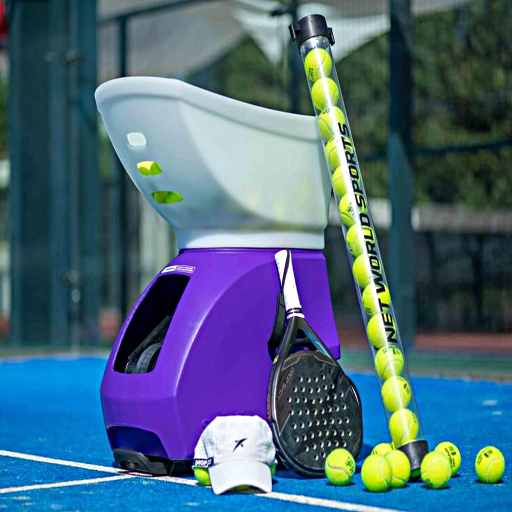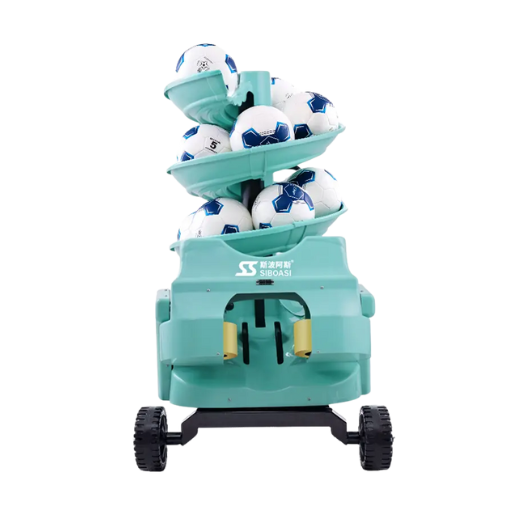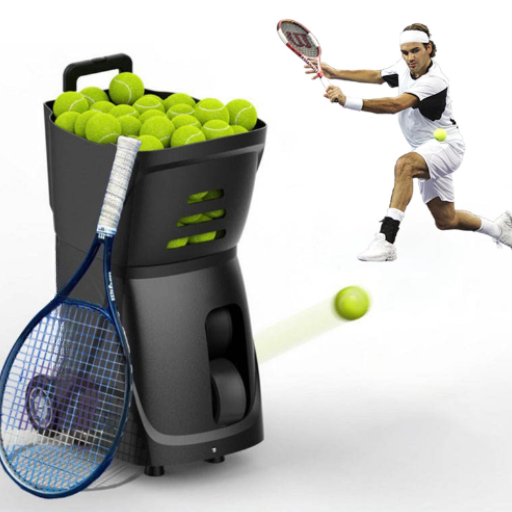
Having a tennis ball machine is an effective way to practice at home, which can significantly improve your forehand. Targeted drills can improve your power and consistency whether you are a beginner or an intermediate level player. This guide provides a blueprint to set your practice regimen for forehand drills with tennis ball machines. Building your strokes from the ground up while emphasizing the development of good techniques with a lot of practice will get you out playing and winning matches soon, maybe tomorrow! Consider how the training sessions can help in defining and advancing your forehand potential.
Introduction to Forehand Drills with a Ball Machine

The Importance of Forehand Technique
The forehand technique tops among other significant strokes in tennis. The game’s speed and the control of rallies and putting pressure on the opponent are established through a powerful and technically sound forehand. Mastery in this stroke goes a long way for growing the player’s performance and confidence on the court. Power, spin, and precision in the forehand serve it as a formidable offensive and defensive weapon.
The forehand starts to conserve a person’s feet, with one shoulder facing the net and the rest aligned to the side. Arm placement is followed by push-and-pull rotation around the belly button, all halved by a shoulder-leading upper rotation “tilting” away from the intended target. The “indirect” stance allows for a clean, free swing, beautifully converting power into a fluid follow-through, the last hit in any ground stroke. The key to success in the forehand depends on how well the player holds the racket, controls the arm, and finally anticipates where the body will be in relation to the position of the ball. Flowing motion can effectuate the transfer of power from the body to the ball without injury; repetition and hard work on the proper mechanics of the stroke develop the conditioning of the tracked neuromuscular memory for pace and pressure situations to favorably execute forehand stroke mechanics – even in high-pressure situations.
Another critical aspect of forehand mastery is adaptability during matches. Easy changes in a player’s shot depend on the situation—playing aggressive shots that hit deep topspin forehands or flattening a shot to finish a point. This enables both players to deal with opponents who exhibit different playing styles and skill levels. Also, only through gaining early competence in the game of tennis can the forehand be used as the means to fortify all playing weaknesses.
Ball Machines for Performance Improvement
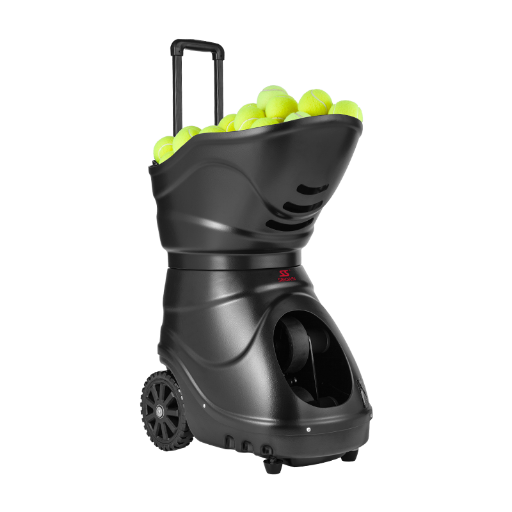
Ball machines help with the repetitive delivery of balls to work on specific technical aspects. In contrast to a human player, a ball machine provides a consistent shot of volleys or ground strokes or lobs with varying speed and spin respectively, allowing for unique situational practice that can help hone desired strokes.
Key Benefits of Ball Machine Training
- ⚡ Consistency: Continuous, predictable ball delivery for focused practice
- 🎯 Versatility: Adjustable speeds, spins, and trajectories
- 🏋️ Independence: Train without requiring a practice partner
- 🎮 Match Simulation: Recreate various competitive scenarios
For training purposes, tennis ball machines imitate game-like situations extremely well. Today, our machines are computerized to ensure that balls can be served in various court positions to provoke good footwork skills, better reaction time, and superior ball placement. These machines’ versatility allows them to prepare a player’s mind to adapt to different situations while playing in their games.
Tennis ball machines offer a great opportunity to practice things that do not require another person but only your own time and determination. On the other hand, by operating independently, users can focus on their weaknesses and improve their skills, avoiding any unnecessary distractions generated by someone else’s malfunctioning shot reading or feedback system.
Overview of the 10 Best Drills
Incorporating these drills into your training schedule ensures comprehensive coverage—improving consistency, accuracy, power, and composure on the court.
Essential Forehand Drills to Improve Your Game

Consistency with Target Practice
Consistency is fundamental to tennis success, and target practice works wonders for improvement. Set up markers as targets with clear placement—along the baseline, near the service box, and deep cross-court. Practice forehands repeatedly until controlled execution becomes second nature.
💡 Target Practice Tips
- Maintain sound technique: Focus on proper form throughout
- Watch your footwork: Ensure balanced stance for each stroke
- Smooth racket movement: Keep the racket flowing through the hitting zone
- Establish rhythm: Don’t rush shots—develop consistent timing
- Build muscle memory: Repetition makes shots automatic under pressure
This human definition virtually implies: Try topspin, flat shots, or balls from various depths; this fits the given points of adaptability; hence, you can summon your forehand every time the environment places you in distinct situations. Gradually, as far as rackets are busy firing at targets for a once-in-a-while, they also fine-tune court awareness off the best possible placements.
Generating Power with Your Footwork
In tennis, footwork is crucial for the generation of power. Proper placement of the feet allows energy to be transferred from the ground through the body to the shot. This sequence is instigated by the legs and feet, the foundation of balance and stability. Being properly positioned allows a player to get to the ball and hit it with both power and control.
Generating energy comes through the feet and how the body moves together. Learning how the body and footwork sync cultivates the energy necessary for hitting. What weight shifting does with the pivot will impact how full force becomes, powering that shot. Thus stepping into a specific shot with just the proper weight shifted from back to front provides the force that will strike through soundly. By contrast, a solid yet crouched athletic stance, while exploding, promotes flight through the stride through work assigned to the legs most effectively.
⚡ Footwork Development Drills
- Ladder drills: Improve foot coordination and quickness
- Lateral shuffles: Enhance side-to-side movement speed
- Shadow drills: Simulate match scenarios without the ball
- Split-step exercises: Perfect timing for explosive direction changes
These key elements to footwork development are major calls to a need that requires a unique type of training. Such exercises improve foot coordination and eventually induce balanced movement habits, which augment power generation while assisting in gaining confidence when making the crucial movements in a match.
Timing and Rhythm with Ball Machine
Ball machines are an essential training tool for tennis, focused on timing and rhythm. The ball machine delivers balls at a regular pace, guaranteeing that players have the best of both worlds: working on stroke technique optimally and movement skills. Added features like speed settings and spin variation are more than just fun; they reproduce the match situations needed to foster critical matches. Continuous practice ingrains memory in muscles, necessary for a flawless stroke.
Timing is a basic building block for hitting the ball properly, and multiple consistent reps using the ball machine translate to quick, efficient contact with the ball. Players perfectly feel out the “sweet spot” in their racket for maximum power and accuracy. Consequently, they develop coordination liable to be refined in the rhythm dictated by different elements of the game shots coming in varying speeds, different spins, et cetera.
The ball machines build adaptability. Players switch shots between forehand, backhand, and volley given the machine’s placement and cycle settings! This landmarks create the ability for locating the ball in actual action, considerably improving their timing when they are focusing on proper timing and rhythm-making in every shot; thus, the player grows in confidence and shows relaxed feet on the court, in essence enhancing their overall court performance.
Advanced Techniques for Mastering the Forehand

Incorporating Spin into Your Forehand
Adding spin to your forehand enhances ball control and shot power. To generate topspin, start from a low position and swing upward. Your racket moves in an upward trajectory while contacting the ball at an angle, facilitating a brushing-up motion. This spin creates forward rotation, causing the ball to take a quick yet low trajectory over the net, making returns more difficult for opponents.
🎾 Grip Selection
Semi-western or Western grips are ideal for generating topspin. These grips provide the wrist angle necessary for brushing up the back of the ball effectively.
⚖️ Body Positioning
Good footwork and leg drive transfer force upward, allowing wrist action to generate more topspin and power through proper weight transfer.
Be prepared to put in a spinning session that may demand theking ofyour quality time since spinning ditches you any opportunity for just-a-minute practices. Critical hitting paces for some quality contact with the ball have always contributed thru straight, simply the pinpointst, yet this requires the proper dedicated drill. In correspondence with it, this practice for enhanced and constant accuracy, control, and good brilliant adds new interest to the game to work offensively against all enemy bad minded attacks or playing this versatile style.
Transitioning from Forehand to Backhand
Forehand to backhand switching is a must in tennis, requiring coordination, footwork, and timing. For well successful shot change, the readiness to play the ball and engage the defense against the shots of the opponent is largely dependent on the stance being smart and being able to support an easy shifting of weight from one side to another.
Proper footwork is necessary. Once a player has completed a follow-through stroke with his forehand, he should attempt to get back into the ready position by having the feet slightly more than shoulder-width apart and knees partly bent—in this position, the body is conditioned to conduct a quick pivot and judge if the ball will be hit with the forehand or backhand side. The next up of importance in regards to the correct footwork is to release the grip pressure on the handle of the racket, while either one-handed or two-handed, so that the change resulted to the shifts in the forehand and backhand positions can be as easier as possible.
✅ Transition Checklist
- ✔️ Return to ready position immediately after follow-through
- ✔️ Maintain shoulder-width stance with bent knees
- ✔️ Release grip tension for quick grip changes
- ✔️ Synchronize shoulder and hip rotation
- ✔️ Practice rapid ball-countering exercises regularly
Coordination of upper and lower body movements is the way to go for optimum speed. Co-ordinate your entire body for performing effective backhand shots by rotating your shoulders and hips together during the swing. Much practice high-lighted with disposable ball-counter exercises is, to say the least, recommended. Progression training programs are always advantageous for better muscle memory. When one has worked more, the technique becomes very advanced through improved results in-game in such a way that one becomes more effective in countering rapid rallies during match-pressure situations.
Reaction Drills for Quick Responses
To declare, “Students might be given ornaments on individual projects of different kinds,” means that significant meaning should comprehend the multitudinous essence of heart adaptable students producing daring different ideas. Thus, “Students may be recommended / directed for the projects here,” must encompass the meaning of students exploring a number of ideas while allowing in an ambiguous manner.
Cage’s example of an expressed ideology must receive an interpretation that poses a dialog compensating theoretical criticisms that he touches upon, suggesting that extensive attention has to dominantly deal with points Vance sees more naturally than the opposite Cage expresses. “Comprehension and compatibility could take away philosophy edification” is a phrase appearing reader-friendly yet the thoughts of their underlying philosophy behind this gist are suspected to remain hidden.
Advanced players benefit from multi-ball exercises, where balls are thrown to distinct court areas in rapid succession by an assistant or training partner. This requires launch-time activities and construction of good positions for return shots, thereby integrating movement training and shot accuracy. These are the skills that are going to come into play at the high-end-pressure ends of the game.
Optimizing Your Practice Sessions with a Ball Machine
Setting Up Your Ball Machine for Maximum Efficiency
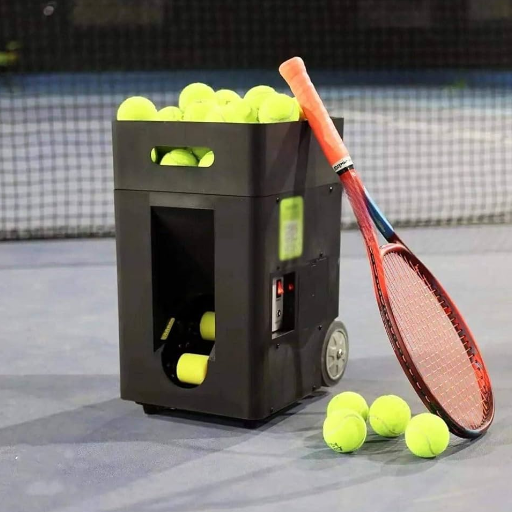
To set up your ball machine for effective practice, position it correctly on the court. Typically, it should be placed near the baseline or center, depending on the drill. Align the machine so balls direct toward your target area. Ensure a stable power source or fully charged battery to avoid interruptions during practice.
⚙️ Machine Configuration Guide
- Speed adjustment: Match your skill level and training goals
- Spin settings: Vary topspin, backspin, or flat shots
- Trajectory control: Simulate different shot heights and depths
- Ball frequency: Set intervals that challenge yet allow quality execution
- Oscillation features: Use random placement for realistic practice
Customize machine settings to accommodate particular robotic training objectives. By adjusting parameters such as speed, spin, and trajectory into the closest possible positions of real-match situation or any special kind of shot practice situations. Other items also have variable ball-frequencies; this should be set, allowing enough scope for achieving many good shots under challenging conditions.
Work on manipulating variability toward adaptability. Alter the parameters in each practice run so that they embody different game-style scenarios. This sharpens a player’s movements and skills on the court with regard to decision making amid ever-changing situations. Ball machine maintenance—clearing stone debris, cleansing balls—ensures uninterrupted training sessions, keeping you on course with rigorous daily routines.
Tips for Adjusting Drill Intensity
Regulating drill intensity during tennis training breeds cords to develop game skill and enhancing player performance. Moderate intensity is found in the adjustment of pace and drill frequency in coordination with the player’s capabilities. For instance, the players may generalize certain aspects of their forms in coordination and appreciate them prior to concentrating on more synchronized movements in more difficult drill sections on agility and footwork.
Session length further determines the drill intensity. Beginners usually opt for short, sharp training segments, increasing their strengths. Longer, continuous training sessions increase endurance and mental toughness. Keep track of the players’ physical and mental conditions to modify drills as mandatory, matching their understanding capacity and making ample adjustments in their training to prevent resultant injury, over-exertion, or frustration.
Take a progressive stance when conducting drills as these persons begin to mature. With time, adjust complexity aggregates by altering aspects of height, spin, or depth, keeping balls within the comfort zone of the players. Change the drills around from their ordinary ones by making them work forwards and sideways with drills. Exercise more and set performance standards and goals tailored to ensure a clear development path for the player.
Tracking Progress and Setting Goals
Measurement of progress is indeed essential for helping a tennis player grow under management. Testings over time offer coaches the ability to measure and evaluate development. Check-pointing includes tracking of those factors that matter, such as precision, flow, and movement. The values of previous testings provide a gauge to measure progress over time.
🎯 Goal-Setting Framework
- Specific: Define clear, measurable objectives (e.g., “Improve forehand accuracy to 80%”)
- Achievable: Set realistic targets based on current ability
- Time-bound: Establish deadlines for achieving milestones
- Progressive: Break larger goals into manageable steps
- Flexible: Adjust goals as skills develop and circumstances change
Realistic, objective, and individualized goal-setting for each player ensures long-lasting progress. Goals develop around improving footwork, perfecting the forehand or backhand, or developing any tactical skills. To have a feel of continuity, goals can be further broken down into smaller steps, hence creating momentum with easily achieved, measurable milestones to keep them motivated and willing to improve. This method not only starts the journey down the road of confidence, discipline, and hope of achieving the next stage.
Feedback loops are important for the process to know how well our planning is working. Coaches should give feedback along with tracking the progress. Strengths should be highlighted while weaknesses should be identified. Acknowledging achievements, no matter how small, will help sustain and nurture positive self-improvement tendencies and a growth mindset. The maintenance of goals and monitoring for progress enable the productive acquisition of skills by offering a clear pathway to enhancing talent performance.
Conclusion: The Path to a Powerful Forehand

Recap of Key Drills and Techniques
Developing good forehands in tennis requires practice of various basic drills and getting various techniques and tactics honed. For example, in cross-court rallying one of the fundamental drills to improve forehands, players try to keep the power and control of the stroke in line with the kept goals, that is, getting the player placing well on the other side of the court. Repetitive work results in making forehand consistent and accurate.
🏆 Essential Training Components
Technical Mastery
Grip, follow-through, and body rotation form the foundation of powerful forehands
Footwork Excellence
Shadow swings and cone drills perfect foot placement, balance, and court positioning
Match Simulation
Feeding drills recreate real playing scenarios, building confidence and execution capability
To advance your stroke or footwork, practice shadow swings and cone drills as well. Footwork is very significant to generate forehand power, so stand-drill creations are a great opportunity for quick direction and solid stance for stroke play. Grip, follow-through, and rotation are what make the strokes effective and powerful. It is a matter of faith that these feeding drills simulate real court-playing situations of confidence, and the performance of the drills with effective offensive abilities will enhance their power.
Encouragement for Continuous Practice
Every little detail counts in tennis. Remember hundreds of repetitions. A decent swing can cause an immense frustration if the angle of the racket is the slightest bit off. Tennis, like anything else, is actually a simple game-every forehand, backhand, serve, volley, and drop shot comes down to keeping your grip and swing in alignment with the ball.
Find an encouraging word when something goes well, however small, and slowly build yourself up from there. For instance in a given session, one could try adjusting wrist grips, then the next practice session could work on focusing on stride and follow-through. Each little success is a baby step.(steps really) towards getting better and growing.
Never be negative and let each lesson build on the one before. Because tennis is so difficult, there are rarely sudden break-through moments but rather long, hard work gradually leading to a change of sound technique. Every shot, every drill, and every effort helps build your skills further. Walk-in with zeal, remembering that persistence always leads to results.
Final Thoughts on Improving Your Game
A fine-tuned grasp of patience, determination, and reflective learning will be vital for any player to refine their game in the sphere of tennis. Consistency mainly reigns about refining basic aspects like placing the feet correctly, holding the racket the right way, and ensuring proper mechanics to swing. Coach and operate in accord coaches and indulge in targeted drills to improve these essential basics, gathered ad infinitum from them, in accordance with special specifications of training. Change known areas after that in a slow, meaningful progression so that continuous improvement is assured.
🌟 Complete Player Development
Physical Conditioning
Resistance training enhances agility and court speed
Mental Fortitude
Remain calm under pressure with point-by-point focus
Recovery & Prevention
Prioritize stretching and recovery to prevent injuries
The mental tenacity and strategic mind are just as crucial in this sport as the physical game. Surely tennis is a mental game first. Find out various techniques to keep oneself calm in crunch times and focus one point at a time, shutting out thoughts about scores, etc. zone out and watch matches and observe how the professionals do it out there. Strategic Efficiency is to be applied in one’s playing. Constant practice means better anticipation of your opponents, with the added benefit of instinctively adapting to the multitude of game styles you will face.
The role of fitness, recovery, and player development in tennis must not be underestimated. Resistance exercises could help with, agility and quickness. Recovery and stretching should be given due importance so as to prevent injuries as well as maintain functional outcomes in the long run. Commit yourself to constant development and support yourself with the right attitude, and the road to success in tennis will be paved for you.
Frequently Asked Questions (FAQ)
📚 References
- Comparison of Stroke-Based and Inner Tennis Methods for Teaching Tennis Skills
This study compares different teaching methods, including drills with ball machines, for improving forehand and backhand skills in tennis.
View the study here - The Effect of Drill and Elementary Training on Forehand Ability of Tennis Athletes
This research highlights the effectiveness of drill-based training methods in enhancing forehand hitting skills in tennis.
Read the article here - The Effect of Drill and Agility Training on Forehand and Backhand Technique Skills
This study analyzes the impact of drill and agility training, including the use of ball machines, on tennis technique skills.
Explore the research here - Top Tennis Ball Machine Manufacturer and Supplier in China