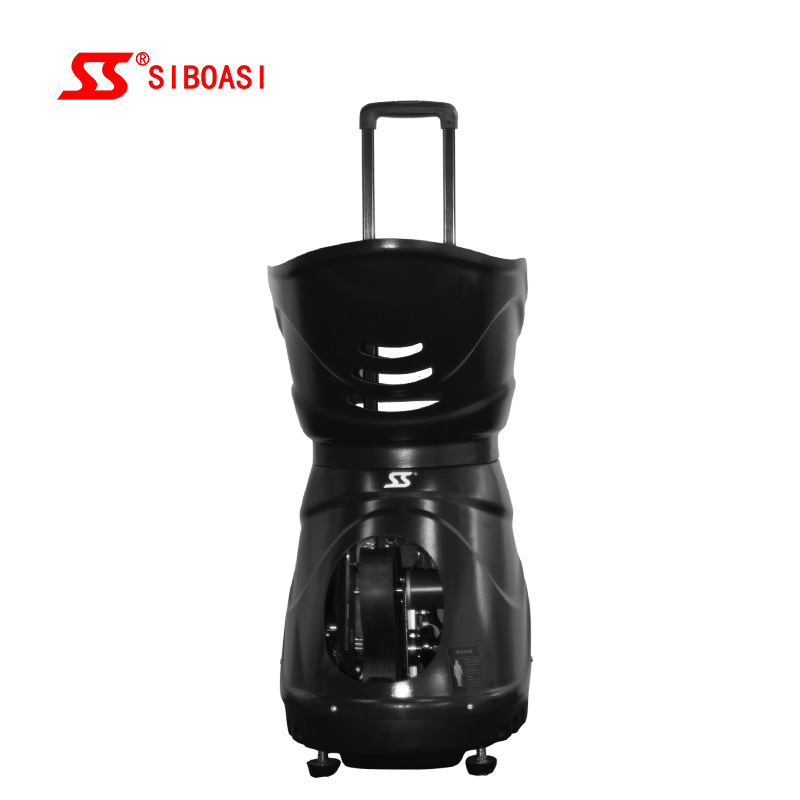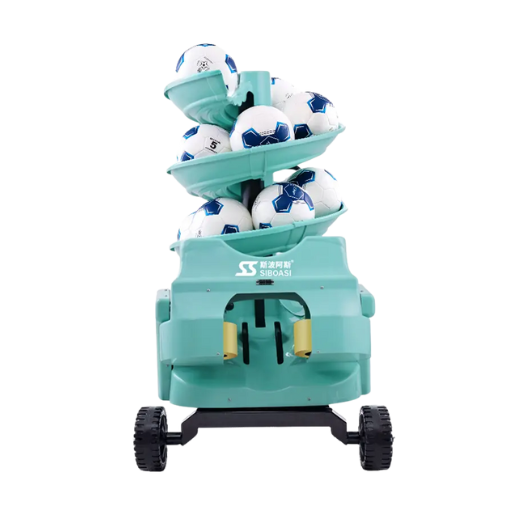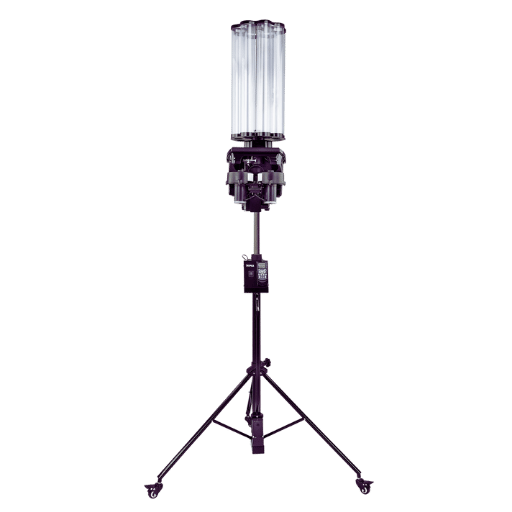
Badminton is a game based on agility, accuracy, and planning. Skill acquisition and technique mastery require key consistent practice. Effective self-training is always challenging, regardless of skill level, especially without a training partner or proper equipment. A modern badminton shuttlecock training machine can drastically change how you train. Such machines provide exceptional accuracy in replicating actual game scenarios, thus offering comprehensive, dynamic, and tailored training. This new technology can transform your practice approach and radically change game performance, skill perfection, and endurance building. Automated systems can redefine training regimes and uplift performance, which is what this article seeks to explore.
What is a badminton shuttlecock feeder machine, and how does it work?

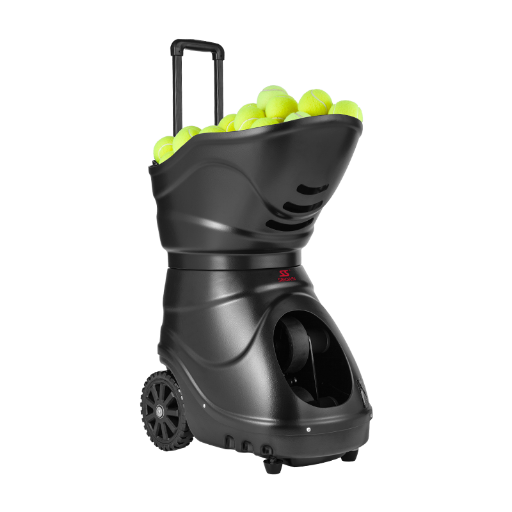
A badminton shuttlecock feeder machine is designed to automatically dispense shuttlecocks for badminton players to practice at different speeds, altitudes, and intervals. Typically, such a machine is equipped with a powered feeding system that releases the shuttlecocks in a controlled way onto the court. This enables players to practice specific shots, improve response times, and consistently develop shot precision over time without needing a training partner. The device is also customizable regarding the angle and rate of the shots, thus enabling users to tailor their training goals.
Understanding the feeder mechanism
The feeder mechanism in a shuttlecock machine loads and releases shuttlecocks systematically and rhythmically. Usually, a revolving wheel or piston arrangement launches the shuttlecock towards the user. An electric motor facilitates the mechanism, controlling the rate and strength of the feed. The motor-controlled rotary electric feeder modifies the launch angle, timing, and trajectory, enabling practice sessions tailored to distinctly defined objectives while guaranteeing steady repeatability and accuracy.
Benefits of using a shuttlecock launcher
- Improved Training Efficiency: Improved punctuality allows players to achieve their aims synergistically. Shuttlecock hoppers remove the requirement for a training partner.
- Consistency in Practice: Because accuracy and repetition assurance are assured, players can aim for specific skills or techniques more easily, without interference in where the shuttlecock is fed.
- Customized Practice Settings: Even newcomers can use the equipment due to advanced and beginner-friendly settings like throttle, angle, and trajectory adjustments, catering to all skill tiers and requirements.
- Enhanced Skill Development: A launcher simulates in-game situations, helping refine reactions, footwork, and shot accuracy while enhancing overall court performance.
- Time-Saving Solution: Automated shuttlecock feeds allow for optimization of skill drills, focusing more on refining skills and practicing versatility mastery.
Components of a shuttlecock feeder machine
- Feeder Mechanism: Keeps and releases the shuttlecocks at designated intervals, maintaining consistency in timing and placement.
- Motorized System: This system burns energy to execute specific functions, such as controlling the speed and trajectory of the mounted devices.
- Control Panel: Shuttle cock delivery is changed in its speed, frequency and angle which is settable through user defined interface options.
- Oscillation Unit: Introduces shuttle cock directional changes to further widen practice possibilities in simulating various game situations.
- Frame and Base: Facilitates ease of movement while ensuring the machine remains stable and reliable.
How can a badminton training machine improve your skills?
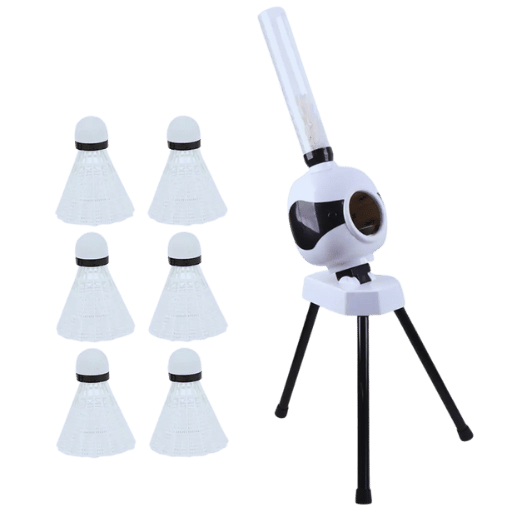
Advantages of automatic badminton practice
- Consistency in Training: Shuttlecock delivery by automatic machines improves accuracy, speed, and consistency compared to manual training methods.
- Skill Development: Players can concentrate on individual strokes by programming selective shot drills. These include advanced techniques such as smashes, clears, and drops.
- Time Efficiency: Practice efficiency is enhanced by minimizing downtime due to manual feeding with shuttlecock dispensers.
- Simulating Real Gameplay: The best badminton shuttlecock feeders replicate competitive situations with oscillation and other customizable features that enhance adaptability and decision-making skills.
- Accessibility: Players can practice regularly and independently because a coach or partner is not required.
Enhancing performance with a shuttlecock shooting machine
Using a shuttlecock shooting machine improves practice by reinforcing critical components such as timing, precision, accuracy, footwork, and practice mastery through repetition. The machine’s controlled shuttle feeds help the player concentrate on particular aspects of their technique. At the same time, the preset and adjustable parameters allow for bespoke sessions that focus on specific strengths and weaknesses. Such a structured approach facilitates self-directed practice and skill acquisition.
Training routines using a badminton shuttlecock feeder
Incorporating a badminton shuttlecock feeder into training sessions allows players to sharpen agility and accuracy while simulating match conditions, practicing different shot varieties, and refining their game tactics.
What are the features to look for in a shuttlecock feeder machine?
Importance of remote control and app integration
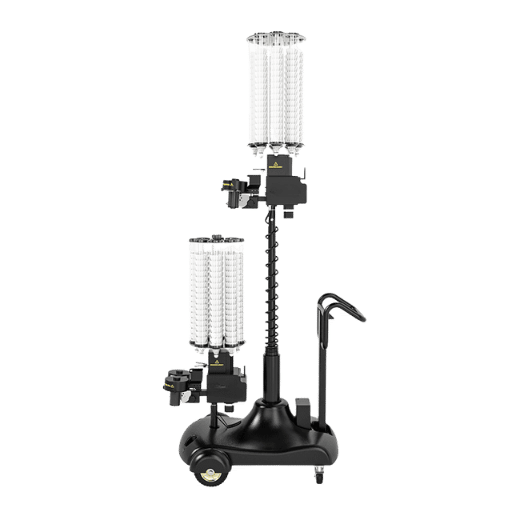
Adding remote control capability and app integration to a shuttlecock feeder machine enhances operation flexibility, accuracy, and agility, both in real-time control and automation. Through remote control, the device can be set to change speed, frequency, or direction, and these will be carried out autonomously, freeing the player or coach at the training session. App integration enhances this feature by enabling storage of custom drills, tracking progress, and analyzing data on workout parameters, all via mobile devices. Such features improve the organization of training sessions, enabling focused and productive drills during practice sessions.
Choosing the right shuttle feeding machine for your level
While selecting shuttle feeding machines, it is crucial to prioritize the skill level, training goals, and budget. Usually, beginners benefit from lower-priced machines that are simple and nominal in function, such as fixed speed and frequency settings. These models are affordable, straightforward, and flexible.
For intermediate players, the most essential feature to look for in a machine is the ability to change speed, shot direction, and frequency of shots given. Mid-tier machines often incorporate features that provide oscillation to simulate in-game situations, aiding players in advancing their footwork, reaction time, and shot accuracy.
High-end machines with programmable drills, multi-speed functions, and control via application are best suited for advanced players or professional sportspeople. Such machines include spinning and random trajectory shots and other real-time performance ways to track progress, which meet the demanding competition standards for upper-level training regimens.
The price of shuttle feeding machines ranges from $200 to over $2000 for advanced models, with varying brands and features adding to the price. Other factors that affect the price include ease of maintenance, the machine’s portability, the number of hours, and ease of upkeep.
Exploring the benefits of a Siboasi badminton machine
A Siboasi badminton machine allows players to enhance their skill set and performance with several distinct advances. Since it gives constant and adjustable shuttle feeds, it enables targeted practice for specific shots like smashes, drops, or clears. The machine caters to players of all levels with different speed, angle, and frequency settings. Furthermore, its programmable drills allow for the simulation of real-game training, which helps in improving reflexes, positioning, and shot precision. A Siboasi machine is built to last, and the controls are intuitive, ensuring dependability throughout training sessions while offering the flexibility to adapt as requirements change.
Why is a badminton shooting machine a perfect training partner?
Simulating real game scenarios with a feeding machine
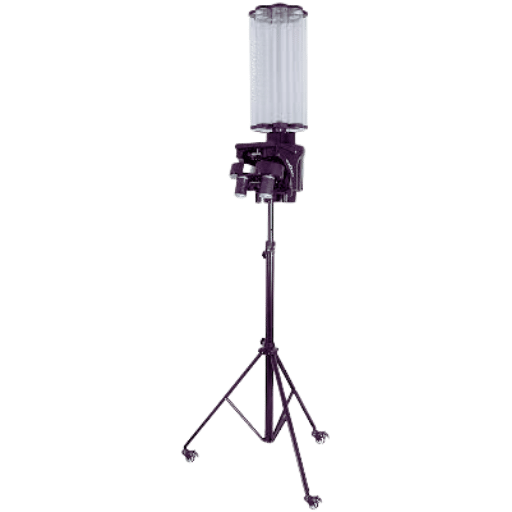
A badminton shooting machine emulates the speed, angle, and trajectory of shuttlecock shots during matches, which is an effective tool for creating simulated practice scenarios. In conjunction with the ball machine, it allows for repetitive practice of defense, net play, and smashing, helping the user refine technique, develop muscle memory, and improve decision-making in pressure situations. The machine greatly aids in systematically improving athletes’ game skills since it can adjust shot patterns and frequencies to mimic the dynamics of competition-level gameplay.
Customizing drills for badminton training
It is vital to adjust drills within badminton training to match players’ needs and proficiency levels. For beginners, training drills target footwork while grip and stroke techniques are broken down into simple steps. Match practice that incorporates complex shot selection, agility, speed, and strategic movement is essential for intermediate and advanced players.
Modern training tools like multi-feeder shuttlecock machines and wearable tech provide invaluable real-time performance analysis of shot accuracy, reaction time, and movement efficiency. For example, research shows that on-court stamina and endurance are greatly enhanced with the addition of interval-based drills, consisting of alternating high-intensity rallying with periods of rest.
Drills targeting specific shots, such as drop shots, smashes, or defensive clears, can develop tactical expertise, muscle memory, and sharpen overall reflexes. Coaches integrate shadow drills, footwork ladders, and plyometrics into practice to improve athletes’ explosiveness and recovery speed. The ability to track performance metrics enables athletes to visualize progress, guaranteeing systematic enhancements towards attaining optimal efficiency.
Integrating with a badminton robot for skill enhancements
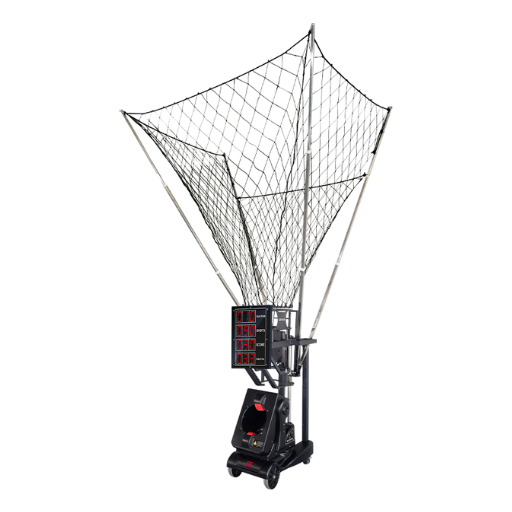
Incorporating a badminton robot into training routines guarantees consistency and precision during practice. These robots can take preset different shot types, speeds, and angles. Athletes can work on specific techniques, like a smash or return, by modifying the robot’s settings on the advanced ball machine to concentrate on particular shortcomings. This repetition helps increase muscle memory, reaction time, and shot accuracy. Moreover, the advanced robots create detailed data, which can also be used to gain insights into performance metrics, which helps the players to redefine their strategies in an informed way.
How do you maintain your badminton shuttlecock feeder machine?

Routine check-ups for optimal performance
- Clean Regularly: Shuttlecock feeder and machine’s components should be cleaned with soft and dry cloths after every use to ensure there is no dust and debris on the surface, both externally and internally.
- Inspect Moving Parts: Check moving parts like feeder wheels and mechanisms for wear and damage, and ensure they work smoothly.
- Lubricate as Needed: Add lubricants to machine parts prescribed to receive them according to the user manual to stave off damaging friction along critical surfaces.
- Test Sensors and Electronics: Operate all sensors to test displays and other electronics, replacing components as necessary to ensure lingering faults do not exist.
- Check Power Supply: Look at the machine with very sophisticated programs for consistent power, and check the power cord and connections for damage to confirm everything is alright.
Ensuring the longevity of your training machines
- Routinely Clean: To avoid malfunction due to the accumulation of dust, sweat, debris, and other materials, remove them after every use using a soft cloth and mild detergent. Mild detergents, as described in the user manual, must be used.
- Lubricate Moving Parts: Allocate lubricant as described by the manufacturer on respective belts, chains, or other moving components to ensure no rough movement occurs due to wear.
- Inspect for Wear: Check critical parts such as cables, belts, and fasteners periodically for damage and wear, and replace them if they are found damaged.
- Ensure Proper Storage: The machine must be placed in a dry, temperature-controlled environment to avoid damage from dampness or too much moisture.
- Follow Manufacturer Guidelines: The user manual for your specific model provides a maintenance schedule and procedures that should be strictly followed.
Frequently Asked Questions (FAQs)
Q: How does a badminton shuttlecock training machine enhance training?
A: A badminton shuttlecock training machine allows one to practice footwork and technique. The machine serves pre-determined shuttlecocks at a set pace and gives precise and timely feedback. The machine is the most effective training partner, allowing players to repeat drills until mastery.
Q: What features should I look for in a shuttlecock launcher machine?
A: These include parameters such as adjustable feeding speed, random feeding modes, and advanced training modules specific to these sports. Devices with screens displaying the various configurations and those operated by mobile applications and remote controls offer greater flexibility and usefulness.
Q: Can a beginner benefit from using an automatic badminton serve machine?
A: With an automatic badminton serve machine, a beginner is exposed uniformly to different types of serves, enabling swift mastery and, therefore, enhancing intellectual familiarity with multiple varieties of shuttlecocks, alongside their respective speeds.
Q: What is the advantage of having a machine shuttlecock feeder?
A: The big toy® badminton shuttlecock feeder enables hands-free and uninterrupted practice. Players are self-paced throughout the entire drill, making it effective in individual and group training settings.
Q: In what ways does a badminton robot with a shuttlecock launcher differ from a badminton robot with traditional training techniques?
A: Unlike traditional training exercises, a shuttlecock launcher badminton robot allows for greater variety and control in practice. Its programming simulates various game situations and exercises far greater precision and sophistication.
Q: Is there a particular preset program dedicated to badminton training on the machines?
A: Quite a number of the machines possess highly specialized preset programs for badminton training, enabling users to design specific scenarios for play, set the pace of feed, and focus on skills or drills.
Q: How can I combine a badminton shuttlecock trainer with other machines, such as a racket stringing machine?
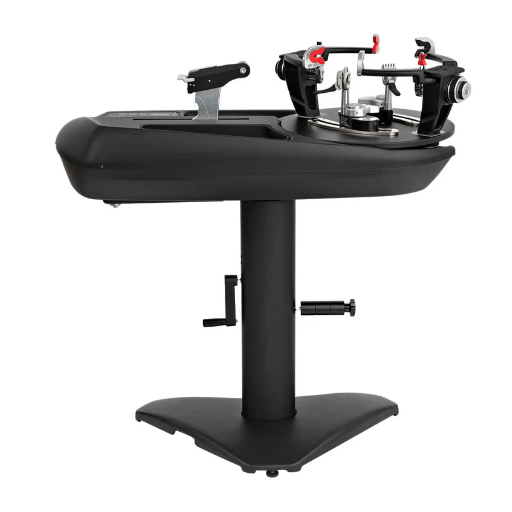
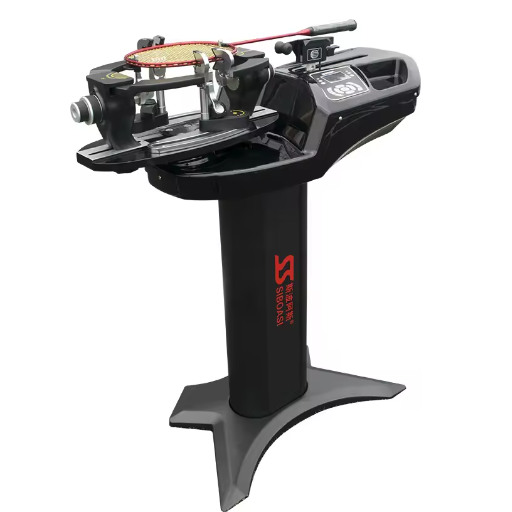
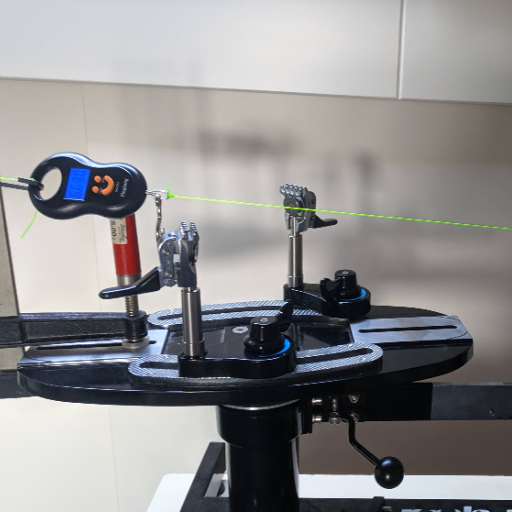
A: The combination of a badminton racket stringing machine and a shuttlecock training machine streamlines gear maintenance and practice for players. The robot’s controlled practice complements the sessions required to adjust to a newly strung racket finely, thus improving badminton feeding techniques.
Q: What kind of shuttlecocks can be used with the badminton shuttle machine?
A: Most badminton shuttle machines are designed to use both nylon and feather shuttlecocks. However, reviewing the manufacturer’s specifications is preferable to ensure proper machine use and optimum results tailored to the device.
Q: Is a badminton feeder suitable for indoor and outdoor training sessions?
A: Various badminton feeders that are adaptable for indoor and outdoor training sessions are available. That said, precautions must be taken regarding the weather and the surface where the machine will be placed for a long duration.
Reference Sources
1. Creation and Test of Prototype Shuttlecock Feeder \& Evaluation of Various Shot Parameters (P.E. et al. 2023, pp. 1672–1676)
- Publication Date: 2023-08-03
- Key Findings: The researchers created, assembled, and 3D printed a prototype feeder machine and were able to derive data for nine distinct shot trajectories. The collected data will assist in the biomechanical analysis and AI-based feeder machine development.
- Methodology: The research included CAD modeling and simulation with Fusion 360 software, 3D printing, and parameter testing of the best badminton shuttlecock feeder. The machine’s operation was automated using an Arduino microcontroller.
2. Badminton Training Plan Optimization with an AI-Assisted System: A Preliminary Study (Wang, 2024)
- Publication Date: 2024-11-07
- Key Findings: An AI-assisted framework employing wearable devices along with the AJFSO-XGB machine learning technique effectively distinguishes between novice and expert badminton players, achieving classification accuracy of 97.05%, F1-score of 97.23%, precision of 97.52%, and recall of 97.27%. This system prototype can adapt training plans to enhance developmental trajectories optimally.
- Methodology: This cross-sectional study used wearable sensors to capture badminton players’ body measurements and biomechanical parameters. The AJFSO-XGB model, developed using this data, underwent hyperparameter optimization to improve its predictive performance.
3. The Effect of Core Stability Training on Dynamic Balance and Smash Stroke Performance in Badminton Players—This research study concerns the effects of training on the performance of badminton players, including the smashing of shuttlecocks.
4. Badminton