Football training evolves wonderfully over a period of years, and technology takes a position in molding the way footballers develop. For any aspiring athletes, young youth trainees, professional coaches or seasoned football players, knowing which tools will be most appropriate in maximizing performance is extremely important. From football training machines, innovation has greatly transformed soccer training. These are mechanical tools with impressive standards for precision and reaction time while mimicking more closely many of those in-game situations never achieved before. Racing the trail of energy towards the training machines for football, you will be given a good idea of all you want to know regarding the modus operandi, benefits, important features, and meanwhile some tips about choosing the best one. It’s time for training in this transformation to fully change all your games.
Contents
show
Overview of Football Training Machines

What is Football Training Machine?
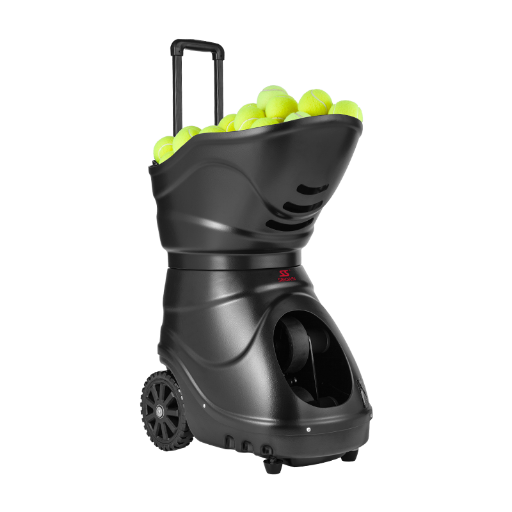
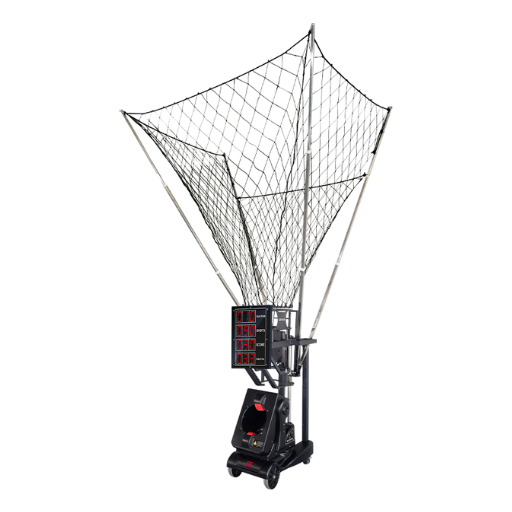
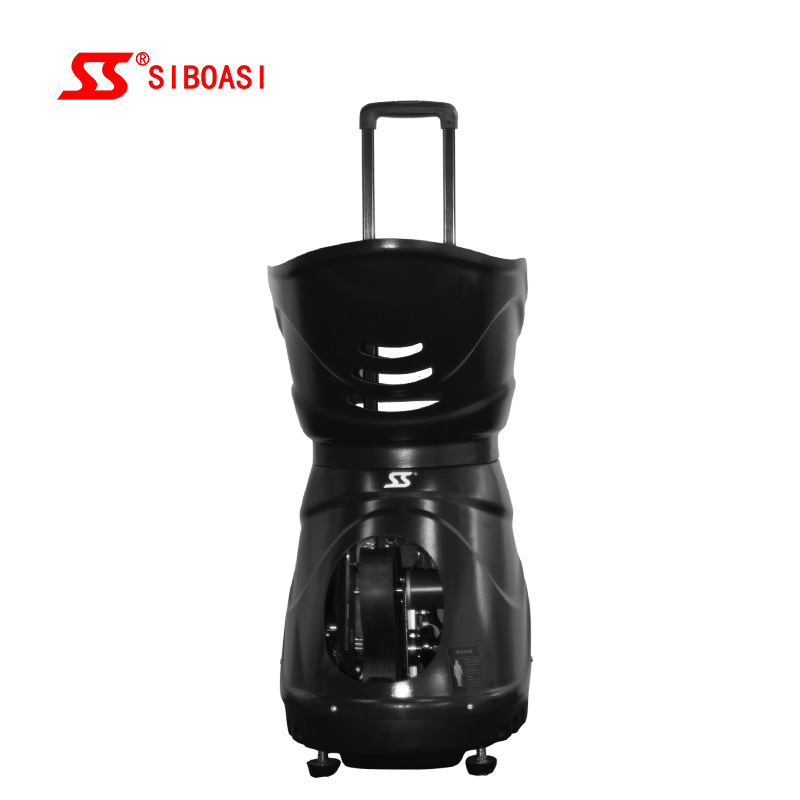
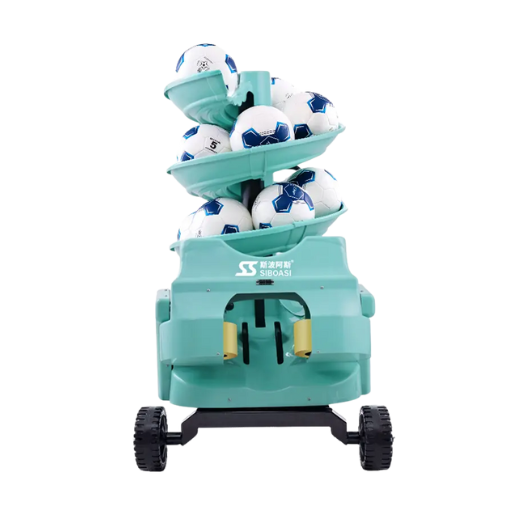
A football training machine is a specialized piece of equipment designed to enhance the practice and skill development of football players. It automates essential functions such as throwing, kicking, or snapping a football, allowing players to focus on refining their techniques and building muscle memory. These machines are commonly used by teams at various levels, from amateur to professional, in high-end facilities to simulate real game scenarios
One of the key benefits of running a football training machine is the repetition of the exercise. Whether it be a perfect spiraled pass or a mighty kick, the machine produces controlled and repeatable outputs to enable the player to practice in a similar type of setting every time. Consistency is what builds up the athlete as far as being able to better understand and master the timing, positioning, and reaction speed abilities necessitated by the competitive setup.
Through this manner, the football drills trainers can effectively reduce the injuries occurring during the rehearsal sessions. These machines serve to lessen the physical strain upon the coach or other teammates who practice reception drills by themselves. Furthermore, these devices save precious time since they help to simplify training by removing manual processes in which a coach must interminably produce dozens of throws. Finally, these machines are pure resources for skill acquisition, while above all, in boosting confidence in order to excel performance in real games.
Types of Football Machines
Football coaching machines act as specialty devices to maximize answerability and edge retention for players of all levels. These machines aim to mimic real match situations, thereby providing reliable, controlled training conditions. Several encouragement types of football machines are available to them:
- Passing Machines:
Passing machines are employed expressly for the refining of passing accuracy, speed, and trajectory. Every kind of shot may be imitated with those devices, like standard short passes, lofted passes, and drill passes. The current age passing machines let you change the settings so the coach can make real match simulations. Hence, the best of them with these settings can be set with different angles, distances (generally 40-80 yards), and speeds up the upper 70 mph. - Shooting and Goalkeeping Machines:
These mechanisms are designed for shooting practice and puckering. With balls shot accurately at an angle and speed that goalkeepers have to fend off, these machines develop the goalkeeper’s reflexes, position, and stopping power. And for the outfield player, the machine allows repeated finishing attempts under simulated situations in a keeper role. - Kickoff and Punting Machines:
This type is frequently used for special teams drills. The machines are often utilized to produce perfect bunches of punts or kickoffs that simulate various heights and spins, as well as hang times, to aid in practicing different punt returns, with the intent of altering any such irregular bounces or movements reported to have turned direction. The newest versions have the force to give spirals of up to 75 yards. - Multipurpose Training Machines:
Multi-functional training machines yield numerous options for all-encompassing football drills. Such machines are perfect for developing a skilled passer, shooter, or even advanced training with a special team. They are commonly incorporated into sophisticated training programs as a consolidation of different preparation uses of one, ready-to-use tool. Features often offered include settings capable of speedy drill transitioning and large ball receptacles with rapid feeders allowing uninterrupted exercises.
Use of this machinery in practice, the teams are able to get maximum practice effectiveness without requiring excessive energy of players and coaches. These innovations will enhance the training in football, thereby making football training machines an indispensible part of modern athletics.
How Football Machines Work
What honors from simulating game situations and giving repeated target practice rule the day for improved performance, football machines normally use strong motors, spinning wheels, and adjustable components to launch footballs at different speeds, angles, and curves. In this way, training for catching, throwing, or receiving is continually refined through repetition under controlled and precise conditions.
It all starts by loading machine balls into the machine, either manually or automatically, depending on the machine. The machine is then programmed with specific game scenarios such as high-speed pass plays, deep throws, or unpredicted bounces. Generally, users will alter the machine’s specifications to challenge athletes at different skill levels or to best mimic the movements of a real opponent. These machines allow athletes to develop subtle reflexes, precise timing, and decision-making abilities under high-pressure situations by offering adjustable games for game situations.
Preconceived notions are rarely accurate, and football machines are merely tools that can be used to provide a great framework for team training and taking care of players, performing specific tasks, and paying close attention to individual technique and game management.aseñaCertainly, ultimately, football machines should not be considered as a substitute, but as an adjunct to traditional training elements.
Benefits of Using Football Training Machines
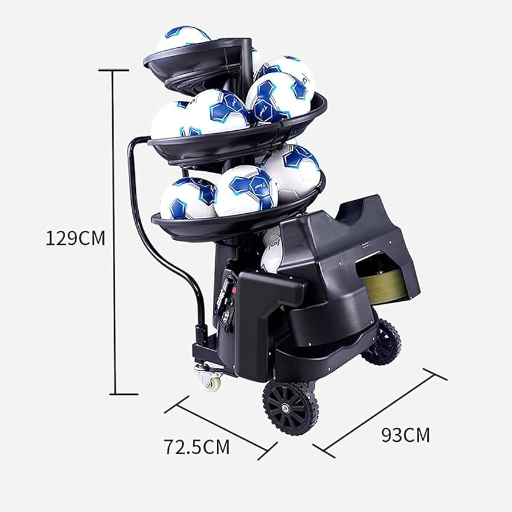
Improving Skills with Football Machines
Football machines, in their essence, are two of the most effective instruments for creating skilled footballers; they give the footballer an opportunity to tighten up the techniques such as passing, shooting, ball control, and reception under controlled fashioning and artificial surroundings. They polish their faculties through an endless repetition of movement, thus, develops muscle memory necessary for good show on the real field.
Being able to simulate match conditions serves as a plus-point for the machine. A player can time his or her response to that goal kick, high-speed passing, or simply wobbly shots taken at goal, much like it happens during a game. They prepare the athletes not only…with regard to the nature of football but also in the dynamics of the game of football. Moreover, this approach eliminates errors most times found in human-made training directions.
Football machines increase training efficiency by allowing coaches to teach strategy and technique while precise passes or shots are delivered by the machine, eternally and with a high degree of duplication. In groups both large and small, where few, if any, individuals can have access to specialized training, machines can transform the game by helping to function against individual limitations. With this, by some means, while making the player divided into a mixture of traditional and unconventional methods, the player can improve½ hands-on approaches to the development of his skills and performance.
Enhancing Training Efficiency
Soccer training machines are great players available at all levels and let players improve their skills and overall games. Such machines try especially to hone in on repetitive techniques with pin-point accuracy, whether it be dribbling, ball control, shooting or passing, thus situated under the controlled environment of a large, carpeted area. Getting all the guesswork out of manual practice minimizes deflection and thus concentrates the focus of the players solely on accuracy, speed, agility, or consistency in pathetic handling without others foddering up to help a player in training.
The models of football training machines displayed is their ability to mimic a variety of match scenarios. They can carry forward a ball giving it speed and spin so that the players may improve their reflexes and control. With so many space limitations sagging quality footballs-shall we throw the ball out for the goalkeeper when we launch it in practice-players can also perform drills in machine- and person like carding into strict synchronicity lesson-coaching context with strict acquisition of technique.
Football training machines provide a way to explicitly target the weaknesses in an athlete’s conditioning program. This means that the athlete’s weaknesses and deficiencies can be exploited to improve ball control, improve long passes, and obtain velocity in kicks as many times as necessary in daily training. Muscle memory and self-confidence are built through the confidence of repeated training. In the end, the methods elevate player performance as well as the dynamics of the entire team, making the competition in the game sharper.
Utilizing Machines for Different Positions
Training machines in football enormously maximize athletes’ turnover by customizing workouts for the positions. The goalkeepers can employ machines simulating high-speed trajectory and unexpected angles to practice reflexes, agility, and hand-eye coordination. By providing fixed yet varied training programs for continued repetitions, these machines encourage goalkeepers to develop confidence in decision-making under duress.
Machines with portions dedicated for players in the field have passes and crosses that give their receivers just a taste of total control to help them in doing proper first touches, ball-controlling procedures, and accurate shooting. Defenders seek chances to intercept or clear balls oftentimes under mixed circumstances, while midfielders take passes with absolute exactness and awareness of situational placement. As to the forwards, if machines let them practice taking shots from different angles and distances, the goal-keepers might have their work cut out for them, but they would be improving I their jobs to score under high-stress conditions.
Besides, these machines allow optimal use of the practice time and completely take away the random variability by multiple players during any drill. The players can hence identify their weaker areas and subsequently concentrate on them in the practice schedules, thus ensuring an all-around development. By incorporating advanced technology into training, it was also ensured that the performances are improved, both stand-by and cumulative contributions from the whole squad.
Choosing the Best Football Training Machine

Key Features to Consider
Choosing the best football training machine should come down to considering some particular features that the training goals and the performance requirements have to come with. Some vital factors are the following:
- Ball Speed And Accuracy:
The machine should have a wide range of adjustable speeds capable of replicating almost every game situation, be it a slow 60 mph or a fast 120 mph. From the simplest of passing drills to the most extreme shooting events at top speed, it enables players to train at accuracy and quick response. - Spin And Trajectory Control:
Advanced units allow for adjustments to accommodate different spins: topspin, side spin, and backspin. It is important that this drill scenario requires such spins. Many times players like to bend their shots; for example, the left-sided players use left foot to curve the ball from the left side into the right side of the goal or used to learn how to strike a cross vulnerable to bend into the box from Picture 2. A few units allow for the angle of trajectory. This consequently expands its usefulness for several drills. - Portability and Durability:
The weight and structural build of a machine affect its ability to play on various surfaces. The lighter models with a tough frame and wheels are easy to move and able to withstand heavy use. These training kits are made with weather-resistant material, ensuring continued action against frost and extreme Icelandic rain. - Capacity and Refill Time:
Molding about five to ten balls, more balls in the hopper ensures that there are few turns in the loading cycle causing rapid and constant shooting. Machines must be made to refill quickly if undergoing intense training. - Power Source:
The machines are generally powered by electricity except antisocial condition; battery power is of great value when a power outlet is not close. The option for archery gun machine electric or battery-dependent will depend on the priority of price, reliability, and human contribution. - Technology Integration:
Modern practice machines include either app connectivity or smart coaching features that enable tracking of real-time metrics like shot accuracy, velocity, and spin rate. - Price and Value for Money:
Available at various pricing tiers, training machines are a perfect choice for budgeting beginners as well as for those looking to buy an advanced system exceeding $5,000. Hence, before buying, access it against the requirement fulfilling factors, making sure the cost that fits the features of the machine is justified to get the requisites.
With these considerations and technological development considerations, these physical assets are a goldmine of value to the player, coach, or team.
Price Comparisons of Popular Models
When it comes to training machines, prices vary hugely depending on features, technology, and functionality. The models that would be okay for beginners sell for between $500 and $1,500. Such machines often carry basic features, for example adjustable settings and durability, making them fine for simple training routines without having an exhorbitant price tag.
Intermediate range machines are machines that have been designed to ease training for an intermediary user or an individual looking to have enhanced abilities and usually sell from $1,500 to $3,500. They carry enhancements in areas like performance tracking, more flexibility, and greater precision, which would be an excellent fit for such individuals or small teams in trying to make their training experience more thrilling.
Incorporating state-of-the-art technology and real-time analytics, these machines consist of advanced materials that ensure peak performance and longevity. It is important to consider investments related to concrete needs and desirable endowments with respect to price.
Maximizing the Use of Football Training Machines

Training Drills to Implement
As it has everything to do with ensuring certain skills are improved if used wisely in practice, football training machines can significantly improve various aspects of player skills. Below are some drills that can be executed to the mutual advantage of players in various units, and to ensure optimally geared usage of these machines.
- Passing and Receiving Drills:
Machines are capable of creating different passing speeds, trajectories, and angles, enhancing the precision of passes by players as well as their receiving skills. In particular, they may practice near-impossibly one-touch digs with balls fed mechanically, or they may improve ball control by receiving lightning-fast balls or balls of the unpredictable pedigree. These drills aid in prompt decision-making and assimilation-two essential attributes for snatching away field dominance. - Shooting and Finishing Drills:
The attackers could enjoy shooting drills with training machines engineered to work on finishing under various circumstances. The machine may enlighten real scenarios as well as provide a chance of being parallel to actual plays through crossing or deflected passing. Because these help in muscle memory, newer players master shooting techniques while making more accurate shots under the most stressful situations. - Goalkeeper Reflex and Reaction Drills:
Goalkeeper development can again be brought very far by making serious investments in sports science, especially ones which further develop his or her reflexes and responses. The best of the training machine will present the keepers with an astounding array of shots that are often speedily aimed at different parts of the goalkeeper zone. Through this training, the keepers are simulating match-play situations where they are required to make instant, unrehearsed responses based on sheer instinct. The impact sustains their concentration, positioning, and acute reaction time during pivotal game situations.
By providing real-time hands-on early exposure to these victorious drills, utilizing football training machines could transform them into practical tools capable of nurturing adroit skills across various player responsibilities.
Adjusting Settings for Different Skill Levels
These football training machines are very versatile for coaches to adjust their settings for different levels of skill. Beginners can have these boxes set to move at a slow speed with relatively simple passing trajectories, so that they can be motivated to build confidence and concentrate on mastering basic skills. This helps them concentrate on accuracy, receiving skills, and experience with controlled ball handling, all without being overwhelmed.
An intermediate player might find these settings to be on medium, perfect for creating a variety of in-game-like situations. The machine can consequently simulate the right environment, with increasing difficulty levels, providing settings for fast passing, numerous angles, and unpredictable trajectories to optimize the player’s reaction time and adapt a much better fighting experience. Having said that, this program would be very good for creating the transition between the more traditional ”beginner” phase of training for more complex training techniques.
Advanced players, who make adjustments for high-stakes matches, are trying to simulate match conditions by considering machine adjustments as serving powerful passes swiftly with varying spins and angles, thereby pushing the player’s endurance, precision, and instinct. Thus, coaches speaking the same language of a well-served game are attending elite players for taking high-pressure shots. This is ideally aimed at conditioning their decision-making and reactive skills, and therefore is working towards ensuring they stay lucid and sharp as we head into the real stuff.
Tips for Maintenance and Care
Of course, the mechanized soccer football machine needs to be appropriately maintained and cared for to perform great work for its expected life. Meaning the following are helpful measures to always keep your equipment in great condition.
- Regular Cleaning:
Dust otherwise condensation caused by a variety of weather conditions can build up on training fixtures and machines. Wipe clean these every time you use washing systems. Use a soft cloth to aid in the task and by wiping it with a damp cloth finish with a thorough dry after the spatula has been cleaned. - Control Moving Parts:
This includes wheels, gears, and belts to control the moving parts in the machine that shrink. They cause entirely regular wear and tear once they must be in constant operation for long. Inspect joints to see if they might benefit from some lubricant and consider the suitability of your belt in terms of contact for less operation defects. - Check Electrical Components:
It is necessary for machines with electronic or digital controls to verify the wiring and contacts regularly. Inspect the wires for any frayed or inoperable condition, and furthermore, verify against the buttons or the touchscreen for their proper functioning, because any failure may lead to disruption to the training process. - Software Updates:
In case the training machine applies advanced technology or smart capabilities to its operation, its software must always be up-to-date. This ensures that the manufacturer’s latest updates that would improve its performance or undo bugs would be present. - Storage:
Keep your machine safe and dry when it is not in use. Never expose it to extreme temperatures as it will harm its electronic and mechanical parts. - Monitoring Usage:
Some modern machines are programmed with durability, or recommended usage limits for various settings. Most wear and tear can be relieved if the limits are kept. - Follow Manufacturer’s Laying Instructions:
Always consult with the user manual provided to you by the manufacturer for specific maintenance scheduling and instructions unique to your model else you run the risk of voiding the warranties and damaging the instrument.
Following these maintenance tips along with taking a big leap toward the use of football technologies is your best bet for improved performances of players and longer life of the instrument.
Expert Recommendations and Reviews
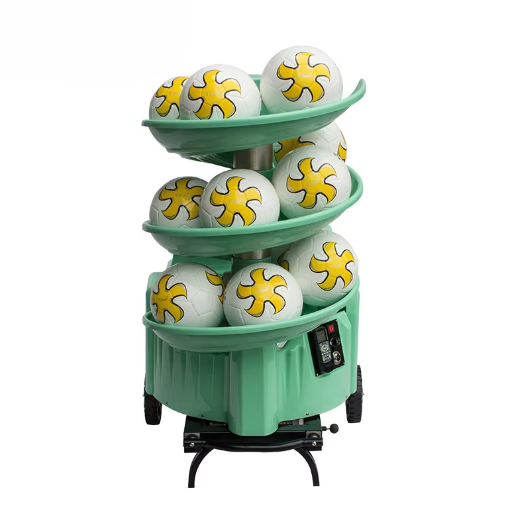
Best Football Training Machines for Youth Athletes
When it comes to selecting youth soccer training machines, one ought to put skill improvement and safety at the top of their considerations. Kids will gain an advantage when they learn sound transference and handling when the use of the machine encourages proper catching subtleties. The equipment should be convenient to use, and its settings adjustable to accommodate the players’ skill levels and capabilities with ease.
Concerns such as lightness, portability, and structure that prevent injury are pertinent issues. Since the machines are giving some real game situations and repetitive play for promoting consistency in the techniques, they are obligatory to support kids close to training. Thus, kiddie-renowned equipment-elements should flexibly present new competitive settings so that players can gradually work up their abilities while observing a gradual performance growth over time.
An additional factor to evaluate when selecting training equipment is the longevity and quality of the training machines. Being able to adequately count on value and high performance for a longer time makes it very cost-effective to opt for machines that are made to sustain the frequent usage of a crowd or the long haul. Also, with the right choice of training machine, training imparted by a parent or a coach will give youngsters a safe learning environment in order to develop their abilities and sense of confidence on the pitch.
Pro-Level Football Training Equipment
Getting professional-level football training equipment is a must for any player trying to heighten his/her abilities and refine his/her skills. Good materials such as agility ladders, markers or cones, and resistance bands can help to slow down speeding up attributes like speed and balance or help to reduce fatigue. On the other hand, equipment such as rebounders and passing arcs is very useful to attain the best shot control and passing skills.
Professional training goals and nets are equally important tools that allow players to practice their shooting accuracy and goalkeeper skills. Durable and expertly sized, these replacement targets provide a realistic setting to simulate match conditions. Highest-quality balls are imperative to playing consistently, ensuring players garner experience with match-ready gear.
Maintaining the safety of a player is most important, therefore the focus should be on protective gear like shin guards or depriving oneself of pain by wearing padded goalkeeping gloves at the training activities. The right footwear is another important consideration that would depend on the playing surface- whether artificial turf, grass, or indoor courts. Comprehensive training accessories, rigorously applied in a structured environment, form the basis of developing the necessary physical and technical fitness demanded in competitive soccer.
Frequently Asked Questions (FAQ)
Q: What is a Football Training Machine and how does it benefit players?
A: A football training machine is a unique piece of equipment that replicates actual game situation exercises like passing, shooting, and catching to aid individual technique, reaction time, consistency, and precision. It becomes a useful tool for a player who practices precision feed drills in addition to repetitive drills since it accelerates skill development and because it increases the productivity of sessions while reducing the need for training partners.
Q: How do football throwing machines work, and what routine can they undertake?
A: Such a device is a pretty advanced project that could be anything from air-pressurised systems to battery-powered motors to feed and project balls under different speeds and angles. What kind of drills can be done in this case? From slotted balls to step-overs to drops by creating chip opportunities – all sort of one-touchage training. Similar design goes into programmable passes that serve as awesome training due to acceleration/so forth that train either individual players or future teams.
Q: Can a football throwing machine enhance receivers’ catching and timing skills?
A: Yes. A football throwing machine can greatly enhance the catching and timing abilities of a receiver by giving the receiver a constant, repeated, and accurate series of balls that the receiver can use to work on the footwork, hands, and route timing. These passing drills are vital for a player in developing this skill set; they assist in permitting the receiver to begin assimilation with varieties and ranges of passing types and enhance muscle memory to make precise receptions in tough situations.
Q: What can I consider in an attacking football machine to be used for offensive training?
A: An attacking football throwing machine should portray quick-firing options, be adjustable for speed, record sequences through programming, and dish out different kinds of throws. For offenses really hard in training, the absolute prerequisites to look for are the highest ruggedness, portability, safety features if ceasing to be applied in offensive heavy drills. Therefore, an object of choice is that this machine should be able to mimic real-game-like attacking situations-white-knuckle situations.
Q: Is a Football Training Machine suitable for youth and amateur teams?
A: Yes, a football training machine is suitable for youth and amateur teams, as long as it is used with proper supervision and appropriate settings. Many machines are equipped with adjustable power and safety settings to cater to younger players according to their needs. They help smaller groups to run efficient training sessions; working more closely on skill during passing and catching and timing the routes without requiring a full roster.
Q: What kind of safety precautions should be taken when using passing machines in soccer?
A: Regarding safety precautions: Ensure that the machine is on stable ground, don recommended protective gear, check that all guards and safety switches operate properly, and comply with the producer’s directives on power and speed settings. The appropriate personnel who are capable of supervising the drill must keep an appropriate distance away from blocking mechanisms and must educate the athletes on the safety rules of the passing machine to prevent injury.
Q: What are the potential sustenance concerns and monitoring procedures for a soccer machine?
A: Performing basic maintenance is cleaning the balls, checking wheels and belts for wear, tightening bolts, and ensuring that all moving parts are well lubricated, as required by the manufacturer. A number of issues likely may come up with the system itself, such as not connecting power, failing to detect input panel controls, unable to callibrate the speed control, and watch for sensor alignment or malfunctioning there. Manuals are available for download by most manufacturers, while customer service or support on common issues are available from manufacturers themselves. Keeping spares can also help in offsetting some of the downtime.
References
-
UT Football Automated Practice Target
This document from the University of Tennessee discusses automated practice targets and their integration into football training, providing insights into the use of technology in sports. -
Building a Dataset and Developing a Video Event Classifier for Football
A study from MIT focusing on video event classification in football, which can be relevant for understanding data-driven approaches in training. -
A Players’-Coaches’ Manual for High School Football
This manual from California State University offers a comprehensive guide for teaching and administering football, which may include training methodologies and equipment usage. - Top Football Training Machine Manufacturer and Supplier in China