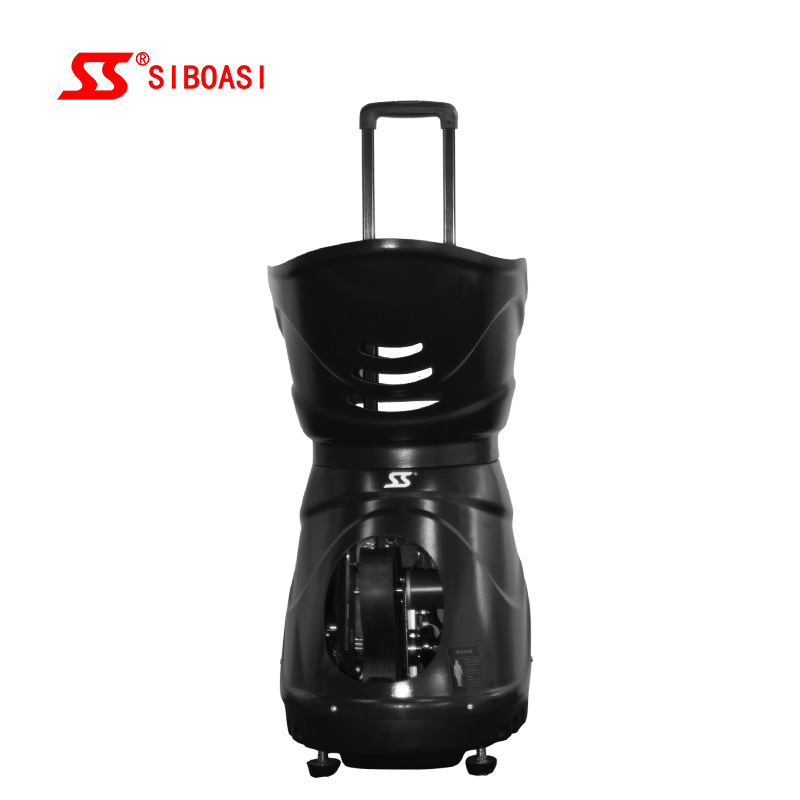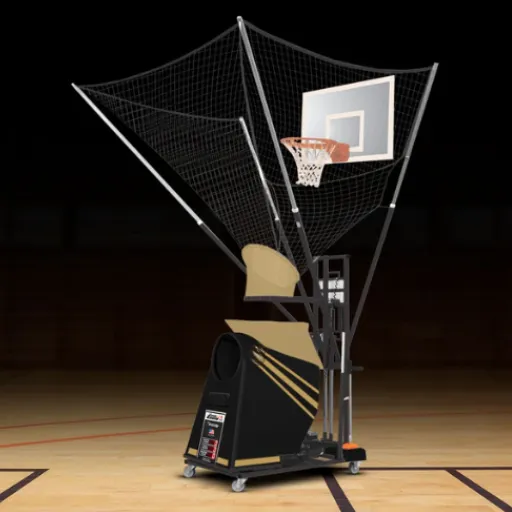
Imagine your basketball training sessions turned upside down by the state-of-the-art technology designed to improve shooting accuracy, consistency, and confidence on the court. A basketball shooting machine is not the usual gym equipment; it is a revolutionary machine that helps players in any stage of their career to improve their skills with measured facilities. Coaches can utilize this mechanism to maximize actual practice time, while players use it to perfect tranquility with peak efficiency. Now let us go through what a basketball shooting machine can do for your training, how to pick one, and why it sits in every modern gym. The game will never be the same for you after these shooting machines!
Understanding Basketball Shooting Machines
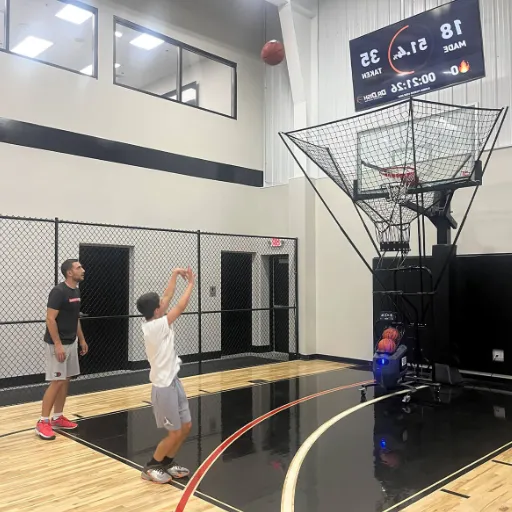
What Does a Basketball Shooting Machine Do?
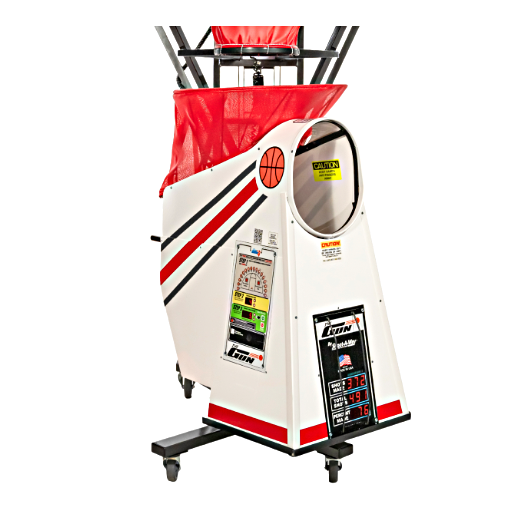
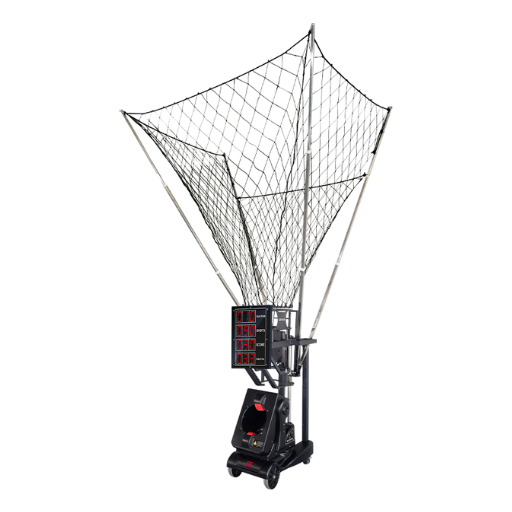
A basketball shooting machine is a high-tech piece of equipment used to help players in the practicing and refine shooting skills. Mainly, a machine collects made or missed shots and throws the basketballs back to the player so they can keep shooting indefinitely, with no interruptions. This kind of feedback loop allows players to keep working on the mechanics and accuracy of shooting while gaining consistency and practicing with minimal downtime.
The return machine usually has an adjustable net all around the basket to direct the balls back into a return. Players set the machine to return the ball to a given spot on the floor so they could practice shots from various angles and distances. The highly modern shooting machine also has features such as programmable drills; shot tracking and real-time feedback of performance to further optimize their practice while assisting players in focusing on the particular area of need.
The broadest of applications in the Basketball Shooting Machines could be referenced, from the beginner, gaining confidence, to the very fine level, perfecting the opportunity to present. In short, by dramatically increasing the number of repetitions a single player can do in a single session, the machines make practicing and training efficient and successful in generating better performance from the player in a real-life court situation.
How Do Shooting Machines Work?
Basketball shooting machines are built to allow for greater training efficiency by carrying out tasks. Essentially, a shooting machine uses nets or rebounders to catch shots whether they are made or missed, and directs the basketballs back into the machine. After retrieving them, the balls are then forced out through the mechanism in the direction of the player, thus simulating being passed to the player during game time.
In general, shooting machines permit a player to work with a multitude of different settings to tailor the workout procedure to fit their needs. Handling passes is of paramount importance, so the two-ball pass is always one of the features to change: pass angle, speed, and distance. Some setups also provide a rotating path to vary shot location to simulate game-like situations. With the automatic pass, the ball is in the player’s hands for the shortest possible time, giving the player a greater number of repetitions in one session.
Additionally, a lot of modern shooting machines include digital features to record performance data. These features allow players to track their shooting percentage, accuracy, and consistency over time. Such systems provide useful information for both players and coaches, thus facilitating the process of pinpointing weak points and following up on progress throughout the training programs. Generally, the shooting machine is a utility that makes the practice sessions more efficient and effectively fosters the development of skills.
Types of Shooting Machines Available
The shooting machines can be classified into different types depending on the needs of the basketball player. The most common type is the rebound type, which operates by returning the ball to the shooter so that he or she may gather new attempts after every shot. They work best for shooting drills that require repetitive shooting attempts, as the player can totally concentrate on his form, accuracy, and rhythm in shooting without interruptions. The machine would return the ball to various positions on the court, maximizing the time available for practicing.
The second category is that of programmable shooting machines. These more advanced machines offer settings for particular exercises in which the player sets variables to either shorten or lengthen pass timing, shooting angles, and more. Because of this, they are perfect for creating shooting versatility and making a player practice under game-like conditions. They work well for shooting training that concentrates on specific zones or situations that players may encounter in actual games.
Some machines are fully automated and can track specific performance metrics. Not only do these machines return the ball, but they also track several critical parameters such as shooting accuracy, release times, and whether a shot is high or low. In turn, immediate feedback is given, allowing the player to make adjustments in the moment or track progress over time, both of which greatly contribute to long-term skill development. In general, these types offer a good variety to ensure use by beginners or professionals alike.
Benefits of Using a Shooting Machine in Training
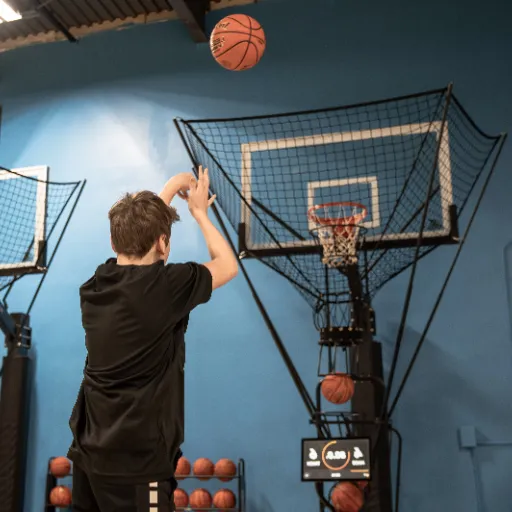
Improving Shooting Skills with Technology
Shooting machines use the latest technological advances to polish the shooting skills of the players. These machines deliver the ball consistently and accurately, so the players concentrate on form, technique, and footwork without having a partner rebound. Repetition here is really what forms the necessary muscle memory for becoming a consistent shooter in a range of game situations.
A further advantage of shooting machines lies in the fact that they provide real-time feedback and analytics. Variables such as shooting percentage, arc, locations of shots, and so on are recorded and displayed for analysis. If players can realize their strengths and weaknesses through this kind of useful information, they can practice in a pertinent manner to overcome weaknesses that will later increase the capacities of their shooting ability as a whole.
Moreover, shooting machines can be programmed for some customized drills; for instance, players can experience simulated pressure situations during shooting or spot changes very fast as part of the drills. When going through these drills, they build confidence and enhance their decision-making skills in real game situations. Athletes can work smarter and more efficiently with a clear focus on improving performance with these technologies.
Personalized Basketball Training Sessions
Personalized basketball training sessions encompass a vast gamut of choices depending on the athlete’s needs, goals, and underlying abilities. The sessions cover all major skills that a player should develop: shooting, dribbling, passing, and defense. A particular set of drills and exercises takes the formation of the weaknesses and helps in building the strengths of the players for a better display of general skills and a greater show on the court.
These sessions may involve technological and data-driven coaching to maximize feedback and measure progress. Through video analysis and performance tracking, athletes can make crucial decisions that allow them to identify areas in need of improvement and further tailor their training. The coach can also tailor drills to mimic actual game situations, allowing an athlete to enhance their reaction time, decision-making, and confidence while under pressure.
A personalized training program would foster deeper bonds between players and coaches. This direct attention rewards empowerment of athletes to better understand the responsibilities, improve on their skills, or train their minds to be strong. Eventually, this more all-inclusive approach towards training has its rewards: the growth and achievements of their basketball careers going forward.
Tracking Progress with Advanced Analytics
The possibilities for tracking and measuring progress in basketball training through advanced analysis are enormous. By leveraging data-driven insights, coaches and players can pinpoint strengths, weaknesses, and areas of improvement-really at the tip of their fingertips. Such a methodology assures that training sessions are set depending upon the needs of the individual to maximize the enhancement of performance and training duration. Shooting percentage, defensive stats, and physical endurance could be a few of the parameters for measuring progress.
Advanced analytics present the advantage of creating an objective performance indicator of sorts. Traditionally, performance may be gauged by sometimes witnessing a few drills, but this evaluation is almost always very subjective. The intelligent use of analytics, however, provides measurable data defining trends and highlighting progress. Such information will help coaches have a more informed approach in training methods, game strategies, and player placements. Thus, through the profusion of data from advanced analytics, trainers can make decisions that better work with the player, making a training program more efficient and at the same time helping protect against regressing.
In addition, advanced analytics fosters opportunities for real-time feedback. Players get instant evaluation with continuous monitoring, and adjustments can be made during practices instead of waiting until after the game for a debrief. This accelerates development and thus cultivates ownership: athletes come to associate the things they do with specific results. With this ability to provide personalized coaching supported by measurable data, advanced analytics has taken center stage as the cornerstone toward assuring the long-term development of basketball talent.
Choosing the Right Basketball Training Facility
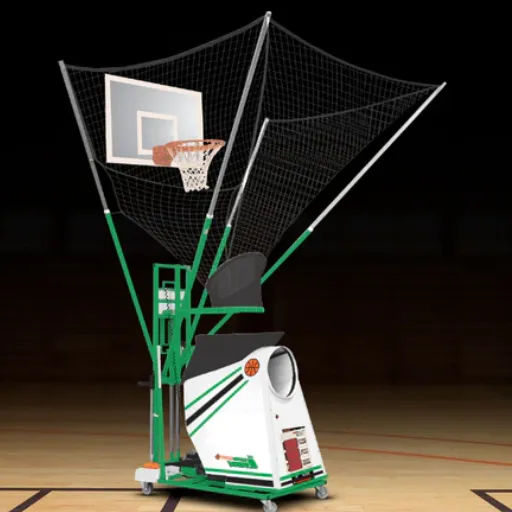
Features to Look for in a Training Facility
Selecting a basketball training facility means making sure that it fits the needs of the athlete and promotes an environment conducive to skill development. Here are some features to consider:
- State-Of-The-Art Equipment: The best training facility boasts modern, well-maintained trending equipment designed specifically for the. Some examples of equipment include shooting machines, agility ladders, resistance bands, and all sorts of weightlifting machines for strength and endurance. The right equipment ensures adequate training in every aspect and facet of the game.
- Advanced Analytics and Technology: Facilities that use various forms of technology to quantify performance and provide feedback always have a competitive advantage over competitors. An athlete can enjoy real-time feedback from tools utilizing motion-sensor cameras, wearable trackers, or shot-tracking devices.
- Experienced Coaches: Certified, fully licensed, and experienced coaches are the essential ingredients in any sports preparation regimen. Trainers who have successfully developed athletes at all stages of athletic competition should be sought after. A fine coach does not only teaches skills but also imparts the mental aspects of the game and strategy.
- Dynamic Training Programs: Programs catering to the athlete’s age, skill level, and goals should be available, from beginner youth programs to advanced skill clinics for pro athletes. It is also helpful to have cross-training options such as plyometrics or yoga for stretching.
- Court and Space Quality: High-grade hardwood should be used for the floors with all markings done to international training, anti-skid surfaces, and appropriate lighting. Space requirements should allow for more than one group to train simultaneously without interference. Killers should be regulation height, and a clean and safe environment also adds to quality training.
- Recovery and Wellness Amenities: Search for facilities that support recovery through ice baths, cryotherapy chambers, or physiotherapy clinics. Recovery after training is an injury-prevention factor and a performance-enhancing factor. Studies have found that recovery facilities can lower injury risk by 30% among high-performance athletes.
- Flexible Timing and Accessibility: Training venues should also be standards that fit the needs of athletes. Ideally, it should be an easily accessible location so athletes can always fit training into their busy schedules without much logistical challenge.
Finding a Gym with Shooting Machines
Start your research by looking for your local sports centres or recreation complexes that offer basketball training. Since gyms tend to serve the needs of basketball players, they have shooting machines that are considered valuable tools for skill development.
Next, you might want to investigate special basketball training academies or programs near your area as they offer a variety of equipment with shooting machines. These are mainly directed towards the training of athletes, be they amateur or pro. You may therefore get valuable documentation about their facilities by contacting them or visiting their web pages.
Finally, check online platforms or sports facility directory websites, allowing users to filter amenities according to their needs, including shooting machines. Many listings provide detailed descriptions, user reviews, and photos to help you check out whether the gym truly has what you are looking for even before visiting. Alternatively, check with the facility directly to inquire about the availability and readiness of the equipment for immediate use.
Comparing Different Basketball Gyms
When comparing basketball gyms, several criteria come into play, some of which affect your experience. Start with the facilities. Does the gym provide for ample court space with perfectly maintained hoops and adequate lighting? The cleaner and safer it is, the better the quality of play one is afforded. Are there specialized pieces of equipment, like shooting machines or trainers, intended for the enhancement of your practice sessions?
Another very important criteria of consideration is accessibility. The gym location and its hours of operation must be checked to make sure they work for you. Of course, being near your home or workplace means you are more prone to hit the gym more often. Consider also the membership policies or pay-as-you-go charges to determine whether they fit all within your budget. The gym may, in fact, present discounts that warrant further investigation for certain long-term memberships or even student discounts.
Last, think about the atmosphere and community of the gym. Many basketball enthusiasts favor gyms where pick-up games and leagues are held, providing one with the opportunity to develop skills while fostering team spirit. The staff’s professionalism and the general vibe attractiveness can be one area that greatly impacts your experiences. By putting these considerations under the magnifying glass, it will be easier for you to determine the gym that best suits your wants and needs.
How to Maximize Your Shooting Machine Session
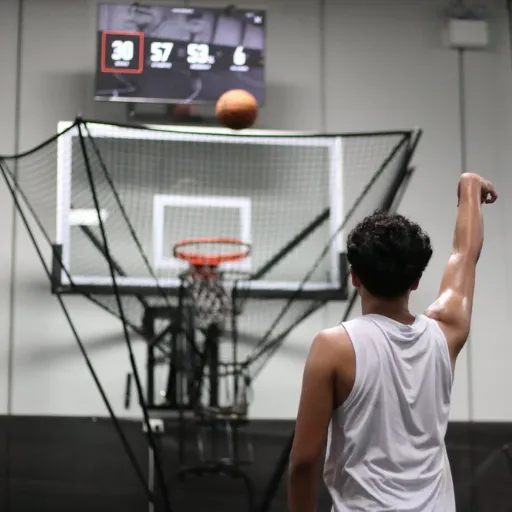
Creating an Effective Workout Plan
A shooter will definitely want to be clear about his or her goals to maximize time usage in the shooting machine session. It is these goals that will determine whether it is to improve the accuracy of shooting, build endurance, or practice a particular game scenario. Having a clearly defined purpose in each session secures the time spent toward purposeful improvement.
Organize the workout into various segments. The first step is to warm up, thus preparing the body for exercise and avoiding injury. Afterward, do some drills related to your chosen goals; these could spot shooting, catch-and-shoot, or off-the-dribble repetition. Rest times are very important. It is a time to recuperate and keep the focus so that one does not reach a level of exhaustion that hampers a good performance. Make progress with difficulty as your abilities develop to further challenge yourself.
End it with a cool-down and self-assessment. Reflect on how you performed and take mental notes where there are areas to improve. Track your progress over time, if possible, by recording your stats or watching some footage and noting trends. This will make it easier to instill consistency into your training and keep the development of your shooting skills ongoing.
Building Skill Drills into the Session
Skill drills are the core drills of a training session, focusing on the modification of a given technique and building muscle memory. A way to incorporate skill drills into a session is to start with identifying the areas of improvement. Depending on what needs to be addressed-accuracy, speed, endurance-drills are then tailored to work on those key areas to ensure that such practice is purposeful and clinically aligned toward a common goal.
Applying skill drills should be carried out within a structured setting. Therefore, start from the very beginning, practicing very basic fundamentals such as basic shooting mechanics, stationary shots, etc., until reaching the very top in a more complex manner, such as shooting on the move, quick transitions, or simulating real-game scenarios. Must be consistent in repetition throughout the drill, might as well maintain correct form and not rush through it.
In the end, even if it is during your training session or afterward, monitor your progress. Give each drill some measure that could be a goal to be achieved, time, or accuracy that was set for accomplishment, against which you will be able to compare your results over time while putting a bit of evaluation into the result itself. This way, you can make sure your preparation is useful and is directed toward further progress.
Using Technology to Enhance Performance
Technology has provided several different avenues to enhance performance in basketball, especially in terms of shooting. Enter the basketball shooting machine, which is commonly housed within a gym. These machines allow players to practice shooting through an automated ball rebounding and ball passing mechanism; in other words, the player can only concentrate on shooting as the machine returns the ball again. The repetition of practice drills builds muscle memory, which is an important factor in keeping shooting percentage intact when the player is under pressure.
The shooting machines can also record the performance of the player. Players can get data on the total attempted shots, the total field goals made, etc. Many of the devices come with integrated technology to help record stats and provide feedback or suggestions about shooting percentage, shooting accuracy, and shooting consistency. Such information is useful so that both players and coaches may identify areas that need improvement and also gauge if they are improving or not.
Integrating basketball shooting machines into athlete training routines enhances their performance manifold. Because athletes train in repetitive shooting drills being complemented by useful data, practices become efficient and productive. This combination of automation and analytics avoids inconsistency and builds on the court, thereby boosting accuracy and confidence.
Elite Training with Shooting Machines
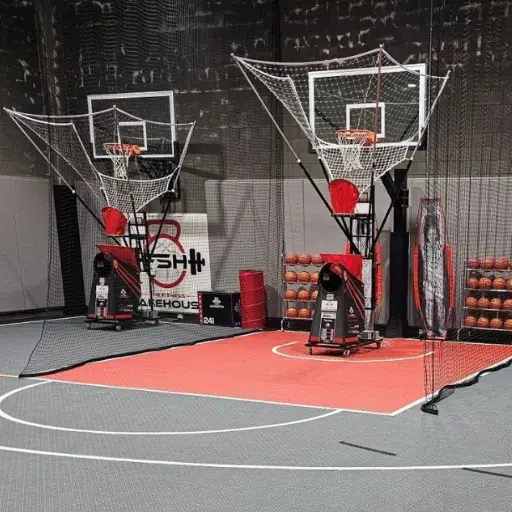
Case Studies of Successful Players
Athletes of all levels have taken advantage of shooting machines to develop their skills on the court. For example, one my collegiate player managed to increase his three-point accuracy by some 15% during the season. It was the repetitive nature of shooting practice combined with the real-time feedback that so much helped his adjustment and muscle memory, resulting in progressive improvements every time he stepped out there to play.
Another illustration involves a professional athlete returning to shooting rhythm after injury. These shooting machines were incorporated into the rehabilitation process in the hope that a controlled, yet targeted, shot could be taken in a low-pressure environment. Thus, the rehabilitation not only hastened recovery but also brought confidence back in play. Since shooting machines are adaptable to drills that are close to game situations, the player never lost the competitive edge throughout the rehabilitation program.
Another big lift from the shooting machine system results from the help given to high school athletes, especially during competitive tryouts or for college recruitment. Here’s a little story about a youngster whose free-throw success improved 20% after three months of practice. Being able to quantify performance gave the player concrete targets to work for and an actual roadmap for getting there, demonstrating the potential of shooting machines for enabling success at every skill level.
Coaching Tips for Using Shooting Machines
- Set Clear Goals for Each Practice Session: Pinpoint specific goals for each practice session using the machine. For example, working on precision in three-point shots or getting as many free throws as possible within a certain time frame. Studies have shown that players training with shooting drills consistently and with goal-oriented intent can improve their shooting ability by up to 10% after six weeks of regular training.
- Adjust Drills to Players′ Skill Level: Shooting machines generally have programmable parameters to simulate a real-game environment. Use this functionality to design drills that suit players with different abilities. Younger players can make good use of baseline shooting drills while more demanding drills involving movement, off-the-dribble shooting, and contested shots can be introduced for more advanced players.
- Record Data and Analyze Performance: Most modern shooting machines come with various built-in tracking systems that record statistics such as shot arc, accuracy, and volume. Players should be encouraged to examine their own data after each session to motivate them to move forward. It has been found that athletes who closely track their performance metrics are 15% more likely to achieve their training goals.
- Reinforce Proper Shooting Mechanics: Volume counts for a lot; however, one must emphasize doing it with proper form for long-term success. Use the machine to encourage form shooting with players at close ranges with lots of repetition that reinforces good mechanics before advancing onto farther distances.
- Simulate Game-Speed Situations: Put game-speed situations into drills by adding defensive pressure or movement patterns along with the use of shooting machines. In doing so, players prepare for the real-world environment, enhancing decision-making and response time when under pressure.
- Increase repetition without fatigue: Shooting machines allow the taking of hundreds of shots in one session, with hardly any recovery time because of the quick ball return. This helps build muscle memory and lessens overall physical fatigue, thereby further improving shooting consistency.
- Use Timed Shooting Challenges: Players should be engaged in shooting contests that are timed to develop concentration and under-pressure shooting skills. For example, have a drill in which you have to make a certain number of shots within one minute; players commonly find these challenges to be a lot more engaging and productive.
Combining the above techniques with modern technologies found in today’s shooting machines, coaches will greatly enhance player development. Remember, the key is in consistency in applying and adapting these strategies along the way, which will bring measurable improvement to gameplay at all levels.
Future Trends in Basketball Training Technology
The future of basketball training technology is mired in innovation and personalization. Wearables are becoming more technological, allowing athletes and coaches to track, in real time, certain key parameters like heart rate, movement patterns, fatigue, etc. This allows for practical insights to be developed wherein training programs can be fashioned according to each single player; it really assists in enhancing performance but much more so in ensuring the players are safe against any injuries.
The other major movement is an AI and machine-learning approach to gameplay and training data analysis. AI-powered systems find patterns and weaknesses in a player’s execution or choices and make detailed recommendations to correct them. Meanwhile, VR seems to be the disruptive force; it allows participants to recreate an actual in-game situation and practice the necessary decision-making in an immersive environment, furthering their preparedness both mentally and physically.
Another evolution—for these are the developments in shooting machines and smart courts—is transforming player development. These modern systems track data and feed back information for instant evaluation of shooting, ball handling, or movement efficiency. With such technology involved in basketball training turns, training becomes more accurate, adaptive, and results-oriented, allowing players to reach greater heights of performance.
Frequently Asked Questions (FAQ)
Q: What is the name for a gym with a basketball shooting machine?
A: A basketball shooting machine gym is a specialized setup equipped with state-of-the-art shooting machines that emphasize the shooting skills of the player. These machines provide unlimited reps, interactive training, and state-of-the-art technology to help players from youth leagues to NCAA and NBA standards elevate their game.
Q: How does a shooting cage work in a basketball facility?
A: A shooting cage allows for the practice of shooting in a controlled environment. It usually has the net that catches the balls fired so that a player can shoot 360 degrees without the need to retrieve the ball after every shot. This will benefit the basketball teams and academies that concentrate on skills training.
Q: What are some benefits of utilizing a basketball shooting machine?
A: The benefits of using a shooting machine include the improvement of shooting accuracy, increased speed of shooting, and practiced technique of shooting, while also allowing players to track their progress via an app so they can spend more time working on areas needing improvement and fully capitalize on their gym time.
Q: Are there any free basketball shooting machine workouts available right now?
A: Free workouts with a basketball shooting machine may be offered at some academies or basketball facilities. It allows players to experience the benefits of the machine without the upfront cost and also serves as a sort of test for the players to see if they want to go into training full-time.
Q: What are the cost variations of basketball shooting machines?
A: Pricing for basketball shooting machines varies widely depending on the infrastructure and technology. Some courts may establish memberships with unlimited courts for use of shooting machines, while other courts may prorate sessions to the hour. It’s interesting to check out whatever local basketball facility may be available in your area that accords with their rate structures.
Q: How can a shooting team benefit from using a basketball shooting machine?
A: A shooting team benefits greatly from the basketball shooting machine in furthering their shooting skills and teamwork. The team together, using the machine, practices drills to increase their ability to shoot from distance and perimeter shooting, vital to playing competitive games.
Q: What are some innovative features that I can look for in a basketball shooting machine?
A: When picking a basketball shooting machine, go with ones that present innovations such as customizable shooting patterns, real-time feedback via an application, and adjustable settings catering to different skill levels. Machines incorporating virtual training stuff could create greater engagement for players.
Q: How do basketball shooting machines assist players in improving their skills?
A: Basketball shooting machines assist players in honing their skills by allowing for consistent, repetitive shooting opportunities. They can practice different shooting types, get immediate feedback on their performance, and simulate game scenarios, with all this repetitive training needed for a player willing to go to the next level in his basketball career.
Q: What is the role of a coach vis-à-vis basketball shooting machines?
A: In the use of basketball shooting machines, the coach role is to engineer proper training programs that best suit the needs and desires of the team. Coaches can analyze shooting machines’ data to measure the player’s performance, target drills, and follow their improvement in time to lead to the basketball team’s success.
References
- Shoot-A-Way – The Gun for Facilities – Offers basketball shooting machines designed for gyms and training facilities, acting as automatic rebounders.
- Shoot 360 at Warriors Basketball Facility – Provides workout options with quality repetitions and expert coaching in a professional basketball training environment.
- Noah Basketball – Features advanced shot-tracking technology and real-time feedback to enhance shooting performance in gym settings.