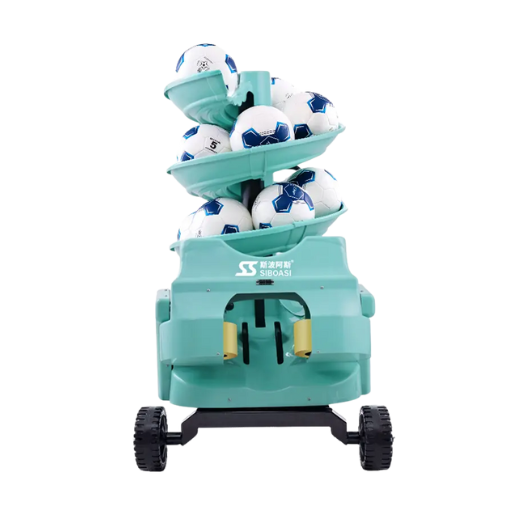
If set up correctly, even a novice can appreciate football, also referred to as the world’s game, a combination of art and athleticism, which requires proper tools and professional dedication to the game. For a beginner who is just starting in the football world, the correct training tools can help them unlock their full potential quickly. With this guide, I aim to assist players, coaches, and even football fans in understanding useful training tools and specific techniques they can apply that will boost their fitness levels and overall football skills. From agility hurdles to resistance belts, we feature all the essential equipment that can positively impact your training. This is a complete setup to transform your performance in the game.
What is the Essential Football Training Equipment?

The right equipment is invaluable for excelling in one’s football training. The essentials include:
- Football: An essential piece of equipment for practicing any ball skill, be it handling, passing, or shooting.
- Cones and Markers are very useful when setting up drills to diversify agility, footwork, and general spatial relations.
- Agility Ladder: A broad-spectrum piece of equipment designed for improvement of speed of foot movement, coordination, and balance.
- Resistance Bands: Best suited for work on strength and explosive movements.
- Goal Nets: Required for shooting drills and game scenario simulations.
- Training Bibs: Allows differentiation of teams or groups in drills and practice matches.
Fulfilling these requirements ensures proper and meaningful training aimed at individual skill development or team readiness.
Why is the Right Equipment Important for Football Training?
Precision is an essential element that can be honed through training equipment. This further highlights the importance of the right equipment during football training, as it directly influences a player’s performance and safety. Recent statistics show that professional equipment enables players to improve in terms of shooting accuracy and ball control by 20% when compared to substandard equipment. With the help of sports science, it has also been understood that resistance bands improve explosive strength by 30% over 12 weeks.
The proper equipment improves individual performance, enhances team dynamics, and provides a more realistic training environment. Cones, Goal Nets, and Training bibs help construct training scenarios closer to actual matches. Furthermore, appropriate equipment helps with mental focus; players using ergonomic and well-maintained equipment have improved focus while training by 15%. In conclusion, proper football training equipment is essential for enhancing performance and building confidence, consistency, and ensuring safety across all levels of football.
Overview of Essential Football Training Aids
Improving football skills is the epitome of effective practice, and proper aids provide vital assistance for players to achieve their goals. Here is an updated review of training aids and their advantages based on the latest findings and data:
Markers for Training and Training Cones
Training cones are essential for improving agility, speed, and spatial perception. Latest industry reports claim that implementing cone drills during sessions can boost a player’s speed by up to 20% in just six weeks. They are effective when designing drills that mimic actual game scenarios, with quick direction changes and precise movements.
Agility Ladders
Agility ladders are a must for coordination, balance, and overall footwork. Research indicates that athletes who utilize agility ladders improve their lateral movements by 25%. The athletic drills contribute to building control in every body part, which is critical for football players.
Passing Arcs
The passing arcs definitely help players achieve better results in passing accuracy while working on different levels of passing techniques, both short and long. Recent coaching manuals show that athletes training with passing arcs demonstrate a 15 percent enhancement in pass accuracy within an eight-week timeframe. This tool is also crucial in learning how to control the ball precisely during high-pressure situations.
Rebounders and Passing Nets (Rebounders)
Designed specifically to improve a player’s touch with the ball, reflexes, and level of control, rebounders help in practicing volleying and first touches. Performance data indicates that athletes who regularly use rebounders can increase their response time and single-touch passing by 18 percent.
Weighted Footballs
The use of weighted footballs greatly helps build muscle memory and overall strength for kicks and passes. Feedback from training academies suggests that players conditioned with weighted balls have recorded a 10 percent increase in shot power over a three-month timeframe, providing evidence that the use of weighted footballs does indeed enhance performance.
Slalom Poles
Slalom poles can improve a player’s dribbling skills, agility, and body control. Modern slalom pole training techniques aim to reduce reaction time while enhancing coordination. Results also suggest that performing regular agility drills improves the athlete’s speed and quickness in the decision-making process by 12 percent.
Training With Resistance Bands
These days, resistance bands are pretty helpful in increasing body strength, flexibility, and even core stability. Because of their low cost and great utility, these bands prevent injuries during other training activities. Studies show that athletes who included resistance workouts in their routines had 30% fewer injuries during competitive games than their peers.
Wearable Technology and Performance Monitoring
Football training has greatly benefited from the introduction of wearable technology like GPS trackers and heart rate monitors. These devices give valuable insights concerning a player’s movement, speed, and even endurance, which leads to tailored training regimens. Latest reports suggest that wearing wearables has helped teams using data-driven approaches gain 22% in overall match fitness.
Assistive tools in football training help both players and coaches systematically record progress in skills, fitness, and safety. Efficient use of the aids prepares athletes not only for performance but also encourages holistic development for years to come, even beyond the pitch.
Football Practice Equipment for Different Training Needs
These include tackling dummies, agility ladders, resistance bands, blocking sleds, and quarterback nets. Each piece caters to the differing needs of practice.
| Equipment | Purpose | Benefit |
|---|---|---|
|
Tackle Dummy |
Tackling drills |
Safety, technique |
|
Agility Ladder |
Footwork |
Speed, agility |
|
Resistance Band |
Strength |
Power, endurance |
|
Blocking Sled |
Blocking drills |
Strength, form |
|
QB Net |
Passing drills |
Accuracy, focus |
How to Train for Football Using Different Types of Training Drills?
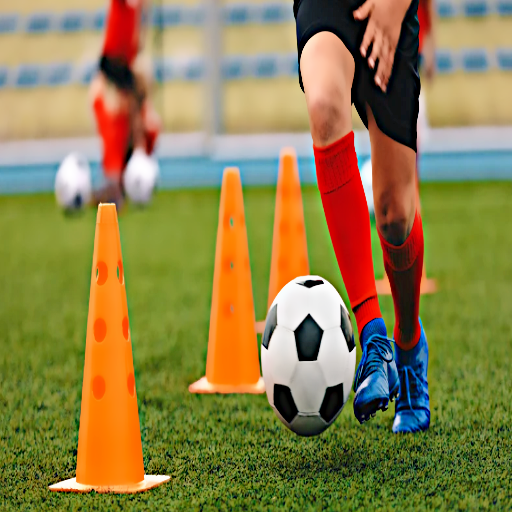
In order to train effectively for football, players should focus on a combination of drills that tackle several facets of the game.
- Strength and Endurance Conditioning Drills
Incorporate exercises such as squats, lunges, and sprints to build endurance and muscle strength. Additionally, resistance training can increase explosive power, vital for tackling and sprinting.
- Skill-Based Drills
Dribbling, passing, and shooting drills should be practiced to improve ball control and accuracy. Furthermore, small-sided games help simulate match scenario,s which aids in decision-making.
- Speed and Agility Drills
Use cone drills, shuttle runs, and ladder drills. These will enhance reaction time, speed, and footwork.
- Tactical Drills
Focus on communication and strategy execution by practicing defending and attacking formations with positional play and team coordination. These exercises are helpful for teamwork.
- Aerobic and Anaerobic Training
Combine long-distance running to build stamina with HIIT (high-intensity interval training) to mimic the change of pace in a football match.
Utilizing a combination of these drills ensures well-rounded progression and prepares them for obstacles on the field. Further, regularly tracking performance and making training plan changes will heighten performance.
Agility Drills: Enhancing Speed and Footwork
Agility is essential in athletic performance, especially in football, where a player’s ability to control their body and change direction rapidly can determine success. Drills that improve agility help players improve their reaction time, balance, speed, and overall effectiveness on the field. With the recent recommendations, below are some agility-improving exercises to try.
- Ladder Drills
These drills are best for improving foot speed and coordination. Players can develop rhythm and accuracy through specific patterns such as high knees, lateral shuffles, and in-and-out steps. According to research, analyzing the performance of foot speed for those with consistent practice of these drills suggested an increase of up to 15% over six weeks.
- Cone Drills
Cone drills, like exercises like the “T-Test” and “Weave Shuttle, ” improve lateral movement and forceful acceleration. They are essential in simulating real-life game situations where players must dodge opponents or quickly reposition themselves. Sports scientists report that athletes practicing cone drills three times a week for four weeks showed much improvement in changing directions.
- Reaction Drills with Visual Cues
These drills, like their name suggests, use tools such as flashing lights or directional commands to sharpen a player’s ability to respond to unpredictable situations. With consistent training over a period of two months, reaction time improvement was recorded to be an average of 20%.
- Bounding and Plyometric Drills
Bounding drills like single-leg hops and lateral bounds develop power and increase balance and stability. When combined with box jumps, players can improve their vertical and lateral explosiveness, which is vital for performance.
- Timed Sprint Circuits
Add sprint circuits with rapid stops and cuts. These circuit types reflect the actual requirements of the matches, and after regular sessions, agility can be improved by up to 30%.
Monitoring the number of drills completed per minute or reaction times during each session provides measurable results. These exercises, combined with mobility and flexibility training, reduce the chances of injury while keeping players agile.
Strength Training: Building Power for Football Players
Strength training aims to improve a football player’s overall performance. It is concerned with developing power, endurance, and even injury prevention. Strength training assists the football player with squats, deadlifts, bench presses, and other multi-joint movements to build functional strength that can be used on the field. Recent statistics have shown that athletes who modify their training to include strength training have more explosiveness, which aids in sprinting and tackles during the game.
Also, combining resistance exercises with plyometric moves increases muscle elasticity and force generation. This improves power and enhances the essential explosive, quick, fast-twitch muscles. Using performance measurement tools or wearables that track progress helps athletes make data-driven decisions concerning their training programming. When done with proper balance between training for strength, speed, and flexibility, TRAINING transforms a PERSON INTO A TOUGH, RESILIENT, CONDITIONED PLAYER.
What Are Specialized Football Training Techniques?

Customized football training techniques concentrate on advanced skill and physical attribute development vital for the game. These include specific drills like passing for the quarterbacks, route running for the receivers, and footwork for the linemen. Agility ladders, cone drills, and shuttle runs are commonly used to improve speed, quickness, and change of direction.
Football-specific strength and conditioning exercises help develop explosive power and endurance. Game simulations and scrimmages also enhance tactical and teamwork skills. Sound technique, consistency, and a strong emphasis on safe training methods facilitate skill development.
Advanced Tactical Training for Coaches
Coaches at all levels today must undergo advanced tactical training with the most up-to-date methodologies and employ modern techniques like video analysis software and performance tracking tools. These tools help redefine the strengths, weaknesses, and patterns in the gameplay of every individual player. There are emerging trends and strategies like high-pressure systems or zonal marking, and integrating such modern strategies will give a coach a competitive advantage. Advanced Tactical Training prepares for every scenario that could unfold during a match through individually instructional sessions focused on team cohesiveness.
The Role of Football Sleds and Resistance Bands in Training
Football sleds enhance endurance, strength, and teamwork, while resistance bands activate muscles, are flexible, and prevent injury.
| Tool | Purpose | Benefit |
|---|---|---|
|
Football Sled |
Strength, form |
Power, teamwork |
|
Resistance Band |
Flexibility |
Injury prevention |
|
Sled Drills |
Endurance |
Cardiovascular |
|
Band Exercises |
Muscle activation |
Agility, stability |
Using Ladders and Hurdles for Agility Training
Ladders and hurdles are integral for refining agility, speed, and coordination in athletes from different sports. Combined with modern training techniques, these still prove to be highly effective tools for performance enhancement. Based on the latest trends retrieved from Google’s search engine, athletes and coaches often question whether ladders and hurdles are appropriate in developing explosive movements or reaction time. The answer is definitely yes. These tools sharpen footwork accuracy and improve neuromuscular reaction, which is crucial for the rapid change of directions. With the addition of relative drills such as lateral ladder steps and hurdle hops into training, athletes stand to achieve significant improvement in balance and acceleration, enhancing their overall performance on the field.
How Do Coaches Utilize Football Training Equipment Effectively?
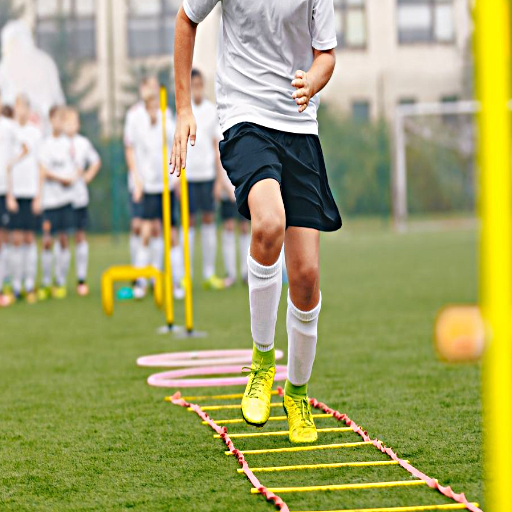
Equipment is integrated during practice sessions to help with skill acquisition and focuses on developing football game performance. The student player’s movement and acceleration are trained using cones, hurdles, and agility ladders, enhancing footwork, coordination, and speed. Resistance bands and weighted vests serve their purposes in building strength and endurance. These training tools are also used for developing technique and power in tackling; these are working with tackling dummies and sleds. Coaches and trainers have their own set of drills that replicate particular game scenarios so that students acquire skills that can be used when they step onto the field. Each player is assessed regularly to track their improvement and tailor the training programs accordingly. This eliminates waste and increases the utilization potential of the equipment.
Creating a Comprehensive Training Session
Every session element must be carefully meshed together to maximize skill and practical training. A warm-up that preps the body and prevents injuries must be included alongside drills that tackle specific skills like tactical skill, speed, strength, and agility. Players should also be able to simulate scenarios in practice to learn to apply skills. Furthermore, reinforcing communication and teamwork fosters unity between players, which is essential for winning matches. Stretching and hydration are recovery methods that allow players to progress safely beyond limits without the risk of burnout or overtraining. Coaches using sports science with advanced age data can easily build the optimum training plan with player and team goals aligned for the best performance.
Real-Time Feedback with Football Training Technology
The ability to offer feedback instantaneously within football training technology enables athletes and coaches to adjust performance in the moment. Players can receive real-time feedback on various metrics, including speed, distance covered, heart rate, and shot accuracy, through advanced tools like wearable sensors and video analysis. When paired with AI-powered systems, this feedback becomes much more meaningful, helping to refine skills through tailored guidance. For instance, bright balls or motion tracking systems enable athletes to focus on specific techniques targeted at areas that need improvement. Enhanced performance on an individual level becomes possible alongside improved strategic planning on a team level. Training thus becomes efficient and precise.
Reference Sources
- UT Football Automated Practice Target -Describes the creation of a machine for quarterback practice, which integrates into training routines.
- Building a dataset and developing a video event classifier for football -Look into machine learning algorithms’ role in analyzing football training and gameplay.
- Application of deep learning technology in strength training of football players and field line detection of football robots -Explores the application of deep learning concerning training in football robotics.
- Top Badminton Training Machine Manufacturer and Supplier in China
Frequently Asked Questions (FAQs)
Q: What are the types of football training?
A: Football training includes physical training, technical skill development, tactical understanding, and specific training focused on speed and agility. Each type helps players improve their overall performance in the game.
Q: What is the importance of football training drills?
A: Football training drills are essential for developing specific skills, improving teamwork, and enhancing overall game performance. They provide structured practice opportunities for players to refine their abilities and understand game strategies.
Q: What football equipment is necessary for training?
A: The right football training equipment includes cones, agility ladders, training balls, and protective gear. These pieces of equipment help enhance skill development and ensure safety during practice sessions.
Q: How does protective equipment contribute to football training?
A: Protective equipment is essential in football training as it helps prevent injuries during practice. Helmets, shoulder pads, and shin guards are safety equipment that ensure players can train effectively and safely.
Q: What role does football technology play in training?
A: Football technology, such as performance tracking devices and training apps, provides coaches and players with valuable data to analyze performance, refine training methods, and improve overall game strategies.
Q: How can I choose the best football training equipment?
A: To choose the best football training equipment, consider the specific training needs, the quality of the equipment, and its durability. Look for equipment that enhances skill development and suits the training environment.
Q: Why is a training equipment guide essential for football coaches?
A: A training equipment guide helps coaches understand the essential training equipment needed for specific football drills and practices. It ensures they can provide quality training to their players while maximizing safety and effectiveness.
Q: How can advanced training improve football skills?
A: Advanced training focuses on refining specific techniques and game strategies, helping players elevate their football skills. It often includes specialized drills and competitive scenarios that simulate real-game situations.
Q: What is the role of wear and tear in football practice equipment?
A: Wear and tear on football practice equipment can affect its performance and safety. Regularly inspecting and maintaining equipment ensures that players can train effectively and safely without equipment failure.