The right decision regarding selecting a tennis stringing machine can uplift a player’s enthusiasm and performance whether professional or club player, a tennis pro shop owner, or a coaching professional, the right machine can do wonders. With so many options, including manually operated stringers and more advanced electronic models, figuring out the right one has become a daunting task. This guide will introduce you to every concept so you can make confident choices. We cover everything, including the most critical features and machine categories, to ensure you select the most appropriate option. Remove the hassle of decision-making because we have everything covered when choosing a tennis stringing machine.
What is a Tennis Stringing Machine?
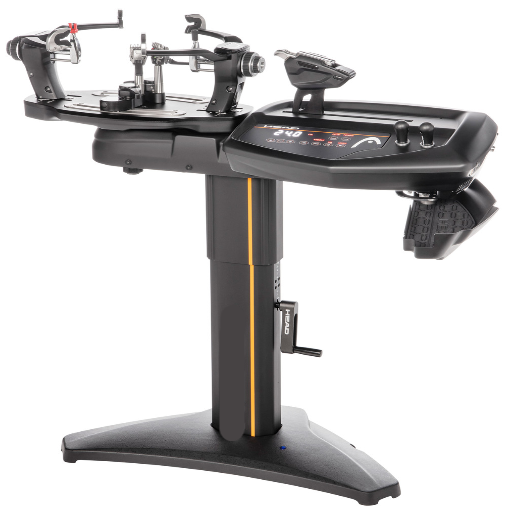
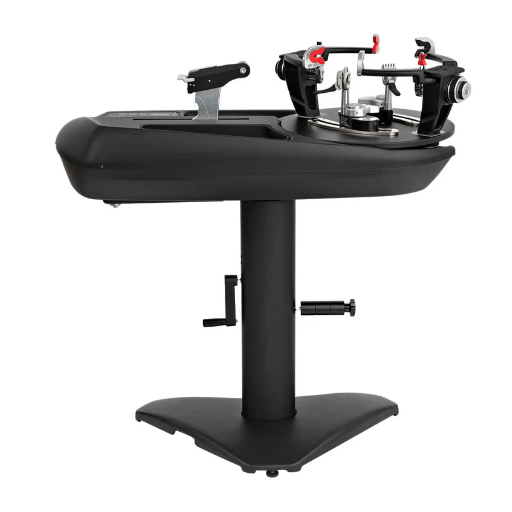
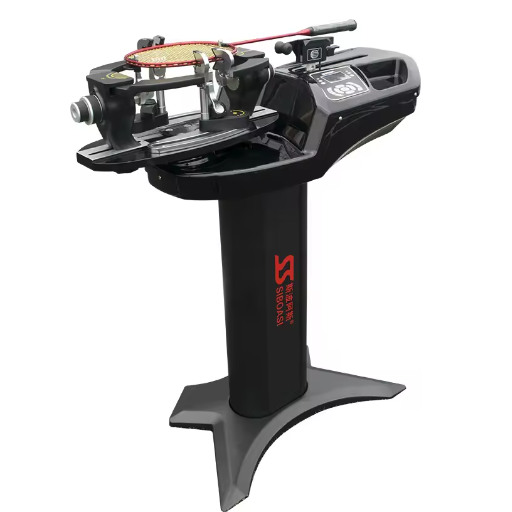
A tennis stringing machine is a specialized device for installing or renewing the strings in a tennis racket. It maintains the proper and equal tension of the strings, which is vital for the performance and durability of the racket. These machines have different types, such as manual, electronic, or ones that require various levels of precision, convenience, and user friendliness. With the help of a tennis stringing machine, players or stringers can maintain uniform string tension, which enhances the playability and effectiveness of the racket on the court.
Types of Stringing Machines Available
Understanding the users’ needs is crucial when looking at stringing machines and their types. The following three are the most common types available in the market:
- Drop-Weight Machines
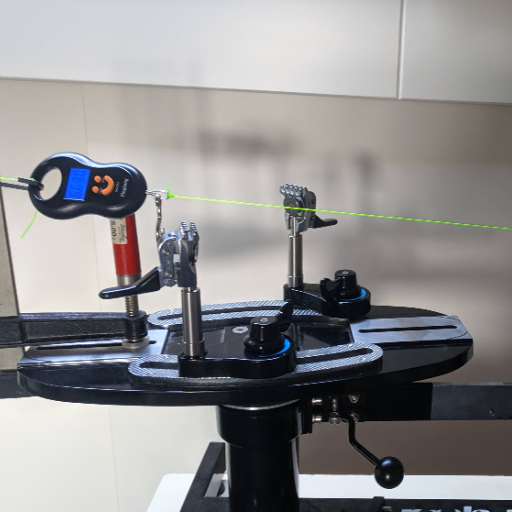
Whether you are a recreational stringer or a beginner, drop-weight stringing machines will fit your needs perfectly. Unlike other machines, they rely on mechanical lever systems, meaning the weight arm must be adjusted manually. If you are shopping on a budget, these machines are ideal as they are portable, cost-effective ($200 – $600), and don’t require extra costs for a calibrated system. It is important to remember that the lower price comes with a trade-off of increased effort needed to maintain the desired tension.
- Crank (Manual) Machines
Unlike the drop-weight variants, crank stringing machines use a spring tension with additional crank components, allowing them to function faster. Due to their affordability and speed, these stringing machines are great for intermediate or semi-professional stringers. You can find these machines between $700 and $1500, and while they are faster and better at providing consistent results than drop-weight models, they don’t match the precision of electronic models.
- Electronic Machines
Among the various types of electronic machines, electronic stringing machines stand out as the most sophisticated and professional. They employ an electronic motor to meticulously regulate tension, which applies precision tension to the strings. These devices are known for their accuracy and reliability across the board. Features such as pre-stretching, constant pull tension, and different speeds are included in most models. These machines start at $1,500 and can exceed $5,000 for advanced versions. Professional stringers or tennis shops where accuracy and productivity are essential will benefit immensely from electronic machines.
Benefits of Using a Tennis Stringing Machine
- Improved Accuracy and Reliability
The most advanced automatic tennis stringing machines guarantee proper string tension within minimal margins. This results in uniform string beds, which are beneficial to a player’s performance on the court.
- Optimum Use of Time
Stringing machines are extremely useful in busy tennis shops or during tournaments. Their advanced features, such as adjustable speed settings and pre-stretch functionalities, make restringing a racket easier and faster.
- Advanced Performance of the Strings
Due to applying equal tension and constant pull, these types of machines offer reduced undue stress on the strings, which enhances their durability and thus provides greater value for the players.
- User-Defined Settings
Modern stringing machines allow stringers to adjust tension, speed, and pre-stretch settings accurately, thereby enhancing the players’ needs and preferences.
- Financial Benefits to Professionals
While the initial cost can be significant, tennis shops and professional stringers stand to gain financially in the long run by servicing their customers faster and more accurately, leading to increased customer retention and satisfaction.
How to Choose the Best Tennis Stringing Machine for Your Needs?

Selecting the optimal tennis stringing machine revolves around your requirements. Clarifying your budget and whether the machine is intended for personal use, a tennis shop, or professional restringing services will significantly assist in decision-making. Ease of operation, stringing precision, and overall durability should also be assessed. Accurate for both beginners and casual users, a manual machine may be ideal. Fast-paced professionals tend to gravitate towards electronic machines due to advanced features like precise tension control. Flexibility with various racket types and robust construction for durability are additional must-haves. Check user reviews and the brand’s reputation before purchasing to allow for a better informed decision.
Factors to Consider When Selecting a String Machine
When choosing a stringing machine, think about the type of machine, ease of use, price, features, and performance. Affected by Google’s search engine data, here is what else you should pay attention to:
- Type of Machine: Select drop-weight, crank string machines, or the electronic ones. Although more costly, electronic machines offer the most time and effort-saving precision, which is excellent for professionals or frequent stringers. For occasional use, a drop-weight or crank machine may suit you better.
- Ease of Use: Stringing machine interfaces that are intuitive and engineered to be ergonomic enhance ease of use, which significantly saves time and energy. Check for quick-clamp systems and adjustable height that improve comfort levels.
- Price: Entry-level stringing machines can be purchased for as low as 300, whereas high-end professional machines cost several thousand dollars. Be sure to consider your stringing needs alongside your budget.
- Durability and Maintenance: After all, the strength of a machine made out of materials such as steel and aluminum matters; while a sturdy machine guarantees durability, frequent use renders maintenance with reputable brands necessary.
- Stringing Speed and Precision: Electronic machines with automated tension settings and superior speed and precision work best for stringing several rackets in a record-short duration. They ensure fast and accurate tightening.
- Portability and Size: Portable machines are easier to carry for personal use or travel compared to larger and heavier units, which are typically much more suitable for professional settings and stores.
Be sure to look at the reviews and compare multiple brands before choosing a product. As Google suggested, some moderately priced and popular models include the Yonex Protech 8, Gamma Progression II, and Wilson Baiardo, with varying availability and specifications.
Comparison of Manual and Electronic Stringing Machines
When comparing manual and electric stringing machines, the former is cheap and easy to transport, whereas the latter is fast, can be used effortlessly, and is very precise.
| Key Point | Manual | Electronic |
|---|---|---|
|
Cost |
Affordable |
Expensive |
|
Portability |
Lightweight |
Heavy |
|
Speed |
Time-consuming |
Fast |
|
Precision |
User-dependent |
Automated |
|
Ease of Use |
Requires skill |
Simple |
|
Maintenance |
Low |
High |
What Are the Best Tennis Stringing Machines on the Market?

The best tennis stringing machines vary according to your specific needs and budget. Professionals love the Wilson Baiardo because of its ergonomic design and electronic tensioning system, significantly simplifying its use. Players and weekend hobbyists will appreciate the Gamma Progression II for its midrange price and dependable performance. At the lower end of the market is the Tourna 600-ES, an entry-level machine that offers superb value for money and versatility. Each of these options provides excellent performance, catering to specific user requirements.
Top-Rated String Machines Reviewed
It is always essential to remember some key considerations when choosing a stringing machine. Wilson Baiardo is still very popular among professional players and stringers, which explains why it is always one of the top search results alongside mid-level machines like Gamma Progress II and Wilson Baiardo. They are popular due to their advanced features. Tourna 600-ES also has a good market, especially among beginner users looking for lower-priced machines.
The data clearly shows that the stringing machine needs to be tailored to the user’s experience, frequency of use, and budget.
Features of the Best Tennis Stringing Machines
Your game might improve if you design your stringing machine around a user’s experience. A second-tier model doesn’t add as much value to players looking for performance. The following features tackle most requirements when looking for the most suitable tennis stringing machine.
- Tension ,Accuracy, and Range
Stringed machines enable efficient string adjustment and provide options for tensioning them. An upscale stringing machine should be equipped with a range of tension options, 20 to 90 pounds, for example, to suit players and rackets of different types.
- Clamping Systems
String slippage is minimized through the use of improved Advanced clamping systems, such as fixed and swivel clamps. These systems are popularly used by professionals due to their unparalleled precision and durability.
- User Friendliness, Adjustability, Easy Maintenance, and Ergonomic Features
Adjusting tension level through a digital interface is easy, but tightening it or shifting mounted systems will securely set all racket sizes. The most ergonomically designed machines geared towards usability will garner customer loyalty.
- Quality of Build and Durability
A sapphire-coated aluminum frame equipped with a swivel screen withstands regular and impactful use. Unlike a restive or commercial setting, professional users prefer machines built from high-grade materials, as they tend to perform for prolonged periods.
- Portability, form factor, and configured size
These are some of the key aspects that should be considered, especially for new users with tight spaces and who are on the move. They highlight the practicality of compact stringing machines alongside their functions.
If they focus on these features, players and stringers can select a machine that meets their short-term and long-term goals.
Price Range and Value for Money
Stringing machines, which offer value based on their features and intended usage, range in price from 300 for basic manual models to 6000 for advanced electronic machines.
| Key Point | Manual | Electronic |
|---|---|---|
|
Price Range |
$300–$800 |
$1500–$6000 |
|
Value |
Budget-friendly |
High precision |
|
Features |
Basic |
Advanced |
|
Usage |
Casual |
Professional |
|
Durability |
Long-lasting |
Maintenance needed |
How Does a Racquet Stringing Process Work?
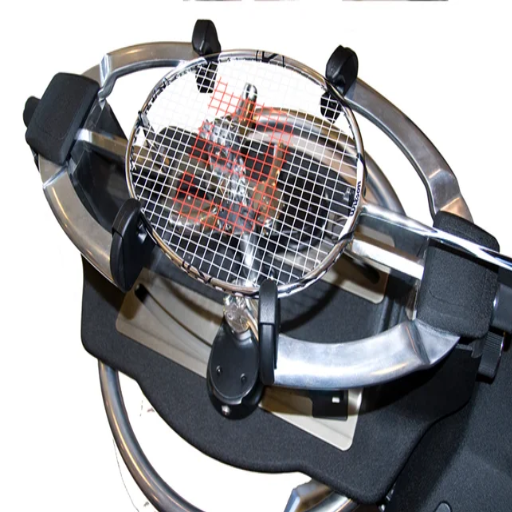
Racket stringing consists of several main steps:
- Strapping Down the Racquet—A stringing machine is secured in place, holding the racquet still during the installation process.
- Cutting Bound Strings Loose: If old strings are present, they are plied away carefully to avoid agitating the frame.
- Measuring String – The New string to be set is measured and cut to the appropriate size beforehand.
- Setting the Mains- Vertical strings are to be set first, as they are strung in the primary direction afterwards.
- Strumming Crosses – Horizontal strings are interlaced through previously set primary strings while applying consistent pull in both directions.
- Securing String Ties: A pulled-off knot in the string is formed to maintain elastic tension and thereby maximize durability.
All steps taken require care to achieve the right amount of pressure and optimum gauge so that precision and performance are achieved without minimizing the balance. Well-strung racquets further assist players by optimising brace power, control, and comfort.
Common Mistakes to Avoid While Stringing
- Incorrect Tension Settings—One of the most common errors is using the incorrect tension setting for the strings. Pulling the strings too tightly can control aggravating string breakage, while pulling too loosely may lack power and accuracy. Check that you follow the recommendations specific to your racquet and play style.
- Skipping a String—Omitting the stringing of all the mains or crosses can affect the racquet’s properly strung multispectrum. Cross-checking the work ensures no strings are omitted in the process.
- Uneven Tension Application—Inconsistent tension setting bestows a string with unbalanced and unplayable characteristics. A handy stringing machine achieves proper balance.
- Improper Knot Tying—String tying after putting them under power tension is a must. A knot tied too soft will cause a string to lose tension over time and harm the entire machine if left decoiling.
Not Replacing Old or Damaged Strings – Using worn-out or frayed strings can alter your game for the worse and even damage the racket frame. Make sure to keep checking over the racket regularly when playing, and change out the strings as required. Steering clear of these mistakes will help the players ensure their racquet is strung to enhance performance, comfort, and lifespan. Moreover, stringing professionals or guides will elevate your stringing skills and save you from expensive blunders.
Tools and Accessories Needed for Racquet Stringing
To effectively string a racquet, it is essential to have the necessary tools and accessories; it ensures that everything is in order. For your convenience, I have compiled a list based on what the experts propose, along with what’s new:
- Stringing Machine: Manual, electronic, and tabletop machines are all considered models; however, they all serve the same purpose of ensuring proper string placement and tension.
- String Cutter – useful for safely removing the strings from the racquet.
- Pliers—Pulling strings and locking knots to the proper accuracy is a breeze with either bent-tip or needle-nose pliers.
- Cutting Scissors – These scissors do not twine while trimming, making them a perfect choice.
- Grommet Grinder or Setter—This tool repairs or maintains the grommet so that the strings can glide through freely.
- Measurement Tape or Ruler – ensures the correct string is on the racquet before stringing.
A starting clamp’s job is to secure the string efficiently and give the grip needed while tuning the strings.
- Grommet grinders can easily maintain or repair grommets and the bearing surfaces of pavilion frames.
- A sustaining tool will also ensure that the frame remains secure, optimizing the chances of cracking or warping while being strung.
- This reel enables the user to strengthen it while keeping it tangle-free for additional string organization.
- For maximum accuracy, use this calibration tool to set the secondary stringing machine.
- Grommet workout string holder enables the maintenance or repair of the tubular grommet canals designed for the cables. They also assist the frame gimbals of insolemn interfaces.
- The stringing pouch or organizer is easy yet perfect for storing the tools and is accessible.
- Grommet grinders allow the repair of gasket bearings or tunnel cuts, improving their glide RT. The framework enables the parts guides.
When these tools are readily available, the entire stringing process becomes much more efficient and professional, improving both performance and prolonging the life of the racquet.
Reference Sources
- Automatic Bead Stringing Machine -Discusses the machine construction and its efficiency.
- The Risk Assessment of a Stringing Processing Line -Assesses the safety and operational risk in stringing processes.
- Creation and Analysis of Checklists to Improve Racquet Stringing Performance -Aims at enhancing stringing techniques and machine manipulation.
- Top Stringing Machine Manufacturer and Supplier in China
Frequently Asked Questions (FAQs)
Q: What are the best stringing machines for beginners?
A: The best stringing machines for beginners often include models like the Klippermate and the Babolat series. These machines offer affordable ease of use while providing quality string jobs.
Q: How does the tensioning system affect my tennis racquet’s performance?
A: The tensioning system directly impacts the string tension, which can affect your control and power when you play tennis. Higher tension generally offers more control, while lower tension provides more power and comfort.
Q: What is the difference between a drop weight machine and an electric machine?
A: A drop-weight machine uses gravity to set the tension, which can be more affordable and portable. An electric machine like the Neos 1000 offers a quicker and more precise tensioning system, making it ideal for experienced stringers.
Q: Are expensive machines worth the investment for casual players?
A: Expensive machines may not be worth the investment for casual players unless they plan to restring frequently. However, more affordable options can still provide quality stringing for those who play tennis occasionally.
Q: What type of machine should I choose to string badminton rackets?
A: If you want to string badminton rackets, consider a machine with a turntable and a 6-point mounting system. These features provide better support and stability for the lighter frames of badminton rackets.
Q: How important is the build quality of a stringer when selecting a machine?
A: The build quality of a stringer is crucial as it affects durability, stability, and precision during racket stringing. Higher-end machines typically offer better build quality, resulting in a more reliable stringing experience.
Q: What features should I look for in the best stringing machines?
A: Look for features such as a wise tension head, floating clamps, and a 6-point mounting system. These features enhance the string tension’s accuracy and the string job’s overall quality.
Q: How can I upgrade my current stringing machine?
A: You can upgrade your current stringing machine by adding attachments like a higher-quality tensioner or clamps. Alternatively, consider investing in a new machine known for its advanced features and ease of use.
Q: What is the benefit of using a swivel clamp during stringing?
A: A swivel clamp allows greater flexibility and easier access to the string when performing racket stringing. This can significantly enhance the stringing process’s efficiency and improve the quality of the final result.
Q: Why is the tension range essential for stringing my tennis racket?
A: The tension range is crucial as it allows you to customize the string tension according to your playing style and preferences. Different tensions can affect your control, power, and comfort while playing tennis.