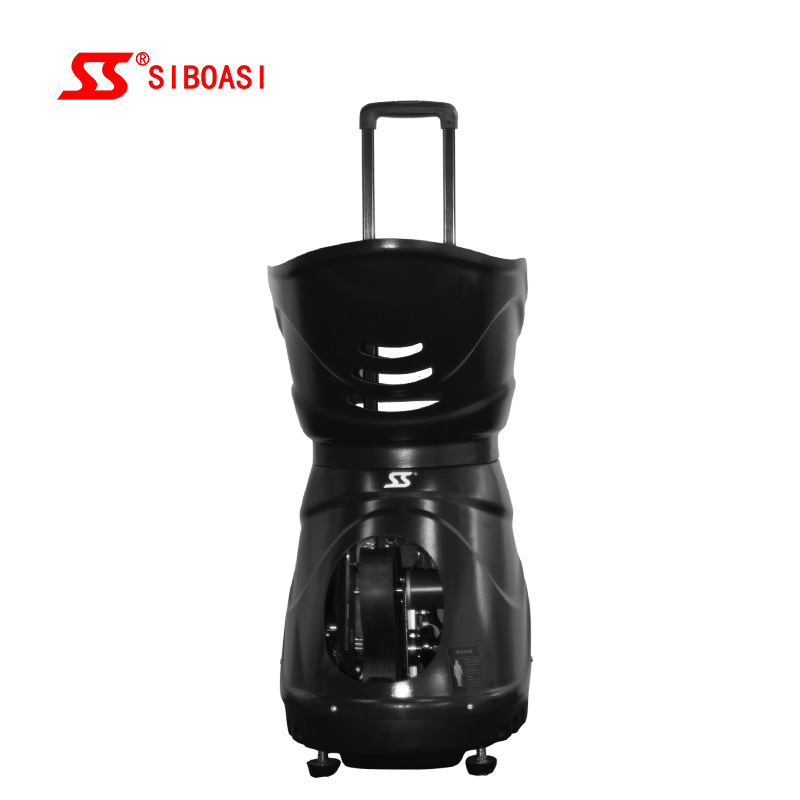
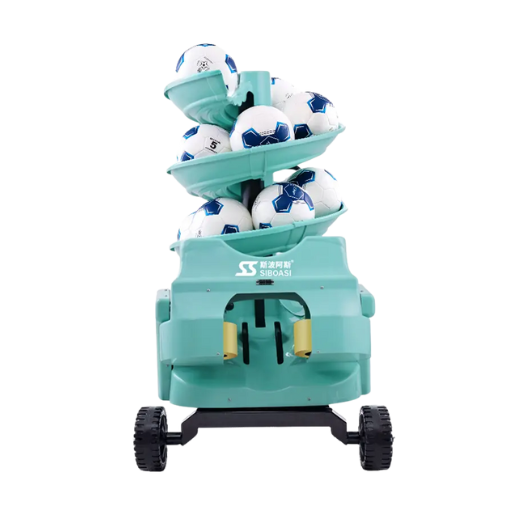
The return of a serve in tennis is one of the most difficult and at the same time the most rewarding skills to acquire. It involves very quick reflexes, strategic anticipation, and pinpoint accuracy — all of which can be developed through organized practice. A ball machine can be regarded as one of the most powerful instruments for the improvement of your serve return game. This article will take you through targeted drills, providing you with step-by-step directions on how to make the most of your practice sessions with a ball machine. Beginners intending to build efficiency or advanced players wanting to sharpen their technique equally would find these drills game-changing. So, keep reading to find out how your serve return can be turned into a dependable weapon on the court!
Introduction to Serve Return Practice
1Importance of Serve Return in Tennis
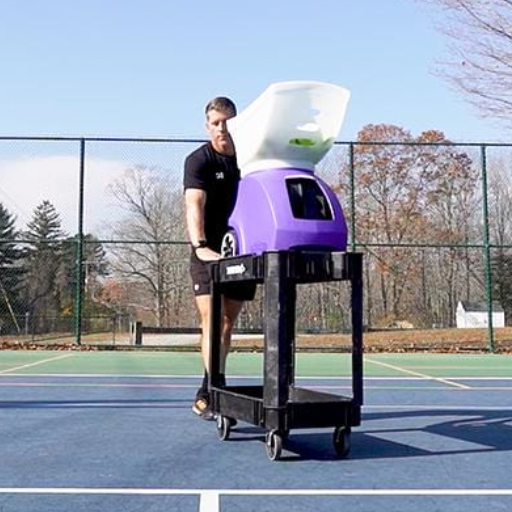
In tennis, the serve return is an essential and government shot that can even determine the result of a match. It is the first chance that a player gets to counter the serve of his opponent and thus gain the upper hand in the rally. With a strong return, the players can even neutralize a potent serve and thus shift the momentum and set the pace of the rally in their favor.
For starters, the understanding of the very basics of serve return has the effect of establishing a strong and stable foundation of being consistent and confident on the court. The main concern with timing, stance, and a short swing leads to the players easily dealing with a wide range of serves. In contrast, the high-level players can utilize the serve return as a weapon of their strategy, aiming at the precise areas of the court where their opponent is most vulnerable.
Working on serve returns through drills improves accuracy, reflexes, and the ability to cope with different serving styles. It also helps a player to react to very hard situations during the matches. Whichever way you want to be either a player who maintains rallies or a player who always wins points from the return, serve return practice is the best way for one’s overall performance and the success of his or her tennis career to come.
2Benefits of Using a Ball Machine for Practice
The practice of using a ball machine for tennis comes with a lot of different benefits giving players of all levels the opportunity to not only develop but also perfect their skills. One of the major benefits that come with it is the aspect of consistency. The ball machine can deliver balls at a constant speed, spin, and height thus letting the players repeat shots on the same area without worrying about a human partner doing the opposite. This consistency is very important for techniques like forehand, backhand, and volley to be mastered and at the same time, be able to build the memory of the muscle involved.
Another great point that comes from using a ball machine as a practice partner is that the practice session can be tailored according to the individual player’s needs. A good number of ball machines come with the option of controlling speed, spin, and oscillation which makes it possible for players to set up different positions similar to those in a real match or choose to work on their weak areas. The ball machine caters to each player’s needs whether they are ranging from reaction time, footwork, or spinning balls to their ability to handle different balls. The machine allows the player to train according to their schedule and speed of development.
Last but not least, a ball machine does away with the need for one and the same practice partner thus making it possible to have uninterrupted training times anytime they are needed. This freedom allows for more practice which is a major contributor to improvement in any sport. Furthermore, players can concentrate solely on their technique, without any kind of pressure from the outside, which in turn leads to increased confidence and accuracy over time. All in all, the use of a ball machine in training is a smart and efficient method of improving one’s tennis skills and performance.
Setting Up Your Ball Machine
1Choosing the Right Ball Machine for Your Needs
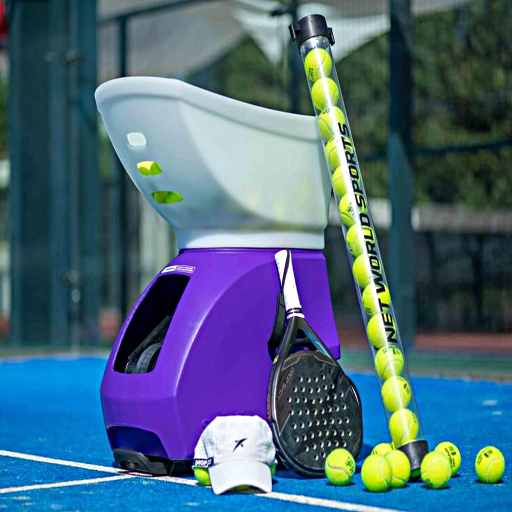
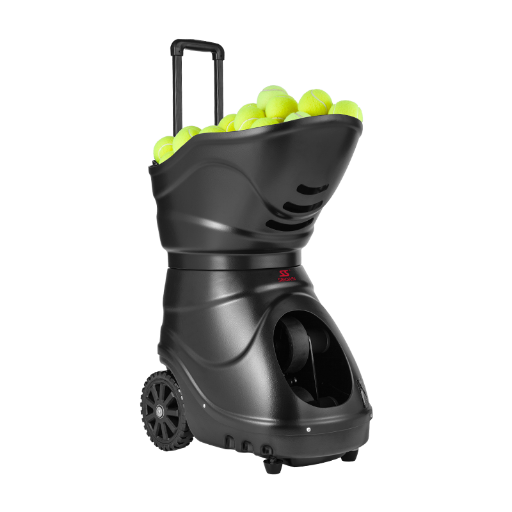
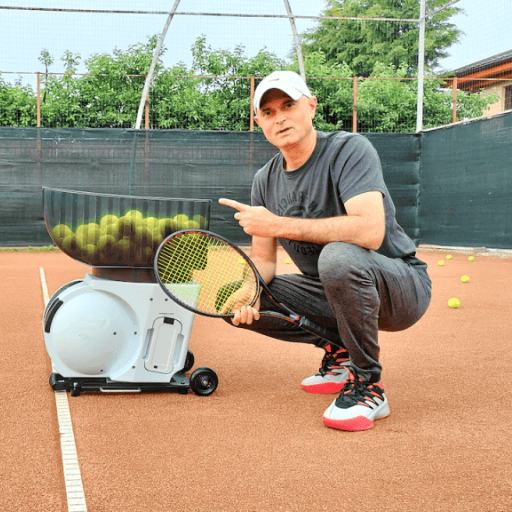
The selection of the best ball machine depends mainly on the current skill level and training goals. A novice may use a ball machine that has even a basic oscillation feature and it may prove effective in building up consistency and accuracy in the beginner. Intermediate or advanced players, however, might require those machines which could provide the professional settings with speed variations, spin control, and random shot patterns, thus giving more options for the training sessions to be tailored.
Moreover, portability and user-friendliness are factors that are very important. If you are a frequent mover with your training, then a compact and lightweight ball machine with wheels or a handle could be the right option. Moreover, check the machine’s power source; whether it is battery-operated or needs direct connection to a power outlet; and consider how this relates to the place you would be using it most of the time. A battery-powered ball machine that is mobile can be taken to the outdoor areas without the concern of being near an electricity source.
Consider the machine’s storage capacity and the duration of its usage. In a way, the higher the number of balls a machine can take, the less often it has to be refilled; hence time is saved for a more efficient practice session. Durability is equally important because it shows that your machine can cope with the forced usage for years. Considering these factors, you will make a purchase of a ball machine that would not only be a training partner but would also lead you to the tennis victories.
2Optimal Setup for Serve Return Drills
For effective serve return drills to be arranged, place the tennis ball machine on the opposite side of the court, thus imitating the position where an opponent would serve. The machine’s settings shall be adjusted to the trajectory, speed, and spin of a typical serve which you want to practice returning. You may start with slower speeds and simpler spin settings, then gradually the difficulty as your confidence grows. This increase in difficulty guarantees proper technique and consistency.
It is good practice to focus on the machine alignment to different angles of serving like wide serves, body serves and serves down the T. The frequent changing of serving directions helps to imitate real match situations and this in turn helps you to develop the needed reflexes and adaptability for making successful returns. Make sure that the hopper is loaded with enough balls to allow for uninterrupted sessions which will consequently lead to maximized practice efficiency.
Court markers in the form of cones or targets will be very beneficial to the drill. Returns depending on your strategy for example crosscourt for defensive shots or down the line for attacking play can be placed to the specified areas. Footwork should be incorporated into these drills—before every return correctly position yourself to imitate match conditions and at the same time strengthen muscle memory.
3Adjusting Settings for Different Shot Types
Adjusting the settings on a tennis ball machine for the different types of shots is one way to personalize the training sessions based on the specific skill to be worked on. Defensive shots can be improved by having the machine imitate slower, higher-arching balls. With this setting, players can go through the whole thing of positioning and returning at the same time with controlled and consistent strokes. Move the trajectory and speed to make the ball land in spots that are like defensive situations.
If you want to practice offensive play, then you need to change the machine to give faster, flatter balls at low trajectories. This configuration allows the players to work on attacking strokes like down-the-line winners or high-spin forehands. The issue of the machine’s pace and direction is how to get precision and power in aggressive exchanges.
For rehearsal of volleys or drop shots, the machine should be adjusted to give balls that are short and low. It takes quick footwork and reflexes, but then that is the kind of practice one wants to have for net play. Rotating through these settings during drills not only prepares players for different match situations but also improves their overall adaptability and performance on the court.
Key Techniques for Effective Serve Return

1Understanding the Basics of Return of Serve
The technique of returning serves in tennis necessitates not only proper placement of one’s own body but also a good measure of anticipation. All the same, one should take a stance just off the baseline, since you are going to be balanced and able to move swiftly in any given direction. Always keep the enemy’s silhouette and racket in your sight when he is serving, since these may tell you a lot about the trajectory and speed of the ball. A strong ready position is a good way of responding fast and efficiently.
However, timing and technique are also necessary for a successful return. Embrace the speed of the serve with a short backswing and direct your entire attention to making the ball touch your racket in a clean way. Moreover, keep your eye on the ball all the time while going through the motion and directing it with a controlled and stable follow-through. In the case of aggressive serves, it might be more efficient to use a block or chip return method; on the other hand, faster serves give the player the chance to play a more offensive shot.
To sum up, various types of returns practiced will provide you with the required versatility. When training for forehand and backhand returns always keep in mind that you are going to face different serve styles: flat, slice, and topspin. Muscle memory and confidence are built through repetition making it possible for you to quickly adapt to different match conditions and opponents. Focusing on these fundamental aspects could eventually lead the players to gaining a lot of consistency and effectiveness in serving.
2Footwork Techniques for Quick Positioning
To keep a player always in the perfect spot, the footwork techniques that one would use would be very effective. A player with proper footwork is able to get to the ball quickly and also is able to stay in the best position for hitting the ball back. The quick footwork is built on the principles of having a low center of gravity and staying on the toes, which not only gives quicker reactions but also smoother movement on the court.
One of the most important methods of footwork is the split step. It is defined as a small hop that is done at the time when the opposite player is hitting the ball. The split step not only gets your body ready to go in any direction but also tires your leg muscles a bit and adds to your overall readiness. A combination of the split step and short, controlled strides allows you to take more ground without the risk of overcommitting or losing your balance.
Moreover, the lateral movements are crucial for positioning. Side shuffles are a good way of quickly adjusting the position without stepping over each other, thus keeping the player balanced and aligned. Drills that incorporate these lateral movements will ensure muscle memory and confidence in the ability to adjust to the different court situations are built up in the players. With commitment to practice, footwork will become habitual and consequently, speed and accuracy in the game will be significantly improved.
3Utilizing Spin and Topspin in Returns
Spin and topspin are two indispensable methods in tennis returns that give players a chance to control the ball’s flight, speed, and bounce. Spin is the rotation given to the ball when hit, and if used properly, it can make the ball very hard to predict for the rivals. Topspin, which is one of the spins where the ball rotates forward, is the most sought-after type since it provides a high, even bounce and allows the player to hit with more precision and margin above the net.
In order to perform a powerful topspin return, pay attention to the upward brushing on the ball with a low-to-high racket motion at the time of contact. This method not only escalates the spin that is put on the ball but also gives a safer path above the net and increases accuracy in aggressive returns. Players who have a good command over the topspin can easily shift from defense to offense and keep controlling the rally by providing a combination of speed and bounce that forces their opponents to be in less favorable positions.
Practicing topspin and other spins daily is very important for a player to develop his/her consistency and skills. A few simple drills like having a rally with controlled topspin shots or working with a coach to perfect racket angles can produce great results in performance. Making spin a part of your game plan can lead to better spots, fewer mistakes, and ultimately help you to win the matches with the improved adaptability and finesse.
Drills to Enhance Serve Return Skills
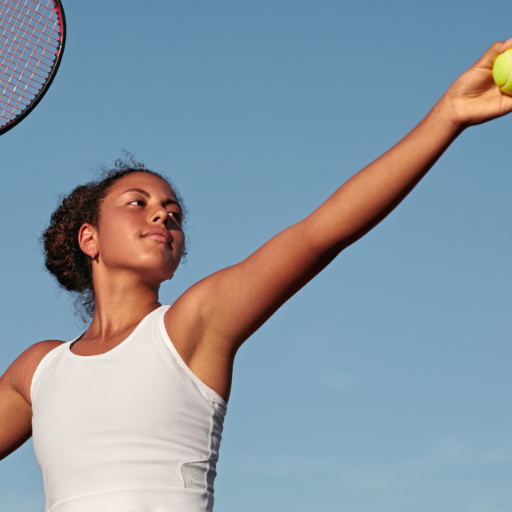
1Advanced Drill: Attacking the Serve
A tennis ball machine may prove to be a very efficient technique to hone your expertise in precision serving and to gain the use of the gun along with the self-assurance. The exercise is particularly oriented towards imitating different types of serves and subsequently preparing your receptions in the best manner possible, all under the supervision of a controlled setting.
Initially, set the ball machine with a variety of spins, speeds, and spots. Position yourself at the baseline and be ready to respond. Focus on the spin and the pathway of the serve’s trajectory while still being in a balanced position. Trying to deal with these variations in spin and speed will not only strengthen your ability to rule over different types of serves but will also make you more proficient in returning the serve.
Then, proceed to practice such returns that are at the same time aggressive and controlled. Identify spots on the court such as deep cross-court or at the server’s feet and where your return will put the server on the defensive, and aim there. The more you drill the returns, the more you will develop your timing and shot making skills. The next step would be to increase the difficulty of the ball machine by making it deliver faster or more tricky serves. This will help you get in shape for tough match situations and eventually prepare you for high-pressure situations.
2Game-Like Scenarios with the Ball Machine
Practicing game-like scenarios with a ball machine is an effective method to simulate match conditions and improve your overall performance. First thing first, set the ball machine to a rally situation with a mix of forehand and backhand shots. You will have to move across the whole court which will be a nice way of practicing your footwork and balance while hitting consistently under pressure. Try to get the same rhythm and intensity as if you were in a real game.
Then, carry out the attacking plays by programming the ball machine to send shorter balls that would just land around the service line. Come to the court and take these shots when they are coming, aim for deep corners or angled winners. This not only makes you have an aggressive mindset but also gets you ready to take the control of the point in real matches when the opportunity comes.
In the end, defensive skills are to be trained by having the machine shoot fast and deep balls towards both sides of the baseline. The main thing is to hit either defensive lobs or neutralizing returns which will allow you to get back to a good position. Such practice builds up your strength and power to turn uncomfortable situations into opportunities for counterattack during the game.
Common Mistakes to Avoid
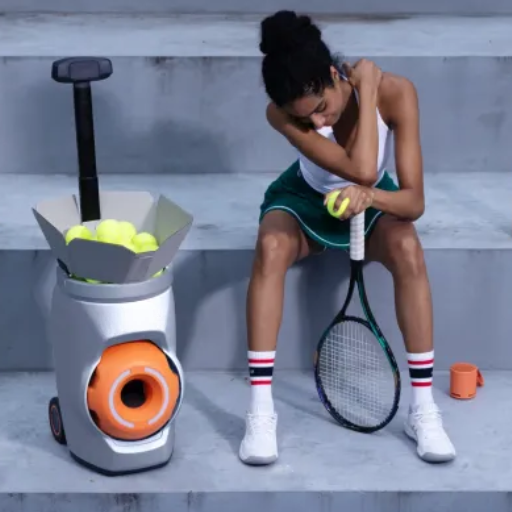
⚠Overlooking Footwork Fundamentals
Footwork in tennis is a very important part of the game that is often overlooked by the players regardless of their levels. A player with bad footwork will not only find himself late at the ball but also badly positioned which, in turn, makes the shot weak or even inaccurate. Besides, being in the right spot means not only the ball has been reached but the player is also already in position and ready to hit the ball. The players who give importance to footwork fundamentals will naturally have the balance and control over their strokes that are better than others.
In order to fix the main reasons for poor footwork, make sure you are not doing the big lunges but rather using the quick small steps and active stance to get around the court. You’ll be able to react more quickly and also move around more easily between your shots if you keep yourself light on your feet. Dangling out your lateral and rear movements as dominant parts of your drills can work wonders on your court coverage throughout the whole match. So, it’s still very important to practice and perfect your footspeed even to the point that it becomes part of your control which always comes from purposive, well-practiced movements.
Finally, keep up with your recovery routine after each shot. One of the most common mistakes is not going back to the right court position after striking the ball which, in turn, exposes the player to the opponent’s next shot. Those who take part in specific footwork drills during their practice will find it easier to develop the muscle memory and thus acquire the skill of proper positioning. Eventually, the control and mastery of footwork fundamentals will add new life to your game and at the same time minimize the number of errors committed due to improper positioning.
⚠Neglecting to Vary Shot Types
Varying shot types is a non-negotiable strategy for bringing up general play and close the gap of points in any racket sport. Not doing so, however, makes one very predictable and thus, it is easier for the rival to outplay him/her. A player who is completely dependent on a particular shot type limits himself/herself the opportunity of versatility in all the different aspects of the game and thus, the chances of taking advantage of the weaknesses of the rival are also reduced.
A good exemple of changing shot types is to alternate between attacking strokes and softer, more controlled shots. When this happens, the opponent is forced to make constant adjustments in his/her position and timing to the change. Such variation disrupts the opponent’s rhythm and hence they won’t be able to settle comfortably in the pattern. Furthermore, mastering of the different types of shots allows a player to operate with tools which can tackle the different styles and strategies of the opponent very well.
Incorporating different stroke techniques into the training schedule is very important for a player to get used to and hence gain confidence through versatility. The use of drop shots, lobs, slices, and drives in training routines not only helps players to improve their overall skills but also to increase their strategic options during competitive play. In the end, shot variation is an enhancement both in a player’s game and in their winning capability over their opponent.
⚠Rushing the Return Process
Hurrying up the return process sometimes results in major mistakes that can jeopardize a player’s being able to win the match during the duel. Players who hurry their return may miscalculate the ball’s path which leads to wrong positioning or uncoordinated shots. Such hasty moves can grant the rival the upper hand, thus allowing him/her to monopolize the rally and dictate the game’s tempo.
As a measure against this, the players should emphasize on keeping cool and preparing their return properly. Good footwork is vital for the body’s correct positioning and also for each shot having a solid foundation. Moreover, following the ball right after its being hit by the opponent leads to better decision-making in the return execution. Reducing the speed of thinking, even when under pressure, will definitely assist players in making returns that are more calculated and precise.
Another way to get return accuracy better is by developing a routine that is not only consistent but also aids the player over time. Players can work on their timing to the maximum through practice drills that mimic game scenarios and at the same time, the drills increase the players’ adaptability to varying play styles as well as their reaction speed. By putting more focus on patience and technique, the players not only increase their potential to be able to handle difficult situations without getting rattled but also, as a result, improve their performance and gain a competitive advantage over their rivals.
Frequently Asked Questions (FAQ)
References
- NMU Commons – Northern Michigan University
This study investigates the reliability and consistency of tennis ball machines, providing insights into their effectiveness for training.TENNIS BALL SERVE SPEED ESTIMATION – OAKTrust
This research focuses on tracking tennis ball serve speed, which can be relevant for understanding serve return training with ball machines.Wall For Tennis Practice
This document includes drills and simulations for serve return practice, emphasizing reaction time and coordination, which are key for ball machine training.Top Tennis Ball Machine Manufacturer and Supplier in China