A tennis ball machine can be the very thing that takes your game to the next level, whether you are a novice aiming to learn the fundamentals or a professional player trying to polish your skills. The machine’s features make it a court asset that can hardly be dispensed with; the consistent shooting, match scenario simulation, and working at the speed that is just right for your skill level are all among the advantages it offers. This article will look into drills that are planned and targeted to develop a player in every aspect, be it the footwork or the forehand, the reflexes or the stamina. As we explain how these drills can let you become the best player that you can be on the court, get set to shift your tennis training to a higher level!
Introduction to Tennis Ball Machines
What is a Tennis Ball Machine?
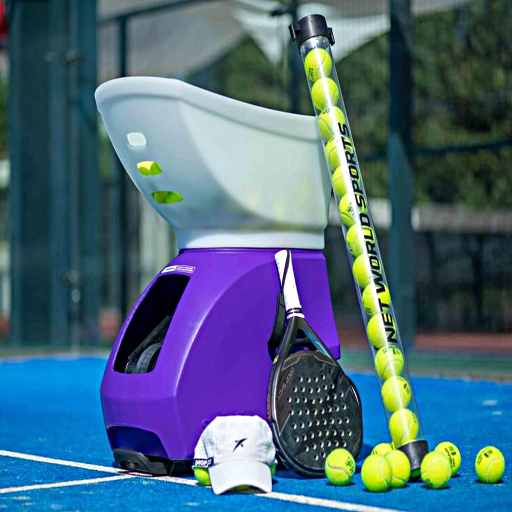
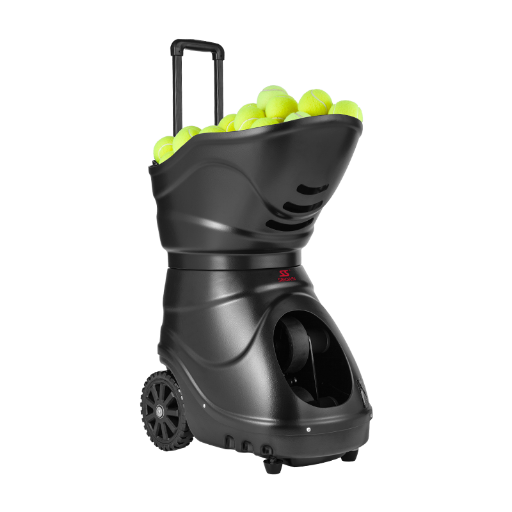
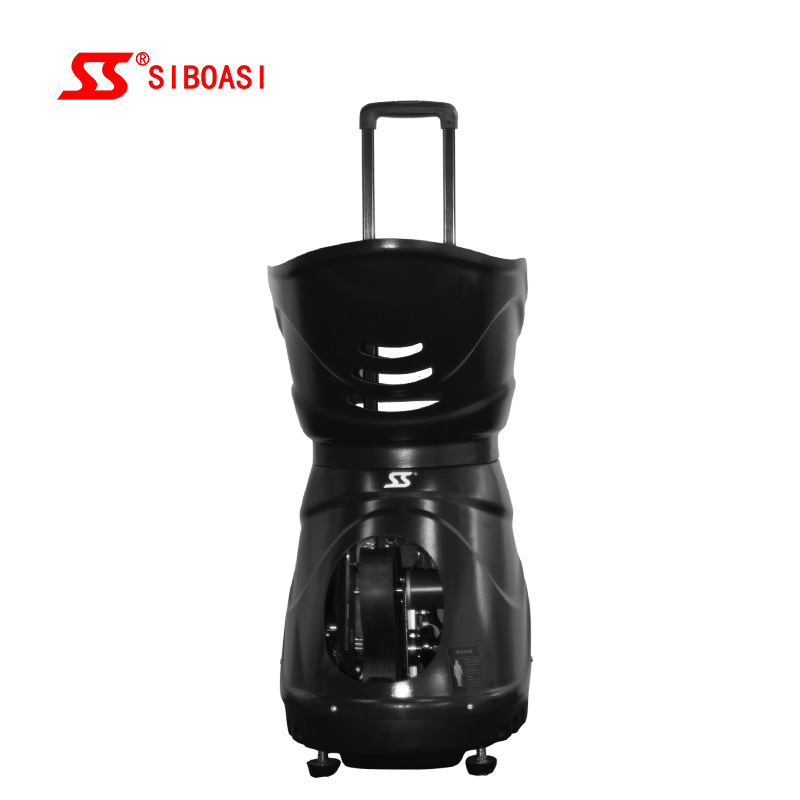
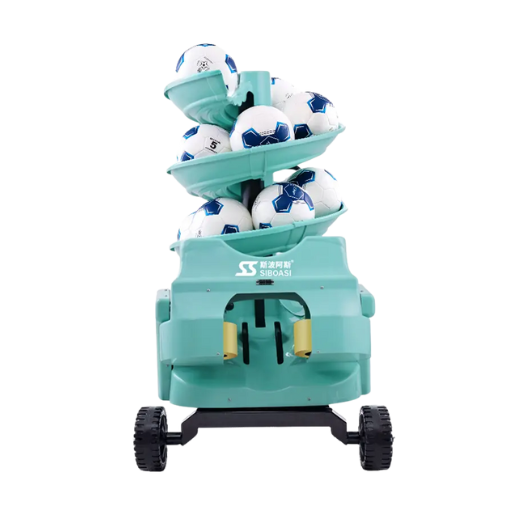
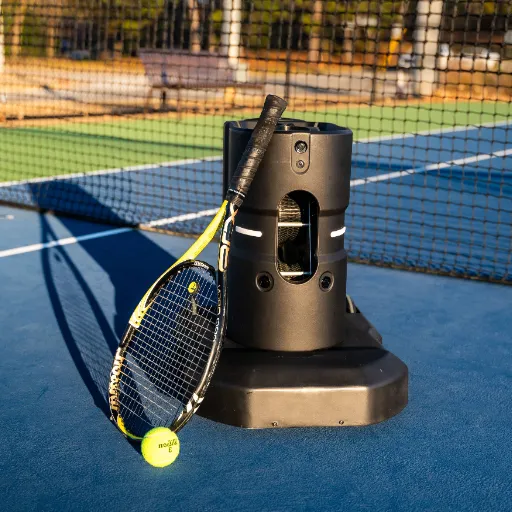
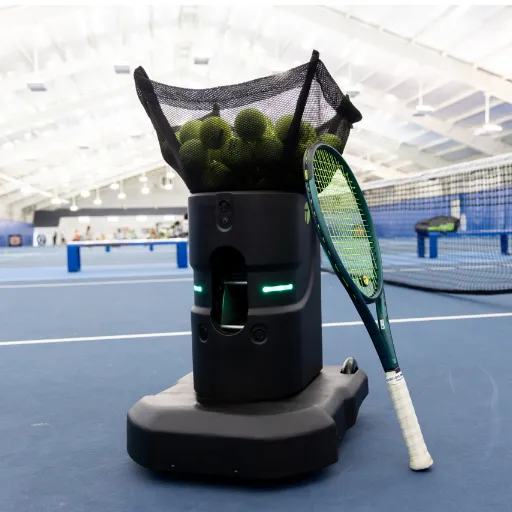
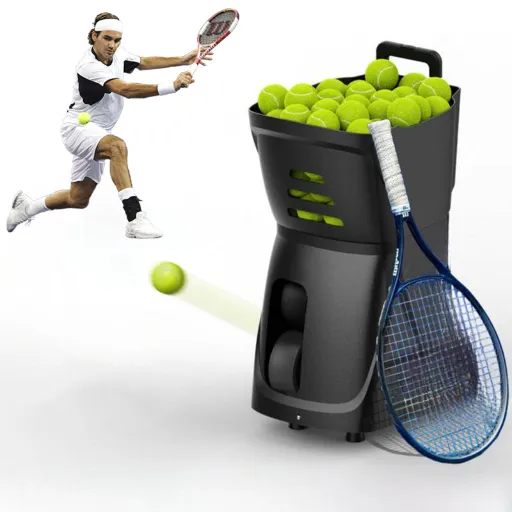
A tennis ball machine is a contraption that feeds the player with balls automatically at different speeds, angles, and intervals, and thus it is very helpful to practice the game. It is a wonderful tool for both inexperienced players and the ones at the top looking for a way to practice their game through a certain area consistently.
The above machines come with adjustment options that let the user change the vertical and horizontal positions of the balls, which in turn lets him practice his strokes like forehands, backhands, volleys, and even lobs. Moreover, many machines come with features that let the user practice with different match conditions, like changing the ball spin and speed, so that he get a complete training experience. Such an option allows players to work on their weaknesses and develop quickness, coordination, and strength promptly.
The main purpose of a tennis ball machine is to provide the player with consistent and repetitive ball feeds, thus minimizing the practice partner’s role. This characteristic of the machine makes it a very convenient and trustworthy training aid for those individuals who want to develop their skills slowly and at their own time. The machine, with its power of creating different situations on the court, is considered an indispensable gadget in a player’s toolbox when it comes to stepping up their game.
Benefits of Using a Tennis Ball Machine
1Constant Practice
A tennis ball machine is the constant in-ball-delivery tool that players can use to practice different strokes with the utmost precision. The value of this repetition is that muscle memory is maximized and the player’s skill is finely tuned. The machine is not a human partner, which means it will not get tired or make accidental shot variations; as a result, every ball delivered is the best one for the skill being developed.
2Customizable Settings for Adaptability
Hi-tech tennis ball machines are supplied with the latest customizable settings that allow the user to select speed, spin, and trajectory. Players can recreate the different game situations from quick volleys to slow lobs and even backspin, hence they get comfortable with the different scenarios. For instance, the top-notch models like the Lobster Elite 3 can perform the 50 most varied and personalized drills, which gives the player the chance to practice at their level or according to their needs.
3The Convenience of Solo Training
A tennis ball machine does the work of two, so the use of the partner for training is not necessary; thus, the ball machine is the best solution for solo practice at any time of the day. This independence allows the player to fully concentrate on their skills without the hassle of arranging a partner’s schedule. A survey done recently reveals that 68% of amateur tennis players noted an upsurge in their performance after three months of regular use of a ball machine.
4Appropriate for All Levels of Competence
No matter whether you are a novice practicing beginner strokes or an expert player working on your game, a tennis ball machine fits all levels. A novice can work at a lower speed and easy drills, while a pro can make it harder by using difficult spins and fast shots. Research has shown that the key to developing skill levels is the combination of consistent repetition and custom drills, which is precisely what this device offers.
5Physical and Mental Gains
Using a ball machine not only improves tennis techniques but also makes the player more active and thus aerobic fitness, agility, and endurance are enhanced. From the mental aspect, it is a benefit that the players’ focus is boosted, their reaction times are improved and their strategic thinking is strengthened by the game-like situation that is simulated.
With the help of technology, these machines are becoming more and more intelligent and easier to use, thus tennis players getting the necessary tools to improve their game both efficiently and effectively.
How to Choose the Right Ball Machine
First of all, when you are about to choose the right ball machine, think about your skill level and the purpose of the training. If you are a beginner, simpler models with basic features might be the ones you will benefit from. In contrast, if you are an advanced player, then grouping drills, changing shot speeds, and adding spin to the balls might be the main factors you are looking for to get the machine to simulate real match situations. Knowing your needs with precision helps the machine to be in line with your practice objectives.
The next step is to look at the machine’s portability, size, and how easy it is to set up. If you are going to change the machine’s location a lot, then go for a lightweight model with wheels and a handle for easy moving. Together with that, check the capacity of the machine—how many balls it can hold—and also check the battery life or power requirements to see if they are in line with your usual practice session length and location.
And lastly, do not forget to consider your budget along with the machine’s longevity. It is hard not to consider the cost first, but spending your money on a well-constructed machine may ultimately result in long-lasting dependability and worth. Thus, a tennis ball machine that is not only made of durable materials but also has positive feedback from past consumers would be ideal. So, by taking into account such vital aspects, you will be able to pick a ball machine that, in return, will best nurture your tennis growth.
Understanding the Benefits of Tennis Ball Machine Drills
Consistency in Practice
Tennis skill improvement heavily depends on the factor of consistency, and tennis ball machines give an unmatched opportunity to humans to do so. One can still be a machine and deliver balls at a uniform level of speed, height, and spin despite the varying nature of human partners who get tired or inaccurate at different times. This perfectness grants players the liberty to work on their form and technique without worrying about unpredictability, which is a major concern while practicing with a human partner. As one keeps practicing with the constant ball placement, a strong muscle memory gets built up which is very important for performing the shots instinctively in the match situation.
Along with this, a tennis ball machine also permits the players to focus their practice in a sharp manner towards their weak points. Whether your aim is to work on your down-the-line shots, sharpen your aerial skills, or even conquer the serve, the machine can be set to exactly what you need. Such a regimen of consistency allows progressive growth since the difficulty can be gradually raised to that of the skills you have gotten to That is why with the help of targeted and frequent drills; you will not only have the opportunities but also the less time needed for improvement.
Moreover, a player who uses a tennis ball machine for consistent practice will be a confident player in the end. Positive shot-making in the course of drills goes on to reinforce the habit of good shooting, and in this case, it is the shooter-take-a-habitat-on-court-perform one. With the passing of time, this kind of practice not only makes the shot perfect but also readies you to deal with stress and pressure in competitive situations. Consistent practice makes the player get used to stress and pressure in competitions thus setting a solid base for their gradual growth and achieving their tennis goals.
Building Endurance Through Drills
The endurance that is built up through drills is a must for an athlete’s improvement in stamina, strength, and overall performance. Drills that emphasize endurance are specifically made to force players out of their comfort zone and thus develop the physical and mental toughness necessary to win in a competition. When mixed together, high-intensity exercises and recovery intervals form the basis of this conditioning technique whereby the body is trained to keep working hard for a prolonged period of time.
One major technique for endurance building is interval training. This technique works by alternating vigorous exercise with short periods of rest, thus exposing both aerobic and anaerobic systems. For instance, running over the full court followed by a quick break won’t just improve your heart and lungs but also your muscle endurance. Gradually coughing up such training not only gives the stamina but also. forsees the body being able to perform excellently in a pressurized environment.
Moreover, there is the need for endurance drills to marry physical conditioning and sport-specific movements to obtain their full potential effectiveness. The exercises of prolonged rallying or match situation simulation will not only make players good but will also equip them with technical and tactical sklls. These are the kinds of drills that are going to enable athletes to keep their focus and energy throughout the game, which is the least that can be done for improved performance and readiness to compete.
Enhancing Precision and Accuracy
In order to enhance precision and accuracy in sports, a diligent and disciplined mental as well as physical practice is required. Athletes can indeed derive a lot of benefits from such repetitive drills, which simulate game situations, and they can gradually develop their movements and responses accordingly. These drills need to be aimed at the essential skills and at the same time should promote the right technique, so that the athletes can gradually build up the right habits for excellent performance.
Feedback is another vital factor. Athletes who receive regular performance reviews from coaches or through recorded footage can spot where they need to improve their technique. With the clear, practical feedback, players can make the necessary adjustments, which will not only help in correcting the errors but will also lead to enhanced accuracy. This whole process develops a cycle of learning and improvement, which in turn leads to greater precision in their respective sports.
Furthermore, mental training has to be factored in as well. Through activities like visualization and mindfulness, athletes are trained to stay focused even under pressure, which is very critical for their accuracy during the competition. By picturing perfect execution and being relaxed, athletes can not only increase their precision but also their decision-making power, thus resulting in a higher level of performance.
Types of Tennis Ball Machine Drills
Beginner Drills for Fundamental Skills
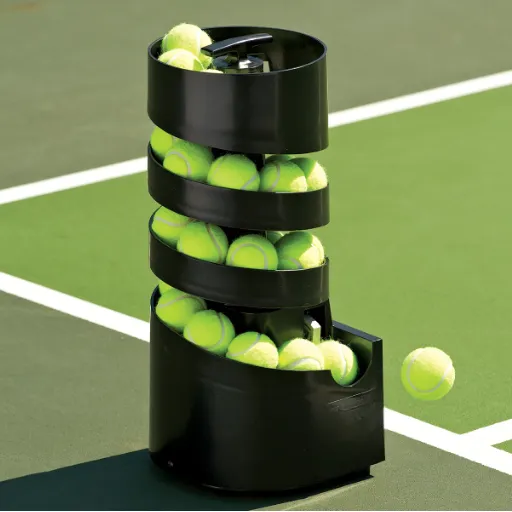
Tennis ball machines can be beneficial for a beginner’s training when it comes to developing the most basic skills as they allow the learner to work in a controlled and focused way on one thing at a time. A great first drill for the beginner that about everyone can recommend is the practice of a consistent forehand and backhand stroke. Set the machine to a medium-speed level and have it shoot balls straight down the middle of the court. This way, the player will learn the right grip, footwork, and swing techniques and at the same time concentrate on hitting the ball with the right part of the racket.
One more drill helps the player in the area of reacting faster and moving better. The machine is placed in such a way that it sends shots alternatively to the forehand and backhand sides. The player has to learn to rapidly change his or her stance and body position in order to be able to return the ball each time. This drill builds up court positioning and agility, which are the basic skills for winning matches as one can consistently perform at their best if they have these two skills.
The last drill focused on being a beginner teaching how to volley. The machine is placed at the net and the player practices shooting and limiting their movement to short, controlled steps. The balls coming from the machine should be at a low speed so the player gets to practice his or her timing and hand-eye coordination. Doing these drills regularly enables the players to easily move on to more complex skills later on since they would have laid down a strong foundation in the first place.
Intermediate Drills for Skill Development
A practice through tennis ball machines gives the option to focus on particular areas of a player’s improvement and thus is a valuable method to develop intermediate skills as it is consistent in giving the same shots. Specific stages require specific drills, in this case, accuracy, control, and adaptability development along with the player’s game. Below are a few examples of practices which are efficient for grinder players:
Cross-Court and Down-the-Line Shots
The purpose of this exercise is to teach the directional control and shot accuracy. The next step is to set the machine to feed the balls towards one side of the court alternately and then work on hitting cross-court shots with forehands or backhands. After this, switch to another practice which is down-the-line shots for building precision and versatility in match scenarios. Strengthening of the decision-making and shot placement skills is done through alternating of these shots.
Approach and Volley Combinations
To develop a skill of net play and transition, set the ball machine to deliver shorter balls mid-court. The player agrees with the machine about the ball coming to his or her left side and does first hit with the most aggressive forehand or backhand followed by a controlled volley. Repeating this pattern becomes a habit and enables smooth transitions from baseline to net, which is the key area in-game to make it win all over the court rule.
Lob Returns and Overhead Smashes
This is a drill that gets players ready for lobbing and doing overheads which are offensive. The machine needs to be adjusted to deliver high-arching lobs at the baseline. Player practices returning lobbing with control and then playing the role of a rapacious attacker by smashing if he sees an opportunity. thus this combo help one develop precision while playing under pressure and also improve one’s footwork and anticipation.
The drills planned for the intermediate level should be hard for the players but at the same time help them to practice and strengthen their basic skills. Gradually increasing the difficulty by changing shots, applying foot positioning, and insisting on consistency through repeated practice will surely empower players to successfully face more challenging game situations.
Advanced Drills for Competitive Play
Tennis ball machines are a great support for advanced players who want to improve their competitive play. The above-mentioned drills are very focused and adaptable, which are the critical elements for surviving in a high-level match.
Target Practice with Depth Variation
Use the ball-matching device to alternate deep and short shots. Concentrate on keeping up the very marked shots to the particular zones on the court. This activity multiplies your ability to decide the depth and direction, thus exercising your power over the rally and your opponent’s weaknesses.
Volley and Net Play Drills
The ball machine has to be set in a way that quick volleys are simulated by shooting the ball at the shoulder level and from different angles. Try to be very fast at the net and keep your form right even under pressure. This will help the quickness of reaction, and you will also be able to perform very delicate volleys in a rapid game.
Angle and Approach Shots
The machine should be configured to feed wide and angled shots. Footwork drills should be combined with shot placement so that you can focus on hitting angled winners or effective approach shots. This will help you practice the transition from defense to offense, a skill that is very important for advanced-level competitions.
Incorporation of these drills into regular practice sessions guarantees the preparation and challenging of players with highly demanding match scenarios.
Step-by-Step Instructions for Key Drills
Forehand Consistency Drill Using a Tennis Ball Machine
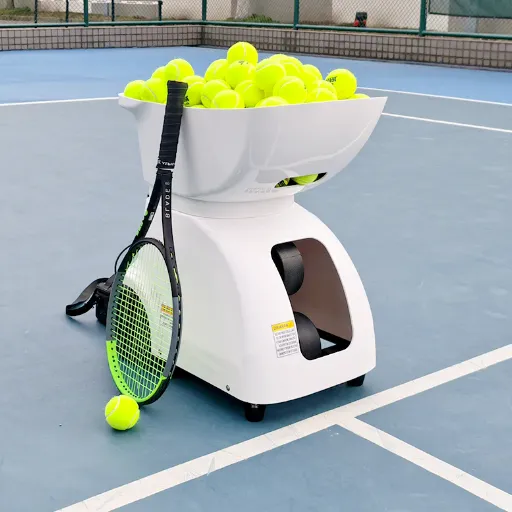
The use of a tennis ball machine can be one of the best ways to improve your forehand consistency. The first thing you have to do is the machine should be set to deliver balls at a steady rate and moderate speed allowing you to concentrate on your form. Take your forehand stance and try to hit each ball with the right technique that includes a smooth swing and a complete follow-through.
The key here is to keep the depth and placement of the ball within the court constant, preferably hitting the cross-court or down-the-line areas. After a while, you can add some more difficulty and adjust the ball machine to the point where it can imitate a real match by altering the ball’s spin, speed, and trajectory.
You can, for example, practice returning shots with high topspin or balls that are low and fast. You can also incorporate drills for foot movement by positioning yourself to recover and reset between shots, thus improving your capacity to handle a wide range of incoming angles and positions on the court.
For advanced practice, work on the directional control by aiming for specific spots on the court, like the corners or sidelines. This way, your ability to dictate points during matches will be developed. Regular practice with a tennis ball machine for forehand consistency drills not only sharpens accuracy and control but also increases endurance and strengthens positive muscle memory for competitive play.
Backhand Power Drill
The backhand power drill is done with a tennis ball machine, concentrating on the development of power and control in your backhand shots. Start by adjusting the machine to a medium speed and light topspin. Stand at the baseline and pay attention to using the correct technique, making sure that your shoulders are completely rotated as you make a swing and that you’ve gone through the ball. This forms a robust base for powerful and consistent backhand strokes to be developed.
As a way of encouraging your advancement, change the setting of the ball machine to mimic more difficult shots such as higher spin rates or deeper placements. Work on stepping into your shots, taking advantage of your body weight for power, and targeting different areas of the court like the corners or deep baseline. This way, you will be able to adapt to different match situations and also gain confidence in using the backhand as a powerful weapon to attack.
The main factor for success in backhand power drills is consistency. Give your main focus to keeping proper form during every session, and little by little, raise the intensity as your strength and technique increase. Using a tennis ball machine for your regular practice not only enables you to develop power and precision but also refines your timing and strengthens your capability to cope with high-pressure situations during matches.
Net-Play Volley Drill
The net-play volley drill is very good for training and developing your reflexes, precision, and control during quick exchanges at the net. Your position is in front of the net and ready for the volley, holding the racket at chest height, with the racket slightly tilted forward. A tennis ball machine can deliver balls at a low trajectory and moderate pace, mimicking realistic volley situations.
First, practice forehand and backhand volleys alternately, concentrating on the firmness of the grip and the controlled nature of the movements. The drill’s secret is soft hands and fast reactions. Swinging too much should be avoided; just a firm punch with the racket that has a minimum of follow-through should be done, so that the ball lands back into the court with the right accuracy. Gradually, the tennis ball machine should be made to increase to simulate actual game conditions effectively.
One can add difficulty by integrating dynamic movements, such as side-to-side footwork, where one maintains balance and focus on every volley. This method of training not only improves hand-eye coordination but also increases agility and proper positioning. Consistent practice with these drills will turn your net-play into a skill you have confidence in and that won’t let you down, even in tight match situations.
Serve Return Drill
The serve return drill is a crucial practice to enhance your training time and hone your skills to take on difficult serves successfully. Start with the ball machine that is already set up to serve balls at different speeds and angles, hence mimicking realistic playing conditions. Place yourself in the right position as if playing a match and concentrate on returning the serve with control and precision each time. This way, the drill conditions you to be ready for both straight and the less predictable serves.
Returning balls to the specific target zones on the court is one way of increasing the intensity. This is going to help you in developing the placement of the returns as a part of the strateg,y instead of being just concerned with getting the ball over the net. Markers or cones can be a very useful way of showing and aiming for the areas where you want the ball to land, thus reinforcing your accuracy even when you are under pressure.
Additionally, you may want to include footwork in the drill to replicate complete match conditions. When the ball is served to you, move from the neutral position to the right return stance. By doing so, you will be developing the habit of staying light on your feet, concentrating on the serve while being ready to return it efficiently. If you make it a point to regularly practice this drill, you will not only improve your serve return skills a great deal but also become a tougher opponent in the court.
Maximizing Practice Efficiency with a Tennis Ball Machine
Setting Up Your Ball Machine Correctly
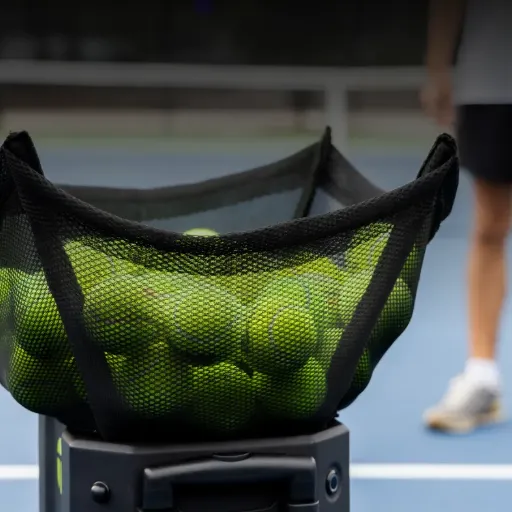
In order to set your tennis ball machine up correctly, first, do choose a flat and stable surface for its placement. Clear the area of obstructions and put the machine at a distance that is in accordance with the type of practice you are going to do. For instance, if you are going to practice volleys then the machine should be closer to the net, and if you are going to practice groundstrokes, then the machine should be near the baseline. Don’t forget to adjust the angle and trajectory to your skill level and drill focus.
After that, load the tennis balls into the machine one by one and do not overdo it so that the machine works smoothly. Also, check the settings of the machine like ball speed, spin and feed rate to match your practice intensity. A lot of machines let you customize drills for example, adjusting for topspin, backspin or flat shots, use these options to create different scenarios you would encounter in a real match.
Lastly, before switching on the machine, stand in your ready position. Start with slow ball speeds and then gradually increase as you become more skilled. Place markers or targets on the court to measure your accuracy and consistency during drills. Set your settings and your positioning up to maintain the condition of each practice session to be the best. Thus, this methodical manner will not only improve but also prepare you professionally for match play through the skills that are built.
Managing Drill Duration and Intensity
Managing drill duration and intensity is key to not only optimum training but also avoiding overexertion. To start with, every practice should comprise of moderate-intensity and high-intensity drills in equal measure, adjusted to your fitness and skill level. For novices, drills of 15-20 minutes are enough to acquire basic skills without exhaustion. The advanced ones, 30-45 minutes can be the time for trials and endurance-building.
Besides that, controlling intensity is also very important in order to keep away from burnout or injury. Employ basic signals like your heart rate or perceived effort and make sure you are always working in a range that is sustainable. Give short breaks between each drill to rehabilitate and keep the quality of performance. As an illustration, after a high-intensity drill, take 1-3 minutes off and then switch to the next activity. The planned breaks not only prevent overtraining but also help you to keep your attention during the entire session.
Finally, with regard to your goals and progress, change the drill duration and intensity. If your goal is to enhance agility, going for shorter, explosive drills may be the right choice. Conversely, if stamina is your aim, then long drills at a steady pace will give you the desired effect. Always pay attention to what your body is telling you and adjust your training accordingly so that it continues to be both effective and sustainable over time.
Tracking Progress for Optimal Skill Development
Keeping track of one’s progress is very important if the ultimate goal is to develop a skill to its peak because it gives a clear picture of the effectiveness or ineffectiveness of one’s current training regimen. If one pays attention to one’s progress, one can easily tell the areas that require improvement and the weak points that need more focus. A consistent and structured way of tracking will always keep your efforts properly directed and in line with your goals.
Among the various methods of tracking progress, keeping a training log is one of the most effective. A training log can encompass daily record of the workouts performed, the time spent on each, the intensity level, and any positive or negative outcomes or difficulties experienced. Going through this log at set intervals provides you with the opportunity to see patterns and make necessary changes to your practice. Furthermore, the creation of measurable milestones can be a powerful motivator that keeps you in the game, as they offer clear indications of progress.
Last but not least, introducing regular assessments as a part of the training program can facilitate the quantification of one’s progress. Depending on the end goal, these could range from simple fitness tests to complex performance metrics or skill evaluations. They act as reference points, letting one subjectively see the extent of improvement over time. Tracking and effective adjustments combined with these methods give the guarantee that the training is both effective and tailored to fit one’s changing requirements.
Frequently Asked Questions (FAQ)
❓What are tennis ball machine drills?
Tennis ball machine drills are organized practice sessions during which a tennis ball machine is used to varying the entire player’s game, etc. The drills can include many different aspects for the player to benefit from like stroke mechanics, footwork, shot accuracy, etc.
❓How can I use the ball machine effectively during practice time?
An effective way to use the ball machine is by having it deliver balls at the same speed and angle throughout the practice time. Concentrate on some drills, for instance, hitting back balls or practicing winning shots. You can also change the machine’s settings to different spins and angles so that you can work on your strengths and weaknesses at the same time.
❓What types of drills and games can I run with a tennis ball machine?
You can run a lot of drills and games with a tennis ball machine. For instance, you can practice taking shots with the slice, hitting the deep targets, and reacting to the short balls. You can also introduce the progression drills that become more difficult as the players continue, or you can even set up a game using the ball machine that simulates the match conditions to improve your game.
❓Can I practice singles and doubles with a tennis ball machine?
Absolutely! You can practice both singles and doubles using a tennis ball machine. When practicing singles, you will be focusing on your footwork and stroke mechanics while hitting to specific targets. For doubles, you can set the machine to deliver balls to different sides of the net helping you to master positioning and communication with your partner.
❓What are some cardio training drills I can do with a ball machine?
Some examples of cardio training drills that you can perform with a ball machine are sprinting to each shot right after the bounce, increasing your movement and stamina. Set the machine to throw balls in a pattern that necessitates you to run pretty fast from one side to another while hitting which will enhance your overall fitness and court coverage.
❓How do I set up machine sessions for stroke mechanics practice?
To set up machine sessions for stroke mechanics practice, pick a particular stroke that you want to develop (e.g., forehand or backhand). Take advantage of the features of the ball machine to deliver balls at various heights and spins. Concentrate on your technique, making sure that you are always hitting the ball with the right form.
❓What should I focus on when practicing hitting shots with a ball machine?
Timing, footwork, and placement of the shot should be your main focus when practicing hitting shots with a ball machine. Deep targets inside the baseline is where you should be aiming at and practicing to shoot in different ways like topspin, slice, and flat shots. Your confidence in your strokes will increase with the help of consistency in your reps.
❓Is it beneficial to include another player during machine sessions?
Certainly. The presence of another player during machine sessions can significantly improve the value of your practice. She/he can feed you balls when you’re practicing, give you feedback about your performance, and assist you in creating match-like situations. Moreover, practicing with a partner introduces an element of competition that makes the session more interesting.
❓How can tennis ball machine drills help improve my game?
Practicing with a tennis ball machine allows you to focus on specific parts of your game by getting repetitive practice. When you work consistently on your mechanics, shot accuracy, and footwork, you will gain more control over your shots, and this in turn will be reflected in your performance during matches. Additionally, you can continuously monitor your progress, thus spotting the areas that need more attention.
References
-
OnCourt OffCourt: Ball Machine Drills
This resource offers a variety of drills and games to maximize practice time with ball machines. -
Tennis Warehouse Forum: Roadmap of Drills/Practice Using a Ball Machine
A community discussion on effective drills and practice techniques for ball machines. -
OnCourt OffCourt: Ball Machine Drills (Duplicate Listing)
Another detailed guide on drills and games for ball machine practice.